Tamron announced the upcoming release of their new ultra-wide-angle zoom lens, the 12-20mm F2.8 (Model A084), on August 27, 2026. The compatible lens mounts are the Sony E-mount version and the Nikon Z-mount. This is a large-aperture ultra-wide-angle zoom lens equipped with operability functions that meet the demands of professionals.
Another notable feature is the adoption of a simple product name, “12-20mm F2.8,” omitting the symbols used previously for Tamron conventional lens names to indicate the AF drive system and image stabilization mechanism.

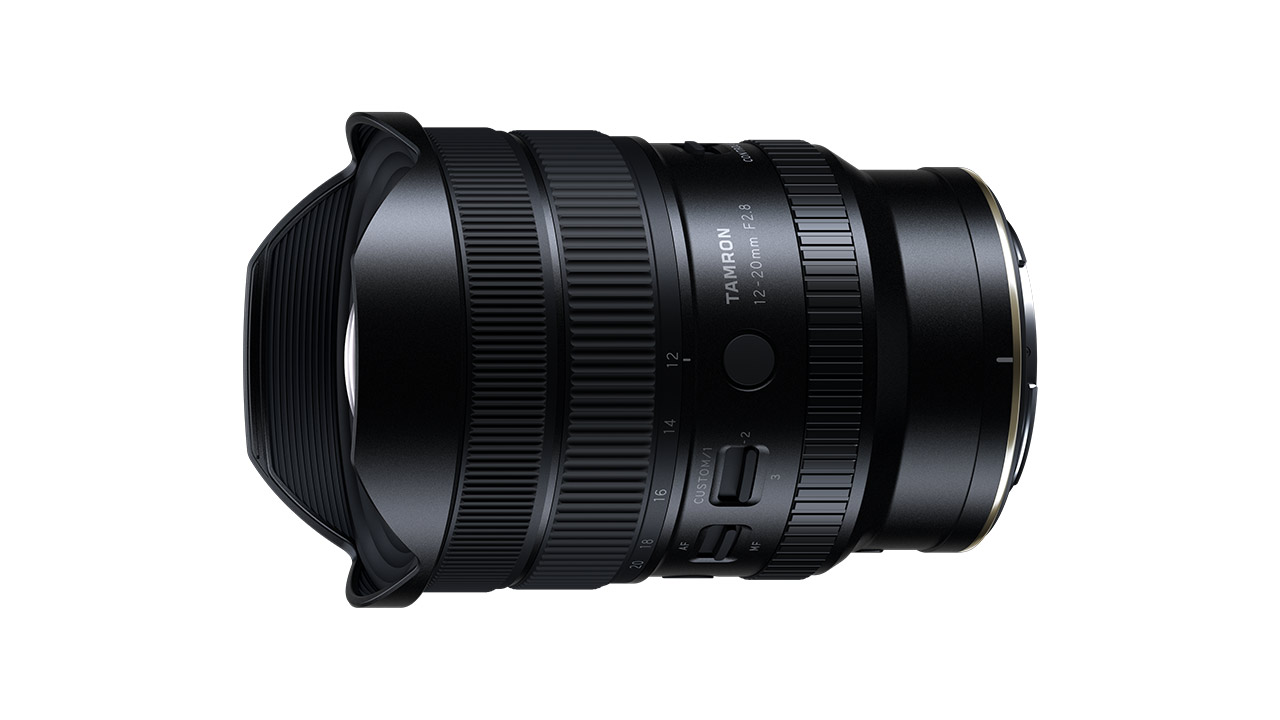
A practical, ultra-wide-angle zoom lens
While ultra-wide-angle zoom lenses tend to become larger and more expensive as the wide-angle end expands, this lens achieves both a lightweight design (570g for Sony E-mount and 585g for Nikon Z-mount) and a wide 12mm field of view. It can be seen as the company’s answer to the challenge of increasing equipment size and weight.
The lens features a new “Toned Profile Next” design, improving functionality and operability. A notable change is the simplification of the product name. The designation “12-20mm F2.8” no longer includes the traditional AF motor name or the alphabetical designation indicating image stabilization. The company plans to continue using this naming convention in the future.
The product packaging has also been revamped. It now uses a kraft box made from recycled paper, and only the focal length, f-number, and logo are printed on it. The design pursues both reduced environmental impact and rationality. The design also takes user experience into consideration, such as the introduction of an opening method that stores the lens vertically.
Tamron 12-20mm F2.8 Lens Breakdown
| Model | 12-20mm F2.8 (Model A084) |
|---|---|
| Angle of view | 121°58′ – 94°30′ <When using a 35mm full-frame mirrorless interchangeable-lens camera> |
| Lens configuration | 12 groups, 17 elements: 1 XLD lens / 3 LD lenses / 1 XGM lens / 3 GM lenses |
| Minimum focusing distance | 0.18m (WIDE) / 0.28m (TELE) |
| Maximum magnification | 1:5.8 (WIDE) / 1:9.1 (TELE) |
| filter | – (Equipped with rear filter holder) |
| Maximum diameter | φ90mm |
| length | 119.3mm (Sony E-mount), 121.3mm (for Nikon Z-mount) |
| mass | 570g (for Sony E-mount), 585g (for Nikon Z-mount) |
| Aperture blades | 12 blades (circular aperture) |
| Minimum aperture (F-number) | F16 |
| Standard accessories | Front cap, rear cap, wrapping cloth |
| Compatible mounts | For Sony E-mount and Nikon Z-mount |


The mount features a filter frame that allows for the attachment of sheet-type filters. Commercially available filter sheets can be cut and inserted.


12mm field of view designed with the video market in mind.
The development of a zoom lens starting at 12mm is driven by the recent expansion of the video market and changing user needs. With the widespread use of smartphones, ultra-wide-angle shooting has become commonplace, and considering the cropping caused by electronic image stabilization during video recording, the demand for a wider field of view is a natural progression.
The 12mm field of view, 2mm wider than 14mm, allows for not only capturing landscapes but also expressing a unique sense of depth. This field of view, far exceeding human vision, enables a different kind of visual expression compared to typical wide-angle lenses.
Optical design specifically for astrophotography
The optical design of this lens is primarily focused on astrophotography. To ensure high resolution performance even at the edges, a 55mm diameter XGM (large-aperture glass-molded double-sided aspherical) lens is placed at the front element. This suppresses distortion and cometary coma aberration, which are characteristic of wide-angle lenses. In addition, it employs the newly developed “AX (Anti-reflection eXpand) coating.”
This coating is a technology that allows for the application of a uniform film thickness even to lens surfaces with high curvature, suppressing reflections, ghosting, and flare caused by the large angle of incidence unique to ultra-wide-angle lenses. The lens employs 12 aperture blades, enabling a nearly circular bokeh at wide apertures and a more pronounced starburst effect when stopped down.
Another distinctive feature is its design, which prioritizes performance at infinity. Image quality at infinity is prioritized over peripheral performance at close range. This design decision emphasizes practicality, aiming to deliver maximum performance for specific applications such as astrophotography.
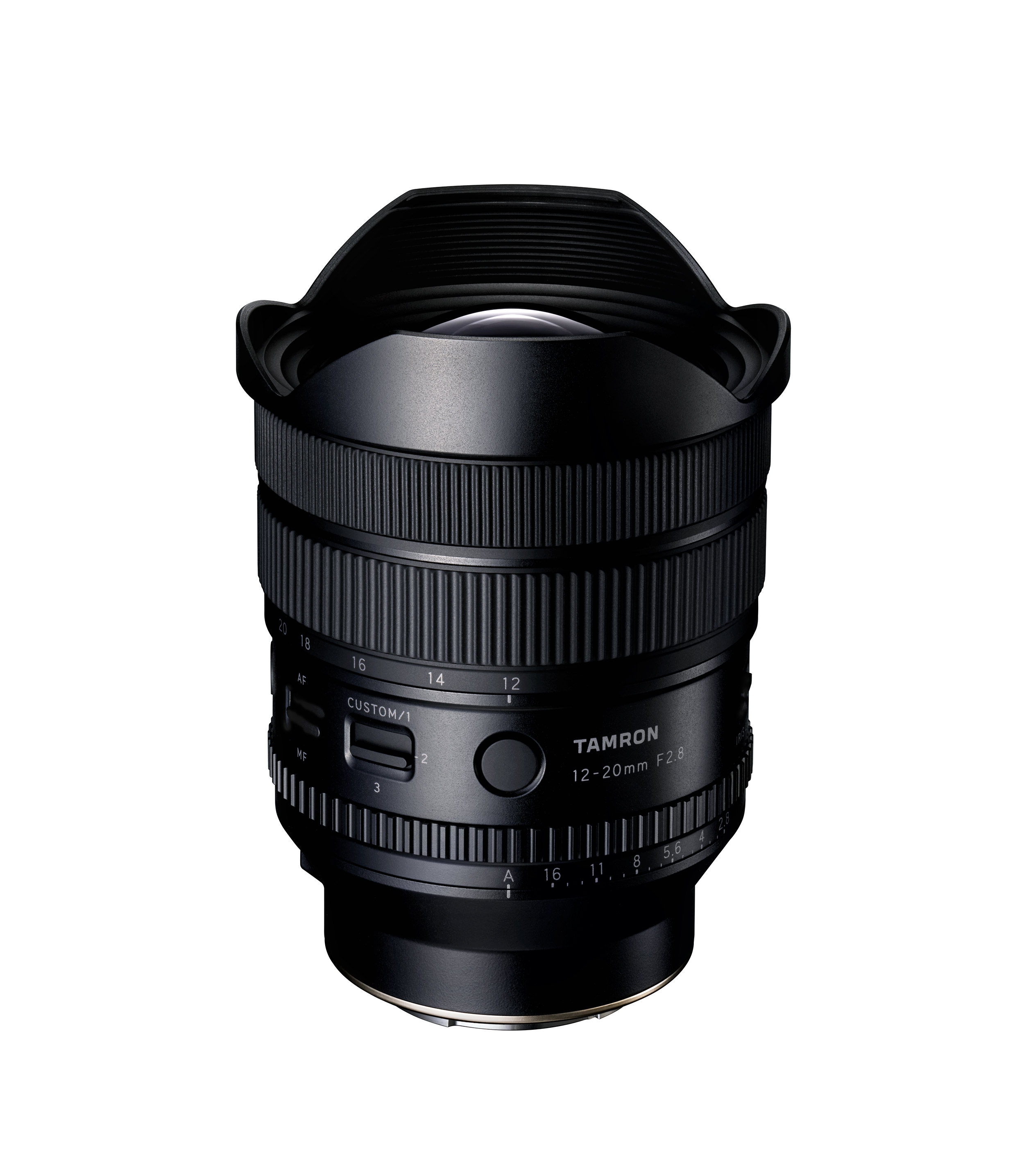
Lightweight 570g body and durability
Despite its 12-20mm F2.8 specifications, its size is similar to the standard zoom lens “28-75mm F/2.8 Di III VXD G2 (Model A063),” supporting mobility during landscape photography. The reason for its light weight is said to be the shortened overall length and reduction of drive parts due to a design that completes focusing with a single group.
The casing is made of polycarbonate and undergoes a six-layer painting process to ensure texture and durability. It features a simple splash-proof structure designed for outdoor use, and the front surface is coated with a fluorine compound that provides excellent water and oil repellency and stain resistance.
It combines maintainability and robustness, resulting in a structure that meets the demands of professionals.
Practical operation functions and AF performance
In terms of operation, it features a range of highly practical mechanical functions.
It features a lock switch that disables the focus ring when using manual focus, preventing accidental operation during long exposures. This specification is designed with the needs of astrophotography in mind.
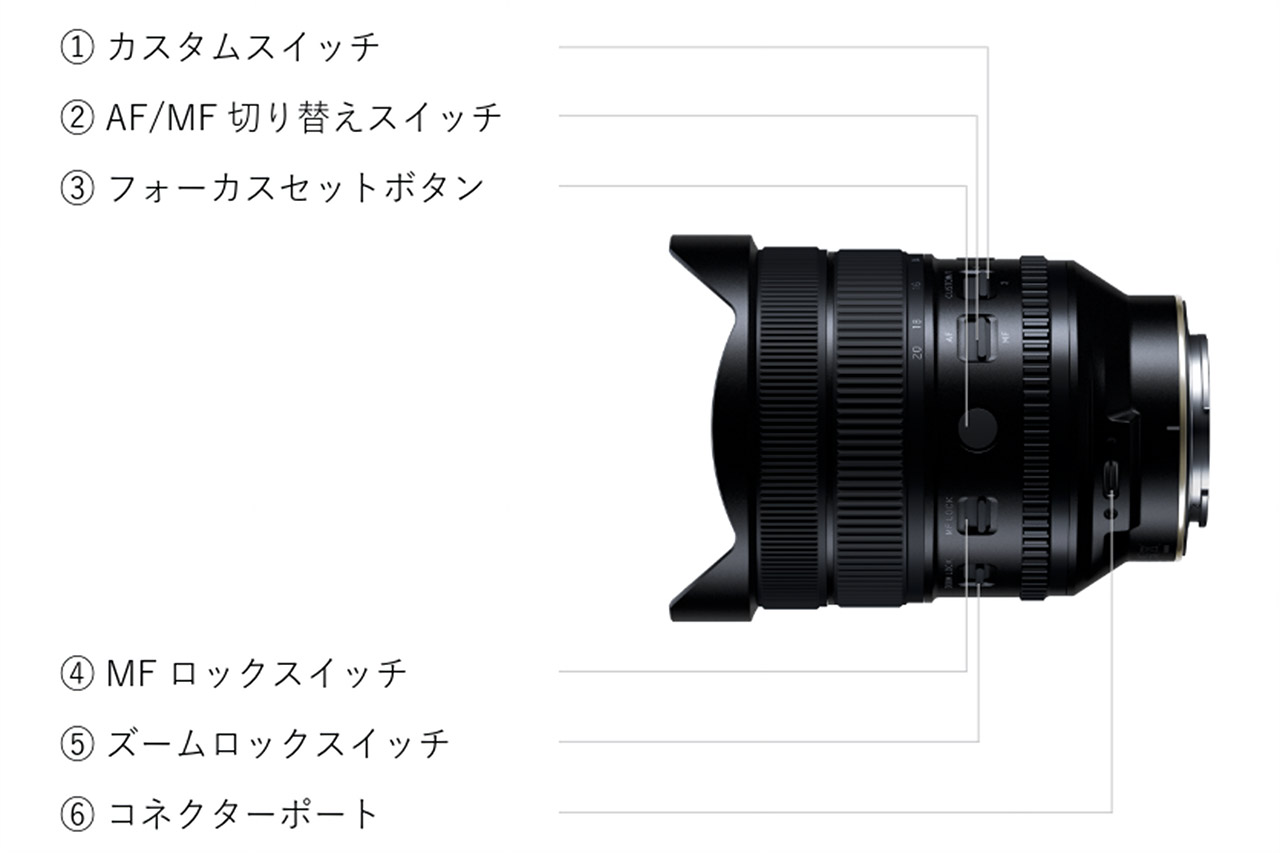
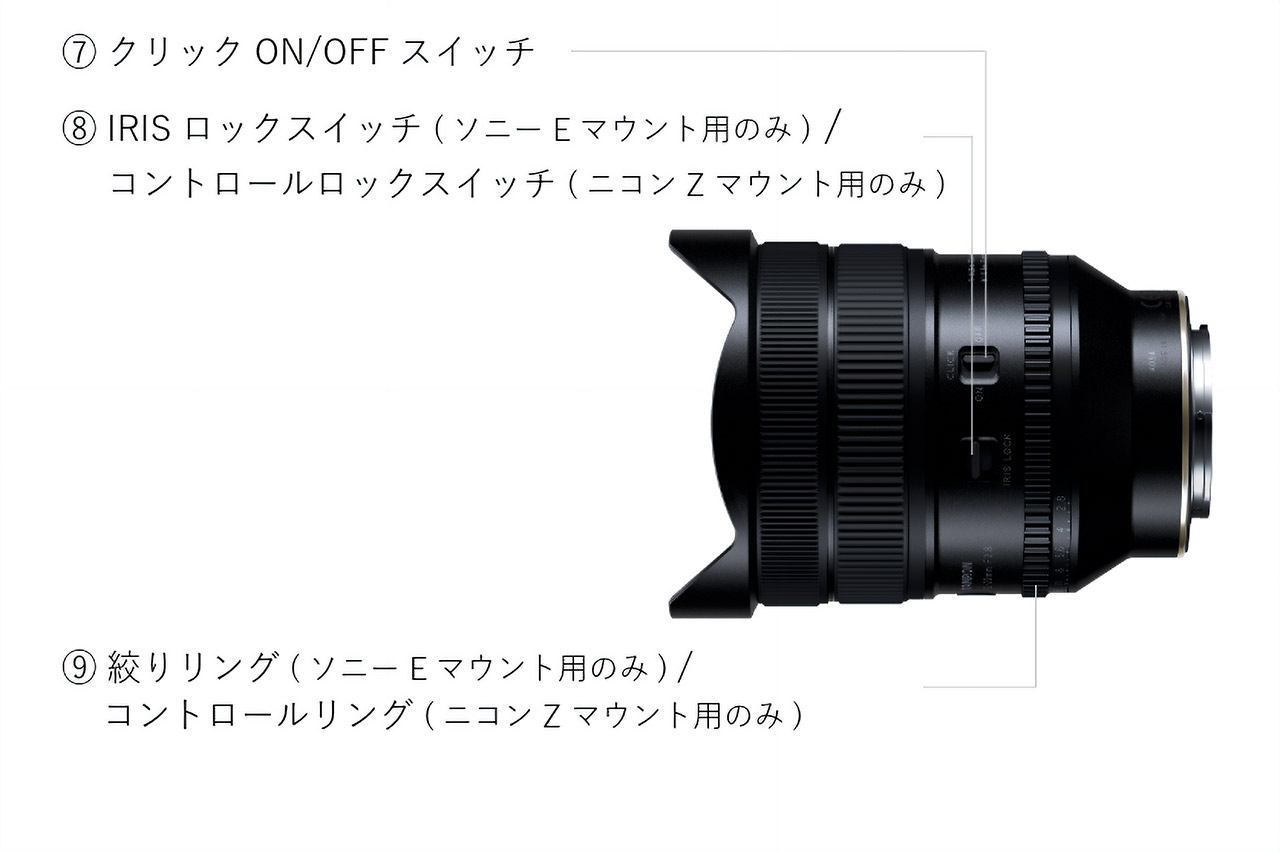
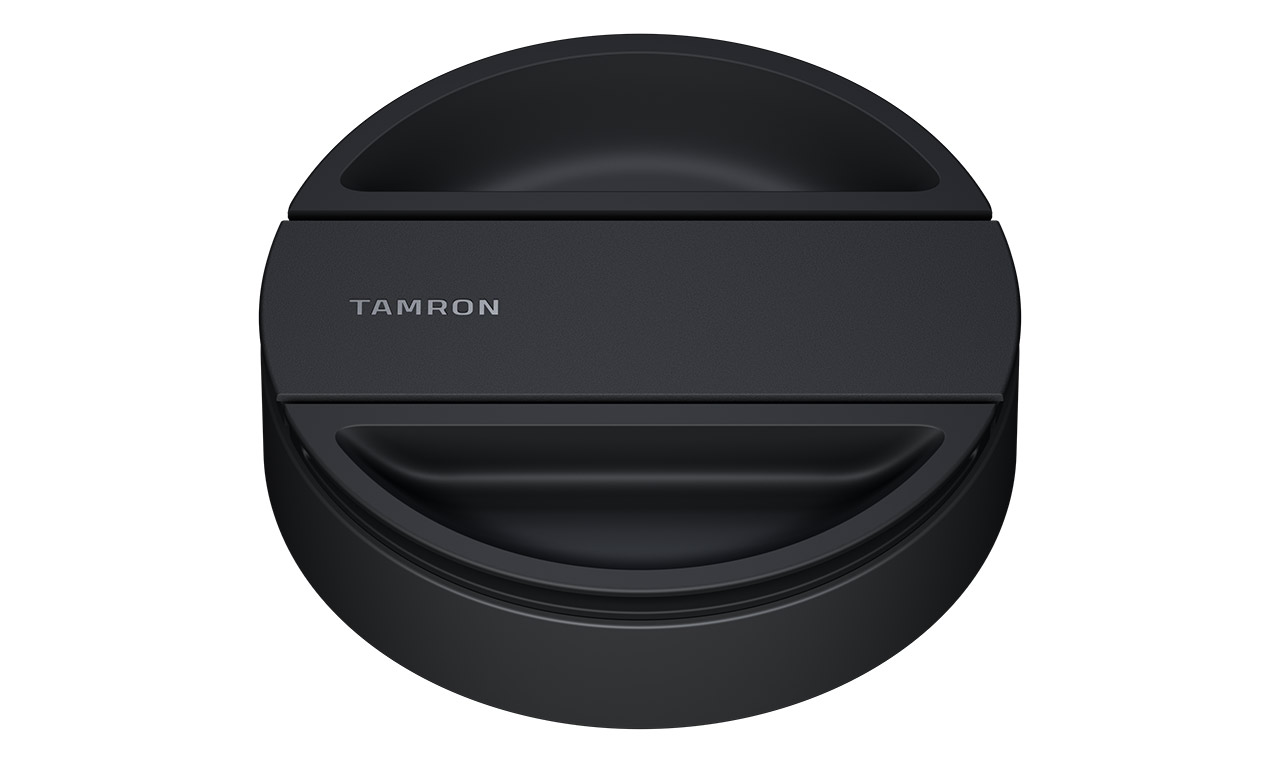
In addition to a fixed petal-shaped lens hood, it features a locking lens cap. The zoom lock switch can be locked at both the 12mm and 20mm ends. The AF motor is equipped with a linear motor “VXD,” achieving high speed, high precision, and quiet operation. The minimum focusing distance is 0.18m at the wide-angle end, allowing for dynamic close-up photography that takes advantage of the ultra-wide angle.
Enhanced customization features of the Tamron 12-20mm F2.8
Another major feature of this product is its compatibility with “TAMRON Lens Utility.” It features a connector port (USB Type-C), allowing users to customize various functions from a PC or compatible smartphone using “TAMRON Lens Utility.”
With compatible mounts, control functions such as “Focus Time-Lapse” are also available. Improvements based on user feedback are continuously being made to the Nikon Z mount version as well. A system is in place to support the demands of modern creators from both a hardware and software perspective.
New option in the ultra-wide-angle lens market
The Tamron 12-20mm F2.8 is a product that pursues a balance between optical performance, lightweight design, and ease of use.
Developed with the intention of “making expression freer and more agile,” this 570g camera packs in specifications that meet the demands of the field. Achieving a high level of balance between descriptive power and mobility, this lens can be considered a practical tool for expanding the possibilities of ultra-wide-angle expression.
A wide 12mm field of view and reliable controls—these features accurately capture the photographer’s intentions and powerfully support creative expression. This autumn, a new option combining practicality and expressive power will be added to the history of ultra-wide-angle lenses.