PRONEWS at INTER BEE 2026
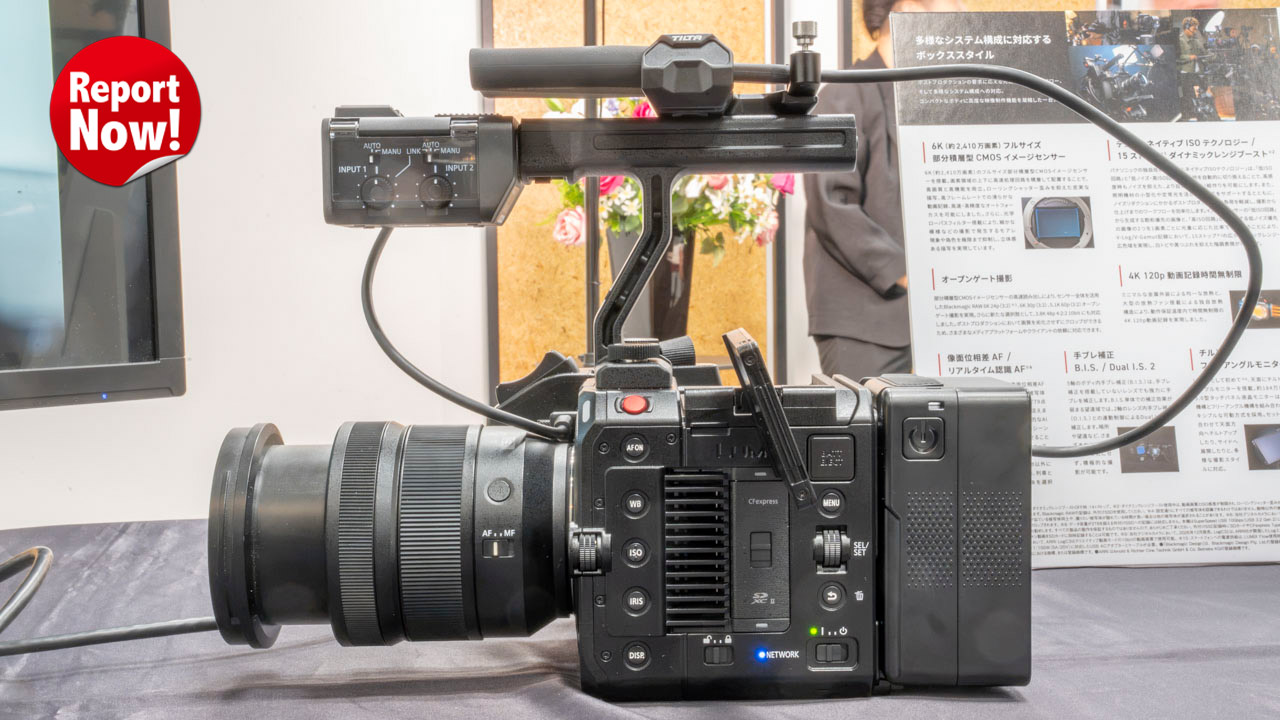
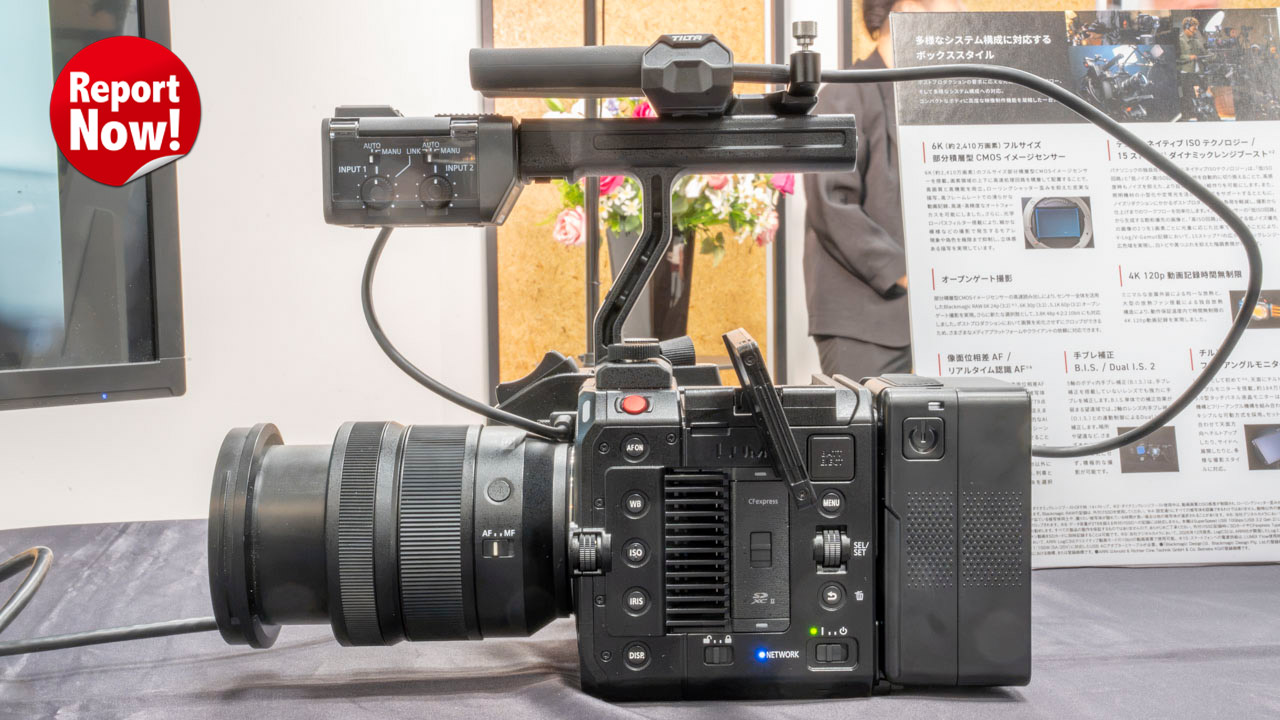
Panasonic announced the new LUMIX SHX1 is a box-type full-frame cinema camera designed for everything from cinema shooting to live production. Equipped with a 24.1-megapixel partially stacked CMOS image sensor, it packs all the features required for video production into a compact body, including 6K shooting, 4K 120p long-duration recording, and support for ProRes RAW and Blackmagic RAW.
The SHX1 and related accessories are scheduled for release on January 21, 2027. The live production unit “AU-LPU1” is targeted for release around the first half of 2027. Pre-orders will begin on November 24, 2026 at 10:00 AM (Japan time).
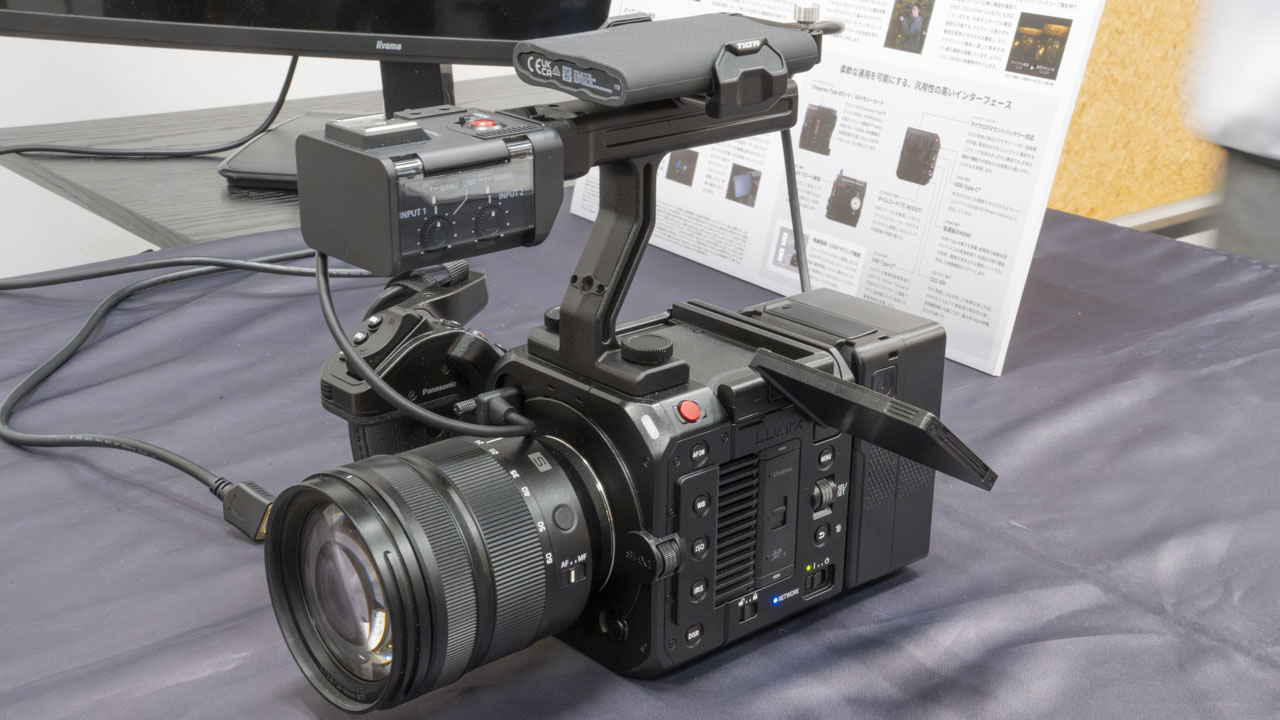
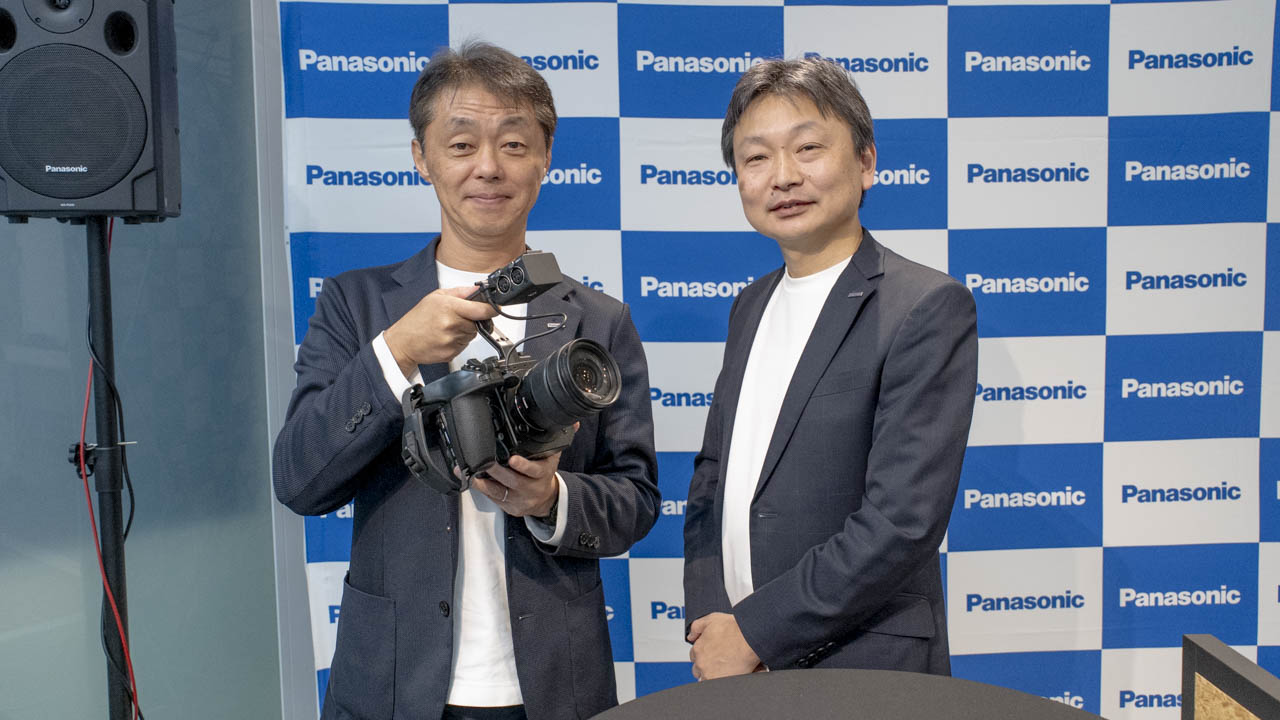
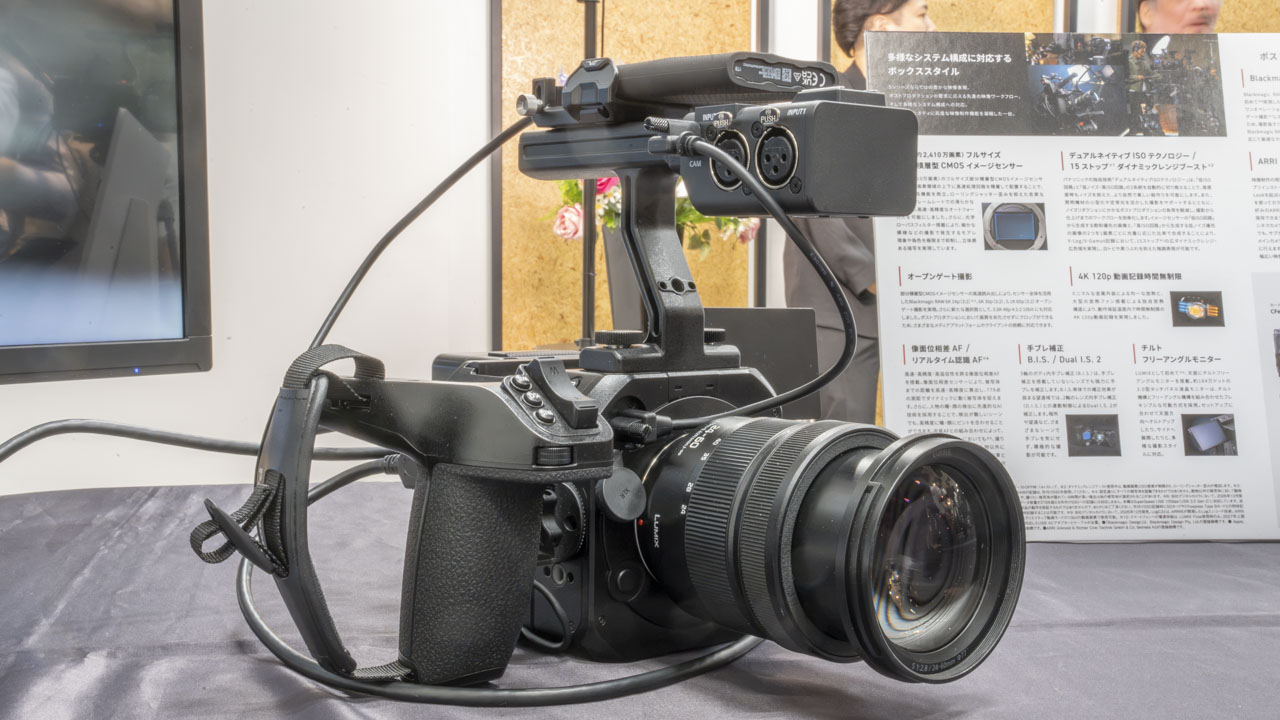
The LUMIX SHX1 unit displayed at the new product launch event.
What is the LUMIX SHX1 ?
The product name itself reflects Panasonic’s direction with this camera. At the new product launch event, a representative explained that the name combines “S” to represent the full-frame sensor, “H” which is similar to the LUMIX S1H and GH series, and “X” which is used in models that prioritize video performance, such as the LUMIX S5IIX. The black-based logo and boxy exterior also suggest that this model is focused on video production.
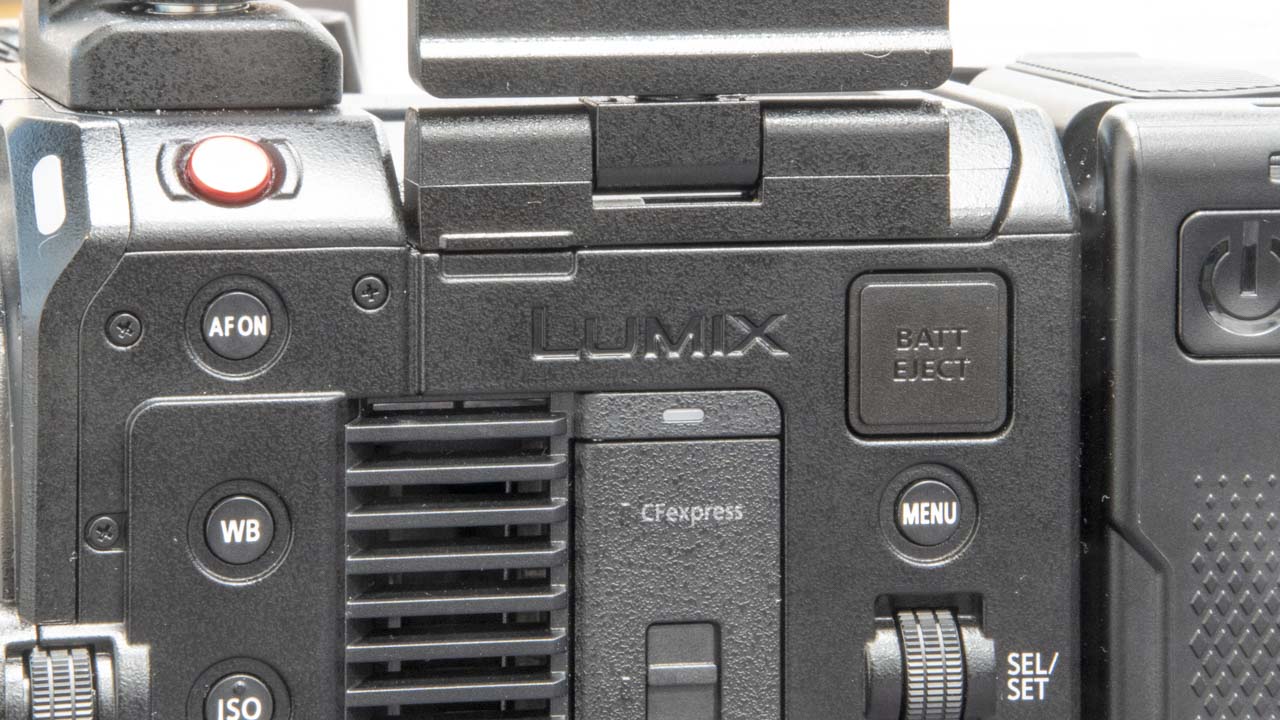
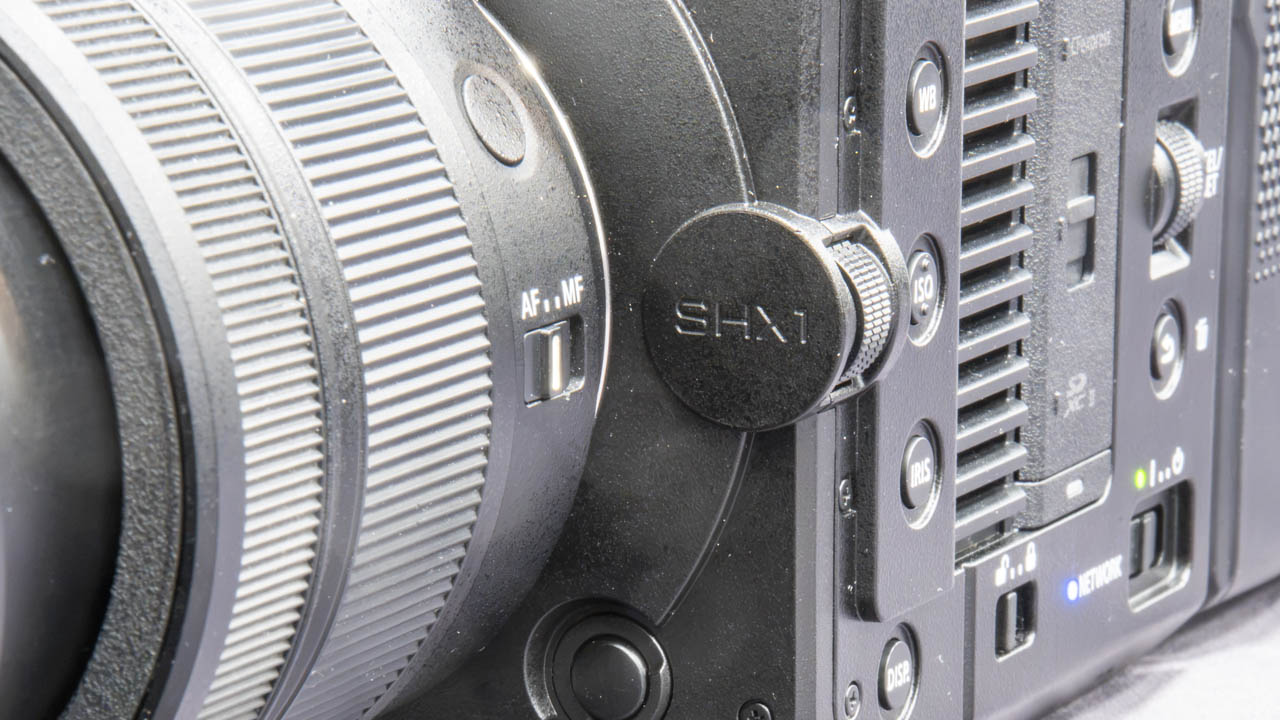
Multifaceted Camera
The SHX1’s features extend beyond just sensor performance and recording capabilities. It’s designed as a camera system that can be configured to suit various shooting purposes, from mobile shooting using handheld or gimbal-mounted cameras to cinematic shooting with external accessories, and even live production using multiple units. The idea is to cover a wide range of production environments, which traditionally required the use of different equipment, with a single camera.
At Panasonic’s new product launch event, I had the opportunity to try out the SHX1. As I operated it while listening to the explanation, I realized that in addition to image quality and recording performance, various improvements had been made to enhance usability on set. What particularly caught my eye were the movable monitor located on the top of the box-shaped body and the system that allows external accessories to be controlled from the camera body.
6K full-frame sensor and versatile RAW recording.
The SHX1 is a full-frame cinema camera that uses an L-mount. Its approximately 24.1-megapixel partially stacked CMOS image sensor achieves both high image quality and advanced functionality by stacking high-speed processing circuits above and below the pixel area. This enables images with reduced rolling shutter distortion, smooth video recording at high frame rates, and fast, high-precision autofocus.
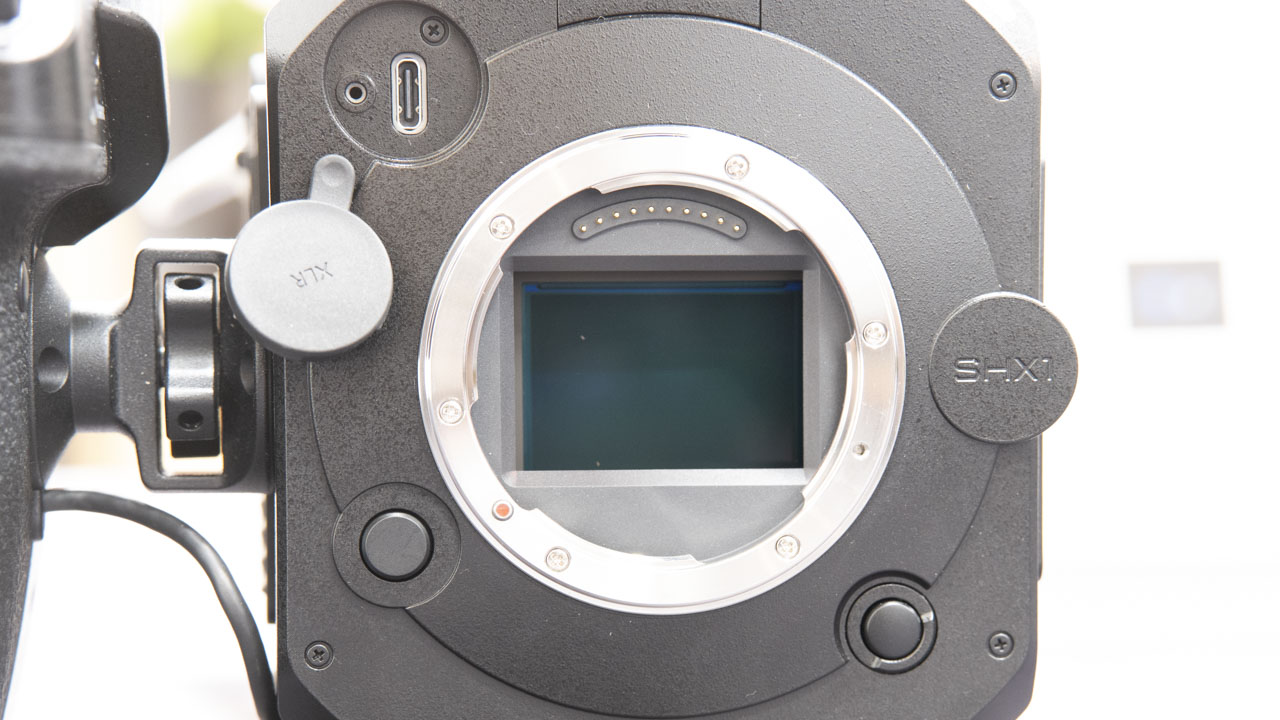
High Video Quality
In terms of image quality, the inclusion of an optical low-pass filter is also noteworthy. While some criticized the previous LUMIX S1II for lacking an optical low-pass filter, it has been newly adopted in the SHX1. This helps suppress moiré and false colors that tend to occur when photographing fine details of buildings or the fabrics of clothing, making it effective not only for cinema shooting but also for event recordings that handle a variety of subjects.
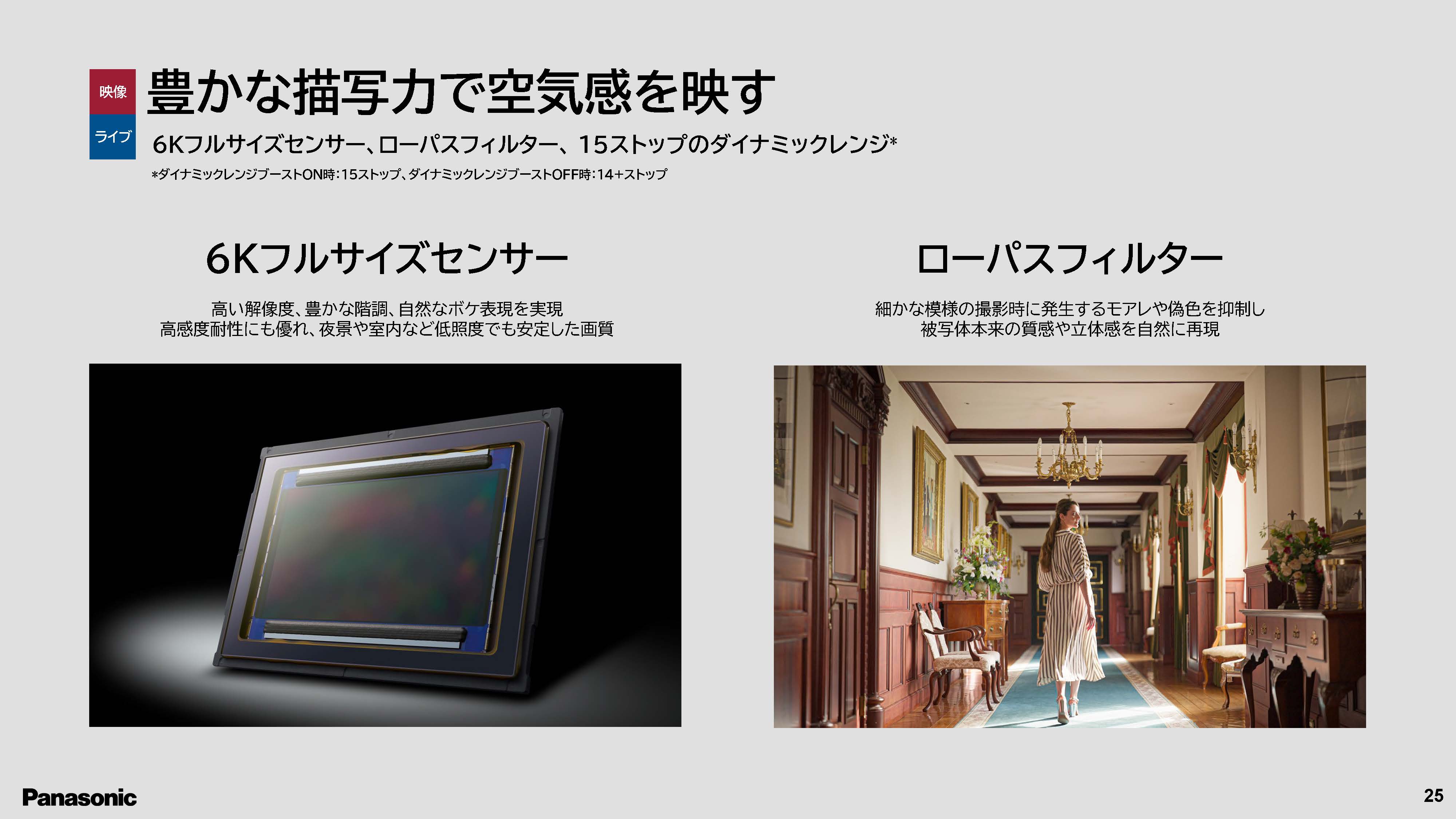
Dynamic Range of the LUMIX SHX1
The dynamic range is 15 stops when dynamic range boost is enabled during V-Log/V-Gamut recording, and at least 14 stops even when it is disabled.
Dynamic Range Boost is a function that combines a saturation-priority image obtained from the low-ISO circuit and a low-noise-priority image obtained from the high-ISO circuit, pixel by pixel, in a ratio corresponding to the amount of light. It expands the tonal range from highlights to shadows, suppressing blown-out highlights and crushed blacks even in scenes with large differences in brightness. However, there are limitations on video quality and ISO sensitivity when using this function, and rolling shutter distortion increases.
On the other hand, Dual Native ISO technology is a technique that suppresses noise even when shooting at high ISO sensitivities by automatically switching between two circuits: a “low ISO circuit” and a “low-noise, high ISO circuit.” Both are related technologies that utilize two circuits, but Dynamic Range Boost works differently in that it combines two images, while Dual Native ISO switches between circuits.
A key feature for recording performance is that there is no upper limit on recording time when recording in 4K 120p. The design combines heat dissipation through a metal casing with a large fan, allowing for long recording sessions within the guaranteed operating temperature range. While actual recording time depends on factors such as power supply and recording media capacity, the same camera can handle everything from slow-motion shooting to long-duration event recordings.
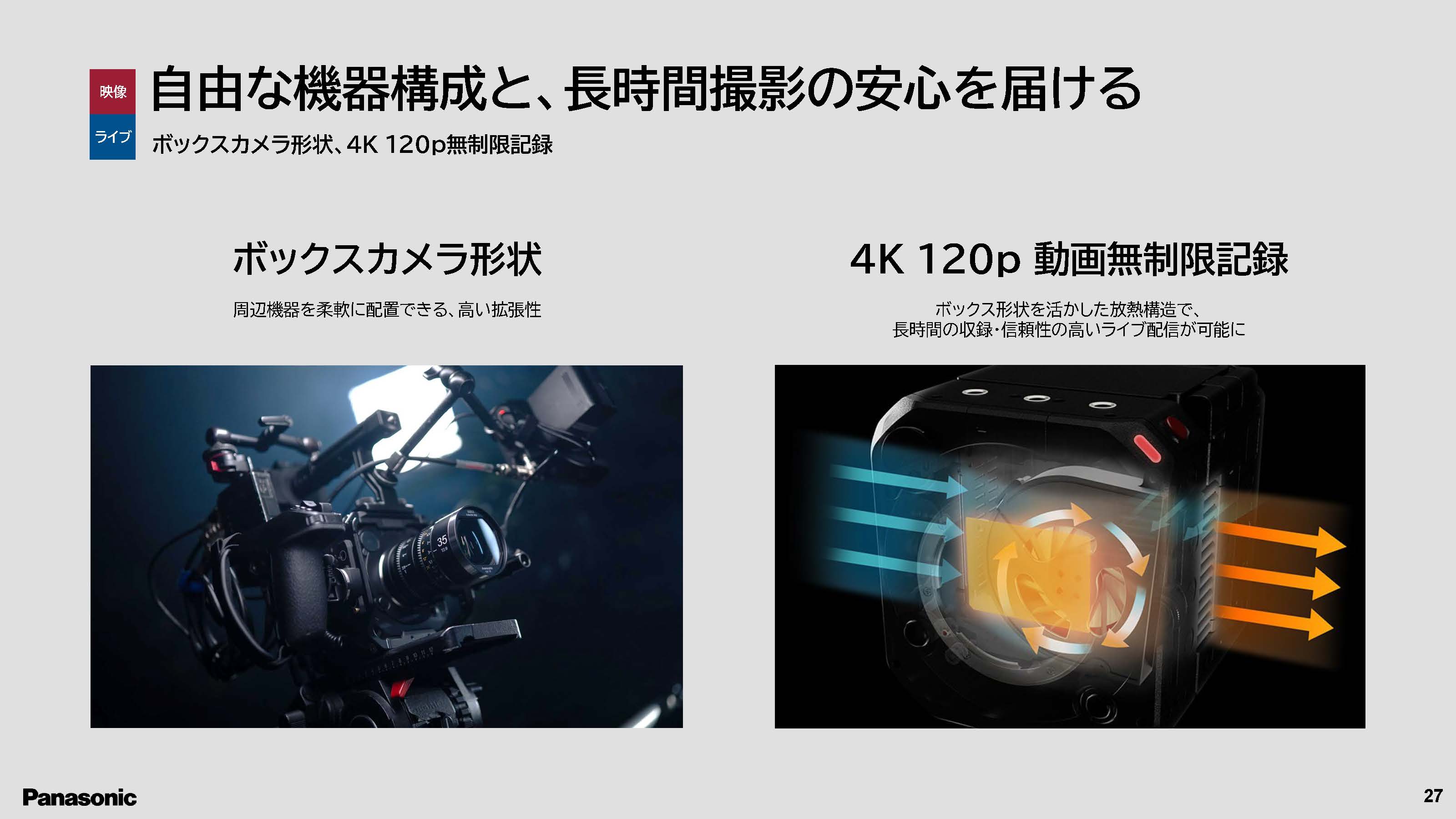
LUMIX SHX1 Supports Open Gate Shooting
Furthermore, it supports open-gate shooting, which utilizes the sensor’s wide imaging area. At the press conference, recording in 6K 30p (3:2), 5.1K 60p (3:2), and 6K 24p (3:2) using Blackmagic RAW were showcased. In addition, it also supports 3.8K 48p 4:2:2 10-bit recording.
High-resolution footage shot at an open gate makes it easy to crop the composition while maintaining the required delivery resolution. This is also effective when creating deliverables with different aspect ratios from the same source material, such as landscape video works as portrait social media videos.
In terms of color reproduction, it inherits the V-Log/V-Gamut technology used in Panasonic’s VARICAM and LUMIX S1H cameras. Furthermore, it comes pre-installed with ARRI LogC3, which allows for more efficient color matching when used in conjunction with ARRI digital cinema cameras.
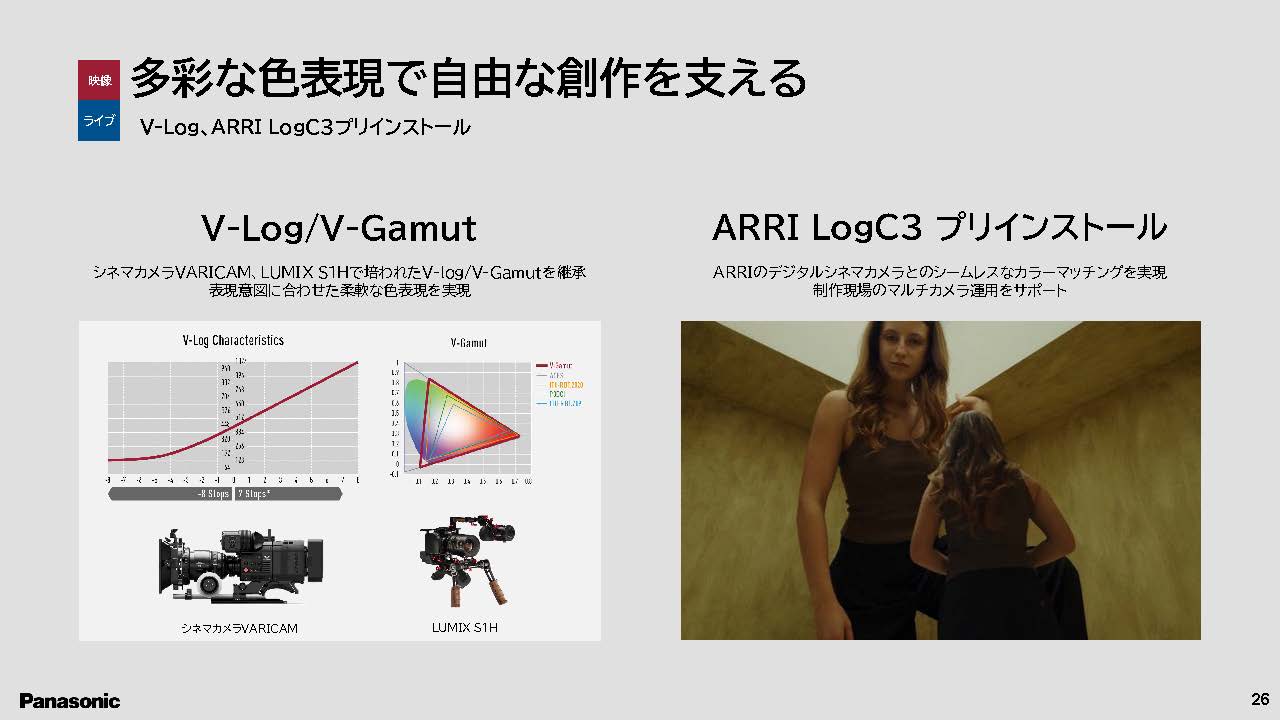
Log and LUT Performances
Footage recorded with ARRI LogC3 is compatible with color grading using log-to-log LUTs from the ARRI Look Library. For example, a configuration using the ARRI ALEXA Mini as the main camera and the SHX1 as a B or C camera is conceivable. The ease of color matching when using cameras from different manufacturers is a major advantage in post-production. ARRI LogC3 can be used in 10-bit video quality in Creative Video mode.
RAW recording capabilities are also extensive. In addition to internal recording of ProRes RAW HQ/ProRes RAW to CFexpress Type B cards, it also supports direct recording of Blackmagic RAW to an external SSD connected via USB Type-C. With Blackmagic RAW, 6K 24p (3:2) open-gate recording is possible, making it easy to integrate with editing workflows using DaVinci Resolve.
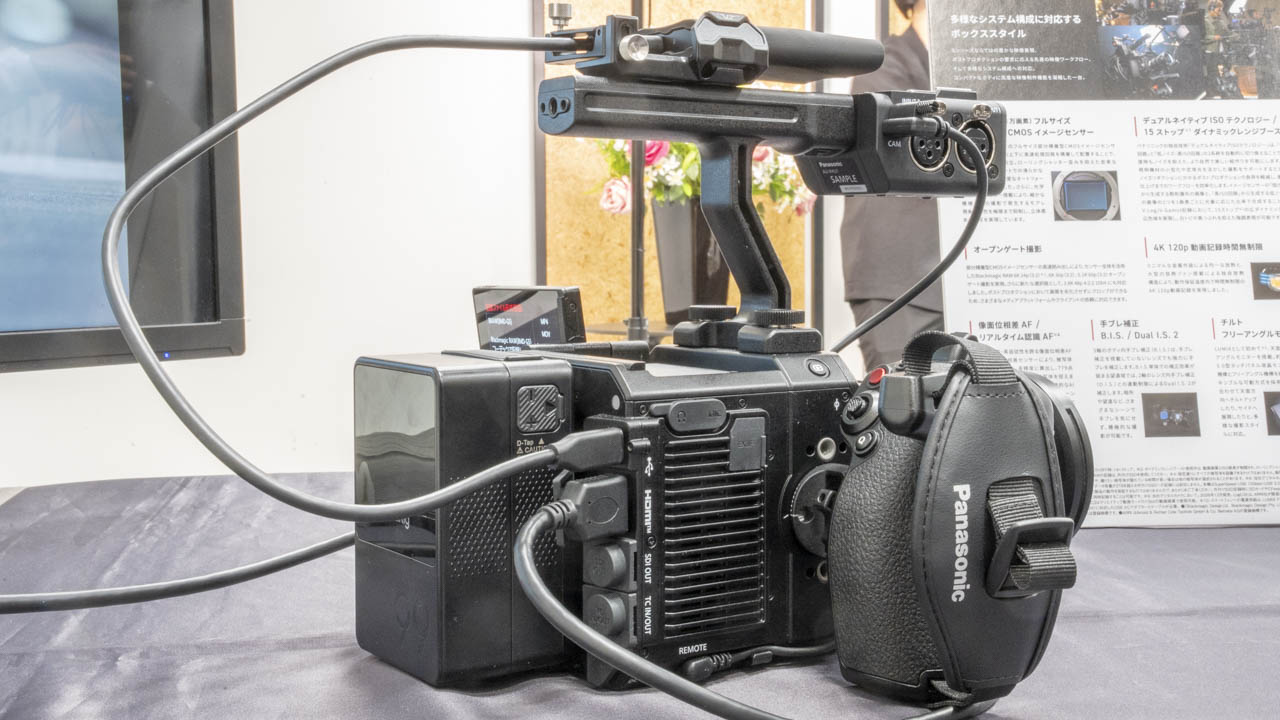
How to Record BRAW with this camera
What’s particularly interesting is the ability to record the main Blackmagic RAW footage to an external SSD while simultaneously recording editing proxies to an SD memory card. This reduces the effort required to generate proxies separately from RAW footage after shooting, streamlining the process from reviewing the footage to moving on to editing.
At the debut presentation, the recording times were also presented as reference values when using 2TB media: approximately 95 minutes with ProRes RAW (5.8K 29.97p, 2,799Mbps) and approximately 445 minutes with Blackmagic RAW (6K 24p, 12:1 compression, 599Mbps). Although a direct comparison is not possible due to differences in frame rate and compression method, it is clear that media usage changes significantly depending on the recording format selected.
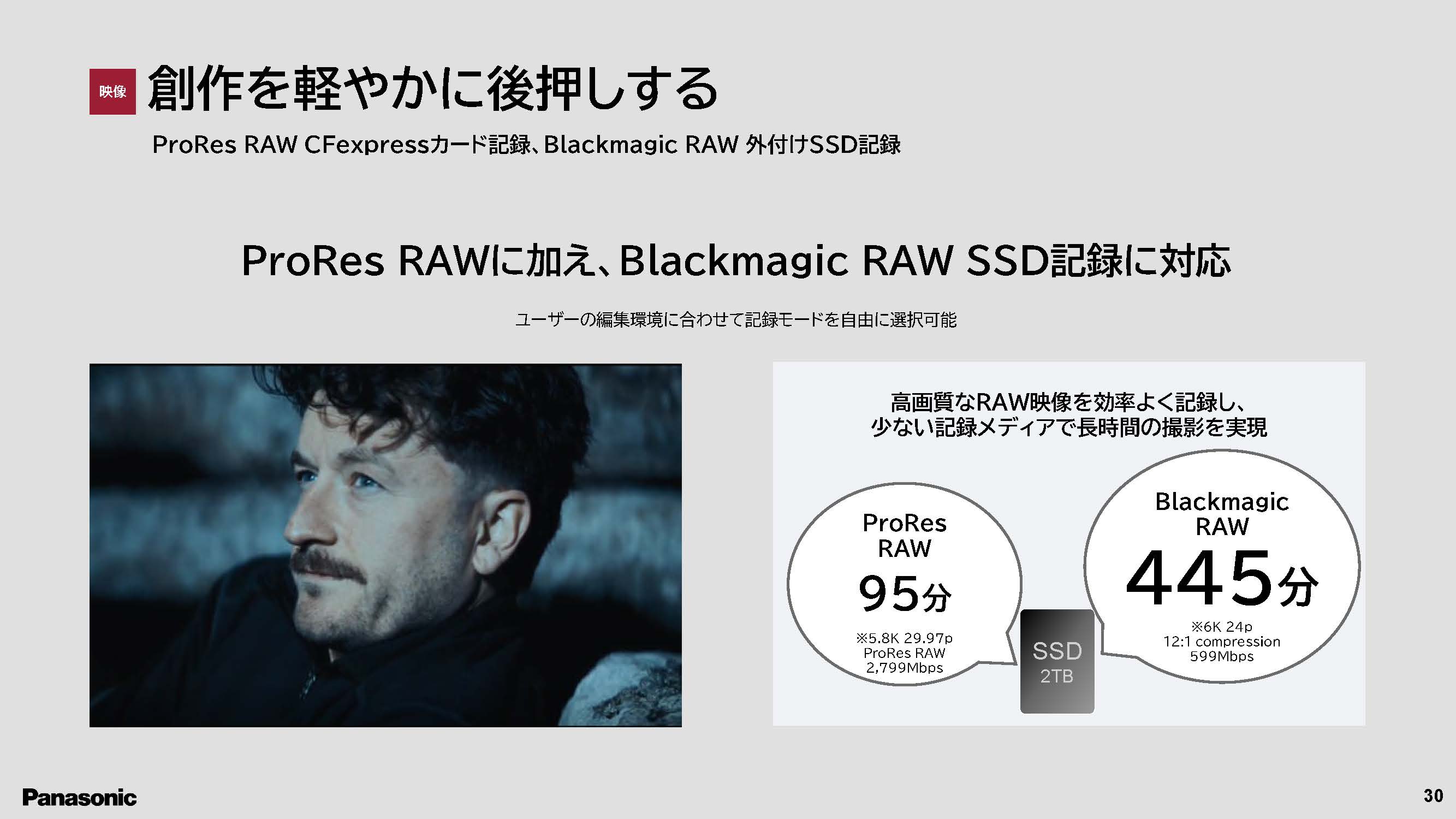
Note that the field of view is slightly cropped when recording in Blackmagic RAW. Recording to an external SSD is supported via USB 3.2 Gen 2 (up to 10Gbps), but recording to SSDs with a capacity exceeding 2TB is not possible, and the use of products that have been confirmed to work is recommended. Also, simultaneous recording of this recording to an external SSD with an SD memory card or CFexpress Type B card is not supported. However, it is possible to record the main Blackmagic RAW video to an external SSD while simultaneously recording proxy video for editing to an SD memory card.
Considering these recording options, the SHX1 can be described as a camera that takes into account not only image quality during shooting, but also the entire production workflow, including material management and color grading.
Movable monitor and Tilta integration were particularly impressive – box-type design also offers unique operability.
What immediately caught our team’s attention with the SHX1 was the LCD monitor located on the top of the body. It uses a 3.0-inch touchscreen LCD with approximately 1.84 million dots, and by combining a tilt mechanism and a free-angle mechanism, the screen orientation can be changed according to the shooting style. The tilt-free-angle system itself is also used in existing LUMIX cameras, but the SHX1 is characterized by its placement, which makes use of the top surface of the box-shaped body.
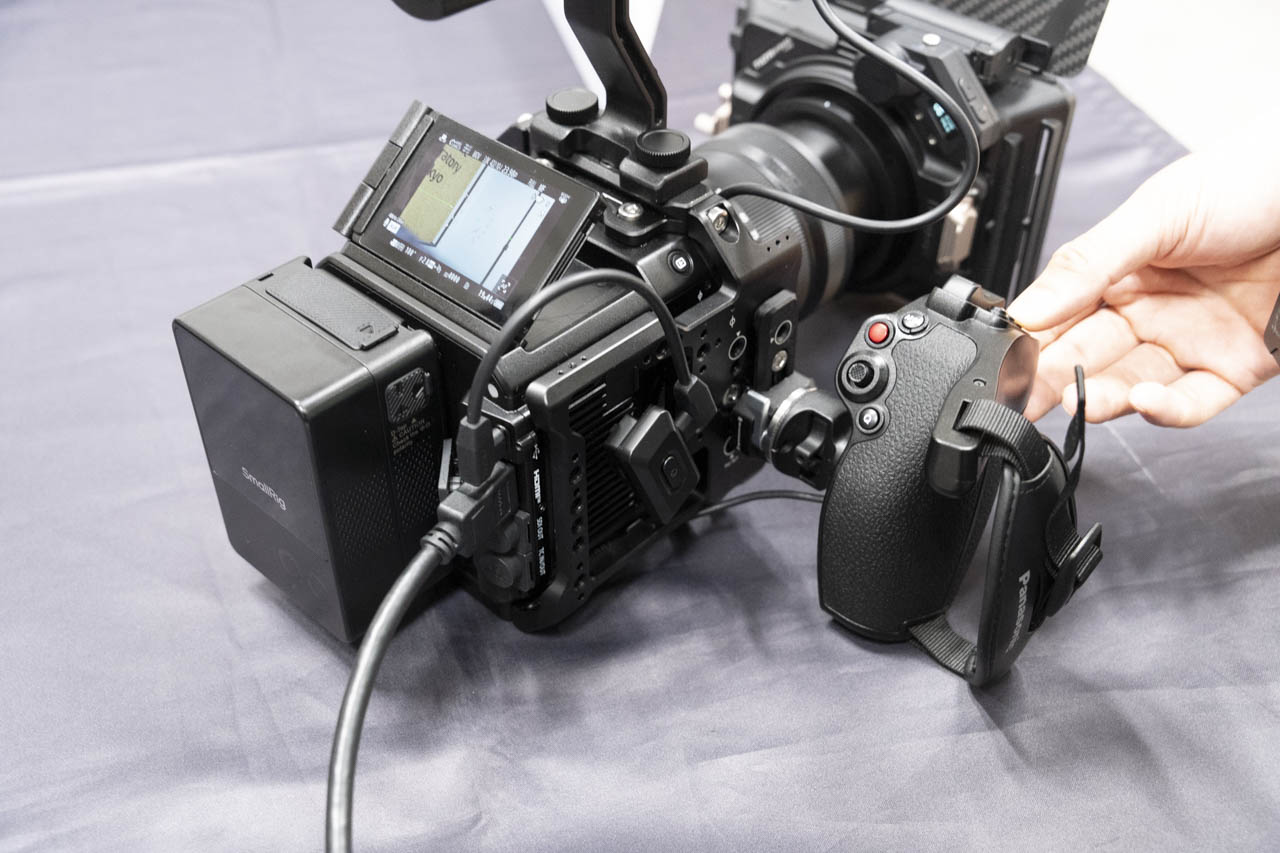
When the top handle is not attached, the monitor can be tilted upwards from the top of the unit. On the other hand, when the top handle is attached, the screen can be unfolded horizontally, allowing you to view the footage while avoiding the handle. This design is also convenient when the camera is mounted low and you are viewing the screen from above.
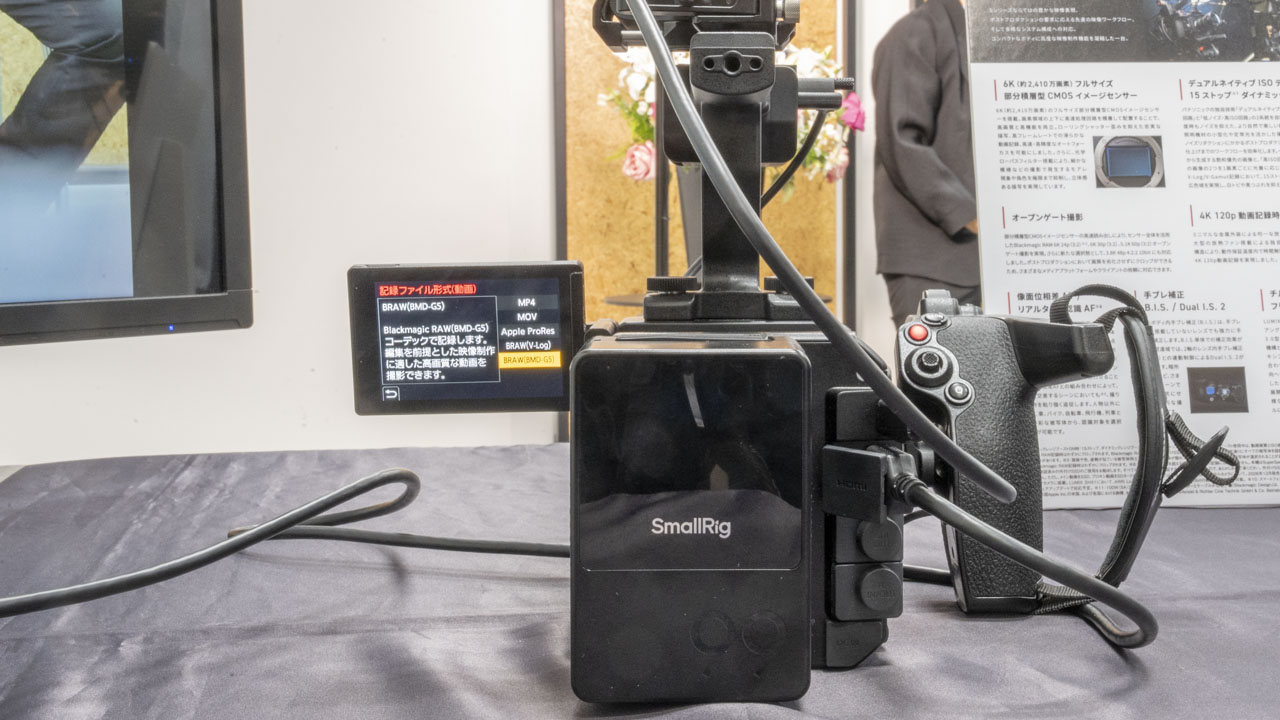
External Monitor Positioning
With box-type cameras, the mounting position of external monitors and interference with the top handle are often challenges. In this respect, the SHX1 can accommodate various shooting positions with just its built-in monitor. When I actually used it, I felt that the placement of the monitor itself directly impacted the ease of use during shooting.
The camera body features 5-axis in-body image stabilization (BIS), and when combined with a compatible optical image stabilization (OIS) lens, it enables coordinated control via “Dual IS 2,” supporting stable video production even when shooting handheld.
The camera employs on-sensor phase-detection autofocus with 779 focus points. In addition to people’s eyes and faces, it recognizes animals, cars, motorcycles, bicycles, airplanes, trains, and more, and, in combination with tracking AF, assists in focusing on the subject. This is a reliable feature in situations where the photographer wants to concentrate on composition and camera work, such as when shooting with a small group or using a gimbal.

Cinematic Performance
For cinema shooting, it also supports de-cise display when using anamorphic lenses. This allows users to check the composition by unfolding the horizontally compressed image back to its original aspect ratio, and it supports display not only on the built-in monitor but also on external monitors via HDMI or SDI. Phase-detection autofocus functions even during de-cise display, and it also features image stabilization for anamorphic shooting, supporting anamorphic shooting in portrait orientation.
What impressed me most about this hands-on demonstration was the integration with Tilta accessories. The demo unit was equipped with an external variable ND filter compatible with Tilta’s control system. By assigning ND operation to the camera’s function button and turning the dial on the unit while pressing the button, we were able to see the density of the ND filter attached to the front of the lens change.
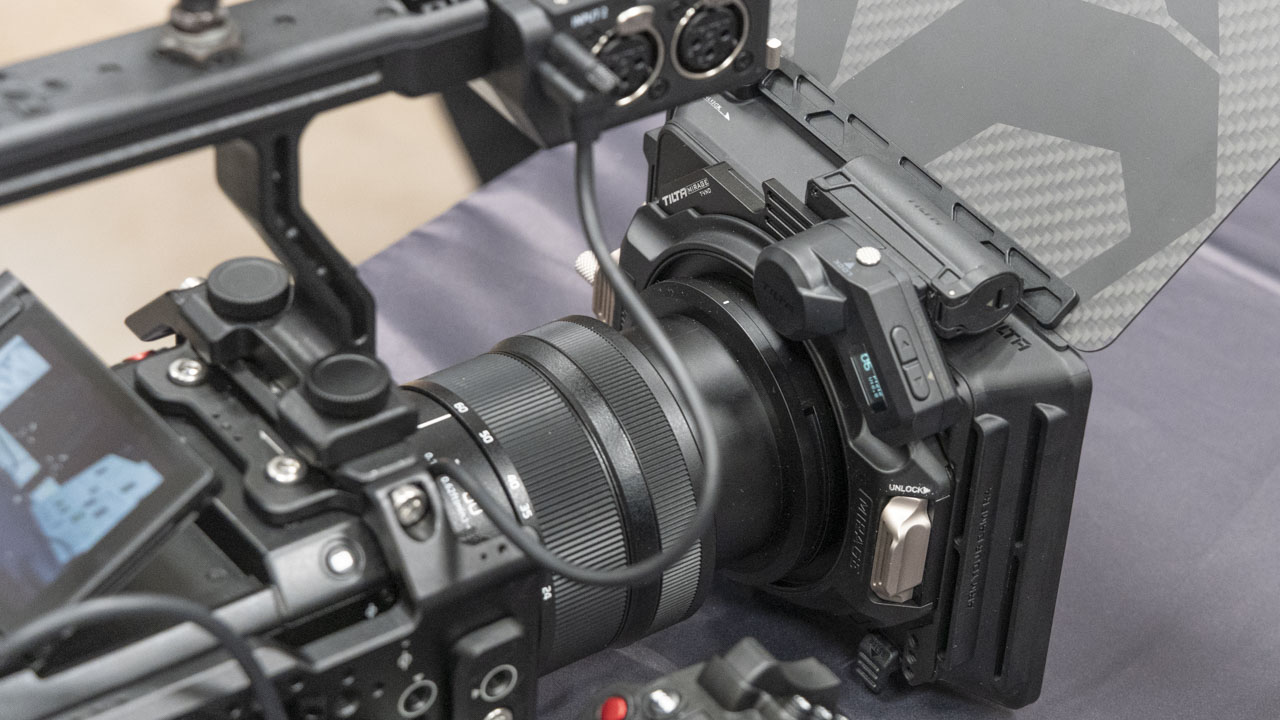
In an actual shooting setting it felt less like adjusting an external filter and more like controlling the camera’s own functions. Normally, to change the density of an external variable ND filter, you have to reach for the filter directly, but with this system, you can adjust it from the camera body. You can adjust the exposure with the same ease as adjusting the ISO sensitivity, aperture, and shutter speed, which reduces the amount of operation required during shooting.
Electronic Focus Control through Tilta
Furthermore, electronic focus control using Tilta’s controller was also introduced. By combining a compatible lens with the controller, it is possible to control the focus without adding an external focus motor or gear.
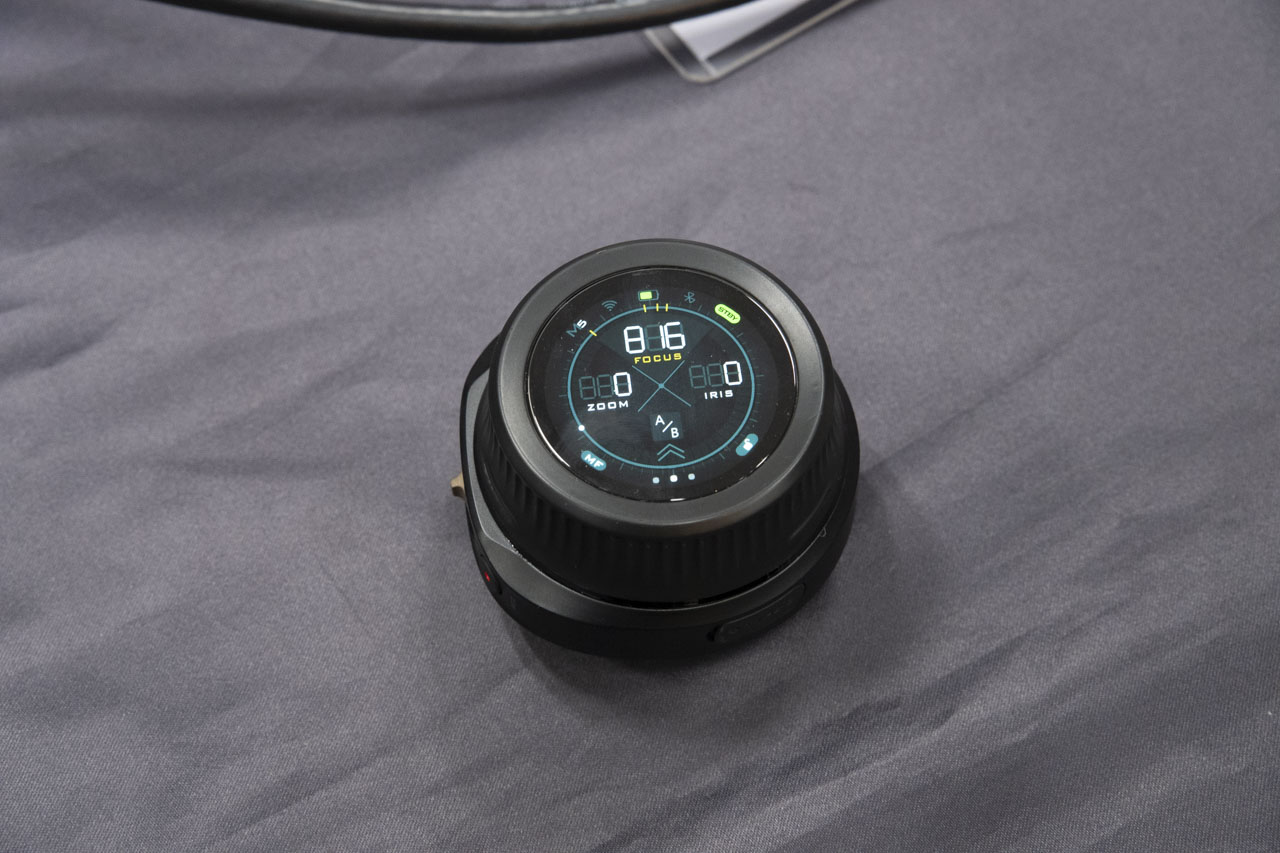
The fact that it doesn’t require adding a mechanical drive mechanism to the lens is advantageous for use with gimbals and small rigs. Rather than simply attaching external accessories, the idea of integrating them with the camera’s control system is becoming a defining characteristic of the SHX1.
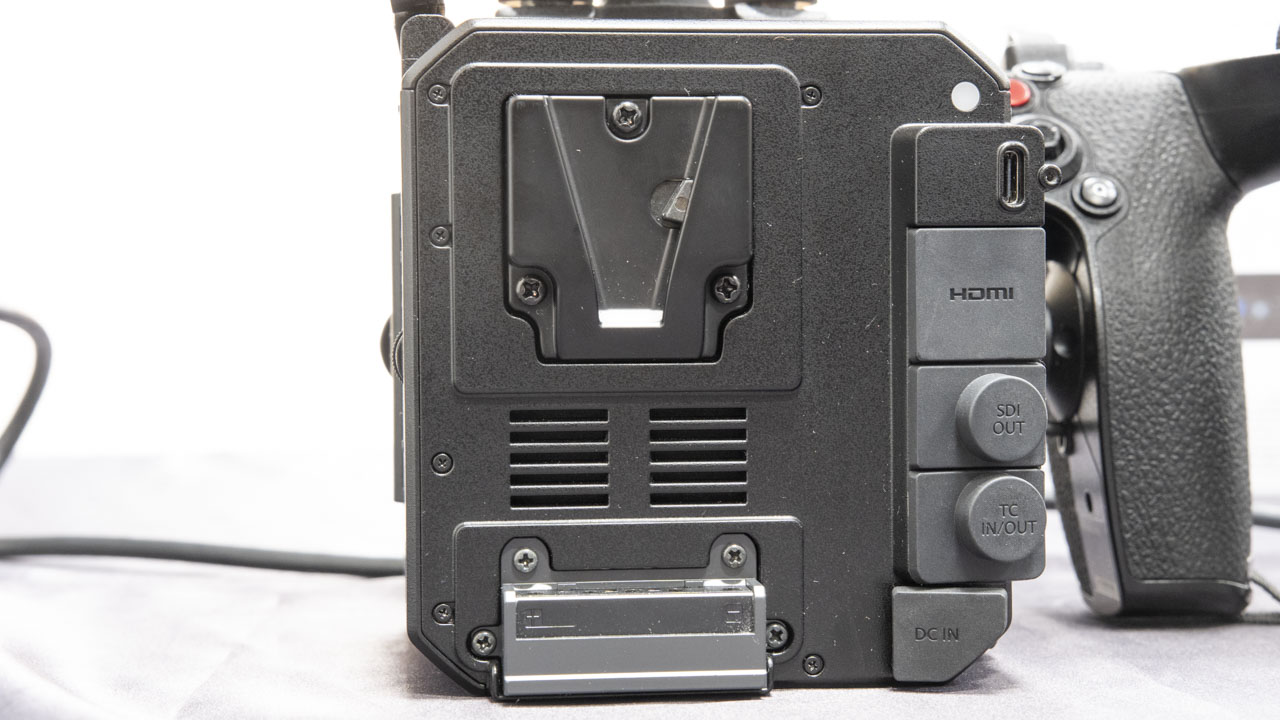
The interface includes 12G-SDI and HDMI (Type A). The 12G-SDI supports video output up to 4K 60p and can be used to connect to external monitors and recording equipment.

Furthermore, it features BNC terminals for timecode input/output (TC IN/OUT), allowing connection to timecode generators, video cameras, etc., to synchronize initial timecode values. This is also useful for multi-camera recording and material management in post-production.
The recording media consists of a dual slot configuration for CFexpress Type B cards and SD memory cards. CFexpress Type B cards can record high-bitrate video of 800Mbps or higher, as well as ProRes RAW HQ/ProRes RAW, while SD memory cards can be used for proxy recording and other purposes as needed.
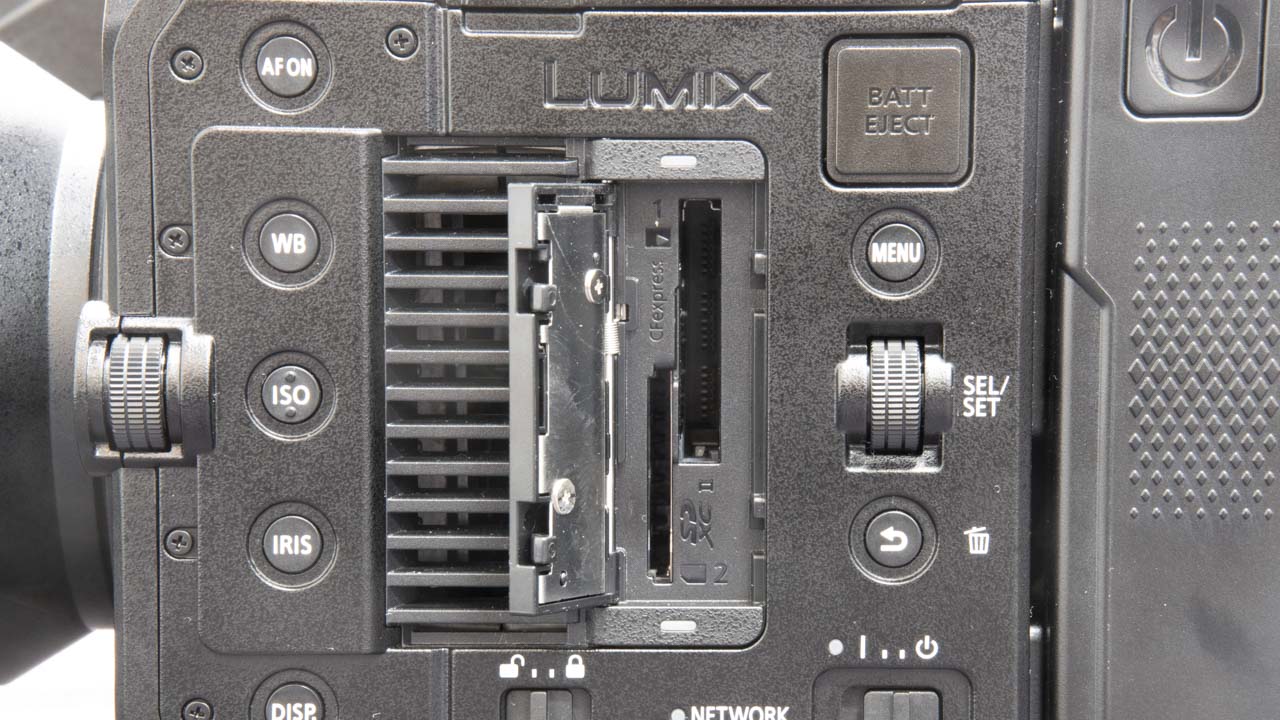
Power Settings
For power, it features a USB Type-C DC IN terminal that supports USB Power Delivery (USB PD), allowing the use of a 100W (20V/5A) USB PD power supply. Furthermore, it adopts a design that allows for direct attachment of a micro V-mount battery, enabling a compact power configuration for the camera body and peripheral accessories.
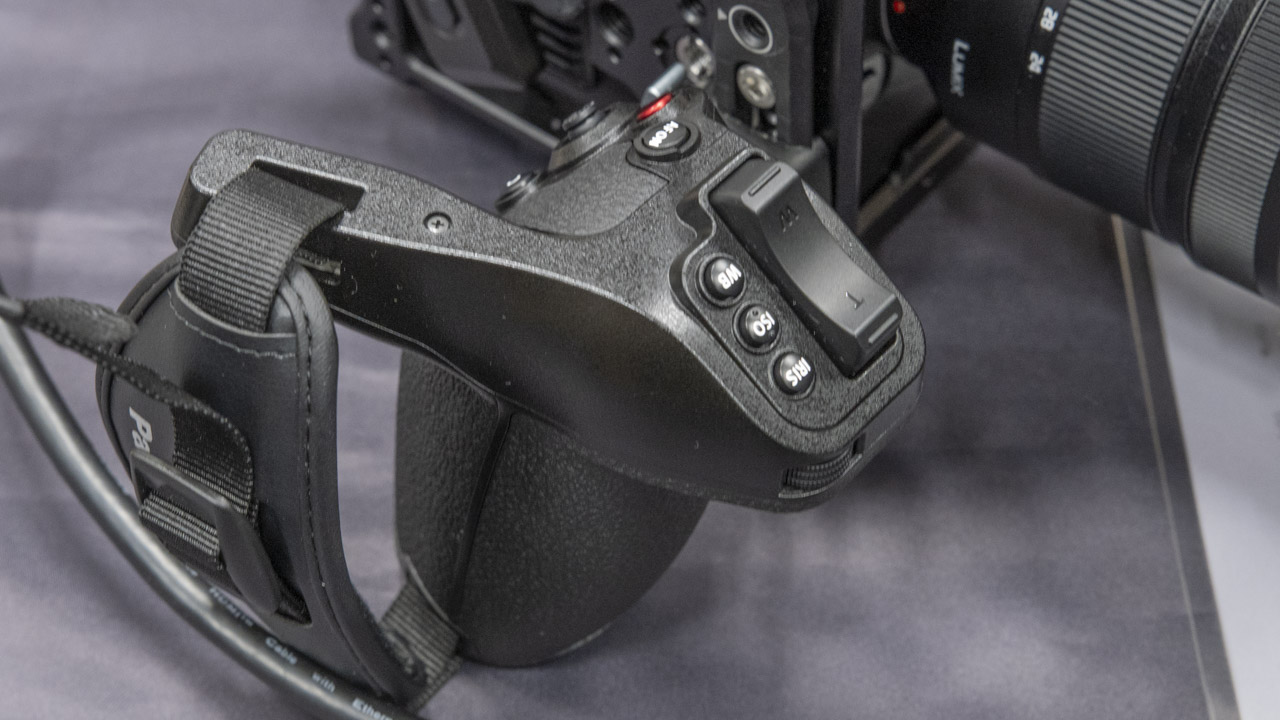
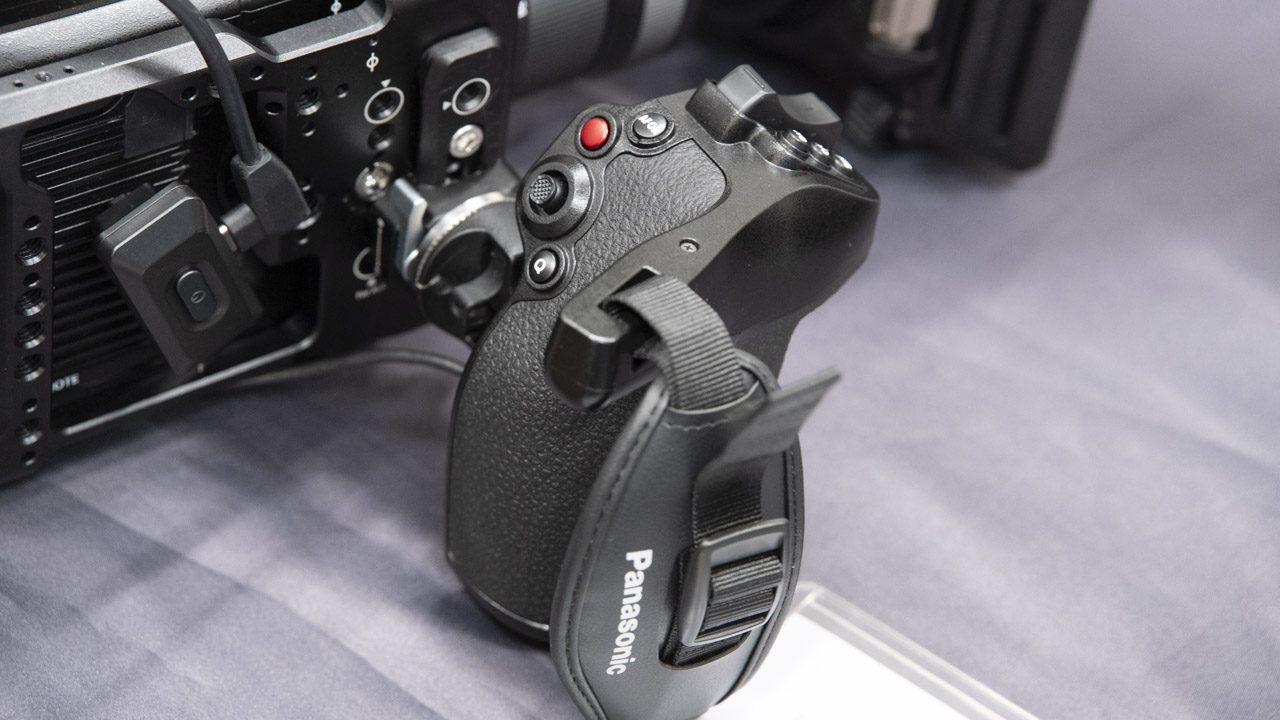
The optional top handle and grip are also designed to allow for configuration changes to suit your shooting style.
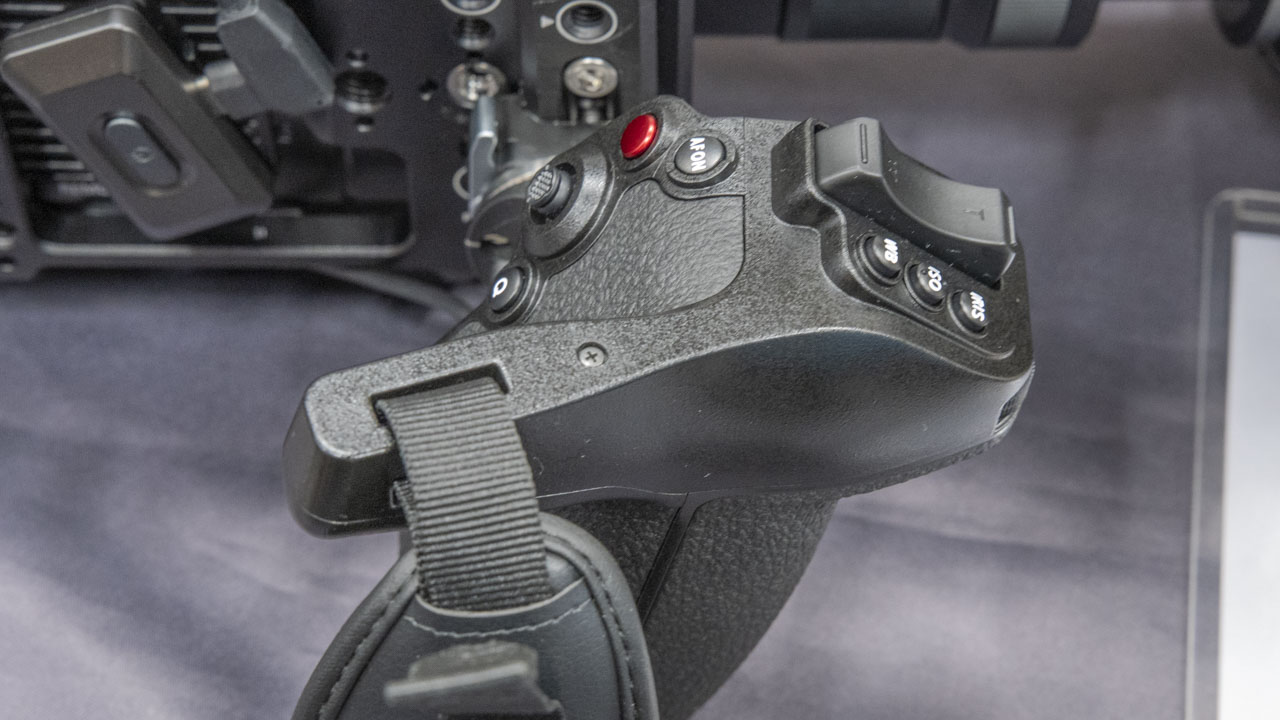
Detachable Top Handle
The top handle and grip can be attached and detached depending on the application, balancing mobility with accessory expandability. It is designed for both compact camera operation and as part of a shooting system combining various peripherals.
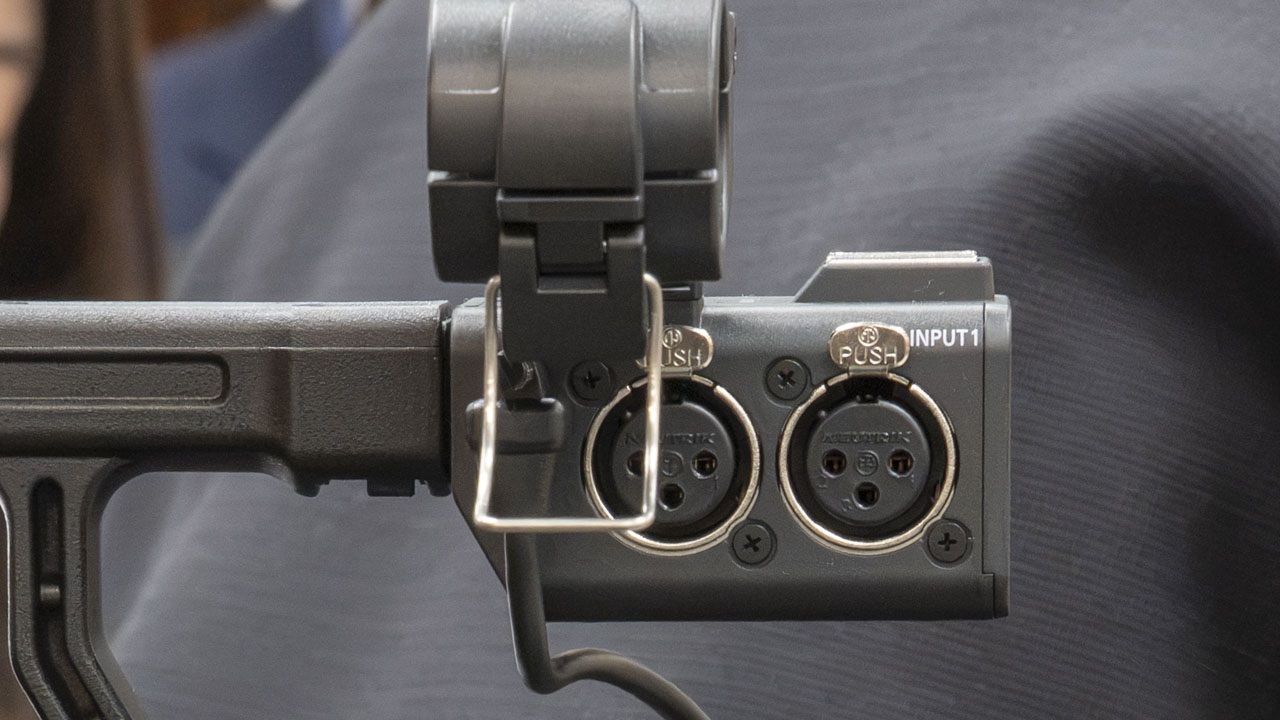
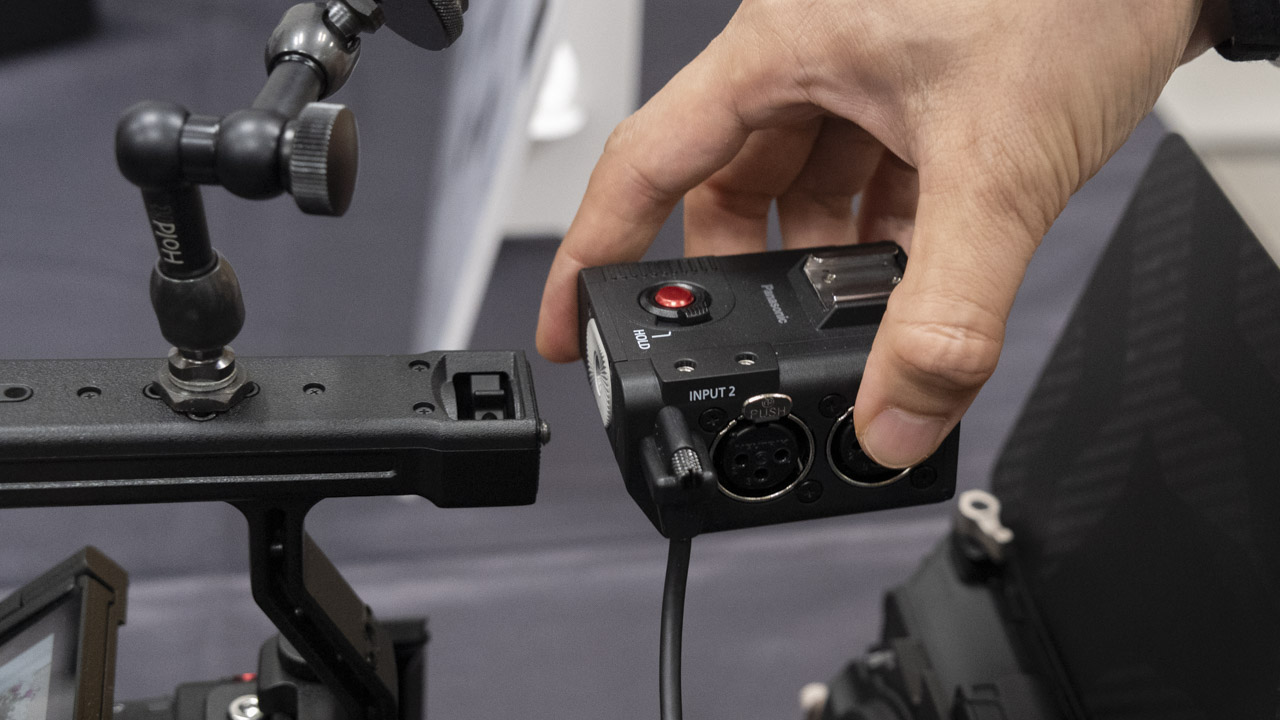
Audio features support 32-bit float recording. This allows for more flexibility in adjusting the volume after recording, making it useful even in shooting environments with significant volume fluctuations. The press conference also showcased a feature that allows for up to four channels of audio recording by combining the input of the detachable XLR handle unit with the 3.5mm microphone input on the main unit.
Monitor, image stabilization, autofocus, accessory control, voice input, power supply. Looking at these elements, it’s clear that the LUMIX SHX1, despite its box-shaped design, also prioritizes standalone camera operation. The ability to change your shooting style by adding necessary equipment is what makes this camera so user-friendly.
From cinema shooting to live production: Expanding the range of applications with a single LUMIX SHX1.
Another important aspect to understand about the SHX1 is its suitability for live production. While it can utilize RAW recording, ARRI LogC3, and anamorphic shooting in film and advertising production settings, in live production it can be integrated into systems combining multiple cameras using 12G-SDI output and timecode input/output.
At the press conference, a system configuration using the upcoming live production unit “AU-LPU1” was also introduced. The AU-LPU1 is intended to integrate with Panasonic’s live production systems, including the remote camera controller “AW-RP200GJ,” remote cameras “AW-UE200” and “AW-UER200,” the “Media Production Suite” software, the “KAIROS” IT/IP platform, and the “AK-HRP1010” remote operation panel.
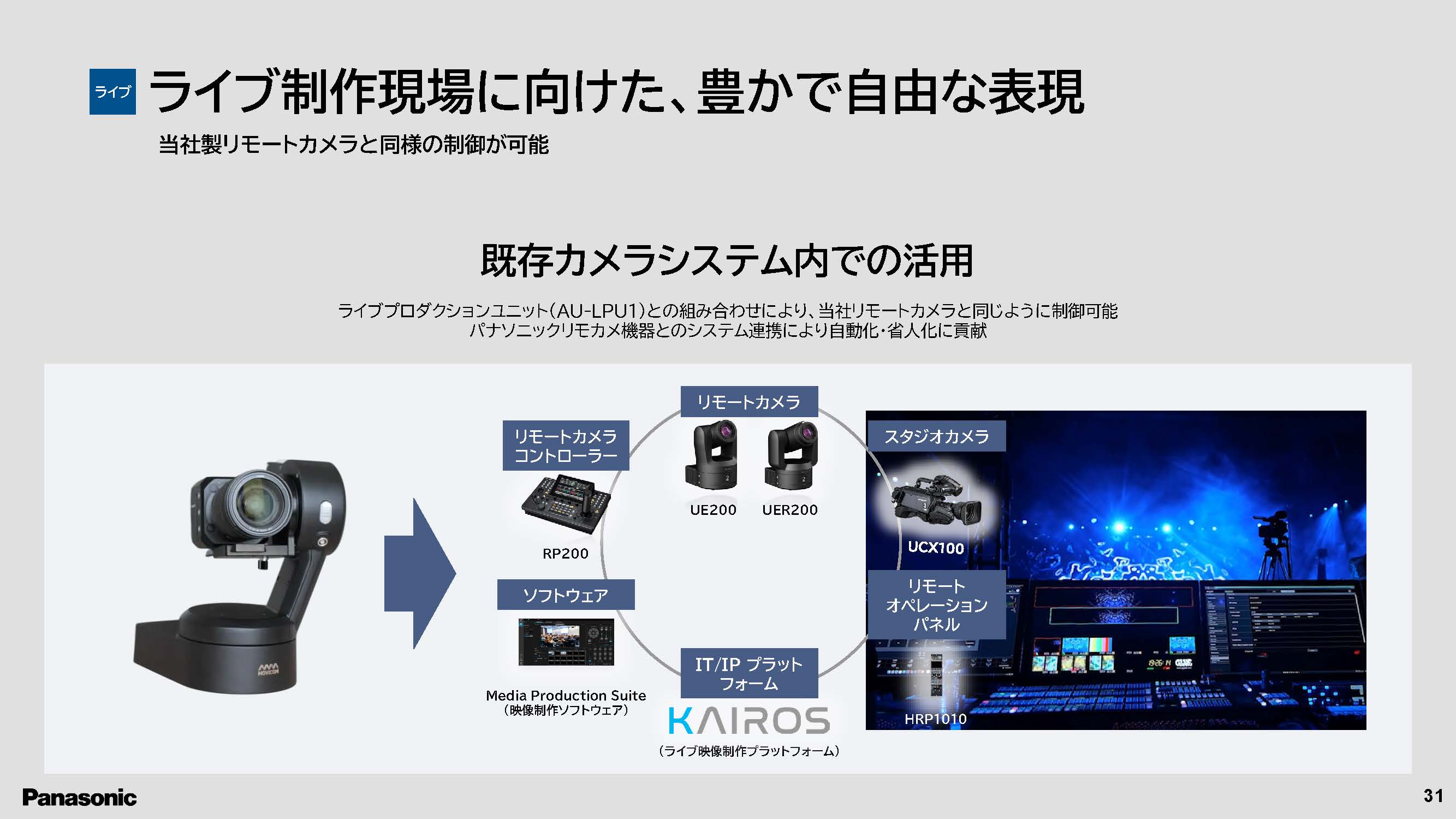
This allows for a configuration that combines the unique visual expression of cinema cameras with multi-angle shooting using remote cameras, all within the same production environment. Centralized management of multiple cameras makes it easier to handle event recording with a small team and productions incorporating remote control. Note that the AW-UE200 and AW-UER200 are pre-release products at the time of announcement, and it is necessary to check the official announcement for specific compatibility conditions and support dates.
Designed for Live Production
One feature designed with live production in mind is the reduced latency of video output. In particular, with HDMI output, the newly developed image processing engine enables high-speed processing, minimizing the time difference between camera movement and the output video.
Furthermore, it supports streaming via Wi-Fi connection to smartphones and USB tethering. This makes it useful for online broadcasting and event coverage from locations where it is difficult to set up a large-scale distribution system. Note that USB PD power supply to smartphones is planned to be supported in a firmware update in the first half of 2027, and will only be available when using LUMIX Flow.
Dedicated Lens Coming Soon
At the press conference, it was also revealed that a power zoom lens suitable for the LUMIX SHX1 is currently under development. This initiative aims to broaden the range of applications to live production, where zoom operation is crucial, while maintaining the flexibility of interchangeable lenses that are unique to the L-mount.
In reality, the LUMIX SHX1 is not just a camera with a high-performance sensor housed in a box-shaped body. In particular, the movable monitor located on the top and the system that allows you to control Tilta accessories from the camera body show ingenuity in reducing the number of operations required during shooting and compactly integrating necessary equipment.
Furthermore, the camera offers a choice between ProRes RAW and Blackmagic RAW recording formats, color matching via ARRI LogC3, and simultaneous proxy recording, demonstrating meticulous attention to the workflow from shooting to post-production. Adding integration with live production equipment further expands its potential applications.
From handheld shooting to full-fledged cinema production, and even live production using multiple cameras, the LUMIX SHX1 aims to allow users to continue using the same camera while changing its configuration according to the shooting environment. It’s a new box-type camera that should be watched closely as it bridges the gap between cinema shooting and live production.