Inter BEE 2026 | Exhibition Report | LAOWA
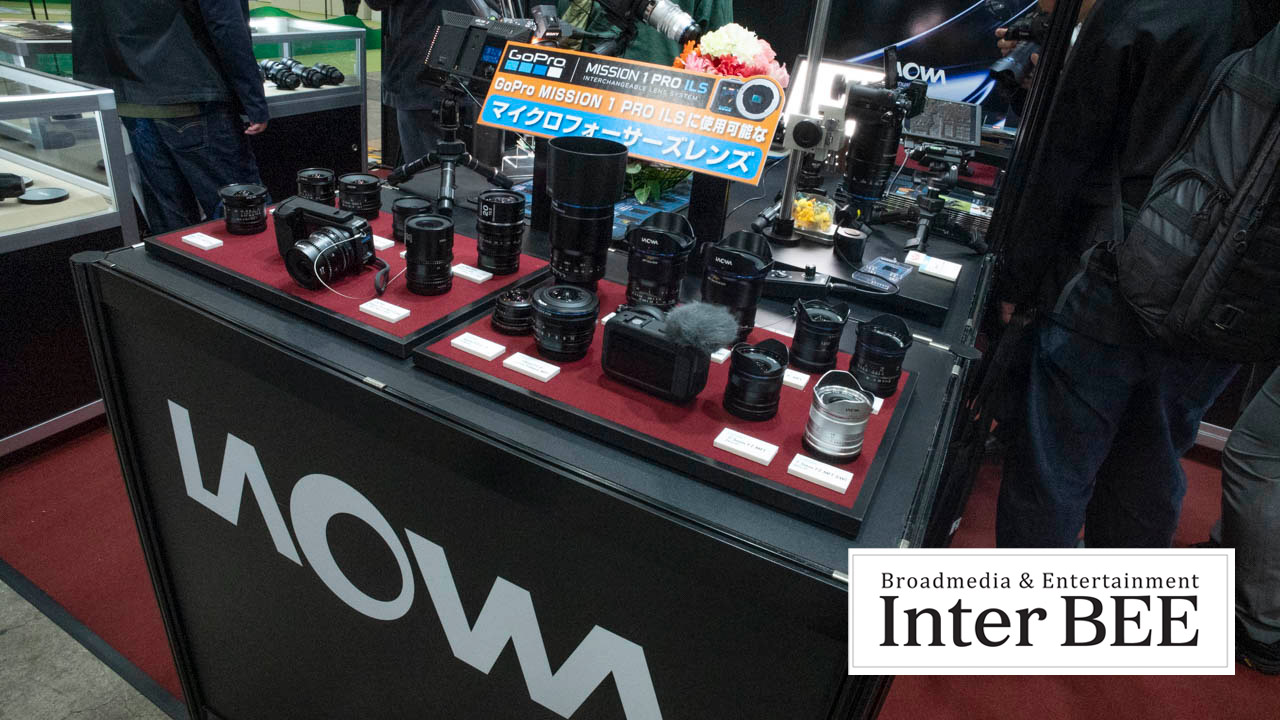
At Inter BEE 2026, the Sightron Japan booth showcased the LAOWA brand’s “Ultima” series of high-magnification zoom lenses for cinema and broadcast use, the “Aksen” series of ultra-high-magnification macro lenses, and a range of Micro Four Thirds (MFT) lenses compatible with GoPro’s interchangeable-lens cinema camera, the “MISSION 1 PRO ILS.”
What particularly caught our eye was the display combining a GoPro with LAOWA’s existing MFT lenses. While the lenses themselves have been on the market for some time, combining them with the new camera reveals a different kind of appeal. The lens’s characteristics, such as focal length, size, and operating mechanism, come to life within this new shooting system.
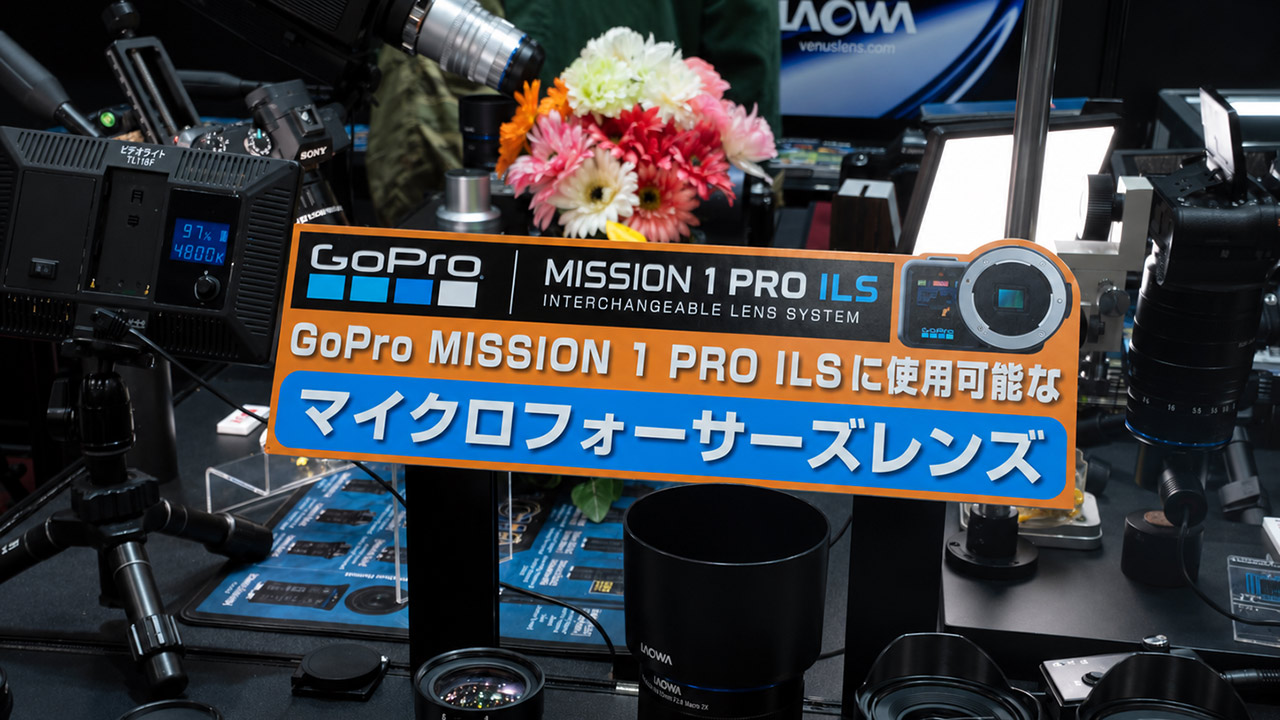
LAOWA at Inter BEE 2026 Main Highlight – Mission 1 Pro Lenses
How the GoPro MISSION 1 PRO ILS changes the way you choose LAOWA lenses
The GoPro MISSION 1 PRO ILS is a compact cinema camera equipped with a 1-inch sensor and a Micro Four Thirds mount. It’s interesting enough as GoPro’s first model with interchangeable lenses, but its features become even more apparent when combined with LAOWA’s lens lineup.
The key point is that while the mount is MFT, the image sensor is a 1-inch sensor, not Micro Four Thirds. Because the sensor is smaller than that of a typical MFT camera, the field of view will be narrower and the angle of view will be more telephoto, even when using the same lens.
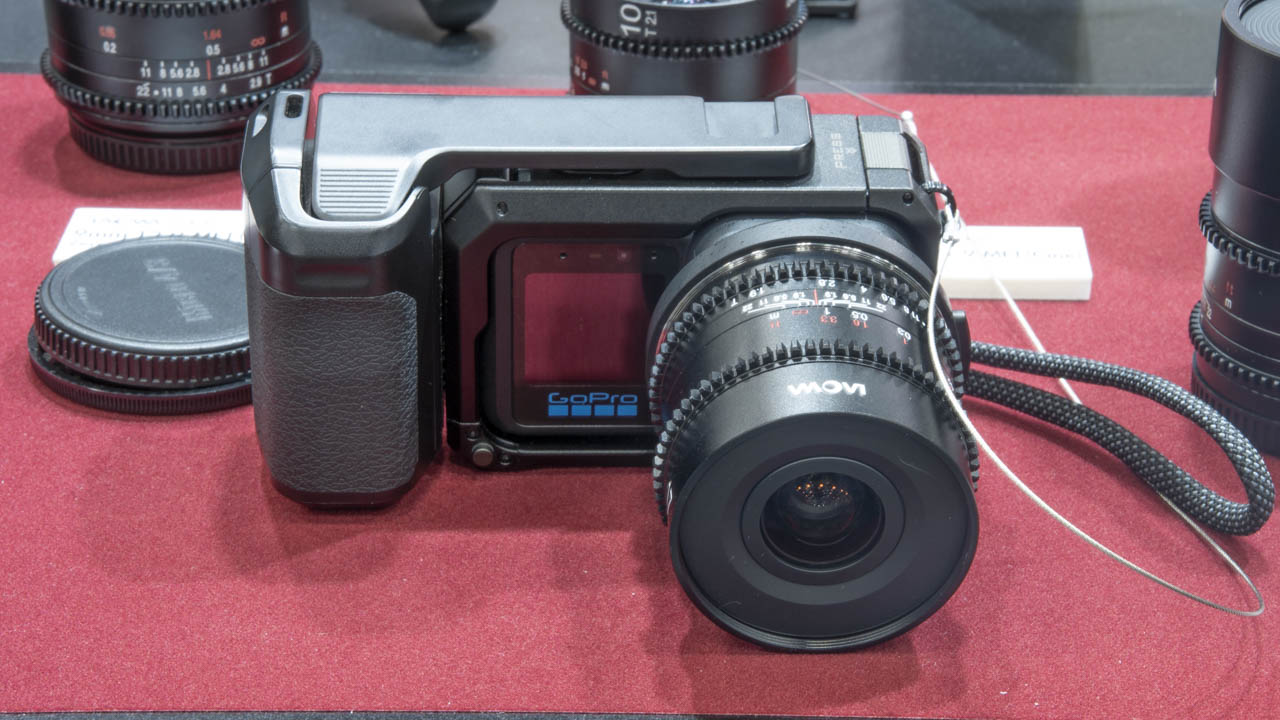
The crop factor in 35mm full-frame equivalent terms is approximately 2.7x with electronic image stabilization “HyperSmooth” turned off, and approximately 3x with it turned on. For example, even a 10mm lens will have a field of view equivalent to approximately 27-30mm, so if you want to shoot a wide area, lenses with shorter focal lengths such as 6mm or 7.5mm become important.
MFT lenses with mechanical focus/aperture rings
Another characteristic is the lack of electronic contacts on the camera’s mount. Because it doesn’t support autofocus or aperture control via electronic communication, even MFT mount lenses that rely on electronic control cannot be used. The ability to mechanically control focus and aperture becomes the key factor in lens selection.
This is where LAOWA lenses come into play. The brand offers a wide range of MFT lenses equipped with mechanical focus and aperture rings. From compact wide-angle lenses for photography to cinema lenses with focus gears, you can choose according to your needs.
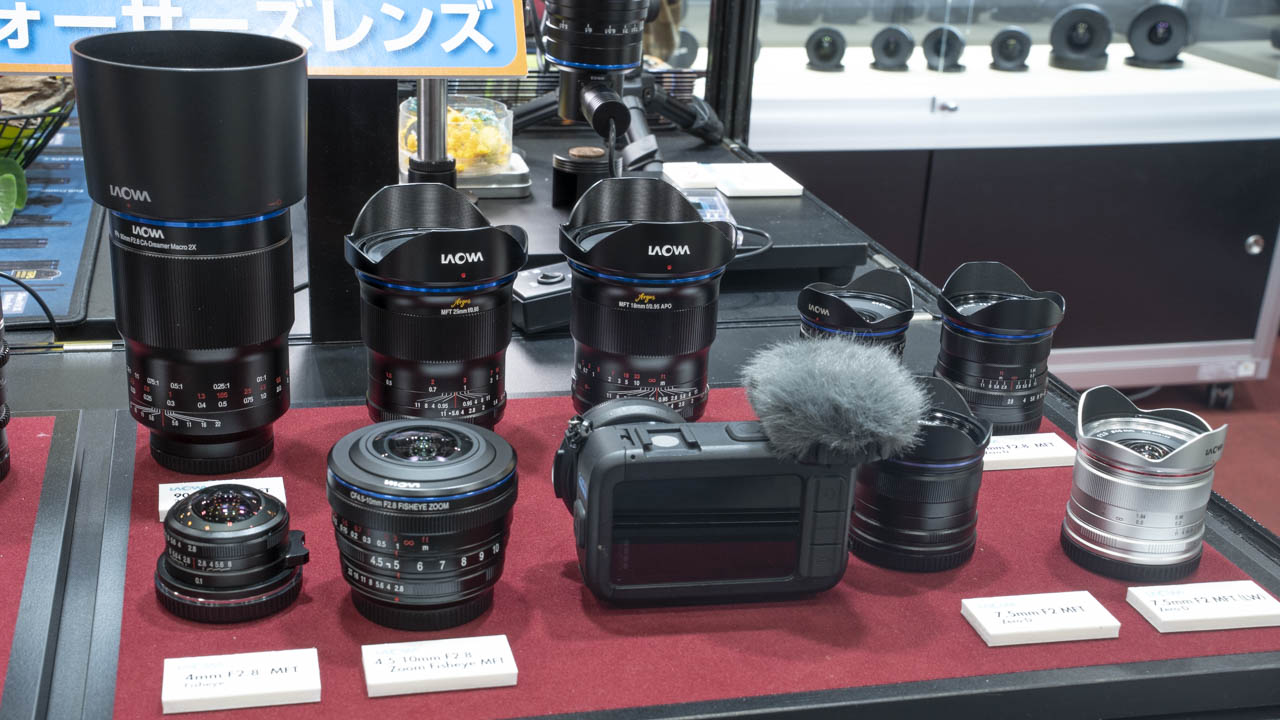
At the booth, they were showcasing these existing MFT lenses in combination with GoPro cameras. According to the LAOWA rep at Inter BEE 2026, orders for compact MFT cinema lenses have increased since the release of the MISSION 1 PRO ILS. It’s interesting that the emergence of a new camera is leading to increased demand for existing lenses.
6mm and 7.5mm lenses – wide-angle photography with the small GoPro.
Among the lenses on display, the one that particularly caught our attention was the 7.5mm ultra-wide-angle lens.
LAOWA offers two lenses: the “LAOWA 7.5mm F2 MFT” for photography and the “LAOWA 7.5mm T2.1 MFT Cine” for cinema. Both are extremely compact, making them an attractive combination with the small body of the MISSION 1 PRO ILS.
When a 7.5mm lens is attached to the MISSION 1 PRO ILS, a field of view equivalent to approximately 20-23mm in 35mm full-frame terms is obtained. Although the field of view is narrower than that of a typical MFT camera (approximately 15mm equivalent), it still offers the advantage of capturing a wide area with a compact camera.
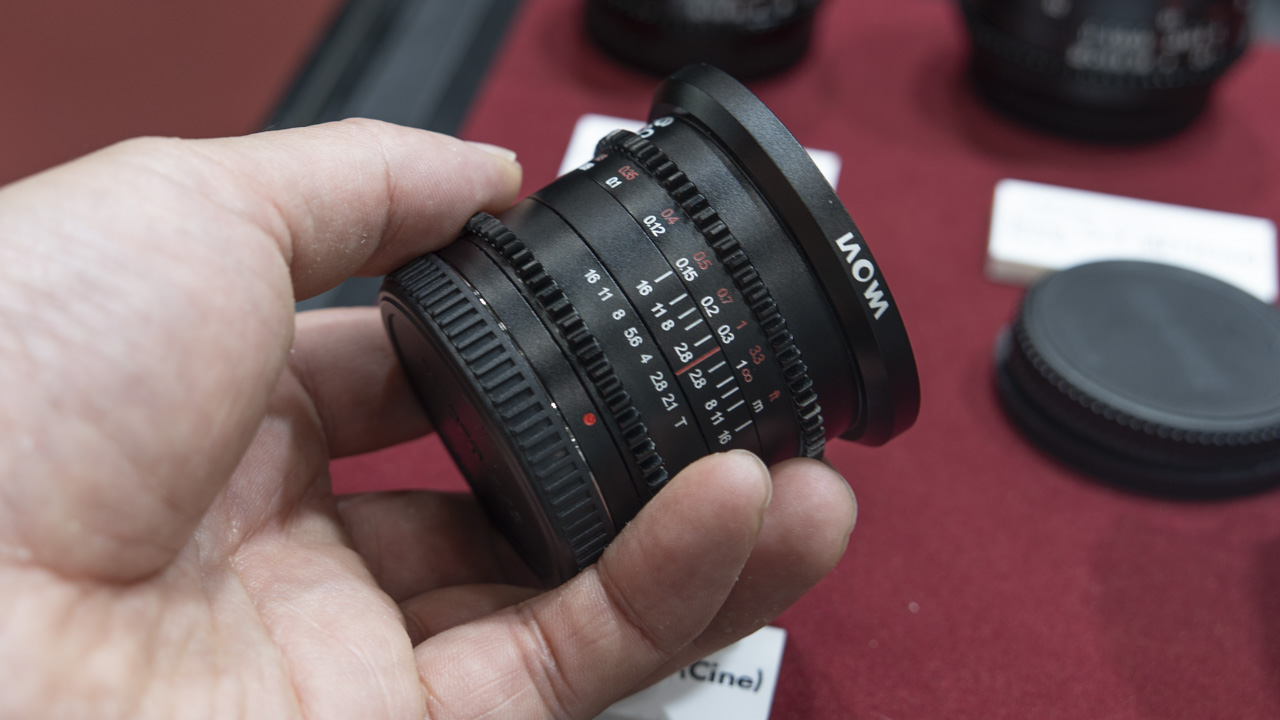 The LAOWA 7.5mm T2.1 MFT Cine is a compact, ultra-wide-angle cinema lens with gears on both the focus and aperture rings. Weighing approximately 170g, it offers the manual control required for video shooting.
Particulars of the 7.5mm T2.1 Lens
The 7.5mm T2.1 MFT Cine features 0.8 MOD gears on both the focus and aperture rings. It is easy to combine with photographic equipment such as follow focus systems, and the aperture ring operates smoothly without clicks.
The lens is strikingly compact, despite possessing the control mechanisms characteristic of a cinema lens. Even when combined with the compact body of a GoPro, the lens doesn’t overly assertive. It’s a combination that allows you to incorporate the operability of a cinema lens into a small shooting system.
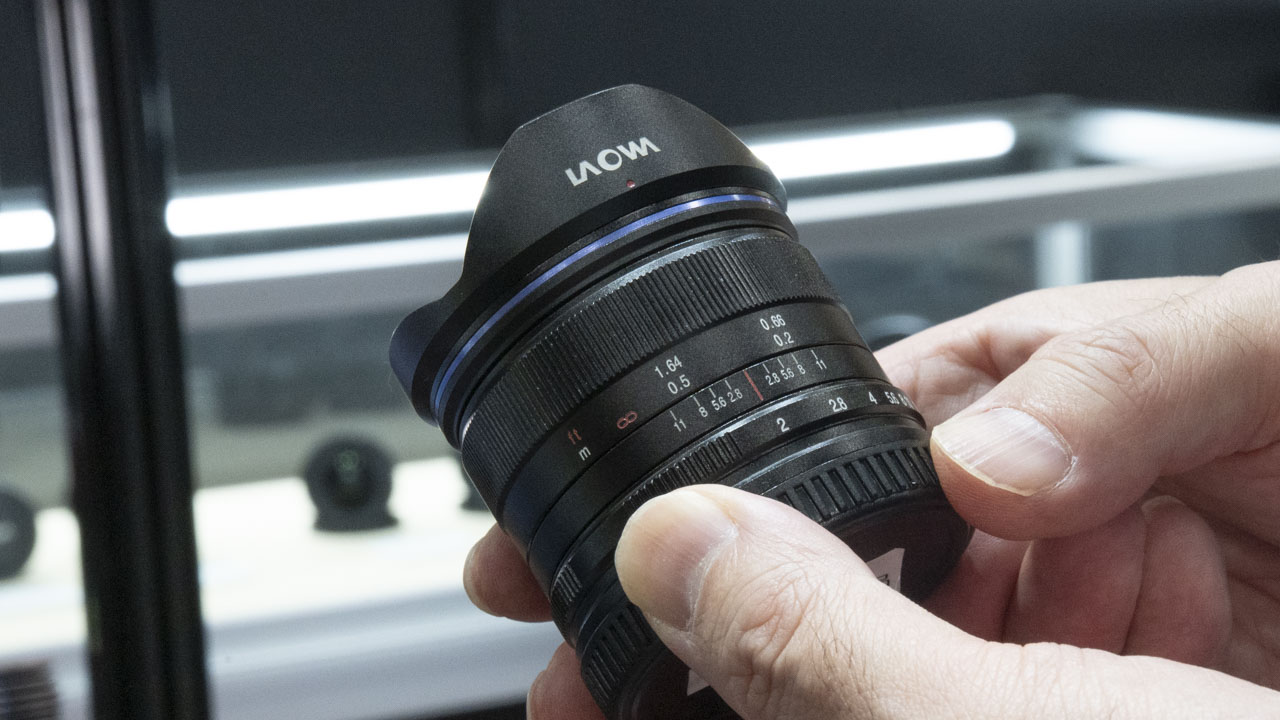
On the other hand, the 7.5mm F2 MFT for photography has a simpler structure than the cinema version. Because it lacks a focus gear, it’s easier to handle as a regular manual lens and is suitable for shooting systems that prioritize compactness.
Handling Usage is a bit different, however.
Even though they’re both 7.5mm lenses, the handling and usage differ between the photographic and cinema versions. There’s also an automatic aperture version of the 7.5mm F2 MFT, the “7.5mm F2 MFT (Auto Aperture),” which features electronic contacts to control the aperture from the camera. However, this model lacks an aperture ring, so when pairing it with the MISSION 1 PRO ILS, you’ll need to choose the standard version with a mechanical aperture ring.
If you’re looking for an even wider angle, the “LAOWA 6mm T2.1 Zero-D MFT Cine” is another option. It employs a Zero-D design that suppresses distortion, making it an ultra-wide-angle lens that easily renders straight lines naturally.
The MISSION 1 PRO ILS offers a field of view equivalent to approximately 16-18mm, making it ideal for shooting indoors, buildings, and large spaces. The combination of a compact camera and a low-distortion ultra-wide-angle lens allows for a different style of shooting and imagery compared to traditional GoPros, which is a fascinating feature.
Fisheye MFT lenses
If you’re looking for a different kind of expression than the linear wide-angle rendering, a fisheye lens is another option. The “LAOWA 4.5-10mm F2.8 CF Zoom Fisheye” on display is a fisheye zoom lens with a focal length that can be changed within the range of 4.5 to 10mm.
With an APS-C camera, the 4.5mm setting produces a circular fisheye effect, while the 10mm setting produces a diagonal fisheye effect, allowing you to switch between the two styles by zooming. While the MISSION 1 PRO ILS has a narrower field of view due to its 1-inch sensor, you can still enjoy the unique fisheye lens look by changing the focal length. Note that according to GoPro’s official information, HyperSmooth is compatible with prime lenses (excluding fisheyes) with focal lengths between 6 and 500mm, and some fisheye lenses for which a dedicated lens profile is available. This lens is not currently included in that list. Caution is advised if you wish to use image stabilization in conjunction with HyperSmooth.
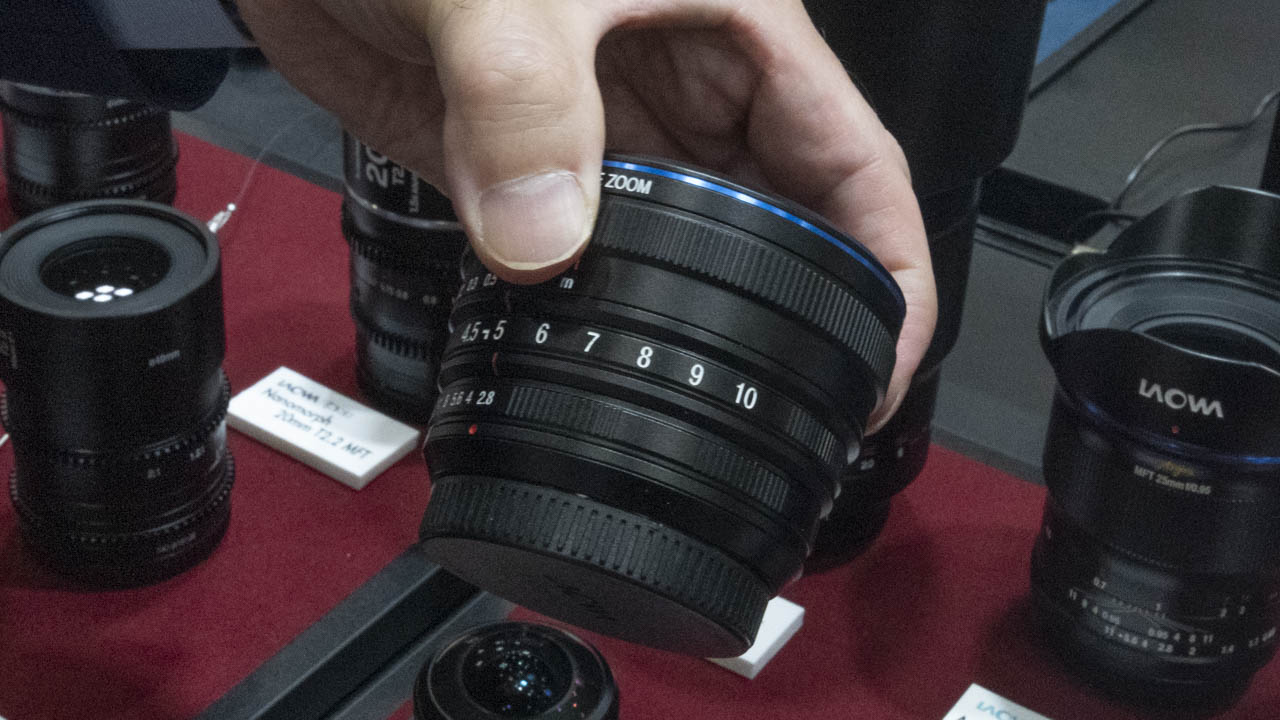
Additionally, the fixed-focal-length “LAOWA 4mm F2.8 Fisheye MFT” is another fisheye lens that can be used with the MFT mount. This lens is also listed as one of the fisheye lenses for which GoPro has prepared a lens profile for HyperSmooth.
Good balance is key!
What impressed us most when I saw the actual camera was the balance between the camera and lens sizes. The previously available compact MFT lenses, when combined with the MISSION 1 PRO ILS, presented a new presence as a compact shooting system.
It offers a range of options for the photographer to refine their footage, including mechanical focus and aperture adjustments, as well as operation using the gears of cinema lenses. This combination adds the enjoyment of changing the visual expression by choosing lenses, something that was not available in previous GoPro models.
LAOWA at Inter BEE 2026 Focus Point 2 – High Magnification Lenses
At the Sightron Japan booth, LAOWA’s professional lenses for video production were also on display.
The “Ultima” series, designed for cinema and broadcast applications, includes three models: the “LAOWA Ultima S35 12-120mm T4 Zoom” and “LAOWA Ultima S35 25-600mm T4.2 Zoom” (both Super 35 compatible), and the “LAOWA Ultima FF 25-180mm T3.8 Zoom” (full-frame compatible). The large lenses in this series were also on display in the Inter BEE CINEMA area.
The zoom ratios are 10x for the 12-120mm lens, approximately 7.2x for the 25-180mm lens, and 24x for the 25-600mm lens. The 25-600mm lens, in particular, covers a wide range from wide-angle to super-telephoto in a single lens, and is intended for shooting sports and live events. This shows that LAOWA is seriously expanding into high-magnification zoom lenses for broadcast and cinema use.
AKSEN Line
Another point of interest is the “Aksen” series of ultra-high magnification macro lenses. Two models were on display: the “LAOWA Aksen 45mm F2.8 1-5x Ultra Macro APO,” which supports a magnification of 1 to 5x, and the “LAOWA Aksen 17.5mm F1.7 5-10x Ultra Macro APO (with coaxial incident illumination),” which supports a magnification of 5 to 10x.
The Aksen series is characterized by its design that maintains a constant focus position and working distance even when changing magnification. Because you can change the magnification without changing the distance between the subject and the lens, it is suitable for shooting fine details and for shooting with lighting setups.
The coaxial incident illumination specification of the 5-10x magnification models, when combined with a dedicated coaxial light source, allows the subject to be illuminated along the optical axis. This is a special shooting system for recording details that are difficult to capture with normal macro photography.
What became clear from this exhibition was the wide range of applications for LAOWA lenses. From high-magnification zooms for cinema and broadcasting to ultra-high-magnification macros that capture the finest details, and even compact MFT lenses for use with GoPros, there was a variety of approaches to suit different shooting purposes.
What was particularly impressive was how existing MFT lenses are receiving renewed attention with the arrival of new cameras. New shooting systems can be created not only by adding new lenses, but also by changing how you use your existing lenses. The combination of the GoPro MISSION 1 PRO ILS and LAOWA was an exhibit that showcased the fun of choosing lenses in this way.