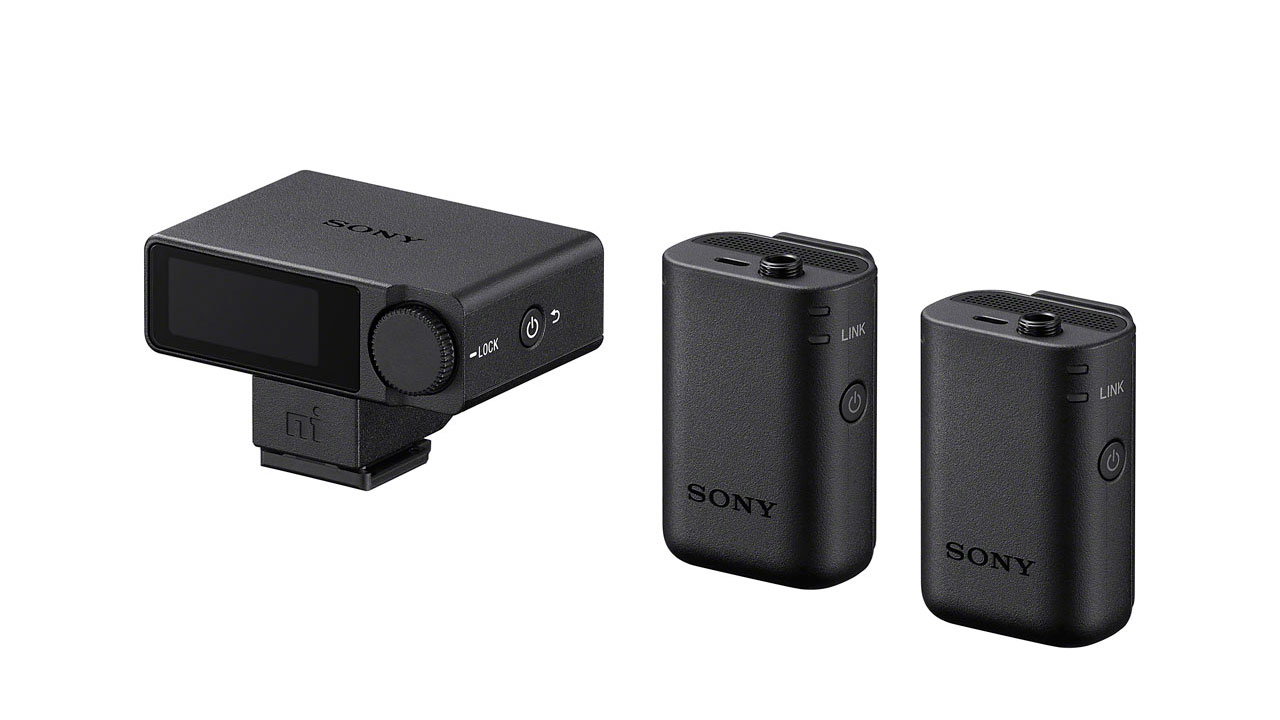
Sony plans to release the ECM-W5 wireless microphone, ECM-W5R wireless receiver, and ECM-W5T wireless transmitter on November 20, 2026. Pre-orders for all three products will begin on October 21st at 10:00 AM.
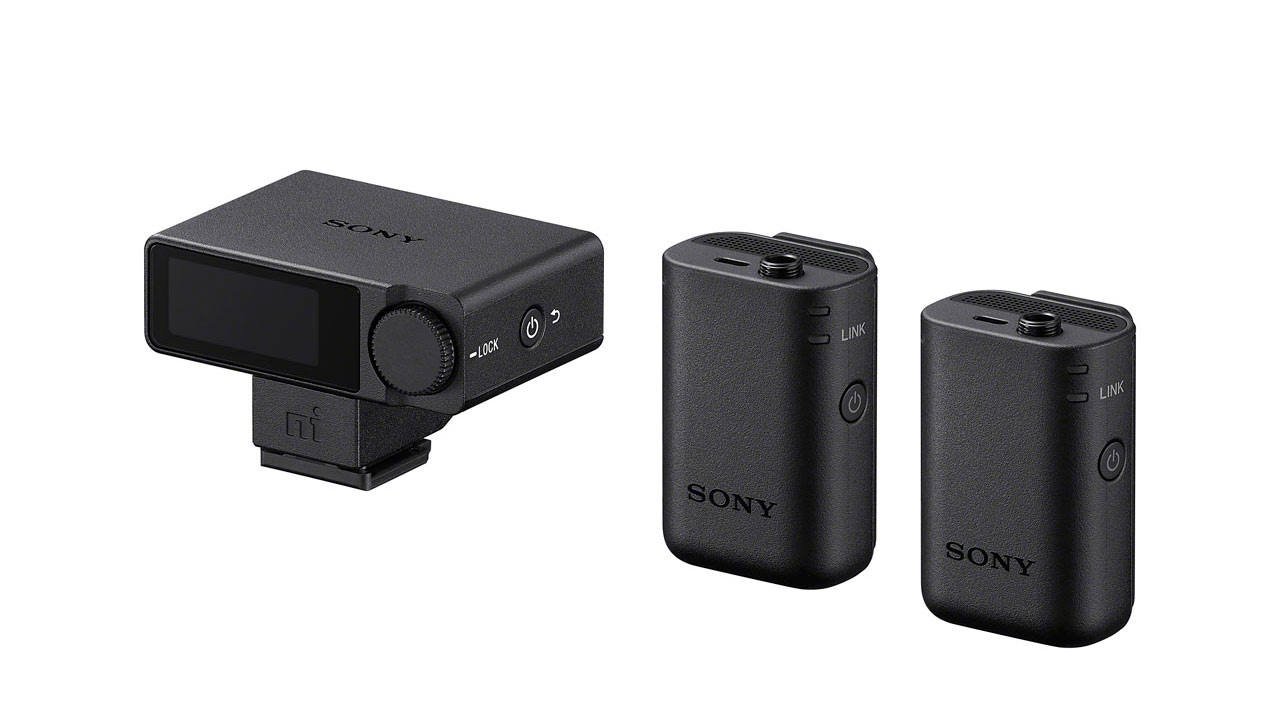
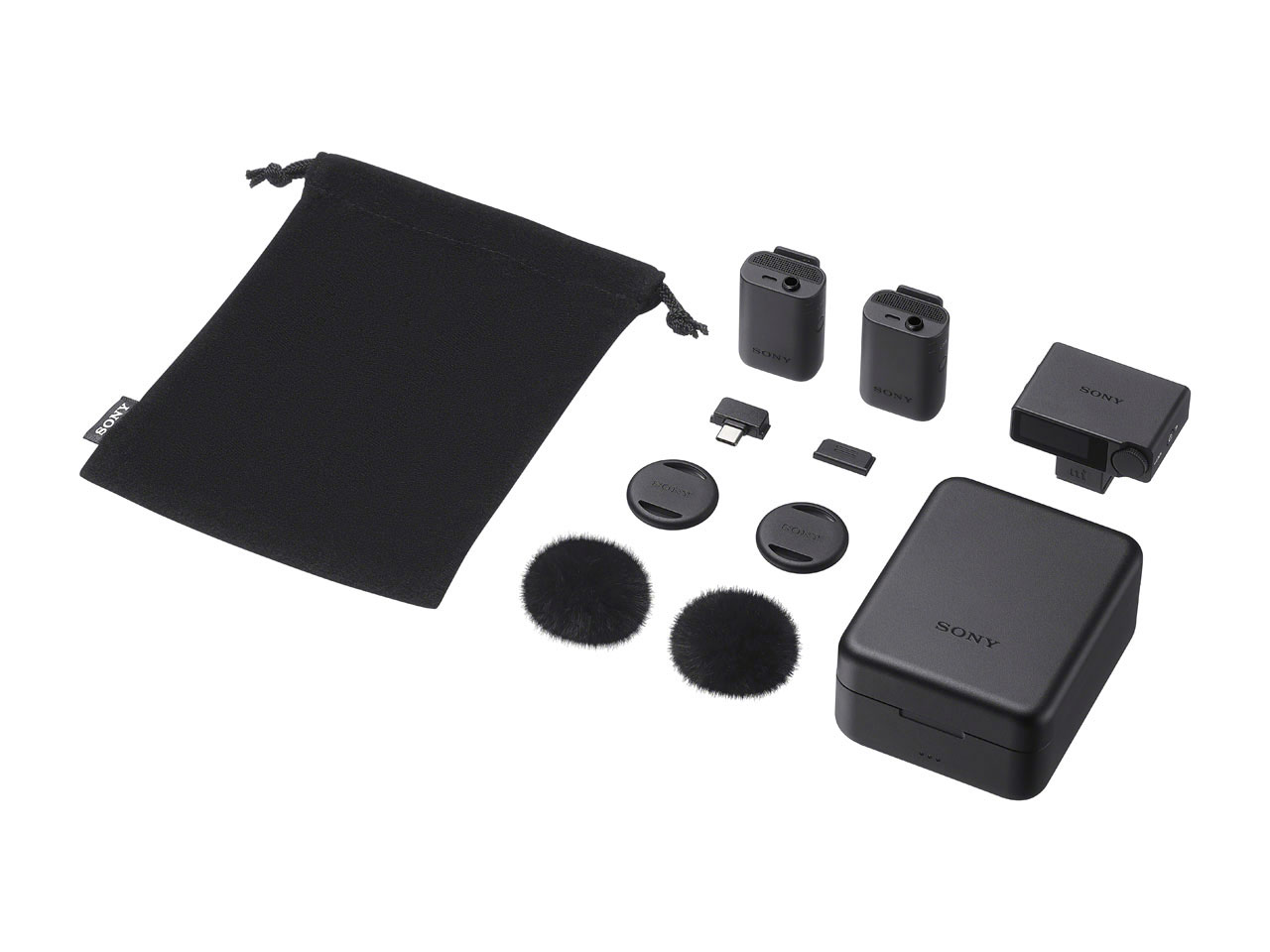
The ECM-W5 is a set model that includes two microphones (transmitters), one receiver, and a charging case. The ECM-W5R and ECM-W5T are standalone models, consisting of a receiver and a transmitter, respectively.


Sony ECM-W5 Main Features
The ECM-W5’s key features include wireless audio recording of up to four channels, as well as the ability to record audio both internally in the transmitter and on the camera. It supports 32-bit float audio recording and 24-bit/96kHz recording, and also features wireless monitoring using Sony headphones and timecode output. Its configuration is designed with audio recording and editing in mind.
| accessories | ECM-W5 | ECM-W5R | ECM-W5T |
|---|---|---|---|
| Microphone (transmitter) | ●(2 pieces) | – | ● |
| receiver | ● | ● | – |
| Charging case | ● | – | – |
| Windscreen | ●(2 pieces) | – | ● |
| magnet | ●(2 pieces) | – | ● |
| USB adapter | ● | ● | – |
| Adapter terminal protective cap | ● | ● | – |
| Multi-interface shoe adapter | ● | ● | – |
| Multi-interface shoe terminal protective cap | – | ● | – |
| pouch | ● | ● | ● |
Audio recorded via three channels. Camera stores up to four WAV files.
With wireless audio recording, audio problems may become apparent after shooting depending on the transmission conditions and settings. The ECM-W5 is designed to allow for multiple recording destinations when combined with compatible cameras.

The recording destinations are the microphone (transmitter)’s internal memory, the audio contained in the video file captured by the camera, and up to three separate WAV files saved within the camera. The separate WAV file saved within the camera will contain up to four individual audio channels in a single file. It is not a system where four channels are split into four separate WAV files.
Each transmitter has 64GB of built-in memory and supports up to approximately 90 hours of recording at 32-bit float/48kHz. Because it can record audio separately from the wireless transmission to the camera, you can use the separate recording data when checking the audio on the camera after recording.
For 32-bit float audio recording, you can choose between “Auto,” which automatically adjusts the recording volume, and “Manual,” which allows you to set the volume within the range of -12 to +12. Noise reduction and low-cut filters can also be switched on or off from the menu. 32-bit float is supported at 48kHz, and 24-bit/96kHz recording is also available. The frequency response is 20Hz to 20kHz for 32-bit float/48kHz and 20Hz to 40kHz for 24-bit/96kHz.
Sony ECM-W5 Set
The standard set includes two transmitters, but up to four can be connected wirelessly by adding the separately sold ECM-W5T. This is intended for applications where multiple speakers are individually recorded and up to four channels of audio are recorded to a compatible camera.
| item | Sony ECM-W5 |
|---|---|
| Bluetooth | correspondence |
| Transmission distance | Maximum 500m |
| Frequency response | 20Hz to 20kHz (32bit float / 48kHz) 20Hz to 40kHz (24bit / 96kHz) |
| 32-bit float audio recording *1 *2 | Supported features (internal recording / MI / UAC) |
| 24-bit / 96kHz audio recording *1 | Supported features (internal recording / MI / UAC) |
| Microphone (transmitter) storage capacity / maximum recording time |
64GB / up to about 90 hours (32bit float / 48kHz) |
| Continuous usage time | Approximately 11 hours (microphone/transmitter) |
| Charging time | Approximately 55 minutes |
| Timecode output (receiver) | Supported (φ3.5 TRS / USB / MI, USB Sync Mode) |
*1 For compatible models, please refer to the Sony official website .
*2 32-bit float audio recording is only available at 48kHz.
Supports standalone recording and external microphones. A wide range of applications for this compact transmitter.
The ECM-W5T is a transmitter measuring 31.0mm wide, 47.0mm high, and 22.3mm deep, weighing approximately 27.1g. It can be attached to clothing using a clip or the included magnet, and is also intended for use as a handheld microphone.
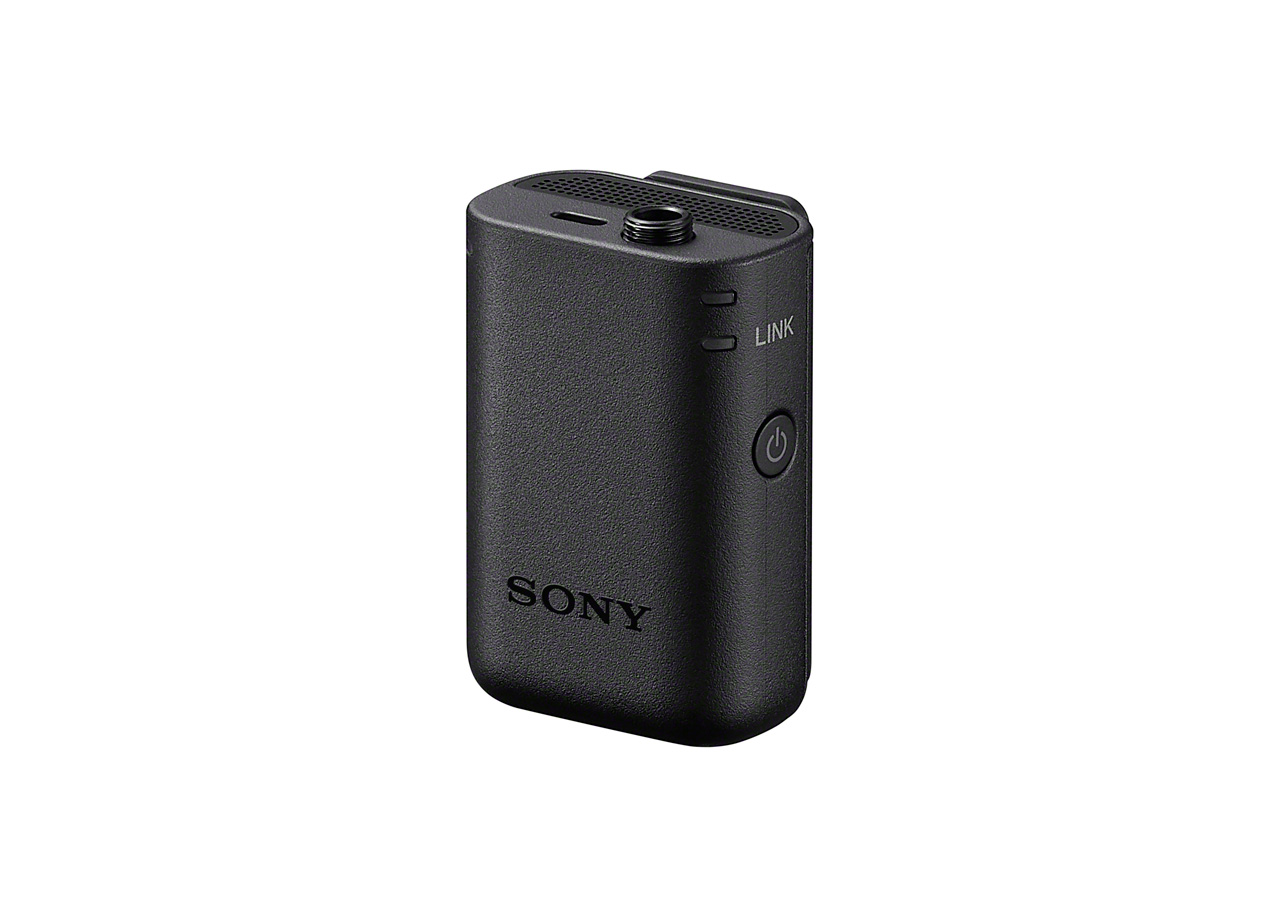
The transmitter can record on its own, so it can be used as a standalone recorder without a receiver. Furthermore, using the receiver and the included USB Type-C adapter, audio can be recorded to USB Audio Class 2.0 compatible smartphones and PCs. A wireless recording method is also available, allowing direct connection of the transmitter to compatible Bluetooth devices.
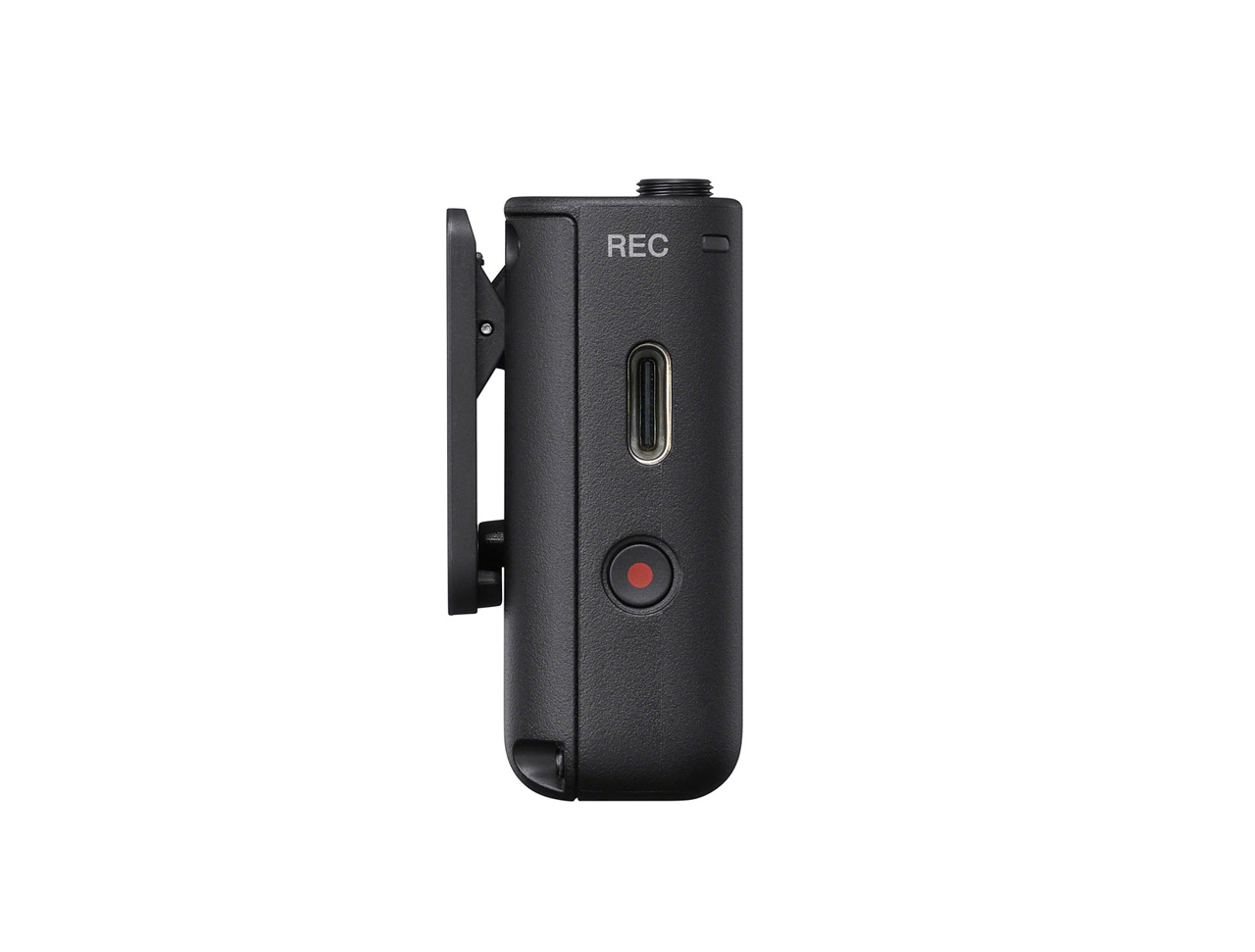
External microphones can also be used. The transmitter and receiver are equipped with a 3.5mm mono external microphone input terminal, allowing connection of the separately sold lavalier microphone “ECM-L1,” etc. It also supports sound pickup methods such as placing the transmitter inside clothing and leaving only the lavalier microphone exposed.
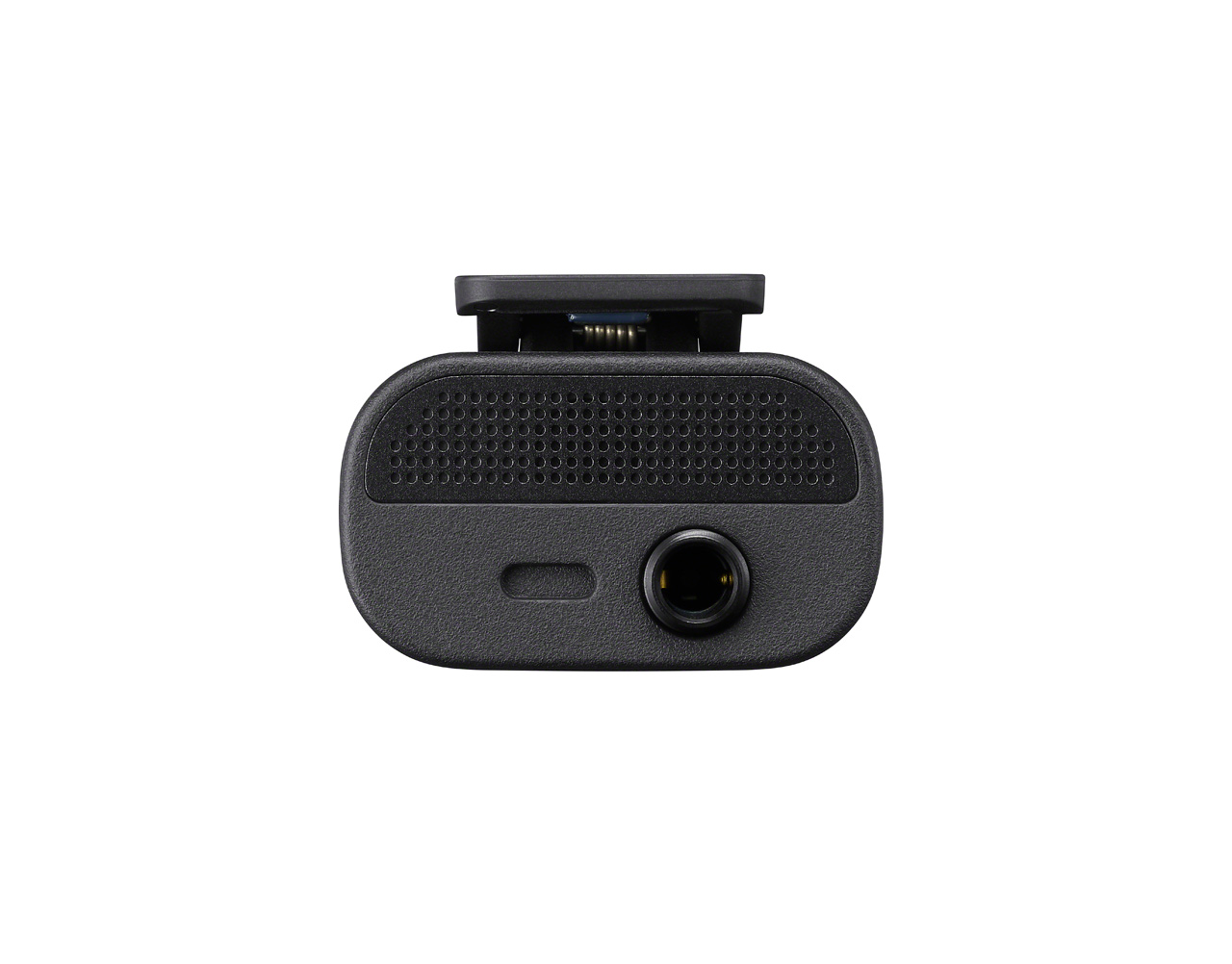

Its key feature is that the format can be changed depending on whether a camera is used and the number of people involved, such as for interviews, podcasts, and video production using smartphones.
Wireless monitoring and sound pickup with compatible headphones
The ECM-W5 also supports integration with Sony headphones that support Bluetooth LE Audio. By connecting headphones to the receiver, recorded audio can be monitored wirelessly even from a distance from the camera. This system allows staff to check the sound without having to stay near the camera with cables.
It is also possible to use the microphone on compatible headphones to record audio to the camera via a receiver. However, the function of using headphones as a microphone and the wireless monitoring function cannot be used simultaneously.
Furthermore, it is planned to support binaural recording when combined with the “WF-1000XM6.” This support will be implemented through a software update for the WF-1000XM6, which is scheduled to take place after the release of the ECM-W5.
Supports multi-camera shooting with transmission up to 500m and timecode output.
Thanks to Sony’s proprietary design, wireless transmission is supported up to 500m in unobstructed environments. This is an increase from the previous model “ECM-W3,” which had a maximum range of 150m. Actual transmission distance may vary depending on obstacles such as metal and human bodies, reflective surfaces, and surrounding radio wave conditions.
Sony further explains that it achieves approximately three times more stable communication in congested radio wave environments compared to the ECM-W3. This is a comparative value based on the company’s internal measurements. It is intended not only for long-distance recording but also for use in environments with many wireless devices, such as event venues.
The receiver features an AMOLED display, a first for the ECM-W series. In addition to touch screen operation, menus and settings can be accessed via a dial.

Sony ECM-W5 Usage Time
Compatible Sony cameras can input digital audio via the Multi Interface (MI) shoe, and it also provides power to the receiver. The receiver has a continuous usage time of approximately 7 hours, and the transmitter has a continuous usage time of approximately 11 hours. The included charging case is designed so that the receiver activates and enters standby mode when opened.
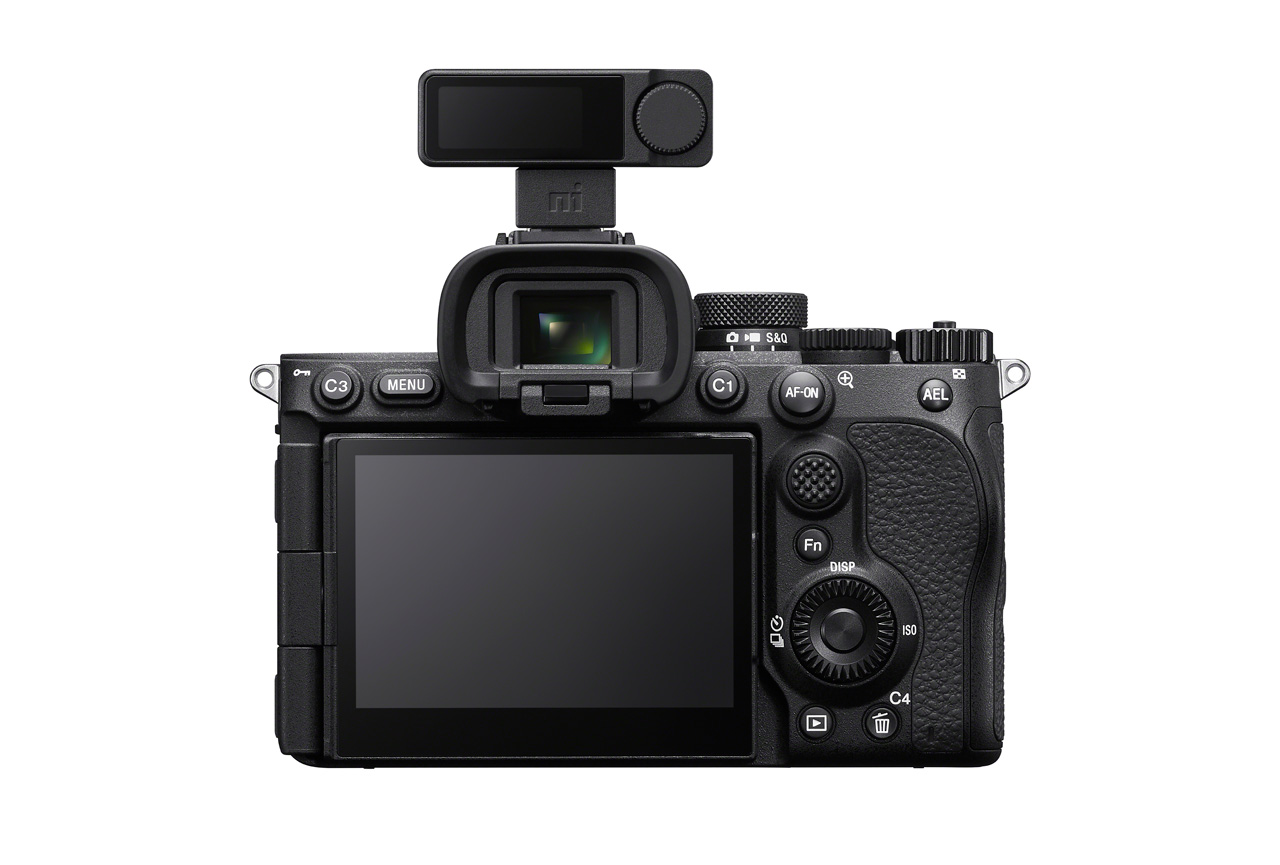
One feature worth noting in relation to the video editing process is the receiver’s timecode output. Because it can output timecode signals to connected compatible cameras, it streamlines the synchronization process for footage recorded with multiple cameras.
The FX5 supports timecode synchronization via USB Type-C cable, and as of its announcement in October 2026, the FX5 is the only camera that supports this USB connection method. For the other models, the FX3, FX3A, FX30, FX2, α1, α1 II, α9 III, and α7S III are shown to use a TRS-BNC cable and the separately sold VMC-BNCM1 for connection.
From data protection through three audio recording channels to recording up to four channels, headphone monitoring, and synchronization during editing using timecode, the ECM-W5 is a product that allows you to build an audio recording system based on the same core, regardless of the number of people shooting or the camera configuration.