PRONEWS AWARD 2025 – Tripods and Monopods

PRONEWS AWARD 2025
With only a few days left until 2025, it’s time for the video industry to take stock of the past year. This past year has not only seen the emergence of numerous new products and services, but it has also left a strong impression on us as we see how these products have permeated actual production sites, changing workflows and the very nature of expression. PRONEWS has been following these changes on the ground through daily coverage and investigation, including at major domestic and international exhibitions such as NAB, Cine GEAR, IBC, and Inter BEE. This is the PRONEWS Award for the best Tripods of 2025!
Monopod, Tripod, and Gimbals of 2025: Changes in Design Philosophy in a Mature Market
Looking at the new monopods, tripods, and gimbals for 2025, we can see that several products are beginning to show changes that cannot be captured simply by following the conventional lines. These include innovations to reduce the number of steps required for setup, designs that assume equipment configurations across multiple uses, and even redesigned interfaces that anticipate one-handed operation, all of which are modifications to processes that have traditionally been accepted as simple actions.
First, let’s take a look at the new “Versine 240” from Vinten, a tripod manufacturer that has set the standard for broadcasting and live broadcasting. Known as the industry standard, the Versine 240 boasts a wide range of load capacity (0kg to 25kg) and is designed with mobility in mind, even in a fluid head market where load capacity is becoming increasingly high. Its configuration is designed with on-site operation in mind. In a world where heavy equipment is becoming increasingly common, this tripod is seen as an easy-to-use option.

*Click on the image to enlarge
Libec
Amidst this trend, Heiwa Seiki Kogyo/Libec has launched a product in the tripod field this year based on its own unique design philosophy.
The “QL40C,” heralded by Libec, is in the mature category of tripods, but by using carbon fiber, it has achieved both lightweight and high load capacity at a high level. Its design, which focuses on speeding up setup and improving operational efficiency, truly embodies the mobility required on modern photography sites.
On the other hand, the company’s “TK-210C” is a model that combines low positioning and high load capacity, despite being a so-called baby tripod. This design, which also assumes use in providing solid support for the main system, can be said to be a symbol of this year’s trend of expanding the role of the undercarriage.

*Click on the image to enlarge

*Click on the image to enlarge
Manfrotto
On the other hand, different approaches to the same problem were presented.
The Manfrotto ONE is a tripod system designed to support both still and video photography. In today’s world where cross-genre photography is becoming the norm, the product was nominated for its hybrid undercarriage design.

Peak Design
Peak Design’s “PRO TRIPOD” series is a model that adds greater rigidity and video compatibility to the context of travel tripods that prioritize portability. The design concept of simultaneously handling compactness and expandability has been included in the configuration of support equipment in recent years.

PRO TRIPOD
The YC Onion “CEDAR CB7” was nominated for its stand-alone head . While positioned in the low price range, it features a counterbalance mechanism and drag adjustment, taking what has traditionally been considered an entry-level head to the next level.
In the monopod category, a common design concept seen in multiple products was to allow operation to be completed with one hand.
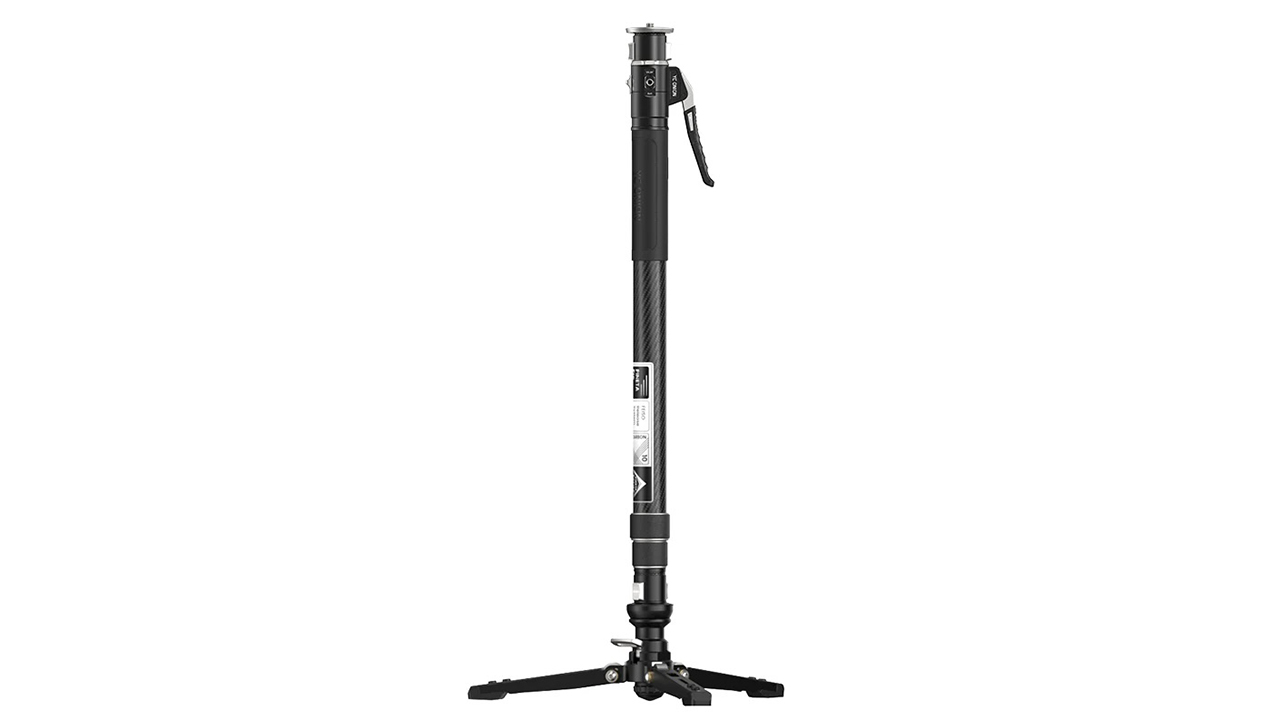
The YC Onion Pineta Pro features a handle-operated telescoping and locking mechanism and a foot pedal-operated base release, and is designed to simplify the operation process. This design is conscious of reducing the operational burden during run-and-gun shooting, and overlaps with a trend seen in multiple products in recent years.

SmallRig’s Carbon Fiber Monopod Tripod unlocks and extends the legs with a push of a lever. Press down again to collapse. We nominated it as an example of the trend toward simplifying operation in the monopod category.
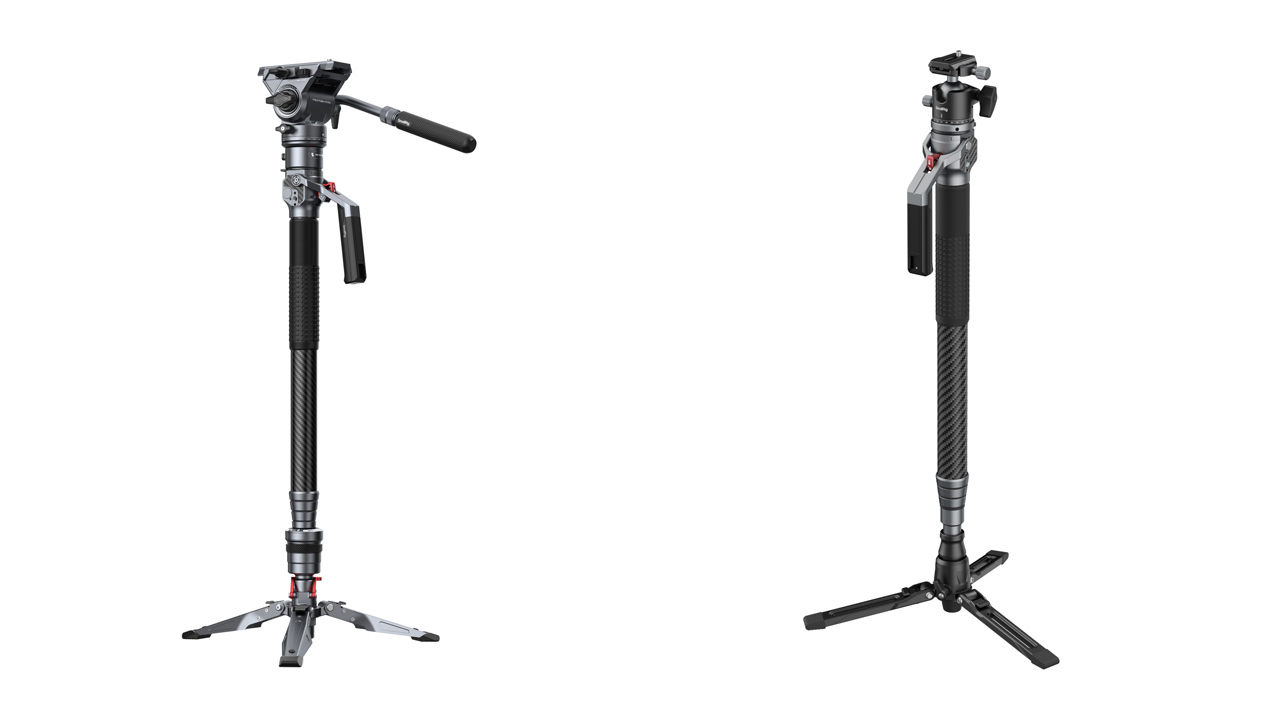
SmallRig “Carbon Fiber Monopod Tripod”
DJI
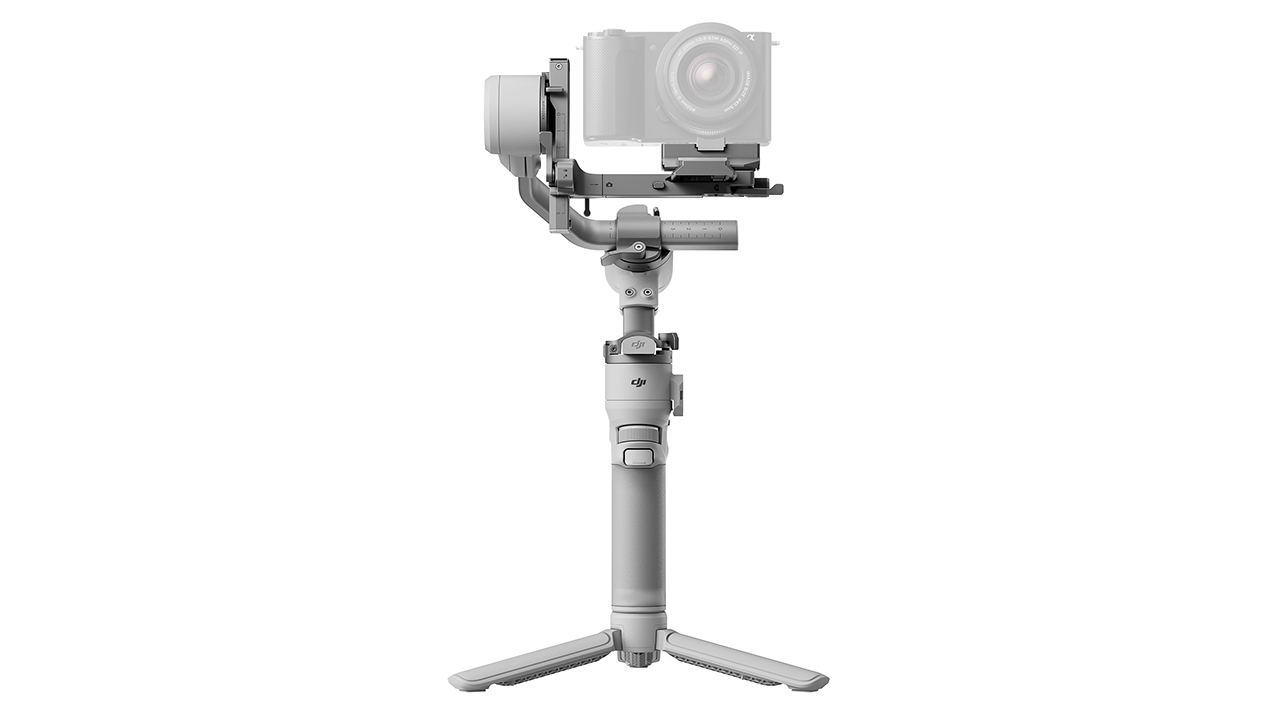
In the gimbal category, the DJI RS 4 Mini was nominated. This model shows the direction of reorganizing and rearranging the mechanisms of higher-end mirrorless gimbals.
PRONEWS AWARD 2025 Best Tripods and Similar Accessories Category Finalist
- Vinten “Versine 240”
- Heiwa Seiki Kogyo / Libec “QL40C”
- Heiwa Seiki Kogyo / Libec “TK-210C”
- Widendam Manfrotto “ONE”
- Peak Design “PRO TRIPOD”
- YC Onion “CEDAR CB7”
- YC Onion “Pineta Pro”
- SmallRig Carbon Fiber Monopod/Tripod
- DJI RS 4 Mini
All of the products listed here are lined up for comparison in order to understand the design trends seen this year. The evaluation has now come to a halt.
The comparison is over, and all that remains is the results.
PRONEWS AWARD 2025 Best Tripods and Support Equipment Category Gold Award
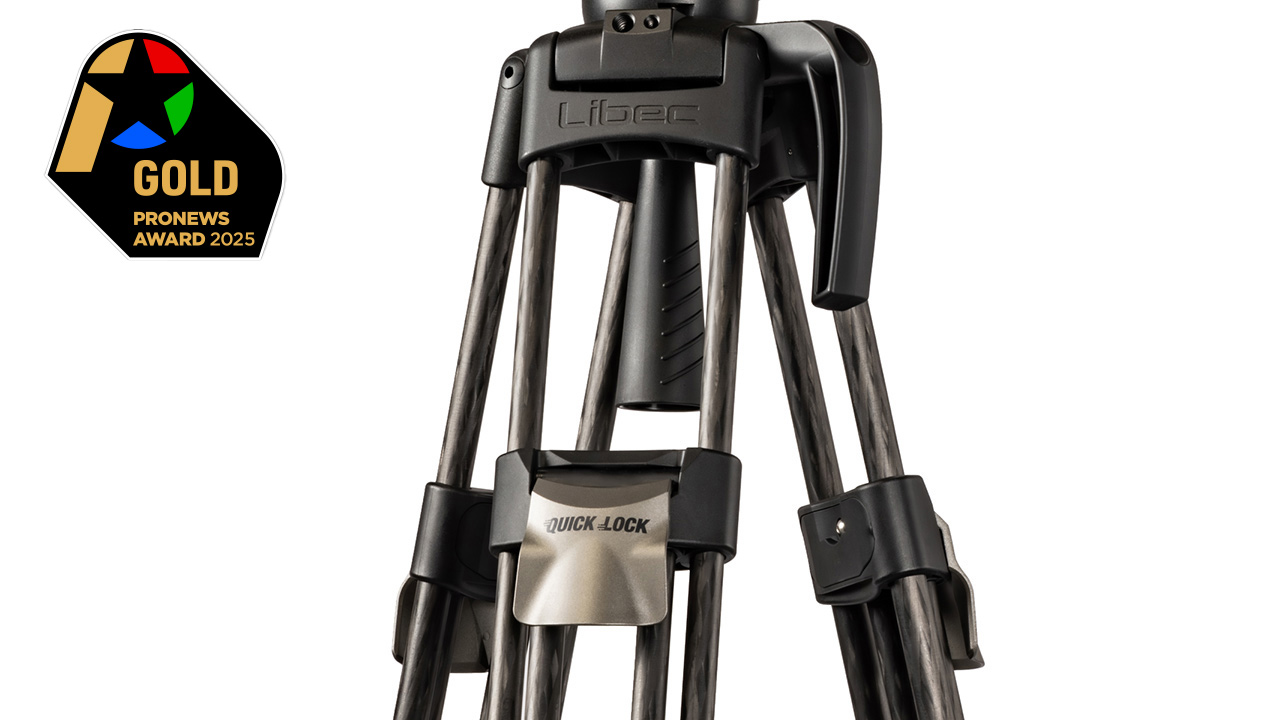
Heiwa Seiki Kogyo (Libec) “QL40C”
All of these products have faced the challenges faced on set this year and offered their own solutions. From here on, we will announce the award-winning products whose evaluations have been finalized by the editorial department.
First up, the Gold Award went to Heiwa Seiki Kogyo/Libec’s “QL40C.”
The moment our team saw this new tripod at the Heiwa Seiki Kogyo/Libec booth at this year’s Inter BEE 2025, we immediately impressed. We had heard beforehand that it was a model that inherited the concept of the aluminum model “QL40B” announced at last year’s Inter BEE, but had changed the material to carbon to make it lighter. However, when I actually handled the actual product and checked the detailed specifications, we immediately realized that it was not just a simple product made of a “lightweight version made from a different material.” There was no doubt about its awarding of this year’s Gold Award.
Of the many nominated products, the QL40C offered the most practical and complete answer to this year’s biggest challenge: “speeding up setup.”
What surprised me was the bold change in specifications. While such derivative models typically maintain the same specifications, the QL40C boldly reduces the maximum height of the aluminum model by approximately 30cm, from approximately 180cm to approximately 151cm. At first glance, this change may seem like a downgrade, but I felt that this is precisely where Libec’s deep insight into the workplace lies. In exchange for reducing the maximum height, the minimum height can be lowered to 38.5cm, dramatically improving its adaptability to low-angle shots. Even when loaded with a slider, head, and camera, it doesn’t get too high, providing excellent stability when aiming at a tabletop subject or other situations where you need a few centimeters lower. Such a pragmatic design would be impossible without a thorough understanding of the realities of the production site.
Of course, the approximately 500g weight reduction achieved through the use of carbon fiber is an immeasurable benefit in situations where mobility is a priority. What is particularly noteworthy is the “flip-lock” leg locking mechanism inherited from the aluminum model. By simply operating a single lock, the entire leg can be extended, fixed, or released in an instant, and once you’ve experienced this, you’ll never want to go back to the way things were. This feature, which cuts on-site setup time by seconds, is sure to be a powerful tool in modern video production, where one-man operations are on the rise.
We were also impressed by the attention to detail that has been given to ease of use, such as the standard-equipped carrying handle and the accessory ports with 3/8-inch and 1/4-inch screw holes that allow for direct expansion of monitors and lights. While the design is based on maintenance-free operation, the fact that the user can service it themselves if necessary is extremely reassuring for professionals who want to use their equipment for a long time. Another great feature is the flexibility of being able to purchase it not only as a system with the HS series or NX series, but also as a standalone tripod. The QL40C is not just lighter, but also allows you to lower your shooting style and expand it more freely. With its on-site-oriented approach to evolution, the QL40C is not just a lightweight or derivative model, but also updates on-site workflows, making it a symbol of the photography scene in 2025.
PRONEWS AWARD 2025 Tripod and Support Equipment Category Silver Award
Widendham Media Solutions “Manfrotto ONE”

Next up, the Silver Award went to the Manfrotto ONE from Videnham Media Solutions.
The Manfrotto ONE is a product that offers a highly sophisticated solution to a problem that has plagued creators for many years.
Now that a shooting style that combines stills and video has become commonplace, this camera has reorganized the requirements for its chassis, starting from the structural level.
The reason behind this is that the decision of “still photography tripod or video tripod” had been put off for many years. When I learned about the full scope of this product, I immediately felt that it went beyond the mere announcement of a new product and represented a revolution in the “suspension system” of the hybrid shooting era.
The first thing that surprised me was how thoroughly the concept was implemented. For modern creators who use one camera for both photography and video, switching equipment and changing settings is a major source of stress. However, the Manfrotto ONE combines the bending rigidity required for a stills tripod and the torsional resistance essential for a video tripod into a single leg by using unique non-circular tubes. When you actually touch it, you’ll be amazed at how it combines sharp stability when taking photos with the strength that supports smooth panning operations when shooting video.
Another feature not to be missed is the inclusion of the “XTEND mechanism” for high-speed setup, which maximizes practicality on set. This mechanism allows all sections of the legs to be deployed with a single action, dramatically reducing setup time. On set, where every minute counts, not wasting time deploying equipment directly translates into more time for creativity.
What we found most interesting this time was the newly developed “Xchange Quick Release System.” This modularity, which allows you to change heads and sliders in just a few seconds, is perfectly suited to modern workflows where equipment configurations change fluidly. Once you experience the flexibility of being able to instantly change the system to suit your shooting style while still maintaining the security of a locking mechanism, you’ll never want to let it go.
The design concept of the Xchange System-compatible “500X Fluid Head,” which is the core of this system, is also excellent. With the ability to instantly switch between landscape and portrait orientations, it perfectly captures the demand for vertical video for social media these days. The ability to seamlessly transition from portrait photography to reel video while maintaining a fluid system with a load capacity of 5kg, is a feature that is truly needed right now.
The lineup is also worthy of praise for its flawless construction, with two models available in aluminum and carbon fiber, and a 90-degree center pole for low-angle shooting. This camera completely erases the boundary between still and movie photography from a hardware perspective, freeing creators from the constraints of equipment and dissolving the boundary between still and movie photography at the on-site level. Its design eliminates the need to “choose one or the other.” As a result, it brings clarity to the long-standing confusion surrounding the chassis.