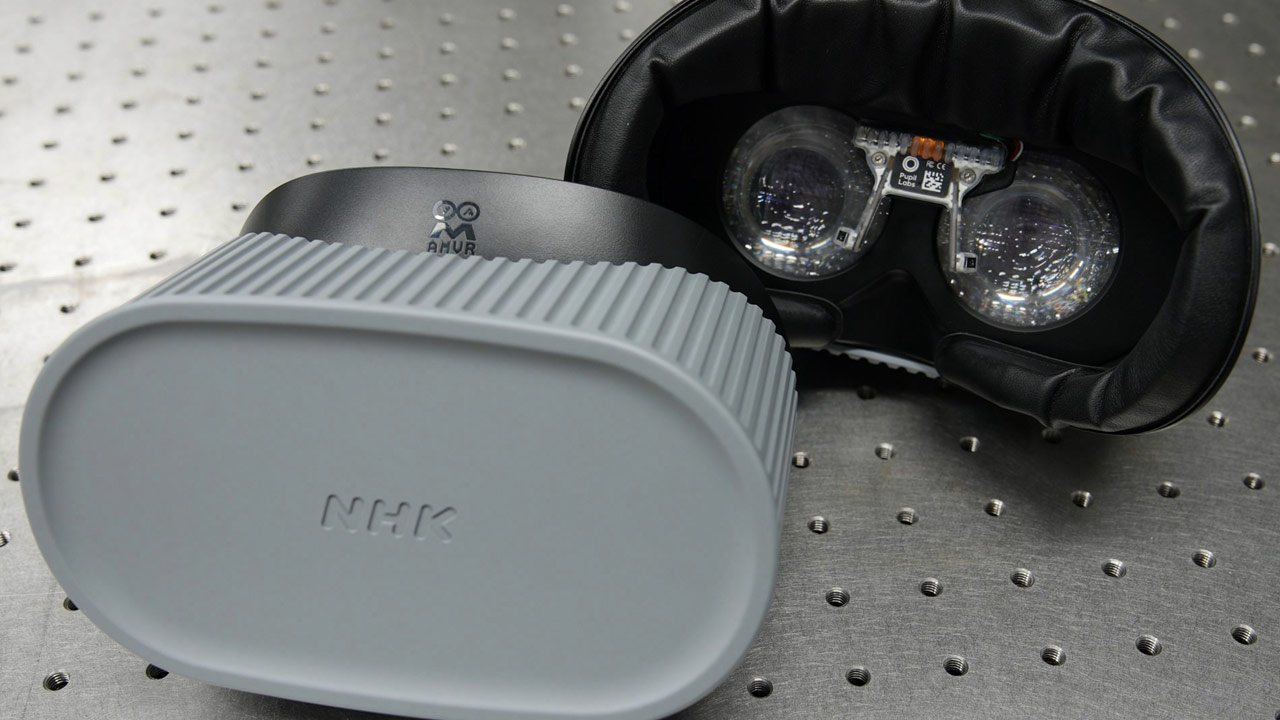
NHK Science & Technology Research Laboratories announced the development of a head-mounted display (light field HMD) that employs the “light field method” with the aim of realizing a virtual reality (VR) experience that looks natural and is close to the real world and causes less visual fatigue.
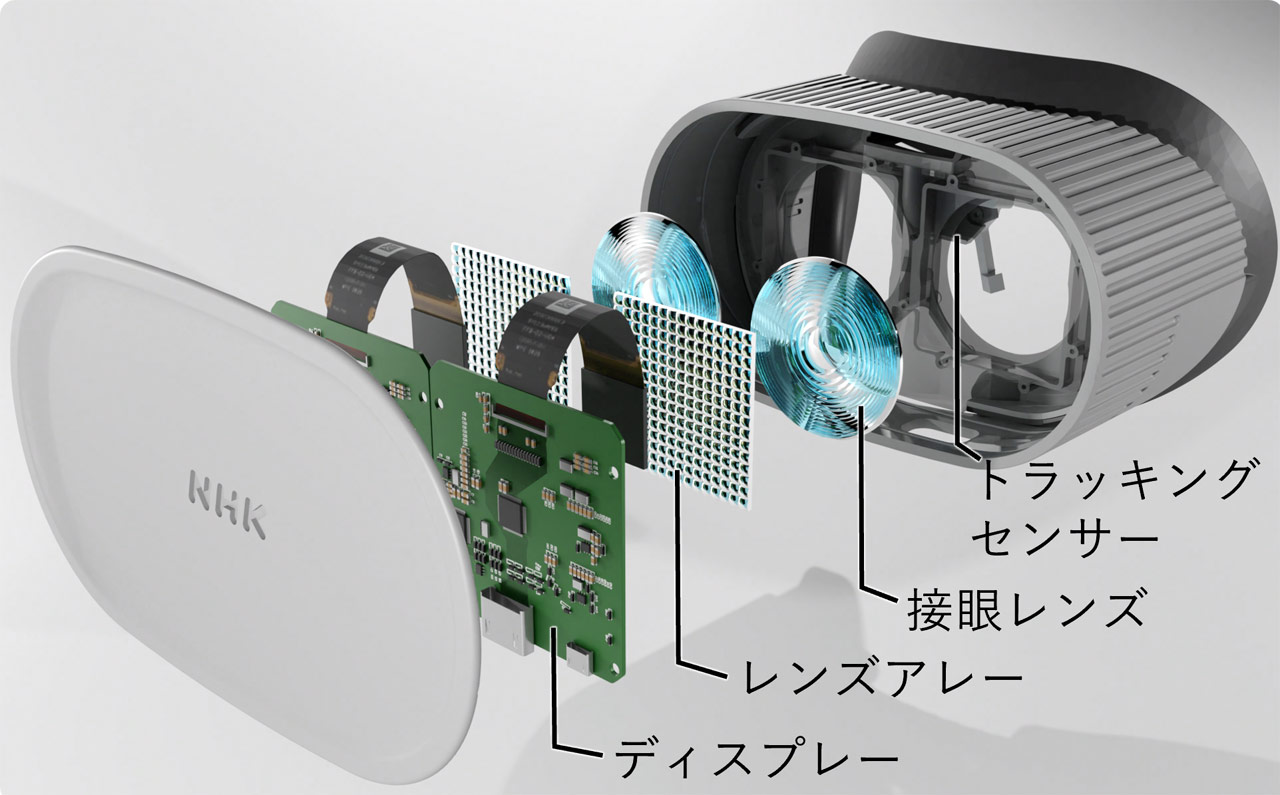
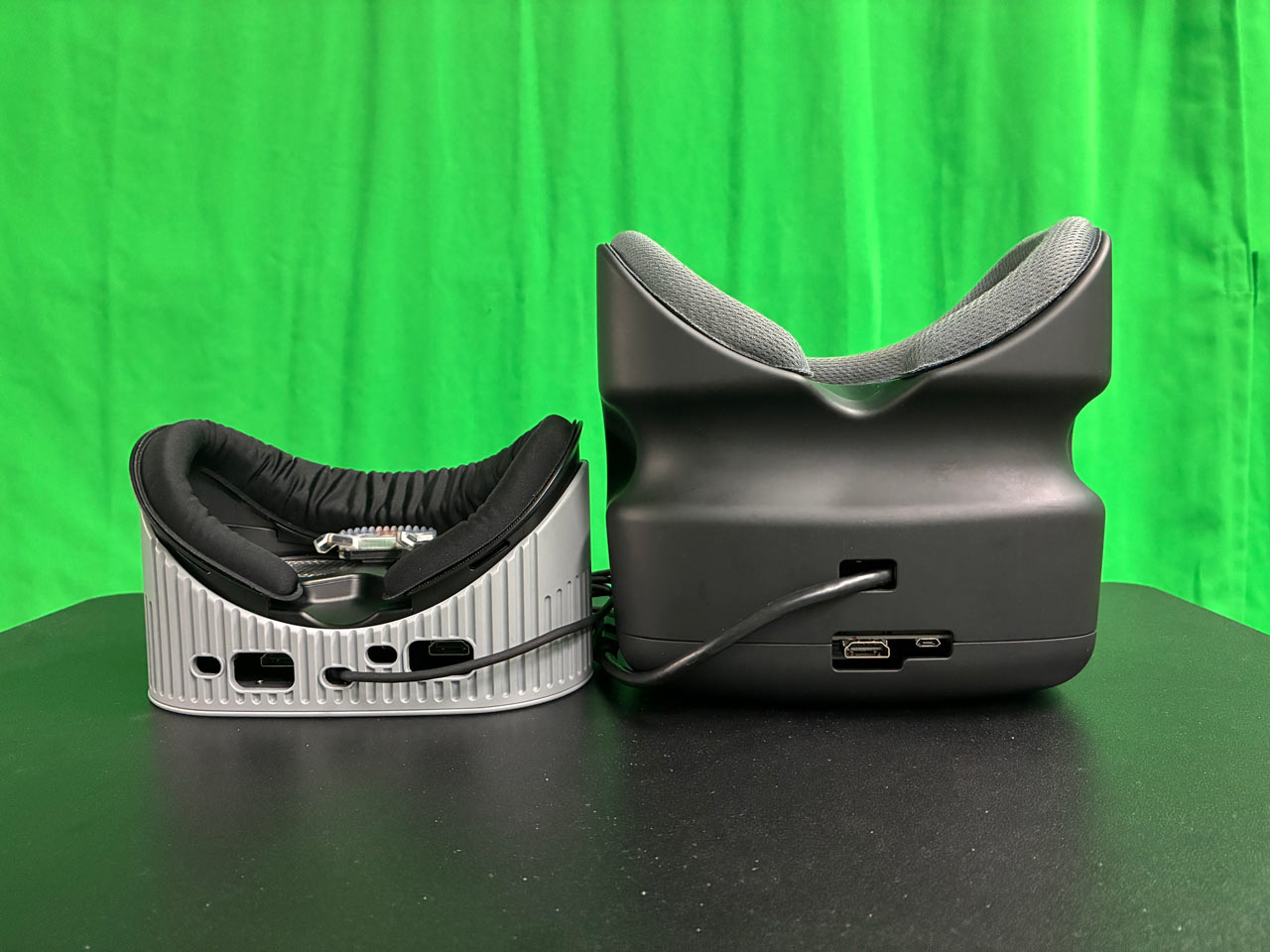
This product being developed is a light field HMD that achieves both significant thinning and high resolution compared to conventional models by combining a unique optical system that arranges two types of lenses with different functions in contact with each other, and a high-definition microdisplay.
Background of development: Why does conventional VR cause eye strain?
Conventional VR goggles (HMDs) create a sense of depth by displaying images from two separate displays, each magnified and projected at a distance through lenses, resulting in slightly shifted images (parallax) for the left and right eyes. However, this dual-lens system has the problem of causing “visual fatigue.”
Even when objects in the image move back and forth, the eye’s focus remains fixed at the position of the magnified display. This discrepancy between the perceived depth due to parallax and the position where the eye is focused is thought to be a cause of fatigue and discomfort.
Solution using the “light field method”
Light field technology recreates the “collection of light rays” emitted from an object that reach the eye.
- Advantages: You can focus your eyes on the desired location, just as you would when looking at objects in the real world.
- Effect: It is expected to enable the display of natural 3D images that are less tiring to watch for extended periods.
Technical point (1): Significant thinning of the optical system
Conventional light field HMDs had the drawback of being large in size.
Conventional mechanism (forming an intermediate image and then enlarging it)
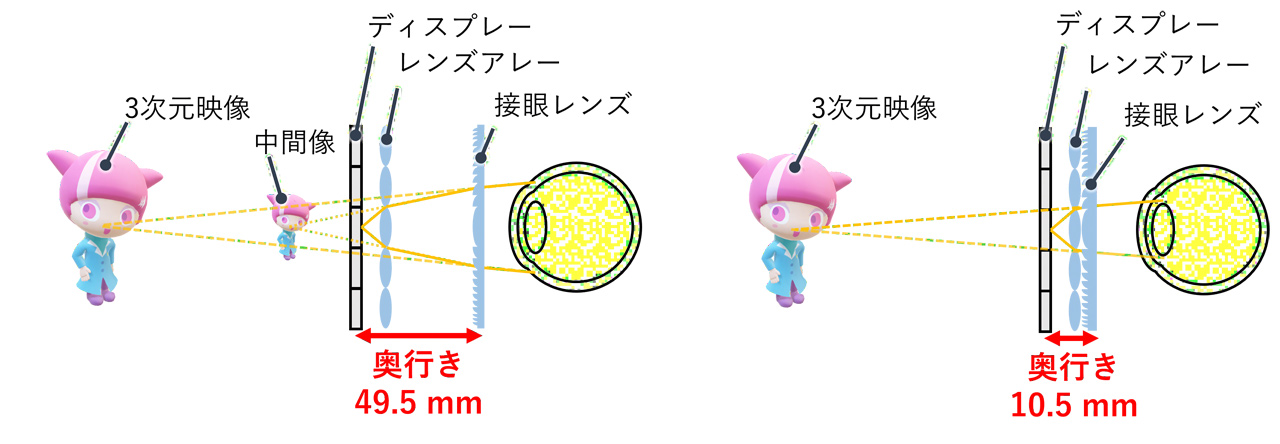
Conventional light field HMDs (Head-Mounted Displays) create an intermediate image in the air using a display and lens array*, and then magnify this image with an eyepiece to display a 3D image at a distance. However, this method requires a gap of approximately 4 cm between the lens array and the eyepiece, which posed a challenge in terms of the size of the HMD.
* Lens array (an optical element in which tiny lenses are arranged in a planar shape)
* Intermediate image (a tiny 3D image formed behind the display by the lens array)
This new technology
NHK says they devised a new optical system in which the lens array and eyepiece are placed in contact with each other. By placing them in contact, they effectively function as a single optical element, achieving simultaneous light ray control and light focusing. The group succeeded in delivering a 3D image directly to the eye without the need for intermediate images, by combining this optical system with a method for generating elemental image groups suitable for this system. The depth of the optical system was reduced by 79% compared to conventional systems, achieving a significant reduction in thickness.
Technical point (2): Displaying high-definition video in real time
In addition to its slim design, the device employs a “high-definition microdisplay.” Furthermore, by combining this with high-speed generation of elemental images using “ray tracing technology*,” which performs calculations of a vast number of light rays at high speed, it has been confirmed that high-definition 3D images can be displayed in real time.
* Ray tracing technology (a rendering technique that tracks the path of light rays leaving a light source and passing through an optical system to generate an image)
* Elemental image (an image containing information about the color and brightness of the light rays that make up a 3D image)

Future prospects
This technology will be exhibited at “NHK Science & Technology Research Laboratories Open House 2026,” which will be held from Thursday, May 28th to Sunday, May 31st, 2026.
Going forward, NHK plans to continue improving the resolution of 3D images and expand the display range, aiming to create a comfortable HMD that is natural, reduces visual fatigue, and can be used in various fields such as education, medicine, and entertainment.
NHK Science & Technology Research Laboratories Open House 2026: “Pioneering, Supporting, and Moving Forward”
- Event Period: Thursday, May 28th – Sunday, May 31st, 10:00 AM – 5:00 PM (Last entry 30 minutes before closing)
- Event is in Japanese only.
- Venue: NHK Science & Technology Research Laboratories (1-10-11 Kinuta, Setagaya-ku, Tokyo)
- Admission: Free (no advance reservation required)
- Homepage: https://www.nhk.or.jp/strl/open2026/