PRONEWS Reviews | DJI Lito X1 and DJI Lito 1
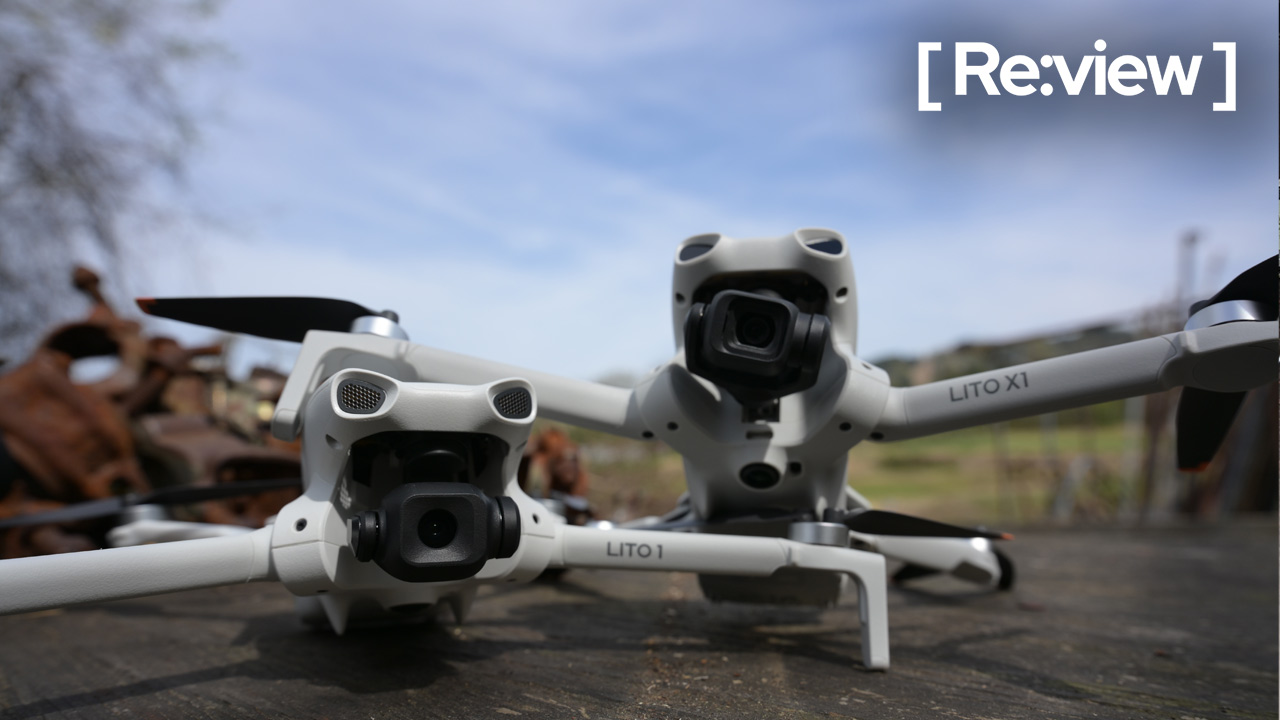
DJI offers a variety of consumer drone series, including Mavic, Air, and AVATA, targeting different user groups. Among these, the “Mini” series, aimed at entry-level users, has been revamped and rebranded as “Lito.” In April, as the first drones in the DJI Lito series, the Lito 1 and Lito X1 have been released. These two models are specifically designed for complete beginners when it comes to aerial photography drones.
What is the Lito series?
Currently, the only Mini series models that will have their Lito chip replaced are those without the “Pro” designation, such as the DJI Mini 5 Pro.
Within the current Mini lineup, the DJI Mini 3 and DJI Mini 4K are included, and these entry-level products will be revamped as Lito. The Mini series without the “Pro” designation will be discontinued, but the Mini “Pro” series will continue to be updated.
Incidentally, Lito is pronounced closer to ‘RAI – tou’ (apparently not ‘ree-toh’).
So, roughly speaking, the differences between Lito 1 and Lito X1 are as follows.
- Obstacle avoidance performance: Lito X1 > Lito 1 (Lito X1 has a front-facing LiDAR sensor)
- Sensor size: Lito X1 > Lito 1 (X1 uses a 1/1.3-inch sensor, Lito 1 uses a 1/2-inch sensor. However, both support 4K video and 8K photo shooting.)
- Color Mode: (Lito 1 is Normal only. Lito X1 supports D-Log M.)
- Presence or absence of built-in storage: (Lito 1 does not have it)
After actually using them, I felt that both were cost-effective models packed with features that would be great for users just starting out in the world of aerial photography drones.
In this article, I will introduce these features while also comparing them with other models.
Package contents and appearance
There are two items to review this time.
• DJI Lito X1 Fly More Combo (DJI RC2)

DJI Lito 1
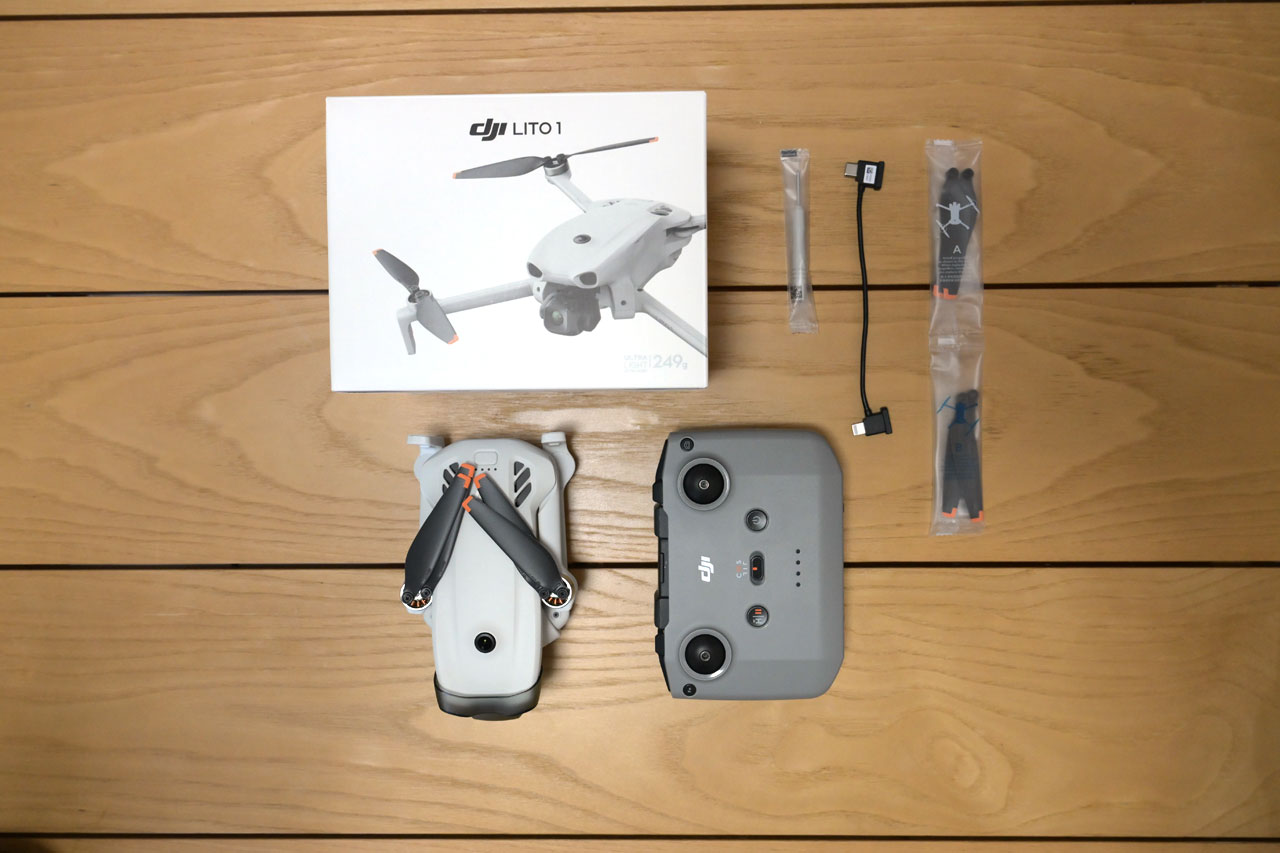
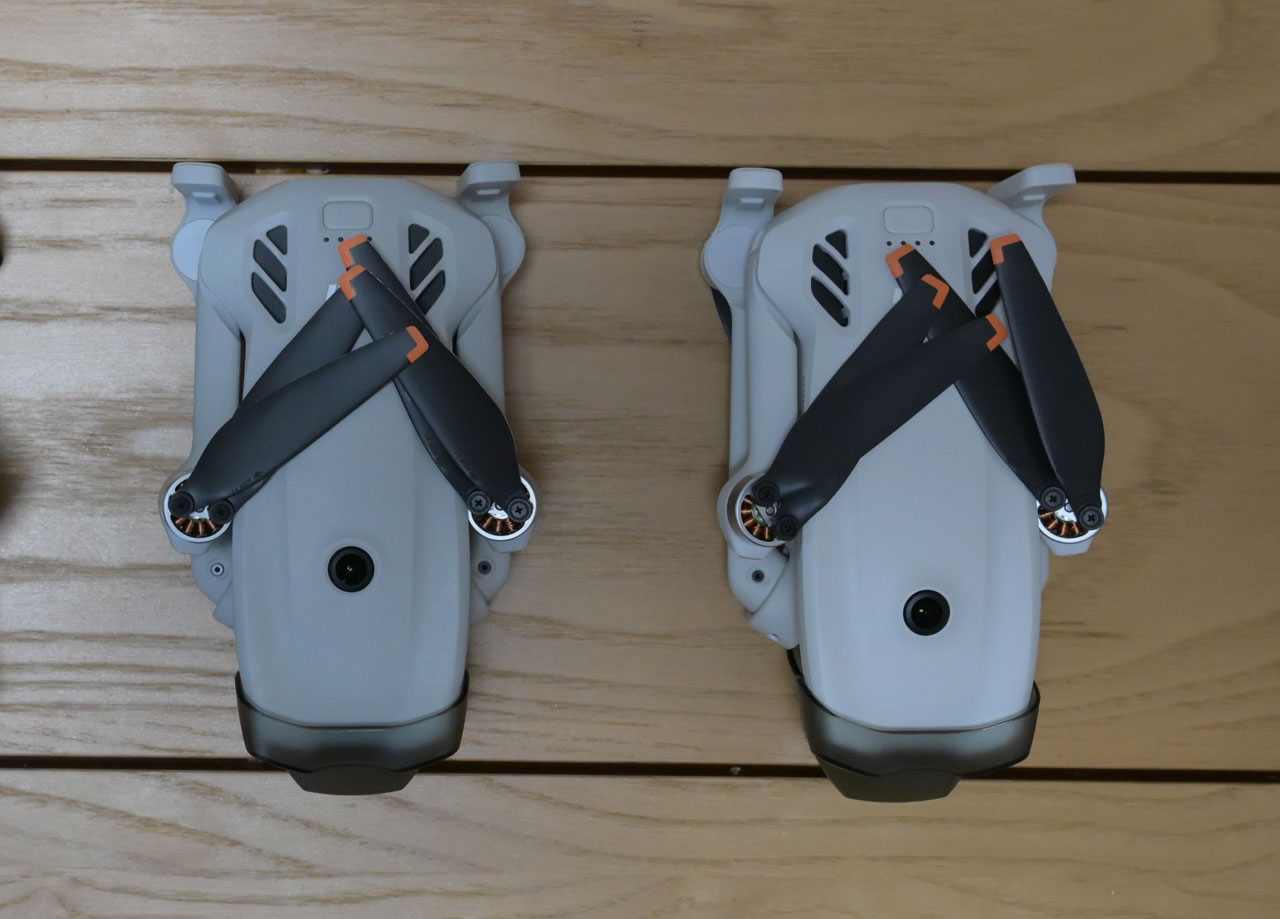
Incidentally, the two models look almost identical when folded, but the X1 has a slightly darker gray color.
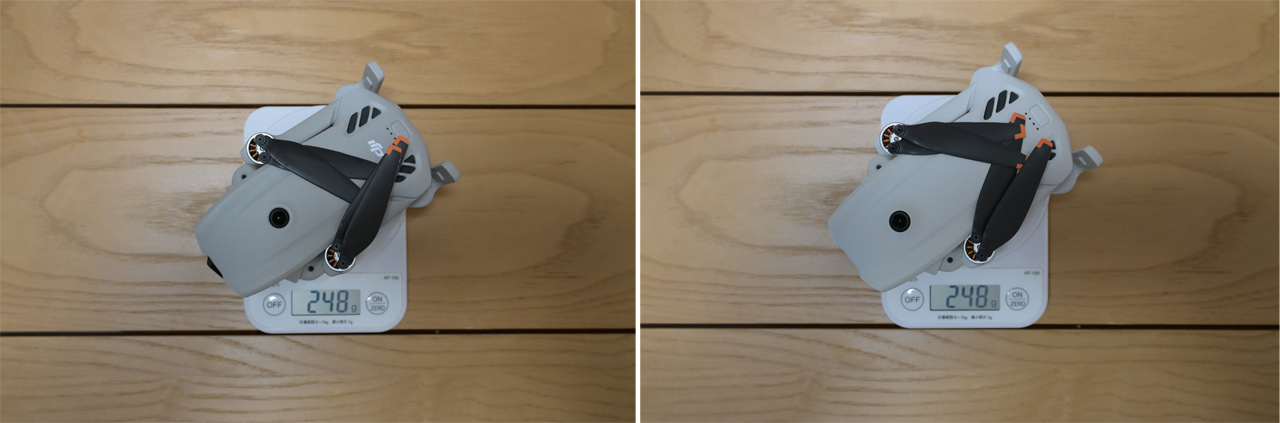
Both products claim to weigh 249g or less, but the actual measured weight for both was 248g.
In some countries, regulations on drones weighing 249g or less are relatively lax, making them convenient for use during overseas travel. However, in Japan, the regulation is 100g, so caution is necessary, and the required procedures will be explained in a later section.
Differences between the two models
• Camera function
The two models differ in camera sensor size: the Lito X1 uses a 1/1.3-inch sensor, while the Lito 1 uses a 1/2-inch sensor. They also differ in focal length, with the Lito X1 having a 24mm lens compared to the Lito 1’s 26.2mm, resulting in a slightly narrower field of view.

Both models support shooting up to 4K/100fps. However, the Lito 1 only supports normal color modes, while only the Lito X1 supports D-Log M. For creators who want to do color grading, the X1 has the advantage.
Obstacle detection
Both the Lito 1 and Lito X1 are equipped with omnidirectional obstacle detection. This is achieved through an omnidirectional monocular vision system located above and below the aircraft, and it functions in environments with a brightness of 5 lux or more. It is likely that this is the same sensor used in the DJI Neo2.
While the older, higher-end models, the Mavic 3 Pro and Mini 4 Pro, require a brightness of 15 lux or more for their sensors to function, this model offers greater stability in low-light conditions and is more beginner-friendly.
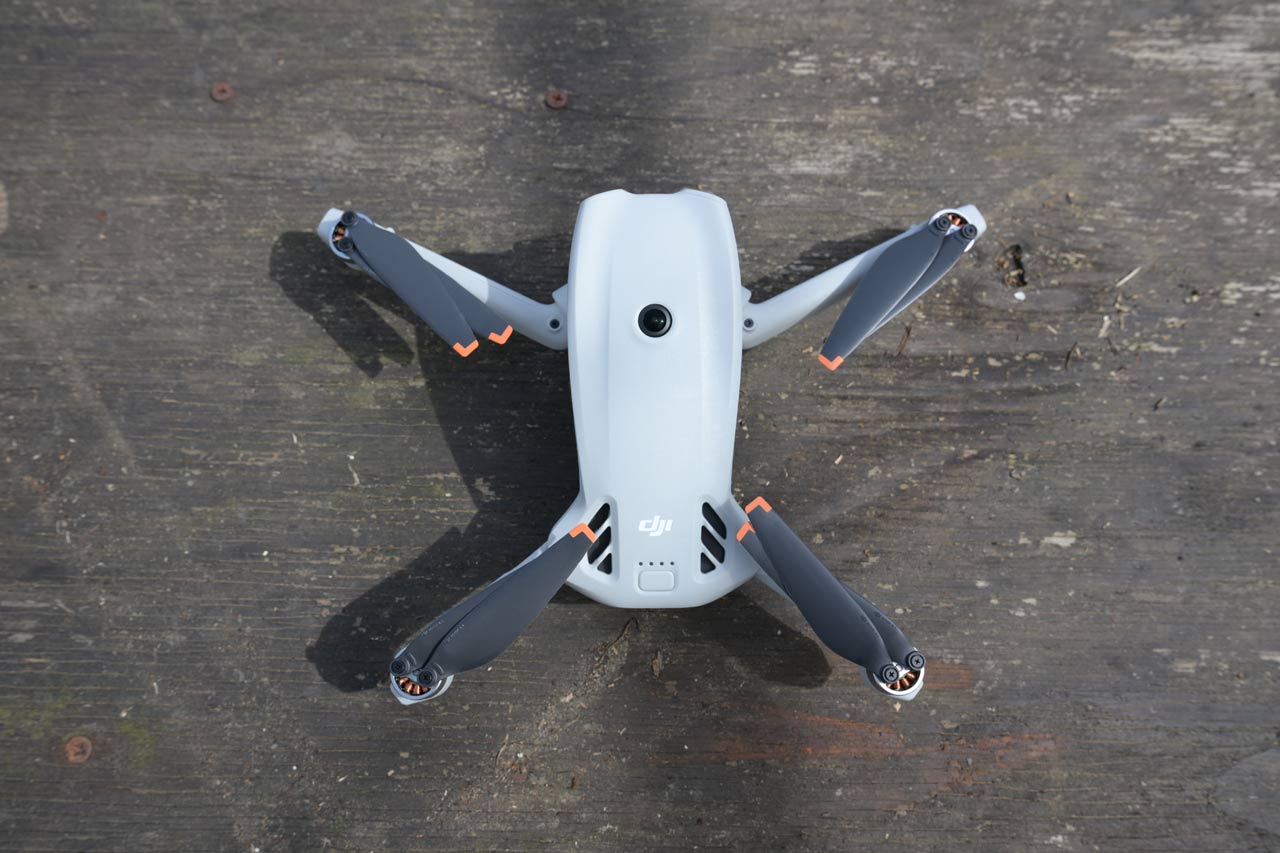
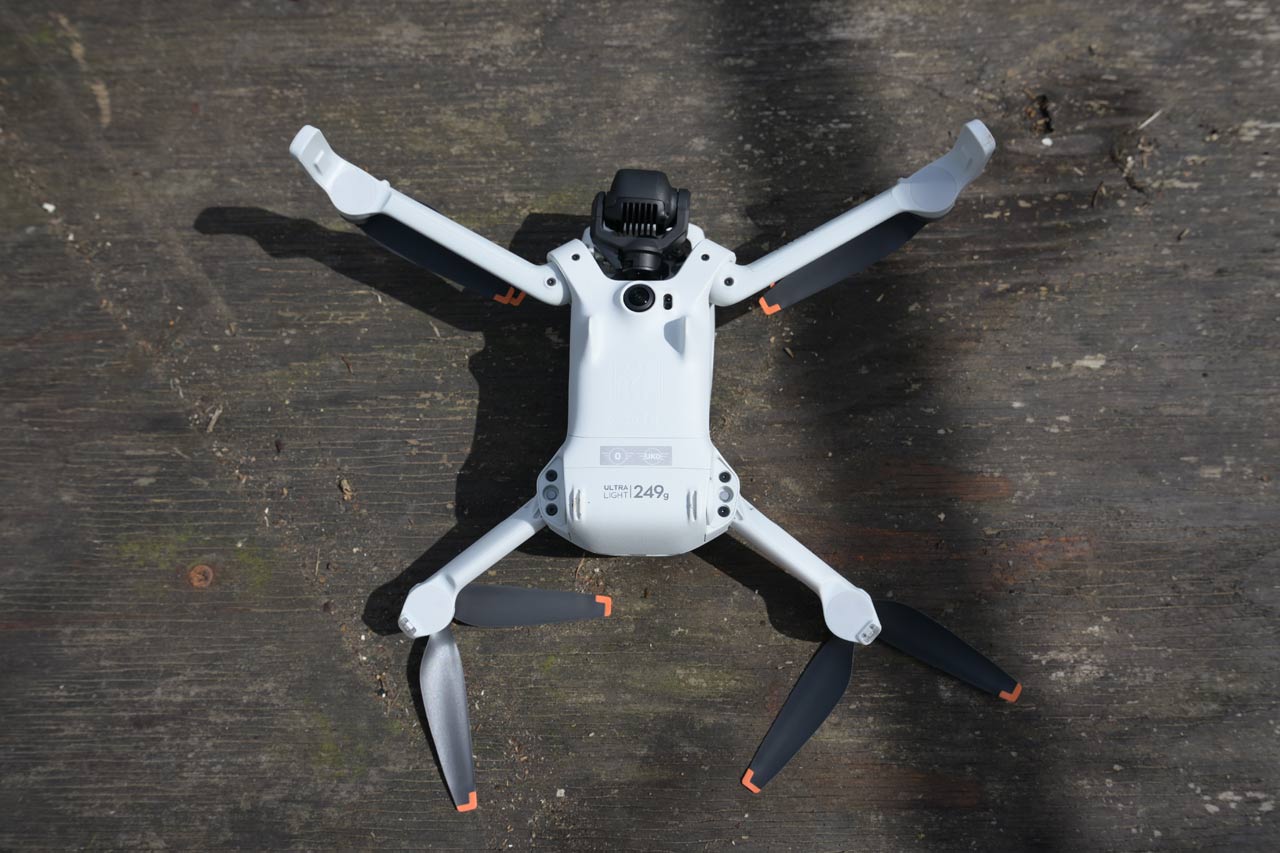
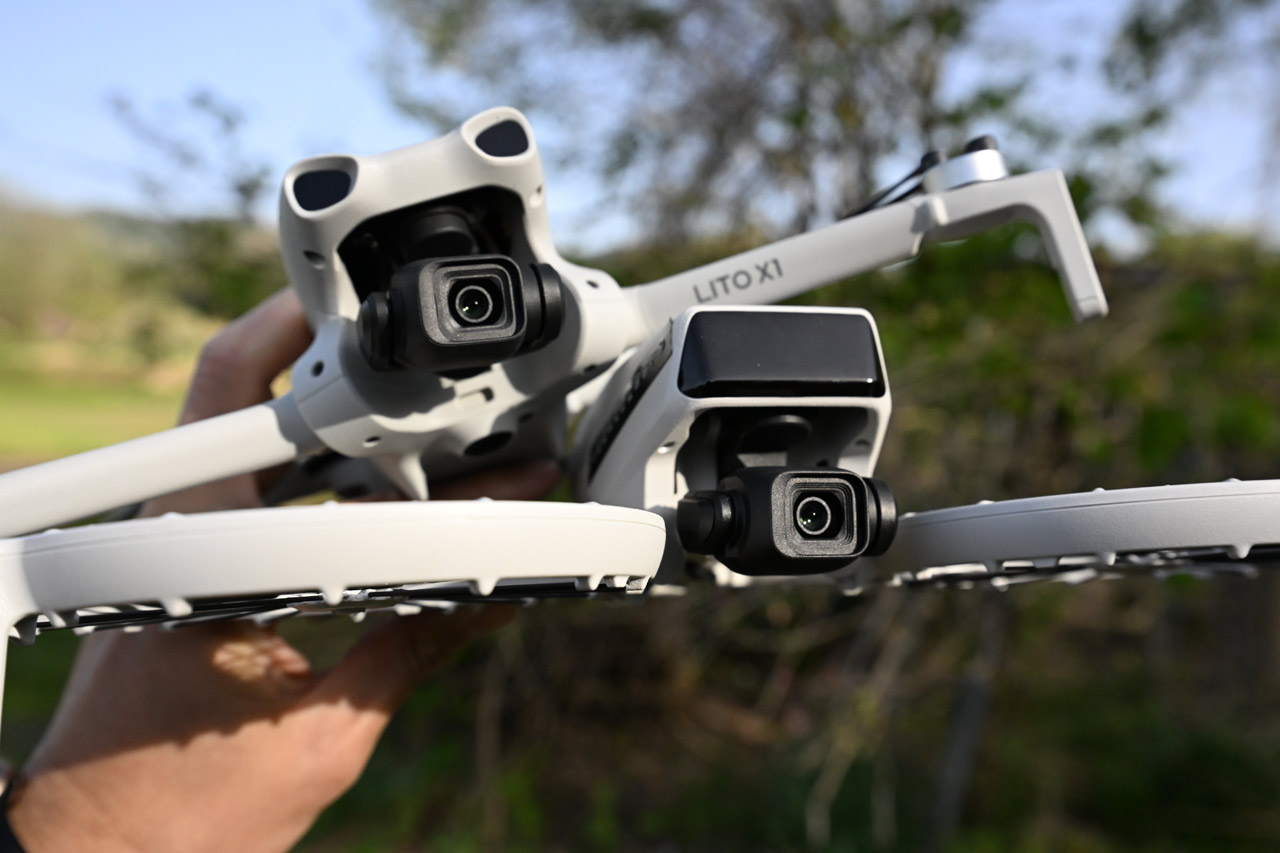
The Lito X1 also features forward-facing LiDAR sensors (two on the gimbal camera). This enables obstacle detection (forward only) not only during daytime flight but also at night. The X1 offers a greater sense of security when returning home at night.

Incidentally, this part of the Lito 1 seems to be a vent.
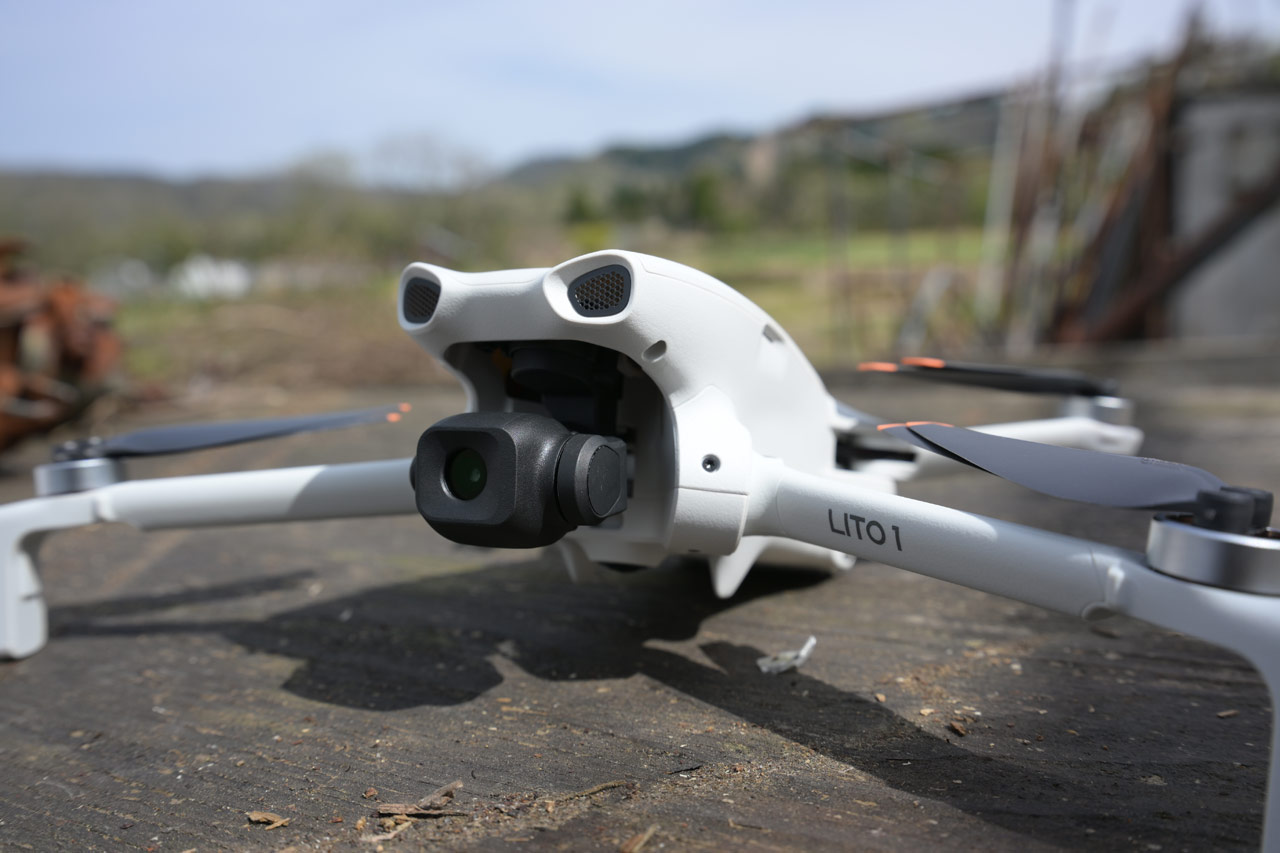
Intelligent tracking features such as POI and ActiveTrack 360°, which utilize the omnidirectional obstacle detection function, are also very convenient. For beginners in particular, the ability to track the subject without bumping into obstacles will significantly lower the barrier to aerial photography.
・Flight performance
Both models have the same flight performance specifications, including a maximum flight time of 36 minutes and a wind resistance of 10.7 m/s.
Both devices support the latest O4 transmission technology and have a maximum transmission range of 8km within Japan. The return-to-home function also works reliably, and in actual testing, it was able to return to its original position with an error of only a few centimeters.
While it’s important not to over-rely on RTH, this feature is a welcome reassurance for beginners.
・Fine details
<battery>
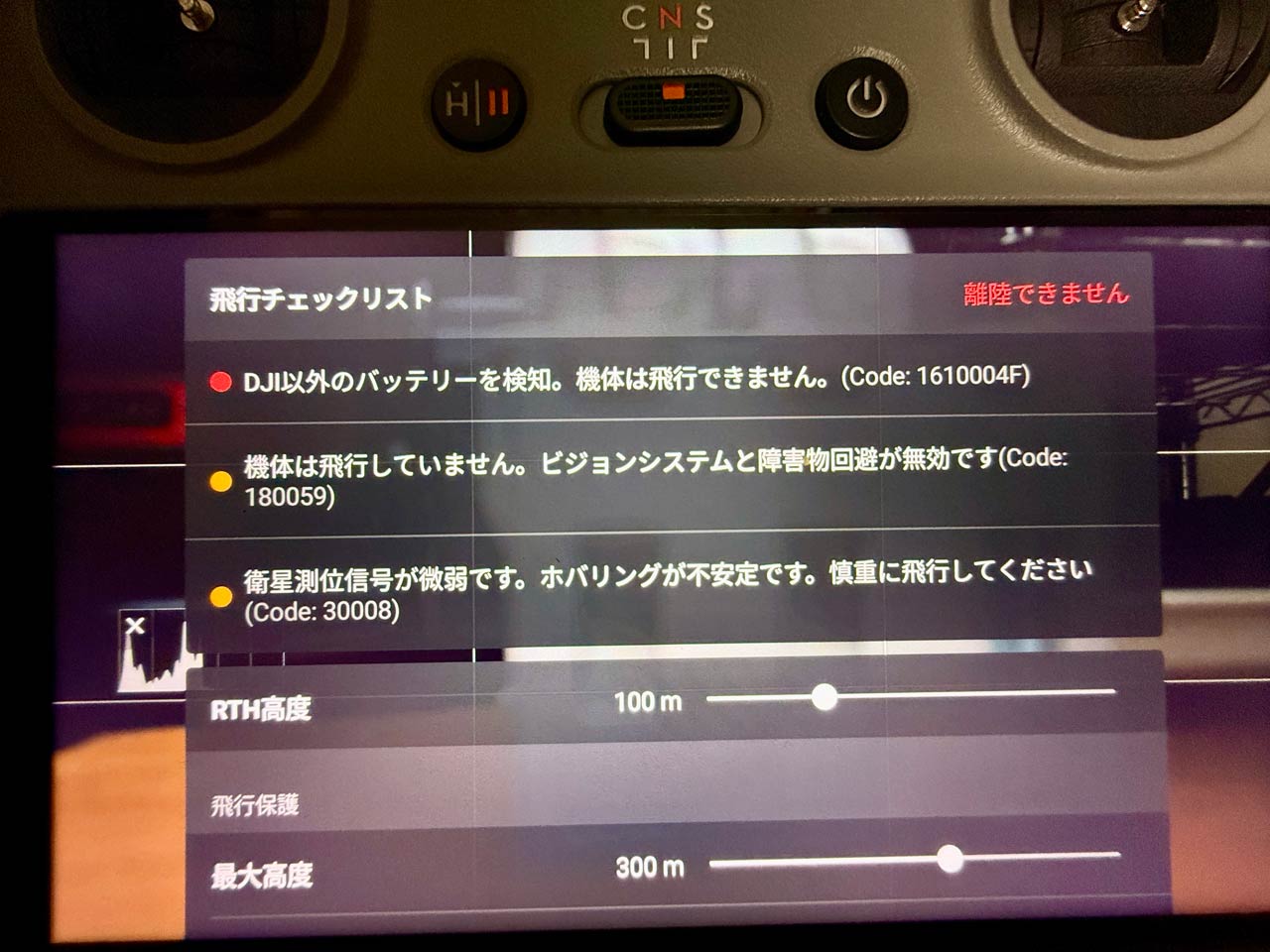
The two models look very similar, but their batteries are not compatible. When I tried swapping them, the drone powered on, but an error message appeared in the app indicating that it could not take off.
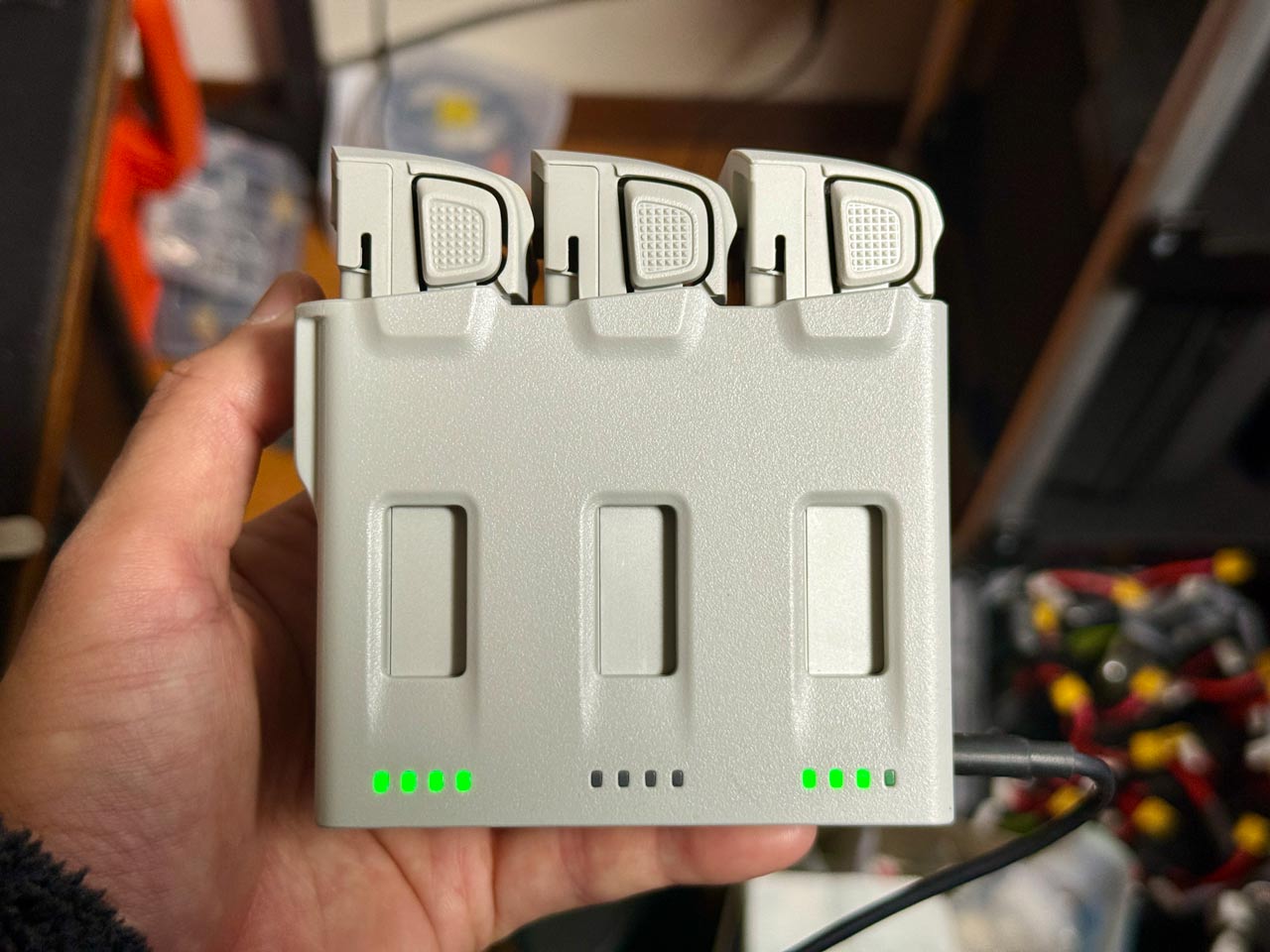
However, it was possible to charge the Lito 1 battery using the Lito X1 charging hub. But this is not officially recommended, so caution is advised.
On the other hand, the DJI Lito Series Intelligent Flight Battery Plus is compatible with both Lito 1 and Lito X1, extending the maximum flight time from 36 minutes to 52 minutes for both. Basically, it seems that products labeled “DJI Lito Series” are compatible within their respective series.
<Storage>
Both models have a microSD card slot, but only the Lito X1 has 42GB of internal storage, allowing recording without a microSD card. This is a welcome feature as it prevents the common mistake of forgetting a card and being unable to take pictures.
Like recent DJI drones, a great feature is that it recognizes media even when the aircraft is powered off. Connect the drone to the computer via USB-C, it’s that simple.

Furthermore, when the Lito 1 was connected to a PC via USB-C with an SD card inserted, it was possible to directly access the data on the SD card. Therefore, using the Lito 1 with the SD card inserted all the time might be a good way to avoid the stress of forgetting the card.
Comparison with other models
We compared the image quality of the DJI Flip, which is in a similar price range, with the higher-end DJI Mini 5 Pro. All footage recorded in 4K60p.
According to the catalog specifications, the Lito X1 and Mini 5 Pro have a maximum dynamic range of 14 stops.
In actual footage, the dynamic range is roughly:
DJI Mini 5 Pro ≈ DJI Lito X1 > DJI Lito 1 > DJI Flip
At least for this, this is how I felt regarding dynamic range.
Although Lito 1 has the smallest sensor size, it’s performing quite well.
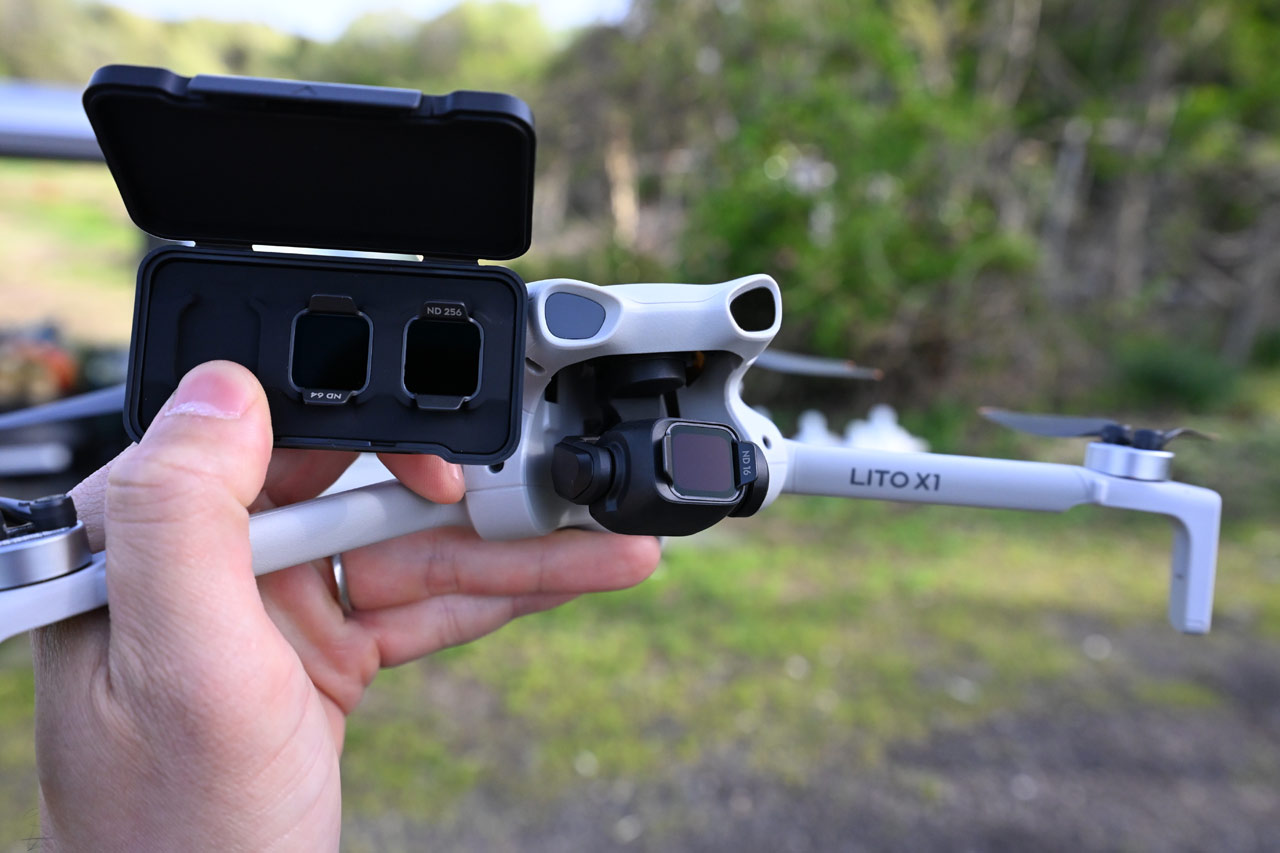
Incidentally, there wasn’t a dedicated ND filter available at launch, but the one for the DJI Flip fit the Lito X1 perfectly.
Given that the Flip’s sensor size is also 1/1.3 inches, I suspect the Lito X1 uses the same camera unit, but the image quality may have been improved due to enhanced image processing capabilities.
Impressions
Latest model for entry-level users
As mentioned at the beginning, these two new models are intended to replace the existing entry-level drones, the DJI Mini 3 and DJI Mini 4K. The existing two models use the O2 transmission method, which is two generations old, so replacing them with the latest technology will improve compatibility with the remote controller and other components, which will be good news for users.
For example, if a beginner purchases this Lito and DJI RC2 set, they can still use the same remote controller even if they later purchase an Air 3 or Mavic 4 drone separately to upgrade.
I felt that this product is well-suited for creators who want to start using drones, as well as for the general public.
An analysis of the Lito series
The Lito series, which has now been launched as a separate entity from the Mini series, seems to have been created in conjunction with the performance improvements of the Mini (Pro). As I felt when I reviewed the Mini 5 Pro that was released recently, it has now reached a level close to professional equipment.
It seems that the Lito will be aimed at beginners in cameras and aerial photography, while the Mini (Pro) will be for aerial photography beginners and experienced aerial photographers who have more camera knowledge than entry-level users, and as a secondary option for professional equipment such as the Mavic.
DJI Lito 1 and X1 Review ORIGINALLY WRITTEN IN JAPANESE by our guest drone reviewer, Masahiro Fujikura | Profile
Mr. Fujikura is a drone operator residing in Niigata Prefecture. Representative of NK2-Tech Co., Ltd. He also runs the YouTube channel “NANKOTSU,” primarily providing information for drone beginners.