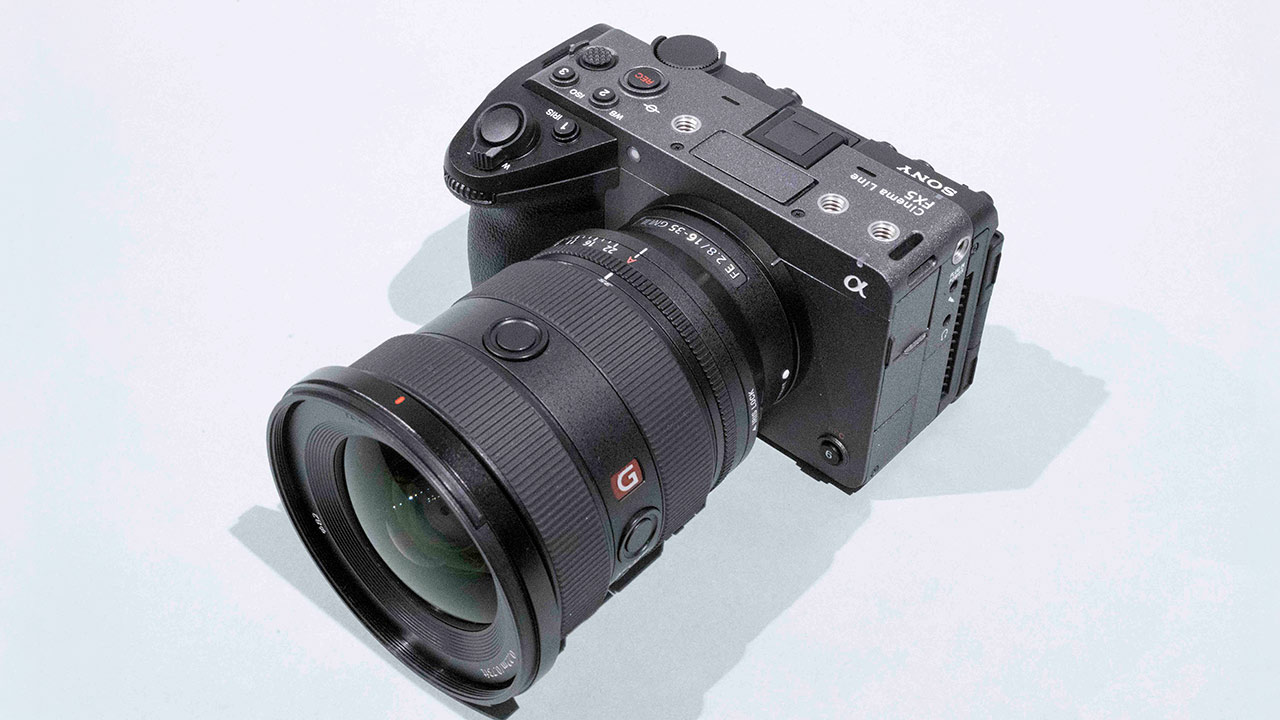
Sony announced the upcoming release of the FX5, a new model in its Cinema Line. It features a newly developed full-frame stacked Exmor RS CMOS image sensor and the BIONZ XR2 image processing engine with built-in AI processing capabilities. It is a video-only model that supports in-camera recording of the 16-bit scene-linear RAW format “X-OCN”. The FX5 is not a successor to the existing FX3, but rather a new model positioned above the FX3 in the lineup. The main target audience is video producers who use the FX series professionally, and creators who are considering stepping up from the α series to the Cinema Line.
Orders will begin on July 28, 2026 at 10:00 AM JST, with a release date of August 21 of the same year. The lineup includes two models: one bundled with a new XLR handle unit, and another as a body-only model.
What is the Sony FX5 ?
The Cinema Line is a series characterized by its consistent image look and operability across its range of models, from high-end to compact. The “FX6” was released in December 2020, the “FX3” in March 2021, the “FX30” with a Super 35mm sensor in October 2022, and the “FX2” with a full-frame sensor in May 2025. The FX5 is a new full-frame model added to this lineup. It is not a successor to the FX3, but rather a new model positioned above the FX3.
The FX3 is still widely used in video production. However, the Sony FX5 retains the advantages of its compact body while being a clearly higher-end model aimed at producers who demand more professional recording and post-production capabilities. It does not support still photography and is designed solely for video recording. It is not a hybrid camera that can handle both photos and videos, but is built from the ground up as a tool for video production.

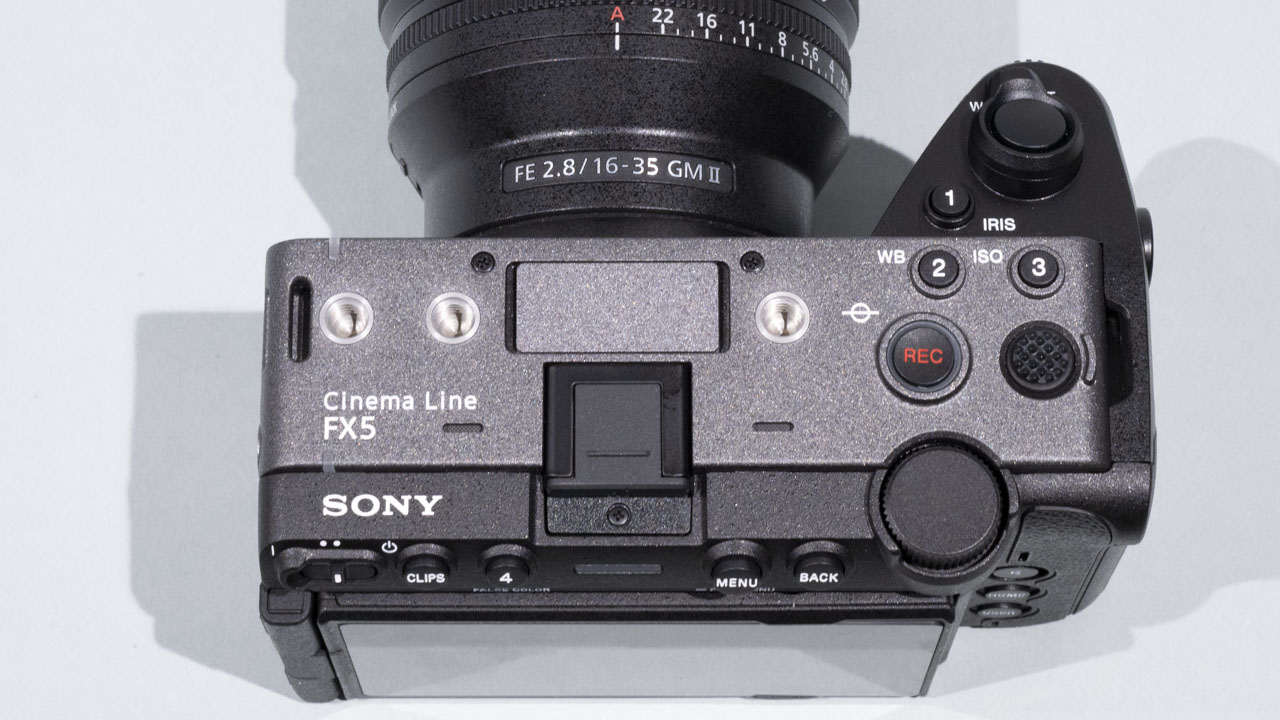
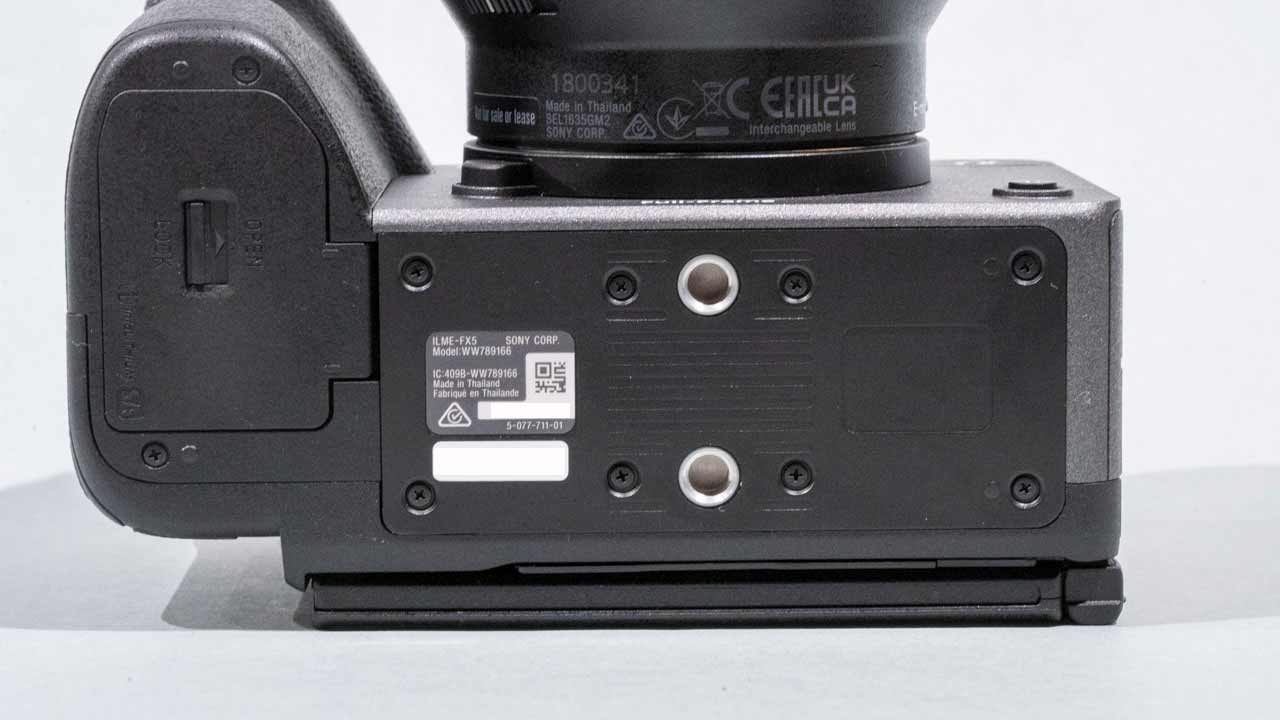
Sony FX5 Specifications
| classification | item | ILME-FX5 |
|---|---|---|
| Standard specifications | Model Code | ILME-FX5 |
| Model | Interchangeable lens digital camera | |
| Lens mount | E-mount | |
| Imaging Department | Image sensor | 35mm full-frame (35.9 x 24.0mm) Exmor RS CMOS sensor |
| Effective pixels of the camera | Maximum resolution of approximately 16.6 million pixels | |
| Total number of pixels | Approximately 18.2 million pixels | |
| Optical low-pass filter | ● | |
| latitude | 15+ stops (Sony internal measurement during S-Log3 video recording) | |
| White balance color temperature setting range | 2000K to 15000K | |
| Anti-dust function | ● | |
| Power consumption | When using an LCD monitor | During video recording: Approximately 7.4W (with FE 28-70mm F3.5-5.6 OSS II lens attached) |
| mass | Includes accessories | Approximately 1046g (including handle, battery, and memory card) |
| Includes battery and memory card | Approximately 734g (including battery and memory card) |
|
| Main unit only | Approximately 643g | |
| External shape and dimensions | External dimensions (width x height x depth) | Approximately 132.2 × 79.0 × 87.0 mm (from grip to monitor) |
| Operating temperature range | Operating temperature range | 0-40℃ |
| Accessories (included) | accessories | Rechargeable battery pack NP-SA100, battery charger BC-SAD1, body cap Accessory shoe cap, VF terminal protection cap, XLR handle unit Handle shoe cap Accessory shoe kit |
*The effective pixel count will vary depending on the lens, shooting mode, and settings used.
*Only one NP-SA100 battery is included.
Evolution is 16-bit X-OCN in-camera recording.
The most distinctive feature of the FX5 is its ability to record Sony’s proprietary compressed RAW format, “X-OCN,” internally without the need for an external recorder. X-OCN is Sony’s unique compressed RAW format that records information captured with a wide latitude as richly tonal 16-bit scene linear data. This enables extremely high-quality recording without the need for an external recorder.
While X-OCN has previously been used mainly in higher-end models such as “VENICE,” the FX5 makes it possible to directly record signals read from the newly developed full-frame stacked sensor as 16-bit scene linear data within the camera.
| classification | item | ILME-FX5 |
|---|---|---|
| Video recording method | Compression format | X-OCN |
| Video recording method | XAVC HS: MPEG-H HEVC/H.265 XAVC S: MPEG-4 AVC/H.264 |
|
| Audio recording method | LPCM 4ch (48kHz 24bit), PCM 4ch (48kHz 32bit float) x 2 LPCM 4ch (96kHz 24bit), PCM 4ch (96kHz 32bit float) x 2 |
|
| Video function | Slow and Quick Motion (S&Q) | ● |
| Proxy log | ● | |
| Timecode/User Bit | ● | |
| RAW output | ● (HDMI) | |
| slot | SLOT A: Multi-slot for SDXC (UHS-II compatible) cards and CFexpress Type A cards. SLOT B: Multi-slot for SDXC (UHS-II compatible) cards and CFexpress Type A cards. |
Scene Linear Recording Method
X-OCN’s “Scene Linear” is a recording method where the amount of light entering the lens and the recorded data have a linear relationship. In typical Log recording, a gamma curve is used to compress highlight information in order to fit a wide dynamic range into a limited tonal range. On the other hand, X-OCN maintains the input light in a linear state, allowing for more flexible adjustment of exposure and white balance after shooting. A major feature is its high grading tolerance, which takes advantage of the amount of information available in 16-bit Scene Linear.
X-OCN offers multiple recording modes with different image quality and file sizes. The FX5 supports “X-OCN LT” as well as the newly developed “X-OCN C1” and “X-OCN C2”. C1 is a mode that aims for a bitrate close to XAVC-I and XAVC SI, and can reduce file size by about 25% compared to X-OCN LT. C2 reduces file size by about 20% more than C1, and is planned to support high frame rate shooting up to 4K 240fps while maintaining the advantages of 16-bit scene linear. Users can choose the balance between image quality and data size according to their needs, taking into account long recording times, data transfer, and storage capacity.
X-OCN requires a CFexpress Type A VPG400 memory card for in-camera recording, and only cards of this standard are guaranteed to work.
| Compatible models | X-OCN XT | X-OCN ST | X-OCN LT | X-OCN C1 | X-OCN C2 |
|---|---|---|---|---|---|
| VENICE 2 | ○ | ○ | ○ | – | – |
| BURANO | – | – | ○ | – | – |
| FX5 | – | – | ○ | ○ | ○ |
The difference between 10-bit and 16-bit revealed through extreme grading.
Let’s look at the differences in post-production tolerance between XAVC-I Log and X-OCN footage. Under normal circumstances, it’s difficult to distinguish between the two, but the difference becomes clear when extreme contrast adjustments are applied to smooth gradients like the sky.
Specifically, with XAVC-I footage, wavy banding (tonal stripes) appears in the sky, and discontinuities in tonal gradation can be seen in the RGB waveform. This is a result of significantly adjusting the highlights compared to the 10-bit recorded tonal range, which has made the lack of tonal gradation apparent. In contrast, when the same processing is applied to X-OCN footage, the gradation remains smooth, and no noticeable stripes appear in the waveform. While opportunities to perform such extreme processing in actual production are rare, the benefits are significant in situations where the amount of tonal gradation in the source material greatly affects the final result, such as sky keying or major highlight adjustments.
A closer look at the details reveals differences in rendering due to the different compression ratios of X-OCN. In the low-compression mode, fine structures and random noise particles are preserved independently, while in the high-compression mode, fine details are slightly lost, and noise particles tend to appear as blocky clusters. Differences are also observed in embossed patterns of text in indoor shots; when strong sharpening is applied, the low-compression mode tends to preserve the pattern more uniformly.
Be Careful with the CODECs
However, these are merely examples of extreme processing applied to visualize the differences. In normal color grading, it is difficult to distinguish the differences between the various X-OCN modes, and the more definitive differences become apparent when comparing a 10-bit video codec with a 16-bit X-OCN.
When using video codecs, it’s necessary to build the look while avoiding image degradation due to excessive adjustments. However, X-OCN is less prone to degradation, allowing creators to focus on the expression itself. This is extremely significant for producers who handle everything from editing to color grading in-house.
Open gate and various image scan modes
The Sony FX5 supports 3:2 open gate shooting, which reads out the entire sensor surface.

At launch, it can be used when recording with X-OCN, and open gate recording with XAVC SI is planned to be supported in software update Ver. 2.00, scheduled for August 2027 or later. If you shoot with open gate, it is easier to extract not only 16:9 landscape video but also 9:16 portrait video and videos that are close to square after shooting.
In today’s production environment, where a single shot is used for multiple formats such as movies, advertisements, YouTube, digital signage, and vertical videos for social media, the ability to utilize the entire sensor is highly valuable. In addition, multiple image scan modes are available, including full-frame 17:9, 16:9, cropped shooting, and Super 35mm 16:9. This configuration allows for flexible selection of the imaging area to match the lens and delivery format.
Scan Modes
| Recording format | Image scan mode | ||||||
|---|---|---|---|---|---|---|---|
| FF 5K 3:2 (Open Gate) |
FF 5K 17:9 | FF 5K 16:9 | FFc* 4.5K 17:9 | FFc* 4.5K 16:9 | FFc* 3.8K 16:9 | S35 3.2K 16:9 | |
| X-OCN LT | ✓ | ✓ | ✓ | – | – | ✓ | – |
| X-OCN C1 | ✓ | ✓ | ✓ | – | – | ✓ | – |
| X-OCN C2 | ✓ | ✓ | ✓ | – | – | ✓ | – |
| XAVC HS-L422 | – | – | ✓ | – | ✓ | – | – |
| XAVC HS-L420 | – | – | ✓ | – | ✓ | – | – |
| XAVC SI | – | ✓ | ✓ | ✓ | ✓ | – | ✓ |
| XAVC S-L422 | – | – | ✓ | – | ✓ | – | ✓ |
| XAVC S-L420 | – | – | ✓ | – | ✓ | – | ✓ |
*FFc (Full Frame Cropping) refers to a method that uses a portion of the full-frame sensor’s image by cropping it.
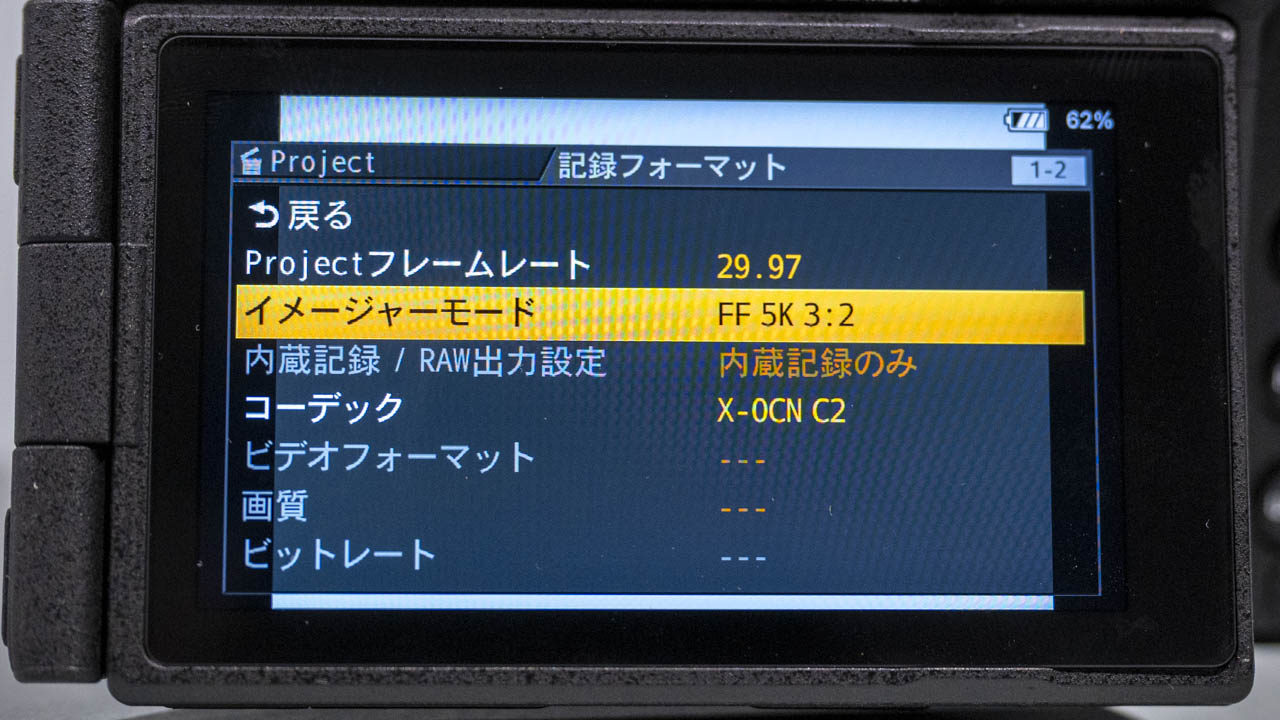
Support for 5K 120fps and 4K 240fps is planned in future firmware update.
High frame rate shooting is another major feature of the FX5. At launch, it will support shooting at up to 60fps in 5K, up to 120fps in 4K, and up to 240fps in Full HD. Furthermore, 5K up to 120fps and 4K up to 240fps when recording with X-OCN will be supported in software update Ver. 2.00, scheduled for August 2027 or later. 5K 120fps will be available with X-OCN C1 and C2, and 4K 240fps will be available with X-OCN C2.
Combining high-definition slow-motion shooting with 16-bit RAW makes it a powerful option for productions dealing with fast-moving subjects, such as sports, action, music videos, and nature footage.
Three base sensitivity levels: ISO 800, 4000, and 12800.
S-Log3 shooting offers three shooting modes: Cine EI, Cine EI Quick, and Flexible ISO. In Cine EI and Flexible ISO modes, you can select a base ISO sensitivity from three levels: ISO 800, 4000, and 12800. In Cine EI Quick mode, the optimal base ISO sensitivity is automatically selected based on the set EI value.
Please note that X-OCN recording is only available in Cine EI mode.
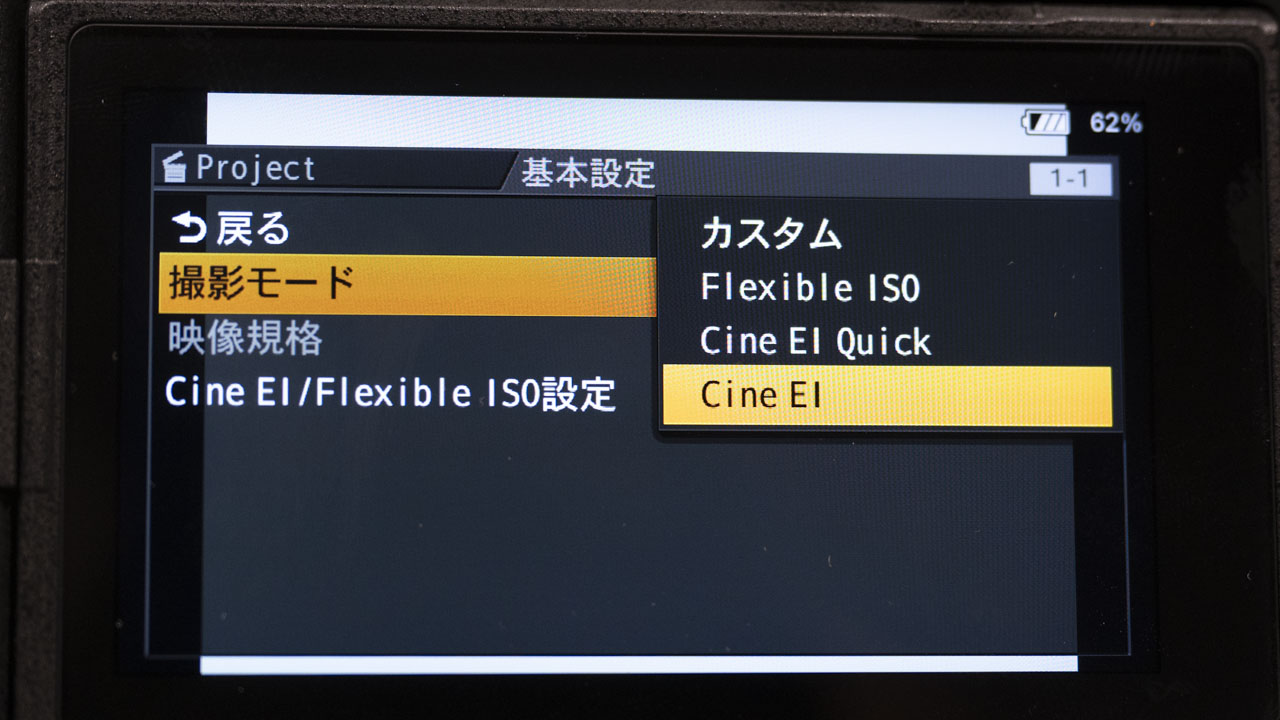
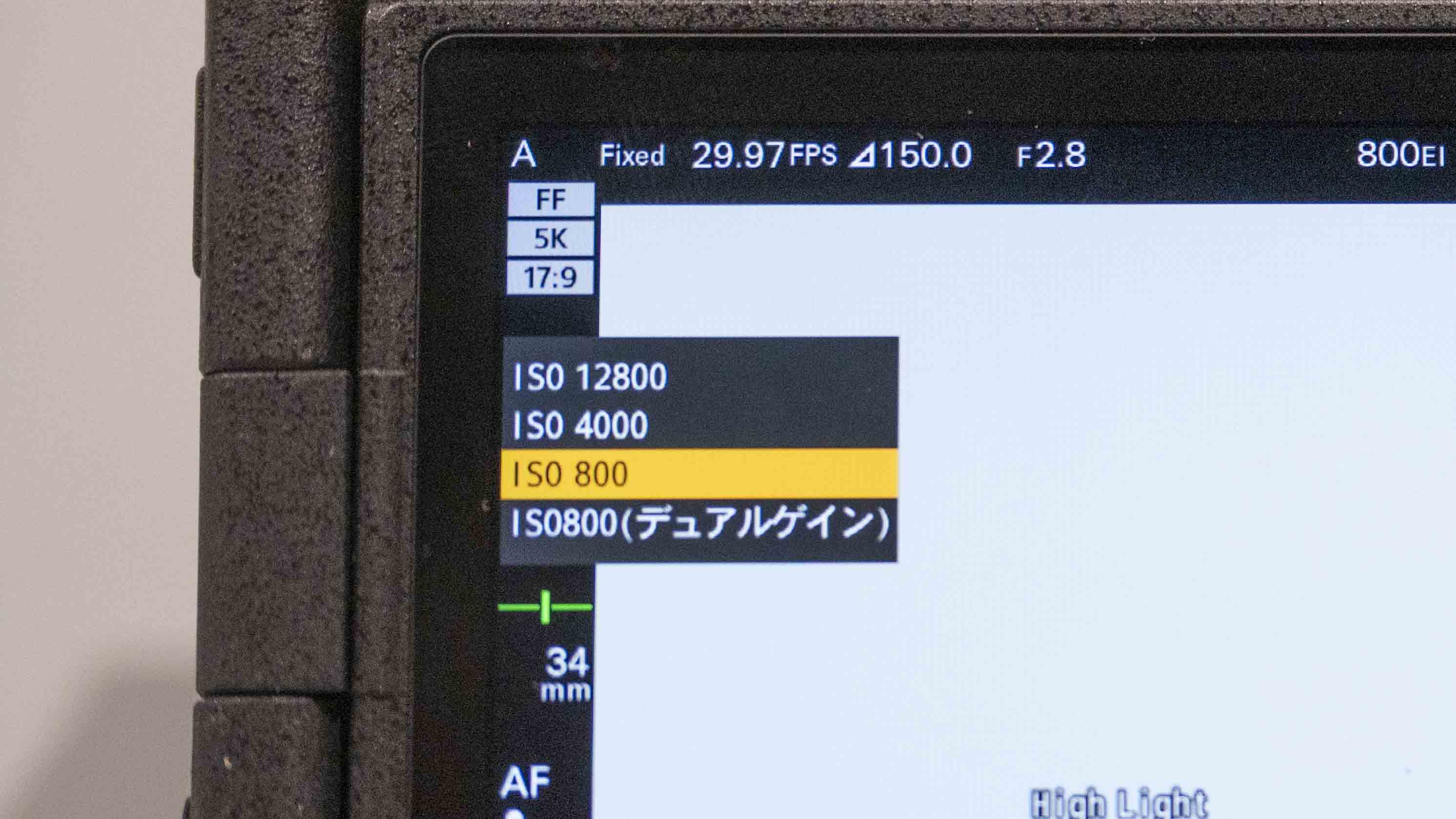
For photographers who previously used a high-sensitivity base ISO and reduced it as needed, the addition of an intermediate ISO of 4000 is a practical improvement. It makes it easier to choose a base ISO depending on the shooting conditions: ISO 800 for bright outdoor conditions, ISO 4000 for indoor or evening conditions, and ISO 12800 for very dark environments.
The three standard ISO sensitivities are clearly displayed on the camera’s selection screen. While this change may seem minor from the spec sheet alone, it’s a valuable feature for improving exposure design on set during documentary and event recording where lighting conditions frequently change. The latitude is set at 15+ stops according to Sony’s internal measurements during S-Log3 video recording.
S-Log3 supports the S-Gamut3 and S-Gamut3.Cine color spaces. Up to 16 user LUTs can be loaded from the memory card to the camera, allowing users to shoot while checking the display to simulate the final post-production result. Loadable LUTs are 17-grid or 33-grid CUBE files (.cube).
| classification | item | ILME-FX5 |
|---|---|---|
| Exposure control | ISO sensitivity | ISO 320–409600 equivalent, AUTO (ISO 320–409600 equivalent, upper limit setting) |
Dual-gain shooting to reduce noise in dark areas
The Sony FX5 is the first in the Cinema Line’s FX series to support dual-gain shooting. Dual-gain shooting reduces noise while maintaining latitude, improving detail in shadow areas. In comparison footage shot in a dark room, using this function suppresses fine noise in dark areas, making the outlines and textures of the subject more visible.
There are some limitations when using this feature. The base ISO is fixed at 800, the EI limit for Log shooting is 3200, and the ISO limit for custom mode shooting is 2500. The maximum frame rate is 30p for 5K 3:2 and 60p for 5K 16:9 and 17:9. It cannot be used with FHD, FFc 4.5K 17:9, FFc 4.5K 16:9, or FFc 3.8K 16:9.
Improved recognition performance and stability through AI processing
The autofocus system employs AI-powered subject recognition and fast hybrid AF, improving recognition performance compared to the FX3. Camera settings allow users to select the target subject from human, animal/bird, animal, or bird. With up to 759 phase-detection autofocus points, it covers a wide area and tracks subjects even in dark scenes or with shallow depth of field.
The ability to maintain recognition and tracking under challenging conditions provides peace of mind in documentaries, events, and solo shoots where lighting cannot be freely positioned.
Manual focus is often essential in filmmaking. On the other hand, in small-scale shoots or when using a gimbal, reliable autofocus is crucial for the success of the shoot itself. The FX5 incorporates advanced features from the Cinema Line while also enhancing the AF convenience that has been praised in the FX3 and α series.
| classification | item | ILME-FX5 |
|---|---|---|
| focus | Detection method | Fast Hybrid AF (Phase Detection Method / Contrast Detection Method) |
| Number of ranging points | Up to 759 points (phase difference detection method) | |
| Subject recognition (during video) | people, animals/birds, animals, birds | |
| Other features | AF transfer sensitivity (video), AF transition speed (video), focus map (video) |
|
| Subject recognition during autofocus Touch focus Touch tracking Multi-angle monitor Camera microphone function Focus magnification |
Improved Image Stabilization
Image stabilization has also been improved from the FX3. The roll correction range is up to approximately twice that of the FX3. In comparison footage, the tilt and rotational shaking that occur when shooting while walking are clearly suppressed. It also supports Dynamic Active Mode, which combines electronic stabilization, and although the field of view is cropped, it is possible to shoot more stable handheld footage.
Dynamic Active mode is available at a maximum of 60fps, and Active mode at a maximum of 120fps. Super-resolution zoom cannot be used when Dynamic Active mode is selected.
The compact Cinema Line cameras are used not only for rigged shooting but also for handheld, gimbal, and shooting in confined spaces. The enhanced stabilization performance is an important improvement that takes advantage of the FX5’s small body.
| classification | item | ILME-FX5 |
|---|---|---|
| Image stabilization function | method | Image sensor shift type 5-axis correction (correction method depends on lens specifications) |
| mode | Video: Dynamic Active / Active / Standard / Off |
Smoothly transitions between optical zoom and super-resolution zoom.
One of the most practical features is the new “Smooth Priority” mode for the Super Resolution Zoom.

Comparing the conventional optical priority setting with the smooth priority setting, optical priority results in slight changes or pauses in the field of view at the boundaries of the zoom range. On the other hand, smooth priority allows for a continuous change in magnification from the optical range to the super-resolution range, and the return to the wide-angle side is also smooth. The camera’s menu allows you to switch between “optical priority” and “smooth priority.”
When using zoom operation itself as a visual expression, it’s crucial that no unnatural movements occur during the process. This feature is particularly effective in live recordings, documentaries, and event photography when combined with power zoom lenses.
Please note that Super Resolution Zoom cannot be used when the recording frame rate exceeds 60fps. Also, Smooth Priority cannot be used with prime lenses and some zoom lenses.
A compact body only 19g heavier than the FX3.
Despite adding many new features, the body size hasn’t changed significantly from the FX3.
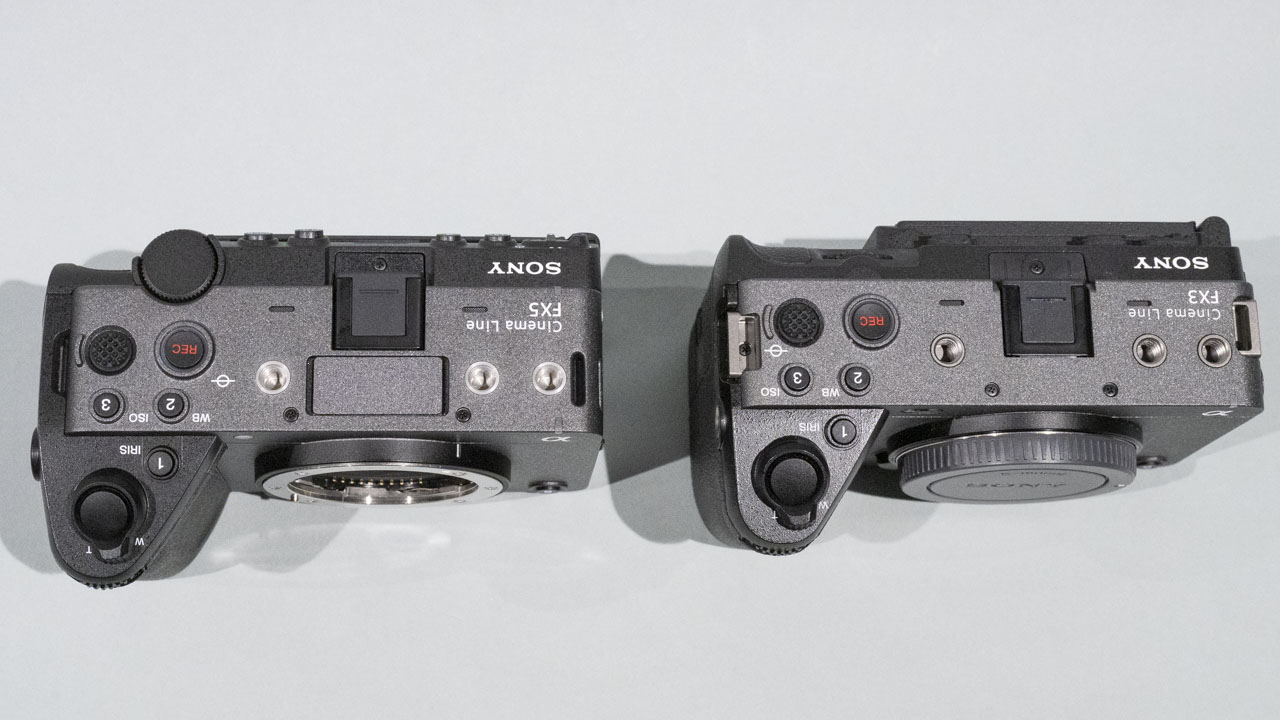
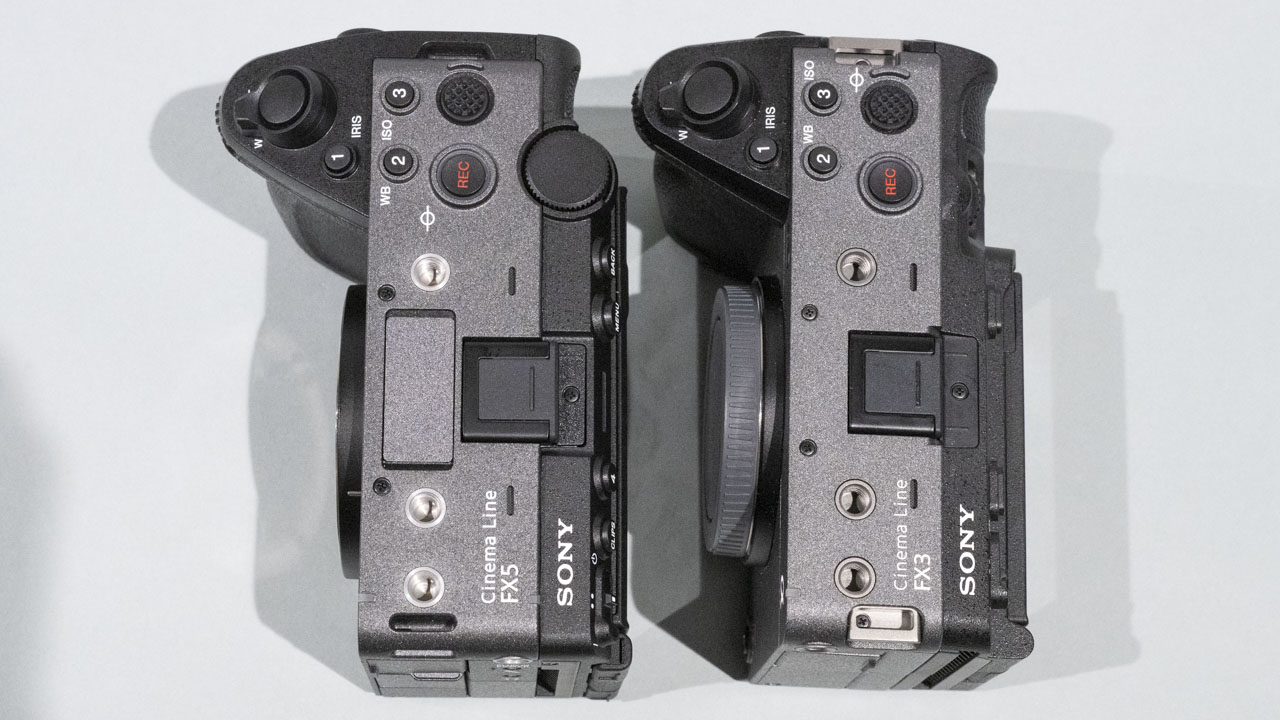
| FX3 | Approximately 715g |
|---|---|
| FX5 | Approximately 734g |
*Includes battery and memory card
The width and depth have increased by approximately 2.5mm, while the height has increased by approximately 1.2mm. The weight, including the battery and memory card, is approximately 734g for the FX5 compared to approximately 715g for the FX3, an increase of only 19g. When you actually hold it, it retains the impression of a compact, boxy body that is characteristic of the FX series. The grip has a moderate thickness, making it easy to hold stably even with a lens attached.
The bottom features two screw holes for tripods. This design makes it easy to choose the mounting method when combining cages, plates, and rigs. Unlike cameras like the FX6, which are designed for shoulder use, this camera excels in situations where camera size is a major factor in shooting, such as with small gimbals, drones, in vehicles, or in confined sets.
3.5-inch, 16:9 aspect ratio, 4-axis multi-angle LCD
The monitor features a 3.5-inch, 16:9 aspect ratio, 4-axis multi-angle LCD screen.

A key feature is the adoption of a 16:9 panel, which is optimized for video display, rather than a 3:2 monitor designed for both photos and videos. The large screen makes it easy to check both the image and shooting information. Thanks to its 4-axis mechanism, the monitor can be opened not only to the side of the camera but also to change its angle while maintaining a position close to the optical axis. This makes it easy to adjust the display position to suit different shooting styles, such as low-angle, high-angle, or when a rig is attached.
The 4-axis mechanism provides a wide range of motion, making it easier to avoid interference with cables and peripherals compared to simple vari-angle displays. Its design also makes it easy to use in compact configurations without the need for an external monitor for video recording.
Sony FX5 supports false color, waveform, and vectorscope.
The display functions have also been enhanced to better suit professional video production. In addition to conventional histograms and peaking, it now supports false color, waveform monitor, vectorscope, and focus map.
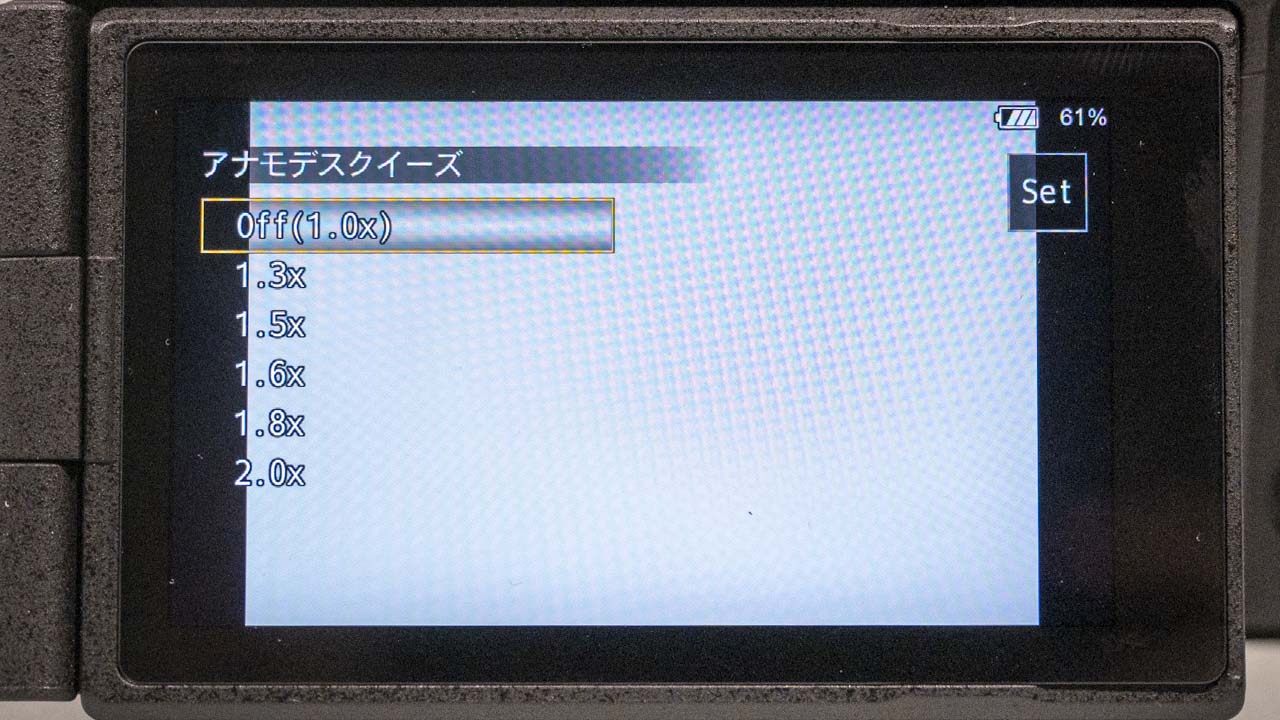
The false color display, which allows you to check exposure using different colors, the waveform monitor, which allows you to check the brightness distribution, and the vectorscope, which allows you to check the hue and saturation, are useful for technically evaluating images on set. It has evolved in a direction that allows you to check the shooting status in detail using only the unit itself, without relying on an external monitor. When using an anamorphic lens, the desqueeze display supports five types: 1.3x, 1.5x, 1.6x, 1.8x, and 2.0x.
“OSD Black” – No information is overlaid on the video.
A new feature that significantly contributes to improved visibility is “OSD Black”.
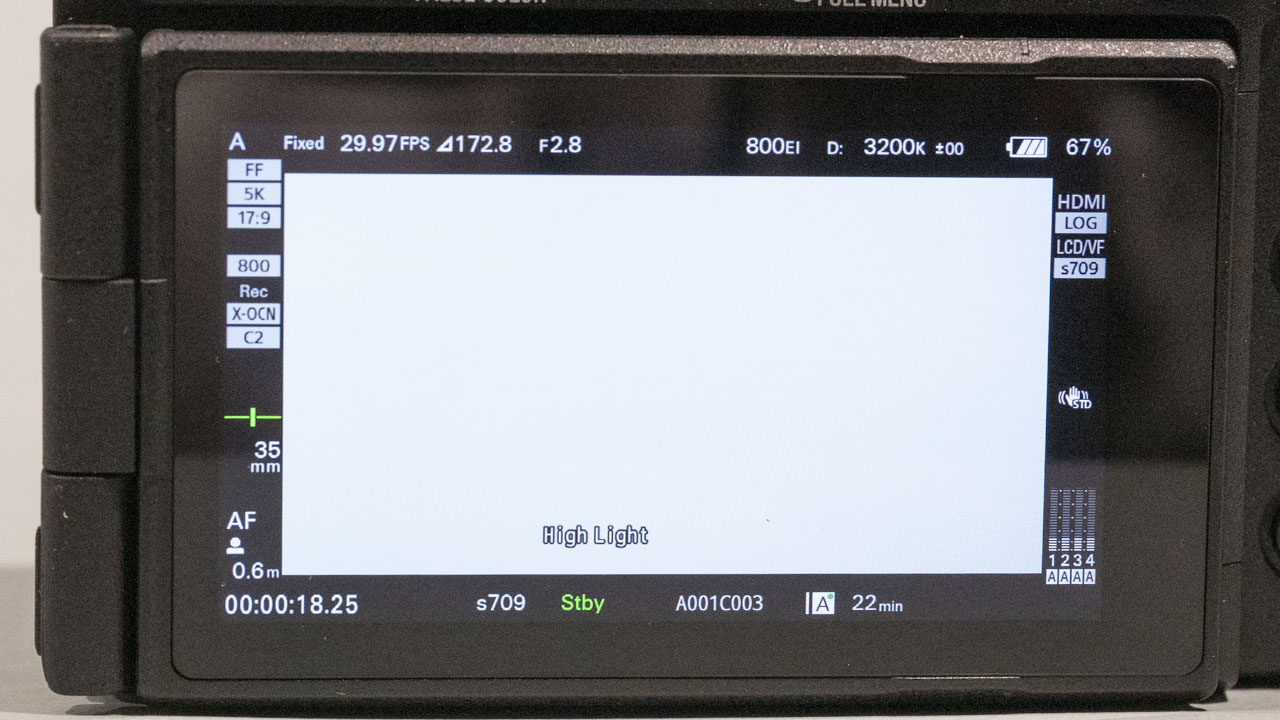
In normal display mode, shooting information such as ISO, shutter speed, and white balance is superimposed on the image. With OSD Black, a black display area is created around the image, and the shooting information is placed in that area. Because text does not overlap the image, it is easier to check the composition, including the edges of the screen.
In video shooting, where composition and a large amount of shooting information must be checked simultaneously on a small screen, the information display itself can sometimes obscure the subject. OSD Black is not a flashy feature, but it is a highly rational display method in actual shooting.
A new menu system that connects to VENICE and FX6.
In terms of controls, the menu system has been significantly changed.

The previous FX3 adopted a menu structure similar to the α series. The FX5, however, has switched to a menu system closer to the higher-end Cinema Line models such as VENICE, BURANO, and FX6. User menus, user functions, and status displays have been reorganized to resemble those of the professional Cinema Line.
Pressing and holding the menu button will take you to a new menu. Users familiar with the FX3 or α series may be confused at first. On the other hand, if you plan to migrate to a multi-camera environment including the FX6, BURANO, and VENICE in the future, having a unified operating philosophy is of great importance. This change can be seen as prioritizing connection to the entire Cinema Line workflow rather than simply prioritizing ease of use for the FX5 alone.

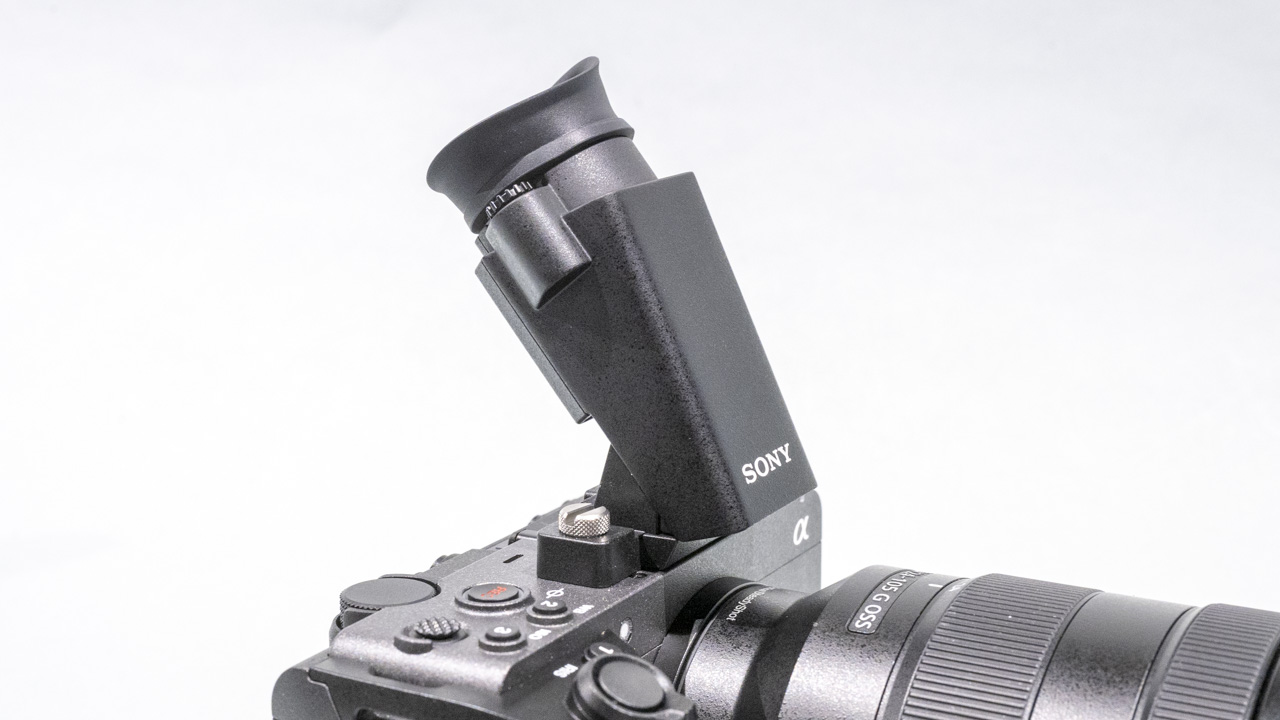
Detachable viewfinder with approximately 7.07 million dots
The FX5 allows the use of a detachable viewfinder that connects to a dedicated terminal.
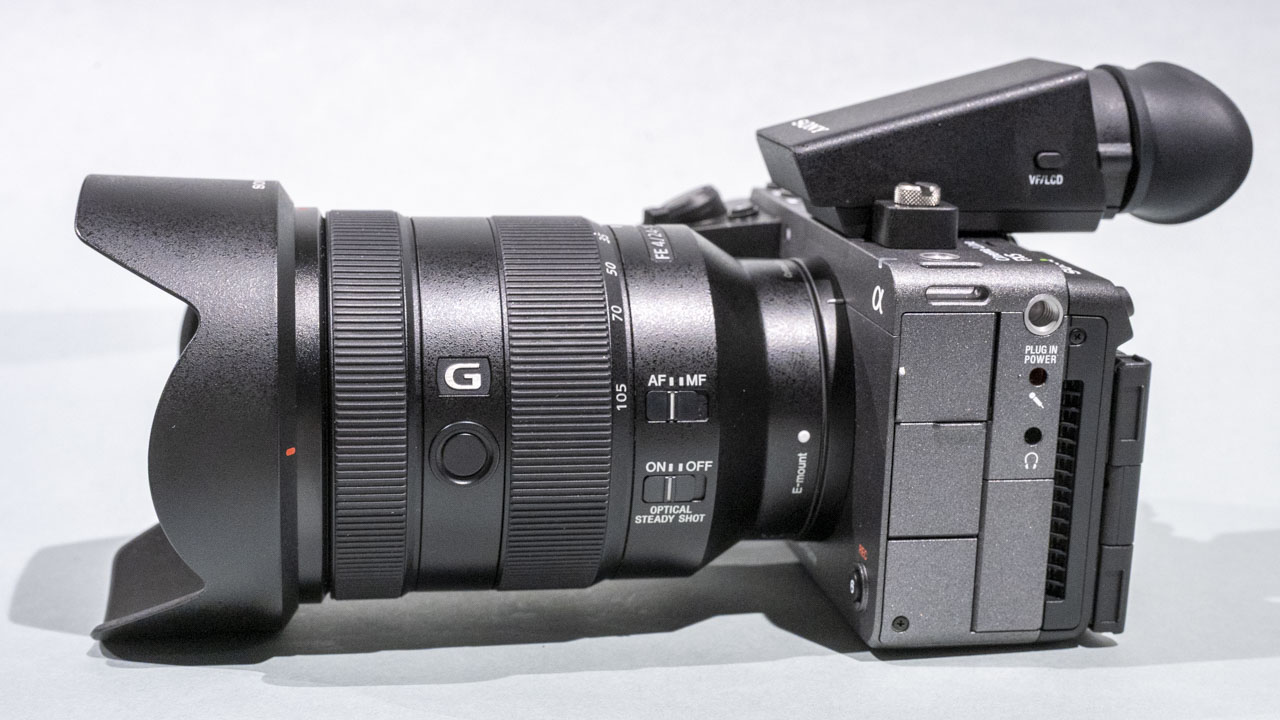
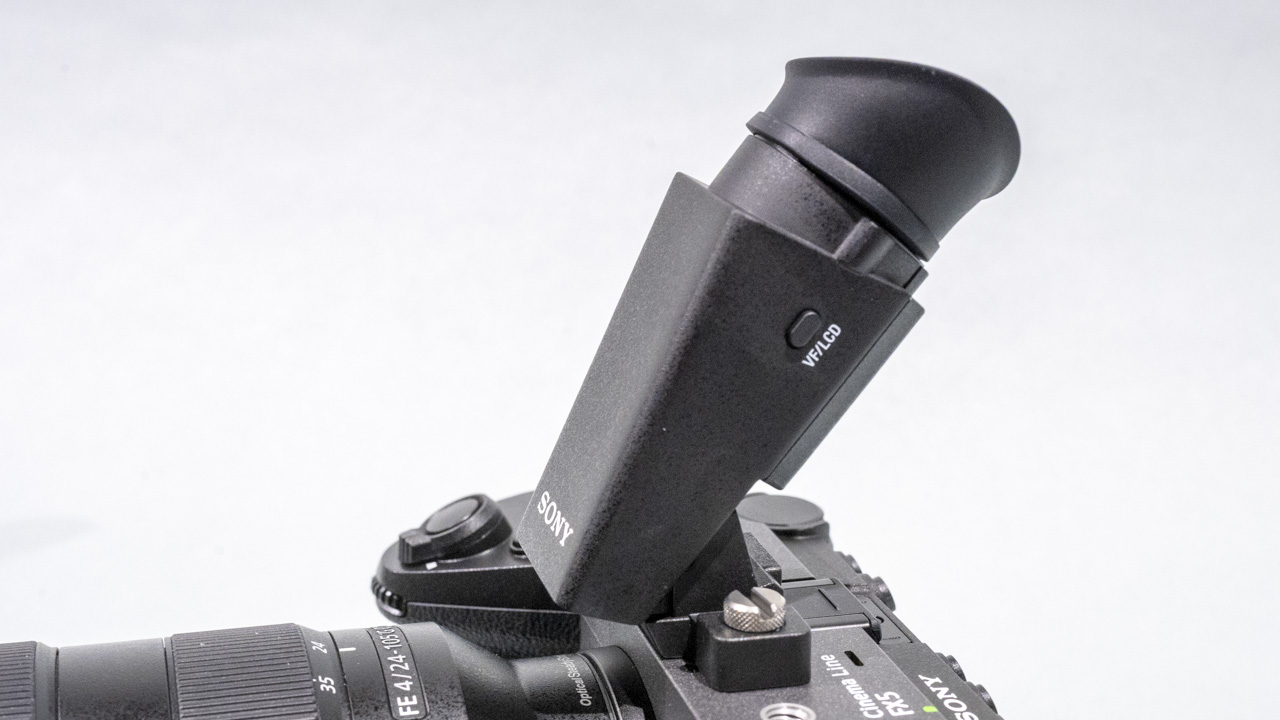
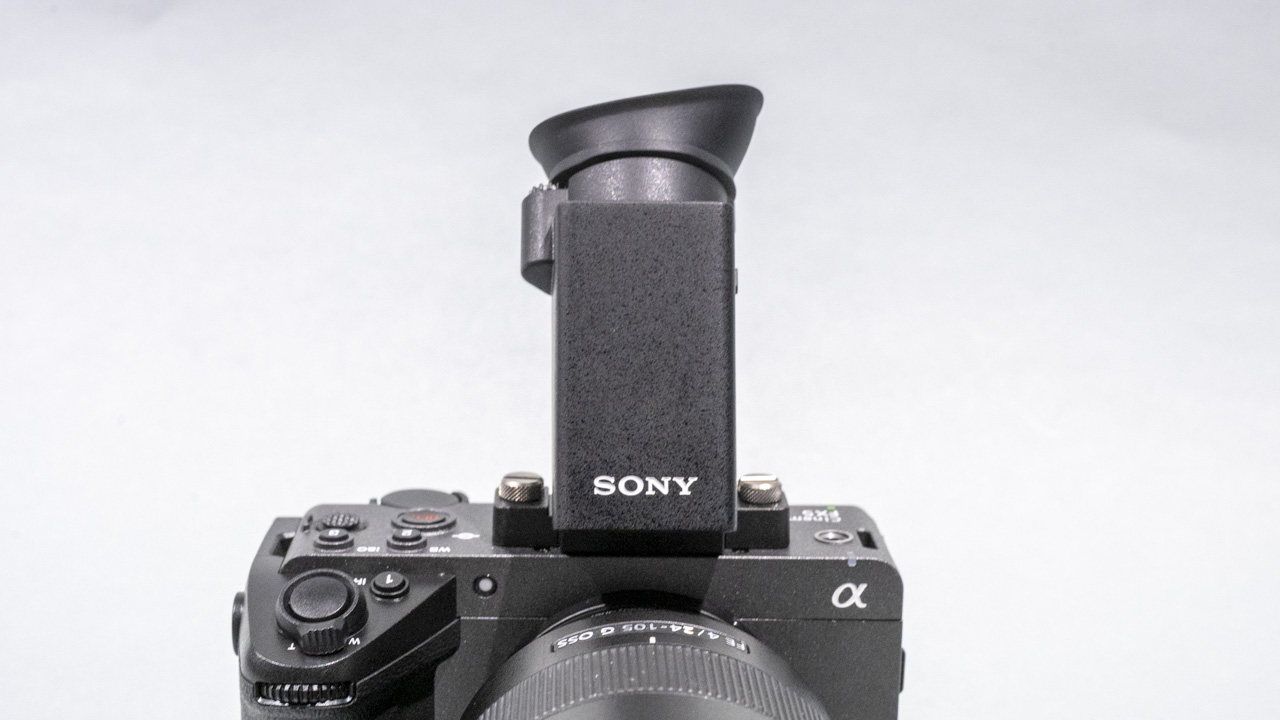
The viewfinder is sold separately and has a suggested retail price of ¥94,600 (including tax) in Japan. Price overseas however varies. It uses a 0.58-inch OLED panel with a resolution of approximately 7.07 million dots and a magnification of approximately 0.90x. It supports DCI-P3 equivalent color gamut, 10-bit gradation, and HDR display, and is designed as a high-resolution viewfinder for video production. The tilt angle can be adjusted from 0° to 90°.
The mounting position is close to the center of the Sony FX5, allowing you to view from a position close to the optical axis. In bright outdoor conditions or when handheld shooting where you want to hold the camera close to your body for stability, you can choose a shooting style different from that of the LCD monitor. The DVF-EL1 connects to the FX5’s dedicated viewfinder terminal. Note that the OLED viewfinder and the multi-interface shoe cannot be used simultaneously. This is a typical FX series approach of expanding the system according to the application while maintaining a compact body.
New XLR handle supporting 96kHz/32bit float
A new XLR handlebar unit will also be released at the same time as the Sony FX5.
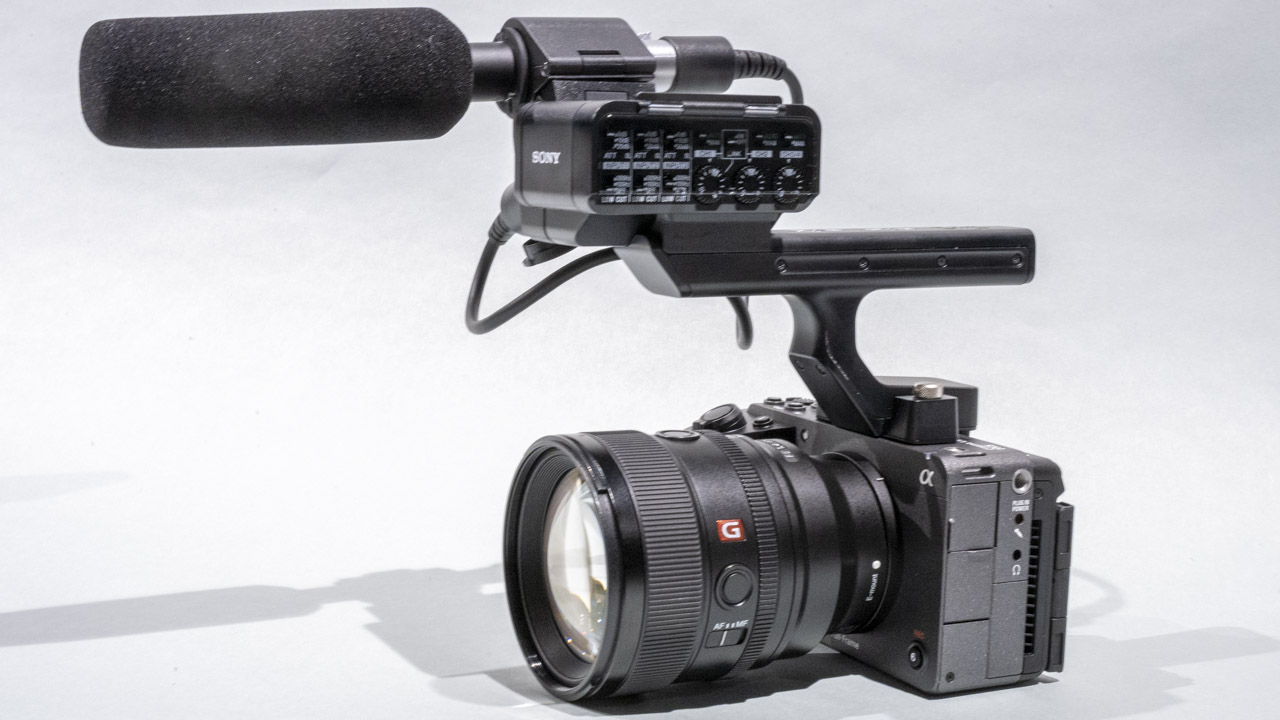
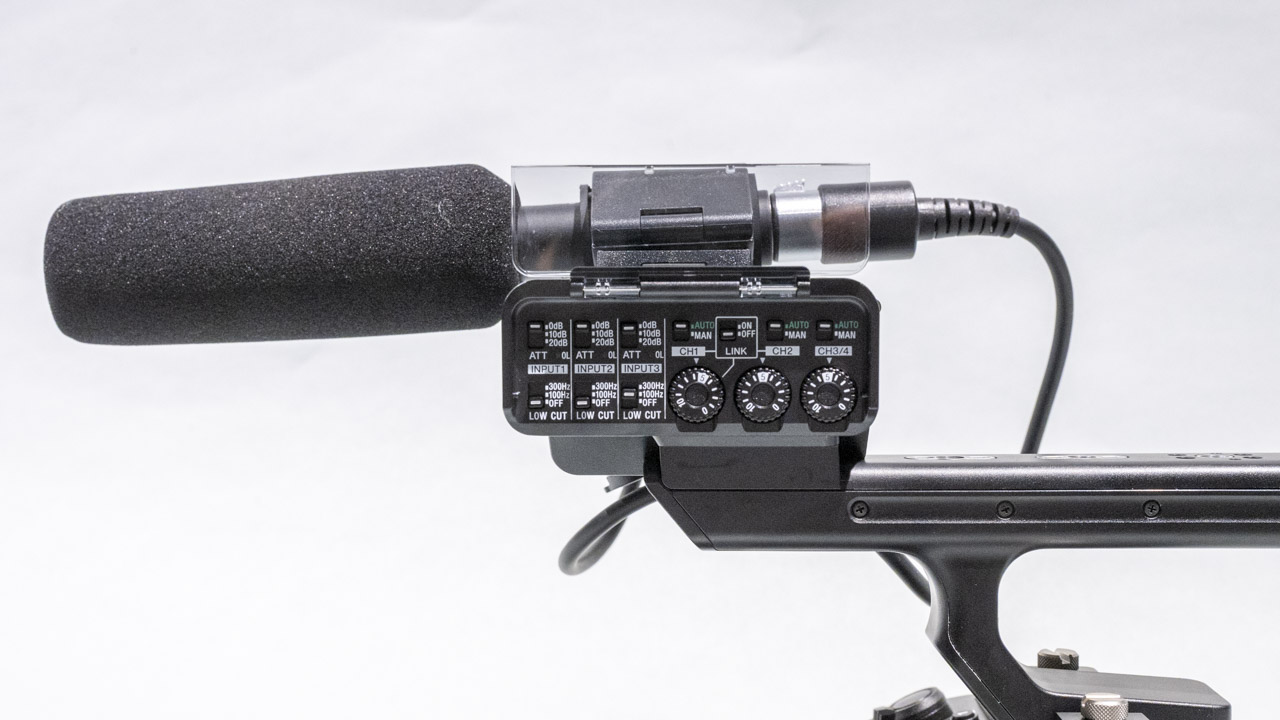
When combined with the new handle, it supports in-camera audio recording at 96kHz/32bit float. 32bit float recording makes it easier to adjust the volume in post-processing, even if the recording level is higher or lower than expected. This provides greater peace of mind in situations where volume changes are difficult to predict, such as interviews, documentaries, and events.
However, because the screw hole positions are different, the XLR handle unit “XLR-H1” designed for previous models cannot be attached to the Sony FX5. Users who already own an XLR-H1 or compatible rig should be aware that they may not be able to reuse their peripherals when installing the Sony FX5.


Supports timecode, communication functions, and network streaming.
In terms of connectivity, a new timecode cable, the “VMC-BNCU1,” approximately 200mm in length, is available. The BNC cable allows timecode output from cameras such as the FX6 to be input to the Sony FX5’s USB Type-C terminal, enabling synchronization of multiple cameras during recording or when recording video and audio separately. A new terminal for wired remote operation is also included. This allows for stable camera operation even in studios or event venues with congested radio waves.
Wireless communication complies with IEEE 802.11a/b/g/n/ac/ax and supports the 2.4GHz, 5GHz, and 6GHz bands. In addition to wired LAN, USB tethering, and FTP transfer using Wi-Fi, it also supports network streaming via RTMP, RTMPS, and SRT. Although the unit is small, it is not just a small camera for standalone use, but can be expanded to become the core of a professional system that combines timecode, audio, viewfinder, network, and remote control.

Details
| classification | item | ILME-FX5 |
|---|---|---|
| interface | PC Interface | Mass storage |
| Multi/Micro USB terminal | – | |
| USB Type-C port | ● (2 terminals) PORT1: Compliant with SuperSpeed USB 10Gbps (USB 3.2 Gen2) PORT2: Compliant with Hi-Speed USB 480Mbps (USB 2.0) |
|
| Wireless LAN compatible (built-in) | ● (Wi-Fi compliant) 802.11a/b/g/n/ac/ax (2.4GHz band/5GHz band/6GHz band) |
|
| Bluetooth | ● (Bluetooth standard Ver. 5.3) 2.4GHz band |
|
| HDMI port | ● (HDMI Type A) | |
| Multi-interface shoe | ● (Compatible with digital audio interfaces) | |
| Microphone jack | ● (3.5mm stereo mini jack) | |
| XLR audio input terminal | ● (3-pin (female) x 2) | |
| headphone jack | ● (3.5mm stereo mini jack) | |
| LAN port | ●(2.5GBASE-T, 1000BASE-T, 100BASE-TX) | |
| function | FTP transfer (wired LAN, USB tethering, Wi-Fi) | |
| Viewfinder terminal | ● (Dedicated terminal for DVF-EL1) | |
| Network Streaming | Video data format | MPEG-4 AVC/H.264 MPEG-H HEVC/H.265 |
| Video resolution | 3840 × 2160 1920 × 1080 1280 × 720 |
|
| Audio data format | AAC-LC 2ch (16bit 48kHz) | |
| protocol | RTMP RTMPS SRT |
New battery with increased capacity
The battery will also be changed to a new, high-capacity type.

According to Sony, the new NP-SA100 battery has approximately 30% more capacity than the battery used in the FX3, improving shooting time and on-location performance. For cameras with processing-intensive features such as high-resolution RAW recording, high frame rate shooting, AI processing, and wireless communication, battery performance greatly affects actual operation. If shooting time can be secured while maintaining a compact body, it becomes easier to operate without using external power supplies or large rigs.
Both internal charging and USB power supply can be accessed via the USB Type-C port, and the device supports USB Power Delivery.
| Sony FX3 | Sony FX5 | |
|---|---|---|
| capacity | 7.2V / 16.4Wh (2280mAh) |
7.82V / 20.9Wh (2670mAh) |
| Actual video recording time (CIPA standard compliant) |
– | Approximately 105 minutes |
| Continuous recording time (CIPA standard compliant, 5K 23.98p) |
135 minutes | Approximately 170 minutes |
Sony FX5 Memory Cards
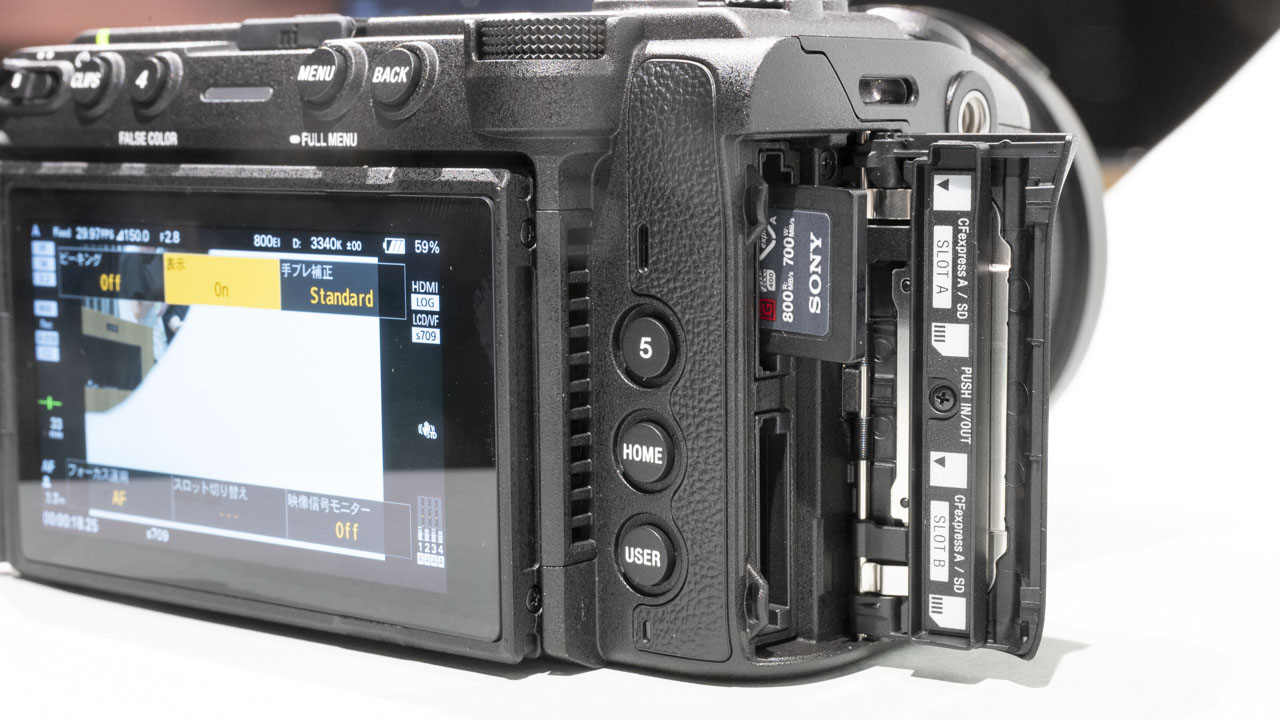
Additionally, the Sony FX5 features two CFexpress Type A memory card slots. In addition to high-speed and reliable CFexpress cards, it also supports SDXC (UHS-II/UHS-I) cards.
| classification | item | SONY ILME-FX5 |
|---|---|---|
| power supply | Batteries used | Rechargeable battery pack NP-SA100 |
| Actual video recording time* | When using the LCD monitor: Approximately 105 minutes (CIPA standard compliant) |
|
| Continuous video recording time | When using the LCD monitor: Approximately 170 minutes (CIPA standard compliant) |
|
| Internal charging | ● (Compatible with USB Type-C terminal, USB Power Delivery compatible) * | |
| USB power supply | ● (Compatible with USB Type-C terminal, USB Power Delivery supported) |
*Complies with CIPA standards.
*Requires a USB cable and external power supply that support USB PD 27W or higher.
Integration with higher-end models and integration of X-OCN workflow
The FX5 and FX6 are priced similarly, which can make choosing between them difficult. The FX6 has a built-in electronically variable ND filter and an SDI terminal, making it ideal for situations where you want a complete recording system on a single camera. The electronically variable ND filter allows for continuous exposure adjustment while maintaining aperture, shutter speed, and ISO. For outdoor documentary and live shooting, this is a clear reason to choose the FX6.
Strength of the Sony FX5 compared to the FX6
On the other hand, the strength of the FX5 lies in its ability to record 16-bit X-OCN in-camera while maintaining a compact body similar to the FX3. For film, advertising, music video, and documentary productions that require X-OCN and where the camera needs to be as small as possible, the FX5 is a strong option. While the FX6 emphasizes completeness for on-set operation, including built-in ND filters and terminals, the FX5 prioritizes a compact body, RAW recording, and powerful post-production capabilities. The choice shouldn’t be based solely on hierarchical relationships, but rather on selecting the model that best suits the functions needed on set.
The X-OCN’s support for in-camera recording not only improves image quality on its own, but also has significance for multi-camera operation with the higher-end Cinema Line. By recording X-OCN with the VENICE or BURANO and using the Sony FX5 for shooting in confined spaces, with gimbals, in vehicles, or with drones, it becomes easier to unify and handle the footage in post-production.
Of course, because the sensors, camera structures, and operations differ, not all footage will be exactly the same. Nevertheless, the ability to share the same Cinema Line look, 16-bit scene-linear workflow, and similar menu philosophy is a significant advantage when using sub-cameras. This makes the system easily expandable not only for large-scale productions but also for small production teams that may want to increase the number of cameras in the future.
Firmware update in August 2027 or later
The Sony FX5 will receive the following additional features in a software update, Ver. 2.00, scheduled for August 2027 or later. These include: up to 5K 120fps shooting using X-OCN C1 and C2, up to 4K 240fps shooting using X-OCN C2, open gate recording in XAVC SI, optimized information display during vertical shooting, and a frame grab function for extracting still images from video.
In particular, the FX5’s open gate recording capabilities for 5K 120fps, 4K 240fps, and XAVC SI greatly expand its range of applications. However, some features are available at launch, while others require updates. When purchasing, it’s essential to check when the recording formats you need will become available.
Features planned for support (Software update Ver. 2.00 scheduled for August 2027 or later)
- X-OCN supports HFR shooting at up to 5K 120fps / 4K 240fps.
- XAVC SI recording in 3:2 aspect ratio (open gate imaging) with full image sensor readout.
- User interface optimized for vertical shooting (vertical layout for displaying shooting information)
- Frame grab function (extracting still images from video)
*Functions and specifications are subject to change without notice.
The Sony FX5 is a camera that changes the role of small Cinema Line cameras.
In conclusion, the Sony FX5 is not simply a more powerful version of the FX3. While its body size is similar to the FX3, it incorporates features previously found only in large, professional cameras, such as X-OCN, OpenGate, three-stage base ISO, AI subject recognition, a menu similar to the higher-end Cinema Line, and advanced video monitoring capabilities. Most notably, it can record 16-bit Scene Linear RAW without an external recorder.
While RAW recording offers high image quality, it also presents practical challenges such as larger equipment, increased file sizes, and higher storage costs. The FX5 attempts to lower these hurdles by offering a lightweight X-OCN mode that aims for a file size close to XAVC-I.
The Sony FX5 is neither the FX3 nor the FX6. It’s not as large as the VENICE or BURANO either. As a middle ground, it’s a new Cinema Line camera that combines a compact body with a 16-bit scene-linear RAW workflow. As a camera that meets the needs of video production, from shooting to grading and finishing, it’s likely to attract attention from many creators.