Inter BEE 2025 Exhibition Report
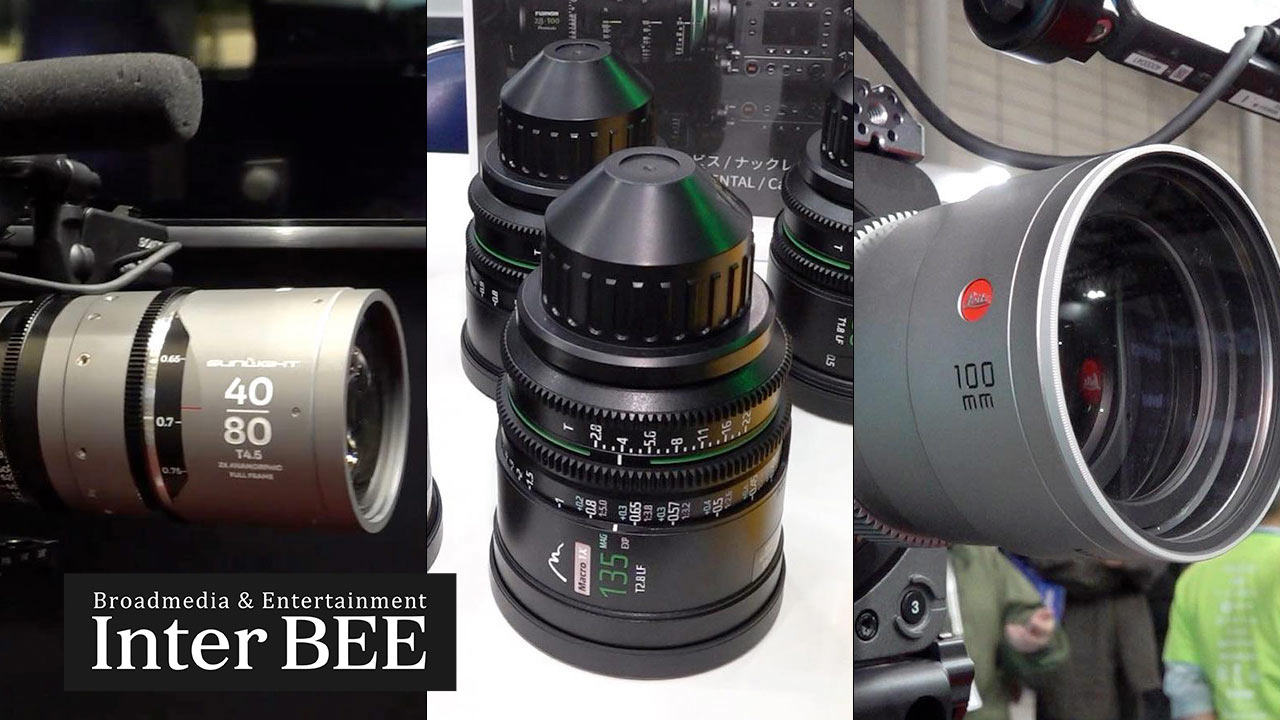
What was striking about the cine lens exhibits at Inter BEE 2025 was that they went beyond mere specs competition and featured a strong focus on products that pursued practicality in the field. Each company proposed tools that could concretely improve creators’ workflows, such as cinema lenses with autofocus and compact lenses that combine high image quality with mobility. We’d like to introduce some noteworthy new products that are sure to bring new options to the video production field.
Sigma exhibits the industry’s first AF cine lens and T1.3 prime lens
First, for this Inter BEE 2025 Cine Lenses review, one of the more popular exhibitions was the Sigma booth, where they displayed two groundbreaking products that go beyond the boundaries of conventional lens categories.
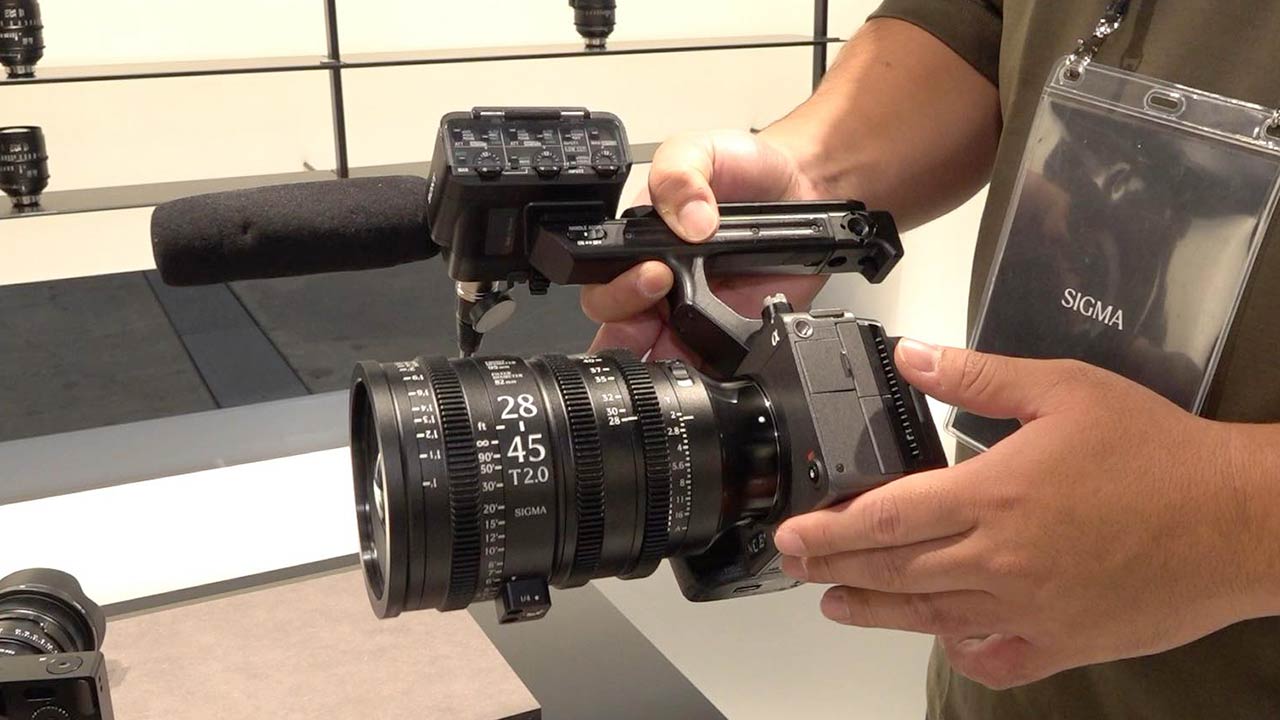
The first is the AF CINE LINE 28-45mm T2 FF, which is scheduled for release in December. At first glance, it looks like a full-fledged cinema lens, but surprisingly, it supports autofocus (AF). As advertised as an “industry first,” it fully maintains professional-grade operability, such as a 0.8mm pitch gear and a 95mm front lens diameter, while being able to switch to AF drive with the flick of a switch – a truly groundbreaking feature. The fact that it combines the precision of manual focus with the mobility of modern AF in a single lens intuitively makes it a powerful tool for one-man operations or small crews.
What surprised me even more was the new “Aizu Prime Line” lineup. I was blown away by its specs: it’s the first in the world to achieve a T1.3 aperture throughout while covering the image circle of the large VistaVision sensor. At the venue, we could see the lineup ranging from 25mm to 75mm, and the combination of brightness and coverage is sure to be the culmination of a technical challenge in optical design. With a roadmap to eventually expand the lineup to a total of 12 lenses, it was hard not to feel Sigma’s serious commitment to the high-end cinema market.

Vintage style with modern performance: Leitz “HEKTOR” demonstrates its “hybrid” imaging capabilities
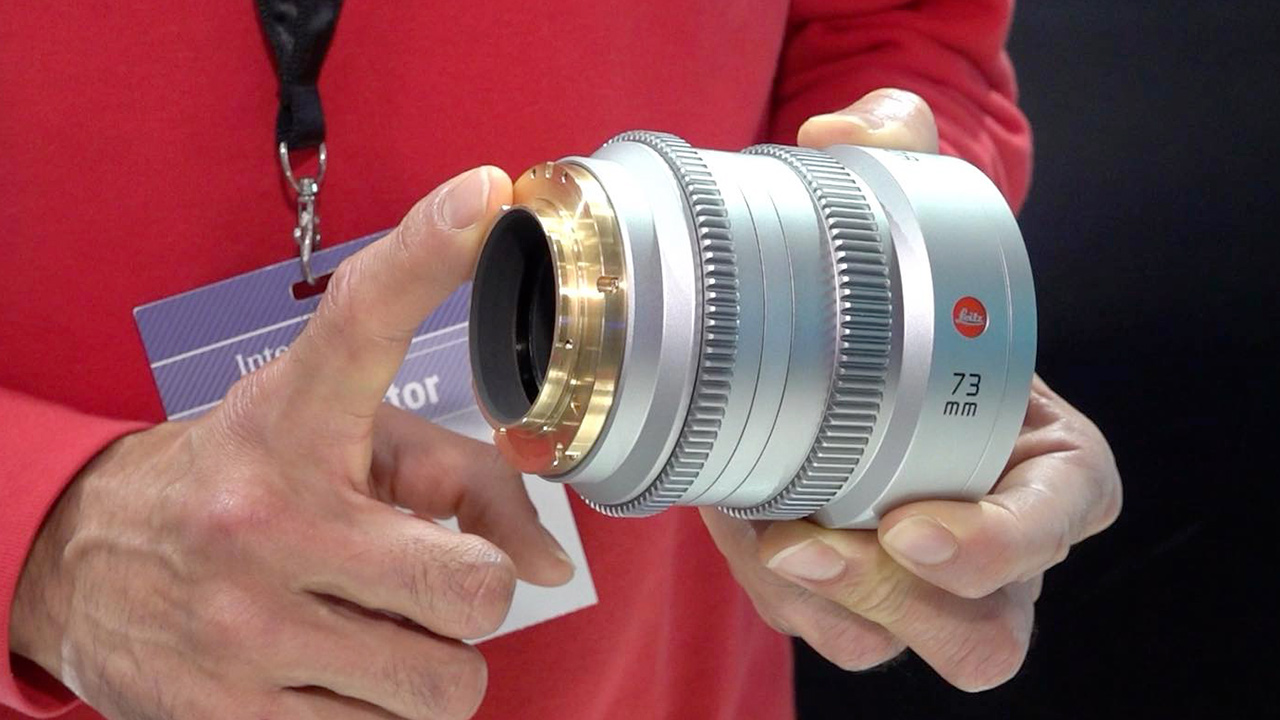
Aside from these cutting-edge technological innovations, the Leitz corner of the Mitomo booth featured a particularly unique exhibit that reinterpreted “vintage” in a modern way: the company’s first cinema lens for mirrorless cameras, “Leitz HEKTOR.”
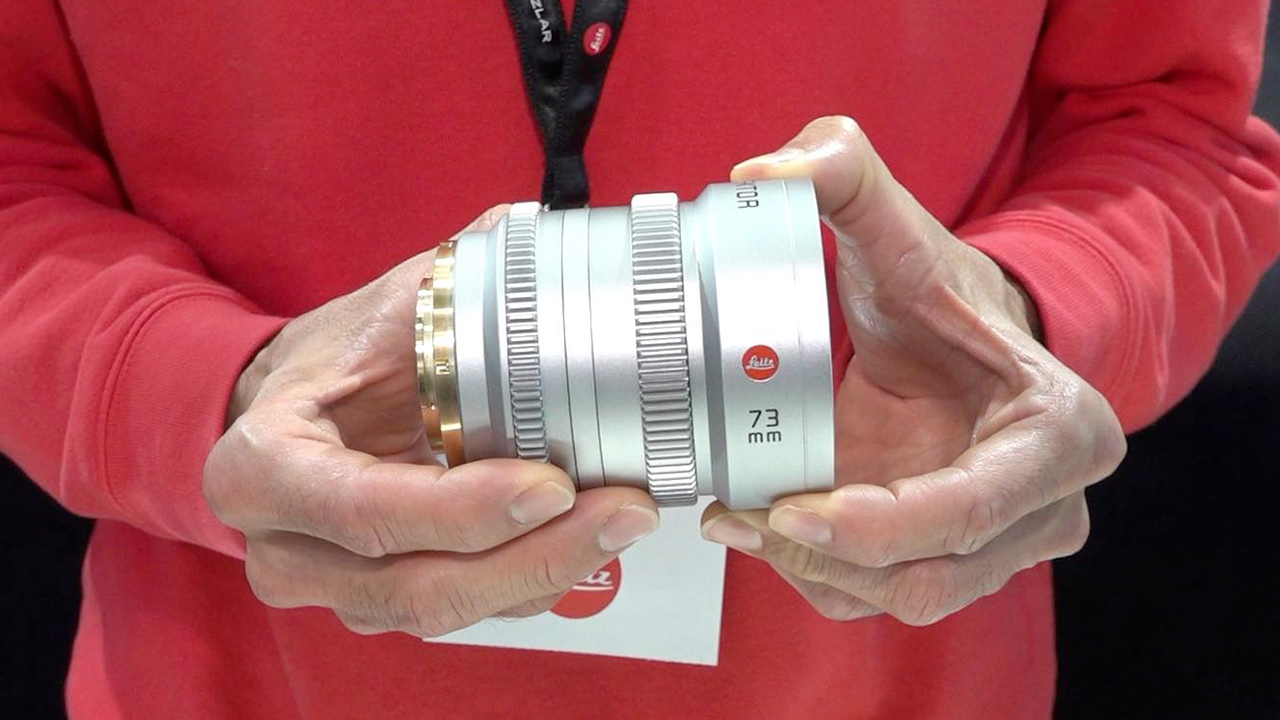
The first thing that struck me visually was the gleaming silver lens barrel. This is an homage to the famous “Hektor” lens from the 1930s, and it has a unique presence among the all-black modern photographic equipment. However, it is very interesting that it is not simply a nostalgic design. The development concept was to intentionally reproduce “vintage character” such as peripheral image distortion and flare, which were once considered flaws. When I actually looked at the lookbook, I could see that even though flashy rainbow flare was generated, the contrast of the subject was well maintained. Modern negative elements such as chromatic aberration and distortion have been thoroughly eliminated, and I was impressed by the “hybrid image quality” that combines the charm of old lenses with the reliability of the latest technology.

Its practicality is also a big surprise. In addition to Leica L, Sony E, Canon RF, and Nikon Z, Fujifilm G mounts are also planned, and users will be able to change these themselves. The ease of installation, which can be completed in just about two minutes by simply removing five T4 screws, has the potential to dramatically change on-site operations.
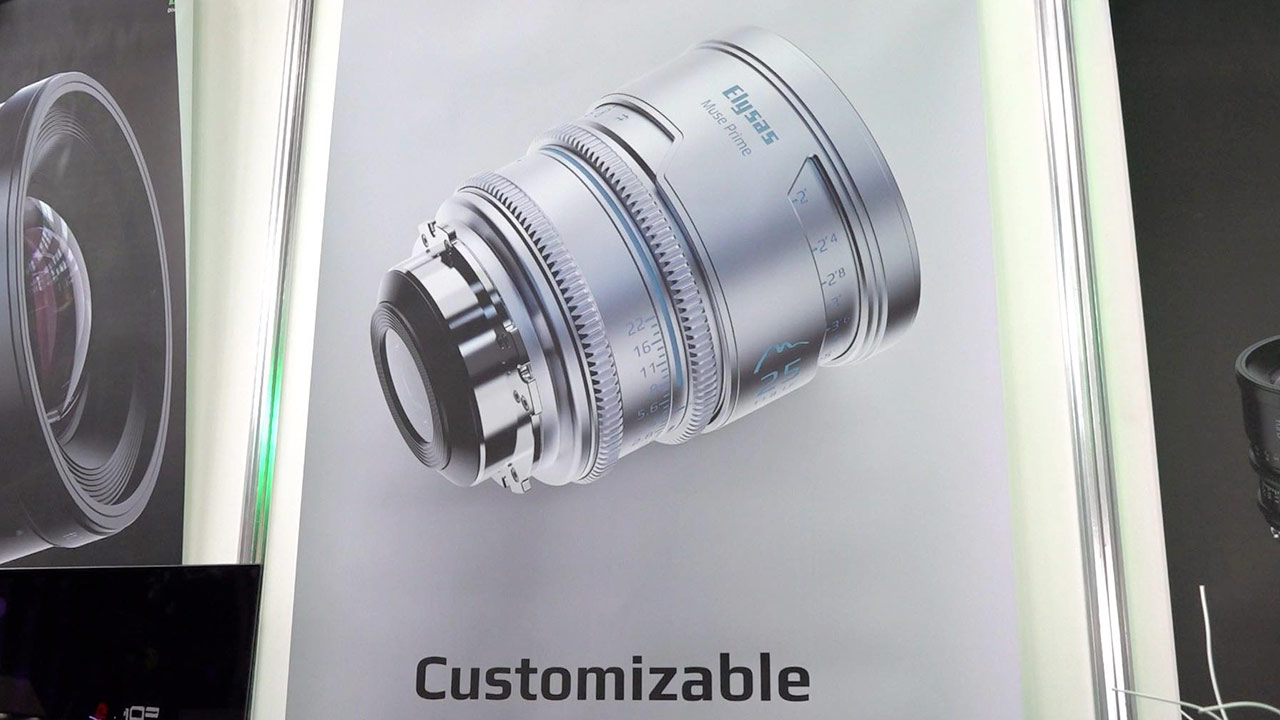
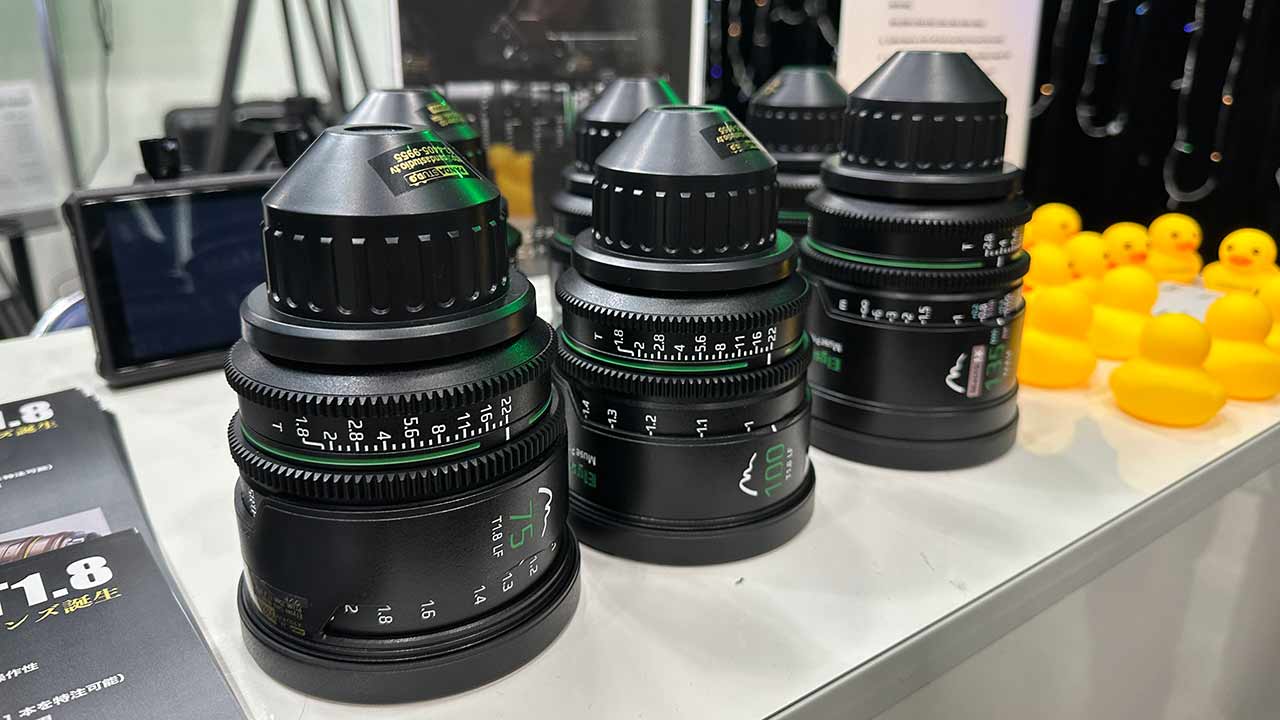
Elysas’ lightweight cinema lens “Muse Prime” weighs approximately 900g and is a PL mount lens. It will be on display at Inter BEE.
As I walked around the venue, I also got a strong sense of the rise of emerging overseas manufacturers. The “Muse Prime” series of cinema lenses, which was unveiled for the first time in Japan at the Elysas booth from China, had a very interesting presence in terms of its specifications and concept.
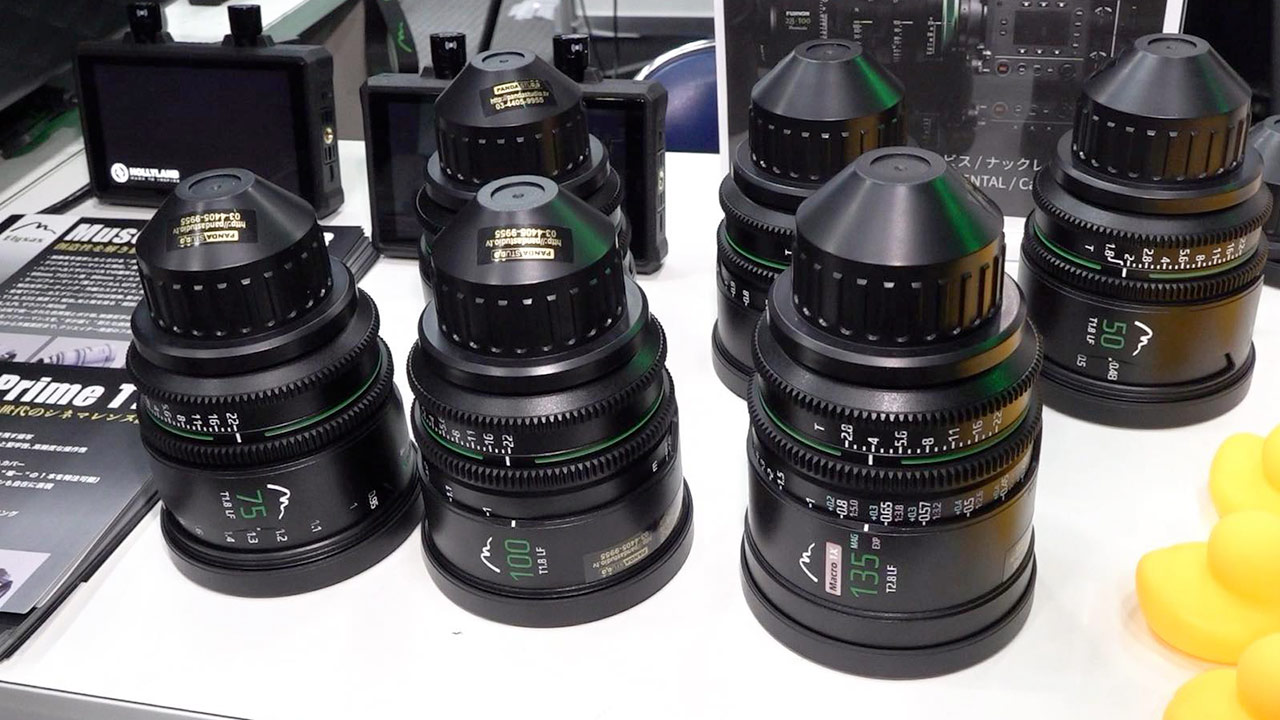
What first caught my eye was the bright T1.8 aperture and the bokeh that the manufacturer describes as “melting.” The consistent quality of the images across the series will be a major attraction for those who prioritize practicality. However, what surprised me most when I actually handled the camera was its weight. Despite using a robust PL mount, it weighs only about 900g. I had a hunch that this lightness would be a powerful tool for use with gimbals or drones. Furthermore, the unique ability to customize the body color and lens coating was an interesting feature not found in other companies.
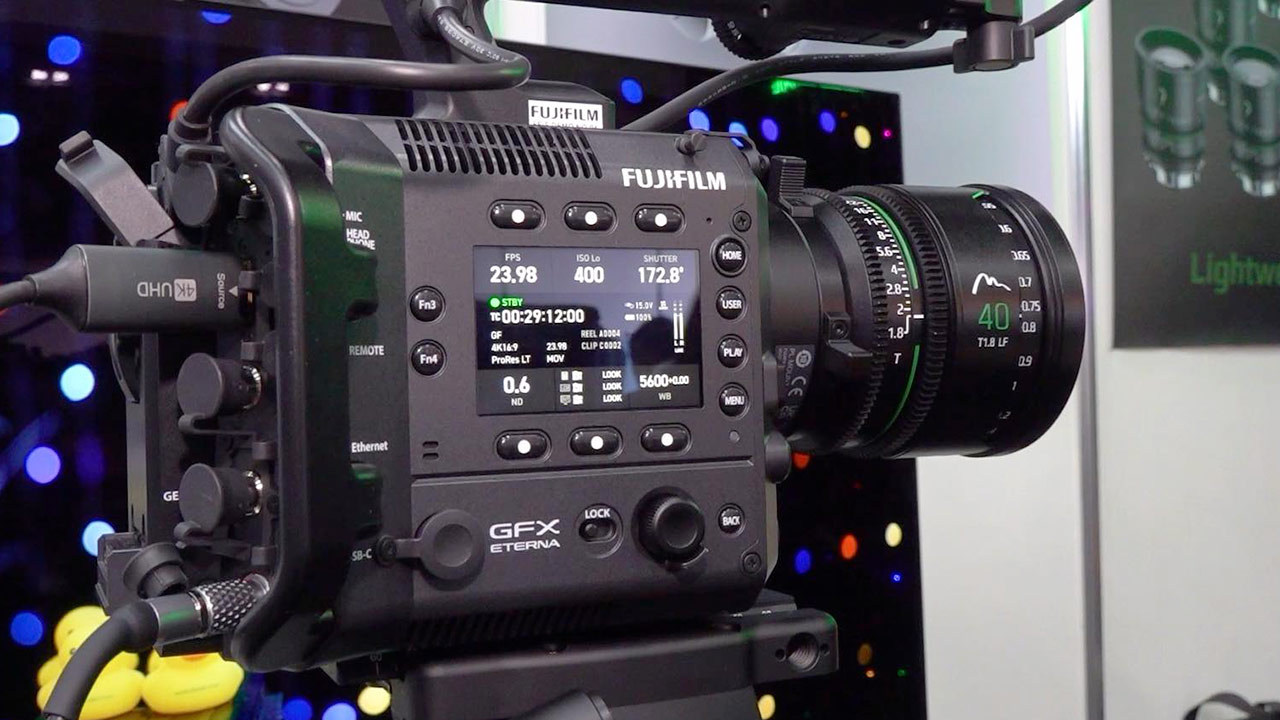
The fact that it was displayed in combination with Fujifilm’s “GFX ETERNA” in the booth was also thought-provoking. This was not just a demo, but a stepping stone to the development of a next-generation lens that covers an image circle of 55mm. It’s worth keeping an eye on Elysas’s developments, including the new model that will be officially announced at the 2026 NAB Show.
Amazing spec balance: SongRAW’s F1.2 large aperture lens shows its true potential at Inter BEE
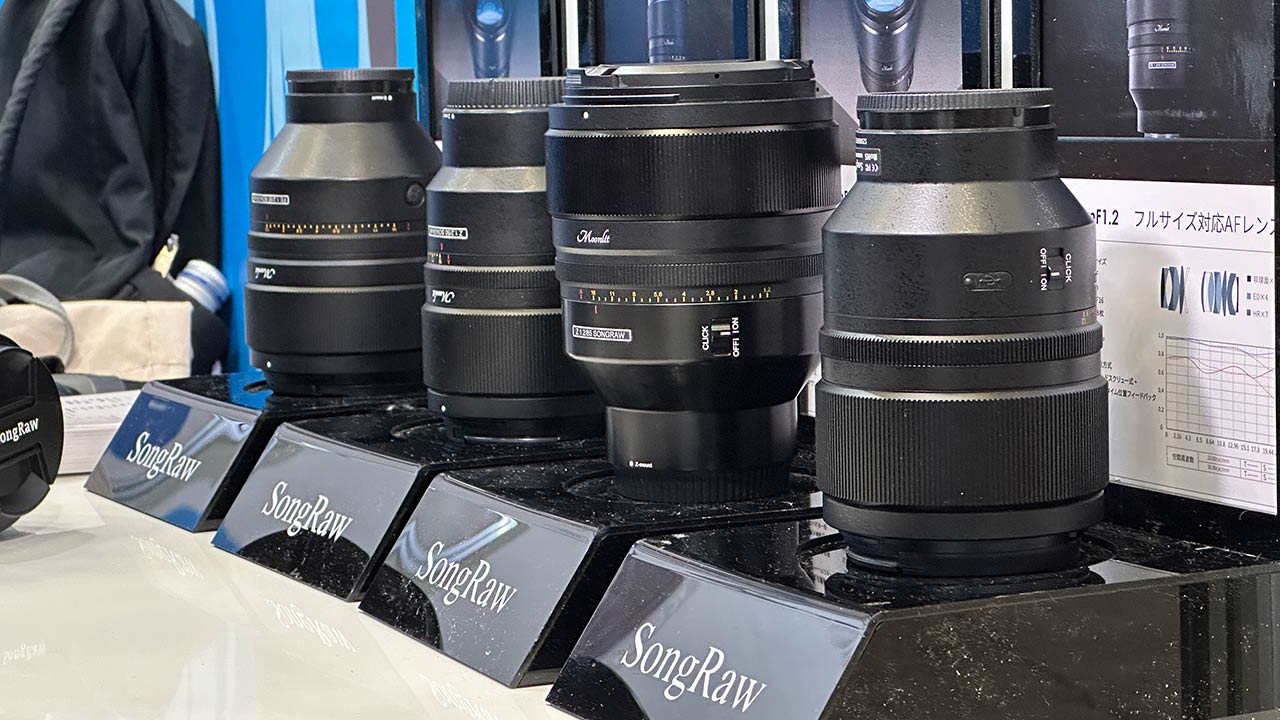
Another interesting exhibit from an overseas manufacturer was the YC Onion booth, which featured the Moonlit series of large-aperture prime lenses from partner company SongRAW, and the balance between specs and practicality was impressive.

The two lenses on display this time were the 50mm F1.2 and 85mm F1.2. Both are compatible with 35mm full-frame and are available for Nikon Z and Sony E-mounts. What’s particularly noteworthy is that they have an extremely bright maximum aperture of F1.2, yet are priced within an affordable range. I was genuinely surprised by how well they offer cost-effectiveness while still allowing for expression that takes advantage of large bokeh effects.
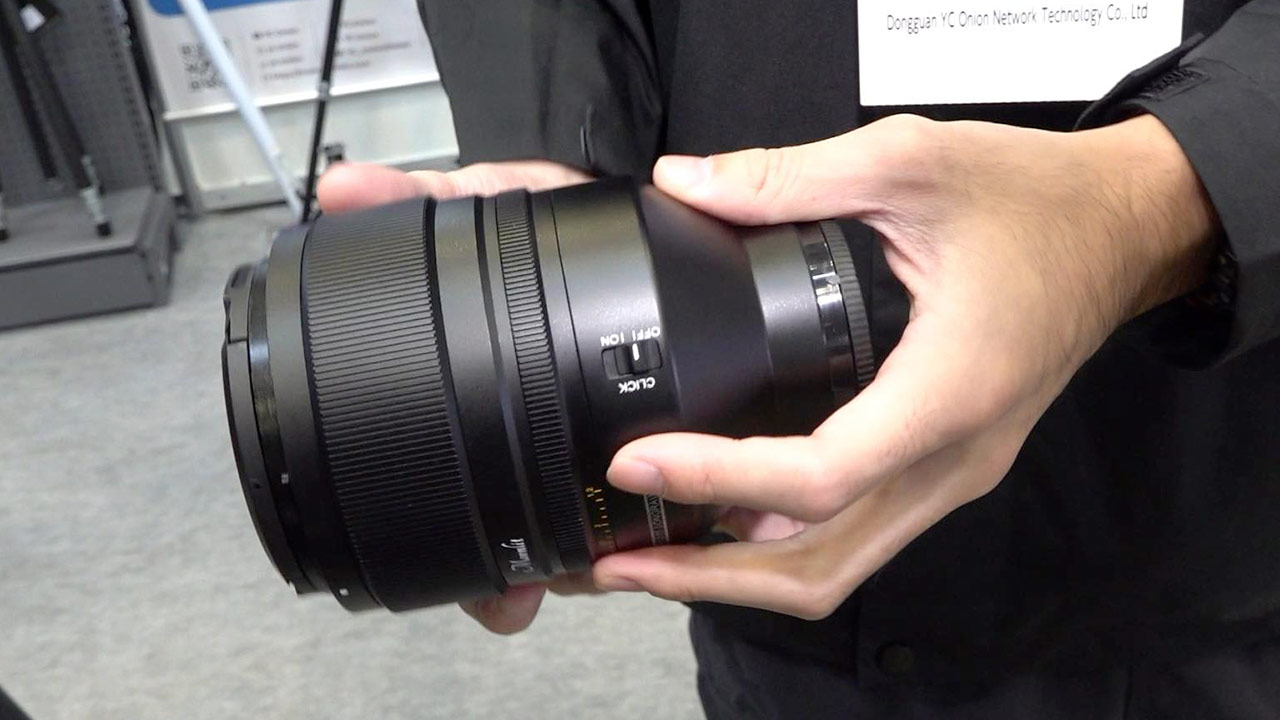
What particularly impressed me when I saw the actual product was its high level of operability. I found it very practical that there is a switch that allows you to turn the aperture ring on or off with or without a click feeling. You can choose between a smooth rotation when shooting video and a firm click feeling when shooting stills. I also noticed some subtle design differences, such as the different position of the USB terminal depending on the mount. This series is likely to become an indispensable lens for filmmakers looking for a fast prime lens.

LAOWA exhibits “Sunlight,” a full-frame compatible 2x anamorphic zoom
At the booth of SIGHTRON Japan (LAOWA), which has a strong presence in the field of special lenses, we saw two new products that will further expand the range of visual expression.
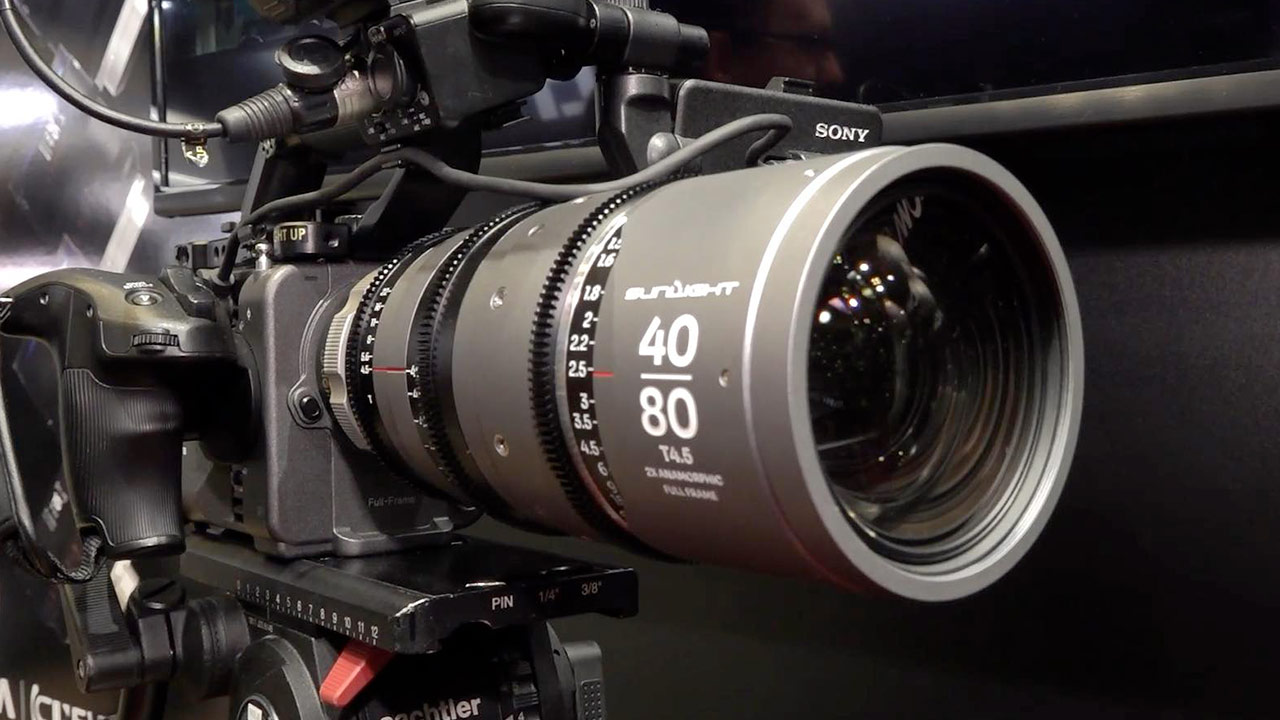
First up is the “Sunlight” series, which overturns preconceived notions about anamorphic lenses. What makes it so interesting is its unique specifications. It is an anamorphic lens that is compatible with full-frame sensors and has a full-scale compression ratio of 2x, yet it also has a zoom function. Normally, meeting all these requirements would necessitate a huge, heavy lens body. However, the actual unit on display in front of me was surprisingly compact. It’s easy to see why the person in charge proudly stated, “Considering the specs, we have created a model that is extremely small and lightweight,” and I was genuinely impressed by the technological prowess packed into it.
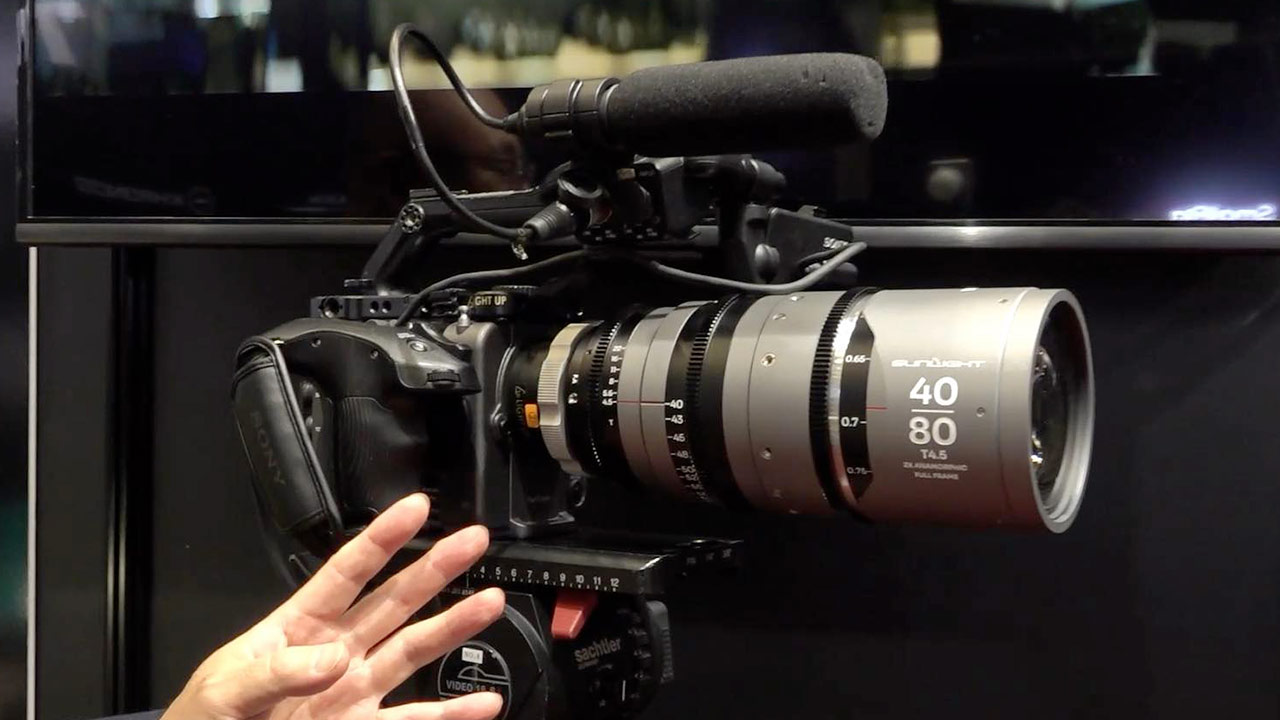
The lineup consists of two lenses: the 40-80mm T4.5 and the 70-135mm T4.5. The fact that you can cover the focal length range from 40mm to 135mm with just two lenses will dramatically improve operational efficiency in the field.
LAOWA exhibits new probe lens with zoom function
LAOWA always brings amazing cine lenses at Inter BEE and for 2025, we also witnessed the evolution of the “long, thin lens” that is the symbol of the LAOWA brand. The newly exhibited “Laowa Probe Zoom” series. The Probe lens has pioneered unique visual expression as an “insect’s eye lens,” but the fact that it finally has a zoom function is huge news for those familiar with this lens.

What impressed me when I saw the actual product on display was how much it has improved practicality. While the previous model only had a 24mm prime lens, the new product is capable of zooming from 15mm to 35mm. In macro photography or in tight spaces, it is often difficult to even move the camera position a few centimeters back and forth. In such situations, the significance of being able to adjust the angle of view on the lens itself is immeasurable.

One particularly interesting demonstration was the “periscope” type. One of four shapes to choose from depending on the application, this lens uses a special bending optical system that allows the optical axis of the camera body to be offset from the lens’s viewpoint. This makes it easy to secure a viewpoint from narrow gaps where the camera body would interfere, or from a low angle close to the ground, or from a high angle. The exhibit gave the impression of having matured from a simple “unusual lens” into a professional tool with greater on-site adaptability.
220° angle of view: The potential of a full-frame circular fisheye lens exhibited by E&I Creation
In terms of unique angles of view, my encounter with a “circular fisheye lens” compatible with full-frame sensors at the joint booth of Focus Studio and E&I Creation was also shocking. Among the many exhibits, I couldn’t help but be genuinely amazed and intrigued by its extreme specs and the possibilities for image expression.

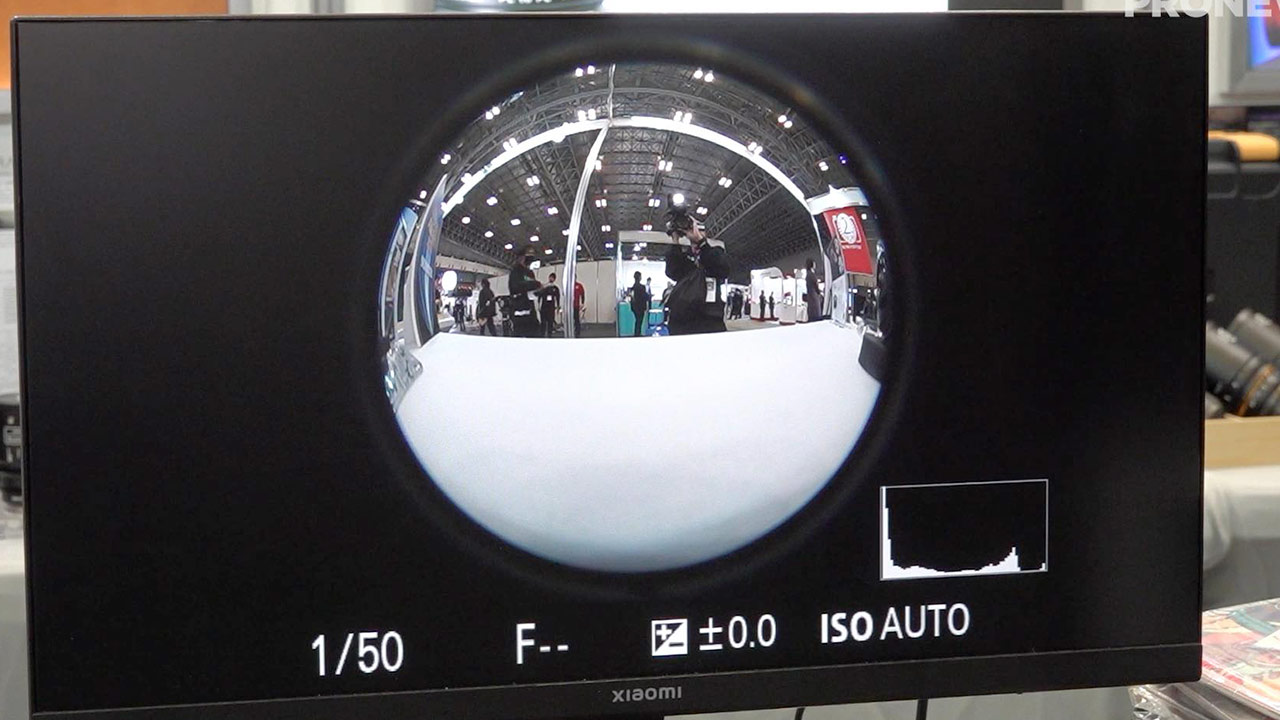
What is particularly noteworthy is the angle of view. While a normal fisheye lens typically has a field of view of around 180°, this lens covers an ultra-wide angle of 220°. When you actually look through the viewfinder, you can see that the field of view not only captures what is in front of the lens, but also the space behind it. While action cameras like 360° cameras have become popular in recent years, I felt that the true value of this product lies in its ability to record such 360° video with the high image quality of a full-frame sensor that far surpasses them. While its specifications are quite niche, this is an extremely interesting lens that will strongly stimulate the creative desires of creators.
An impressive 130 types. “You’ll find it here” – amazed by the display of video mount adapters from Shoten Kobo
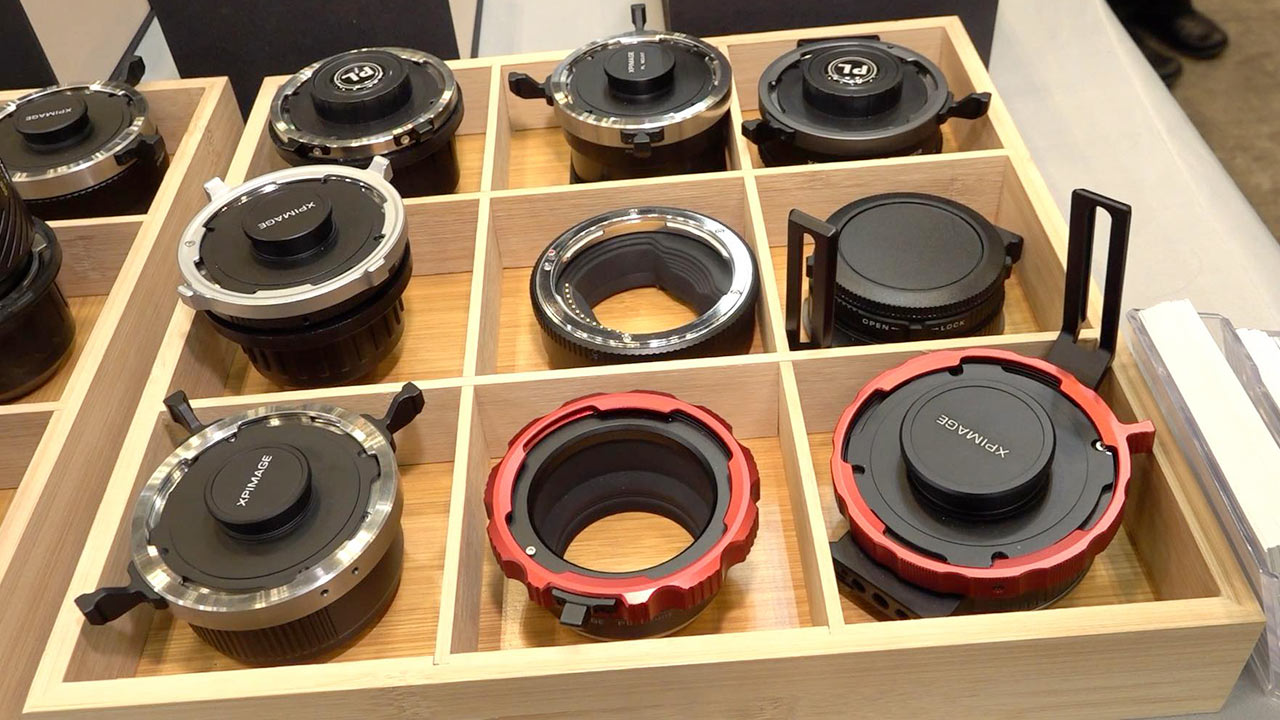
The joint booth of Focus Studio and E&I Creation not only had the lenses themselves, but also a wide selection of peripherals to tickle the fancy of any equipment enthusiast. One thing that particularly caught my eye was the dedicated exhibition area for the “video mount adapters” that they began selling in earnest this year. The array of metal rings lined up along the entire wall was impressive, and I was surprised to learn that this only made up a quarter of the products on offer.
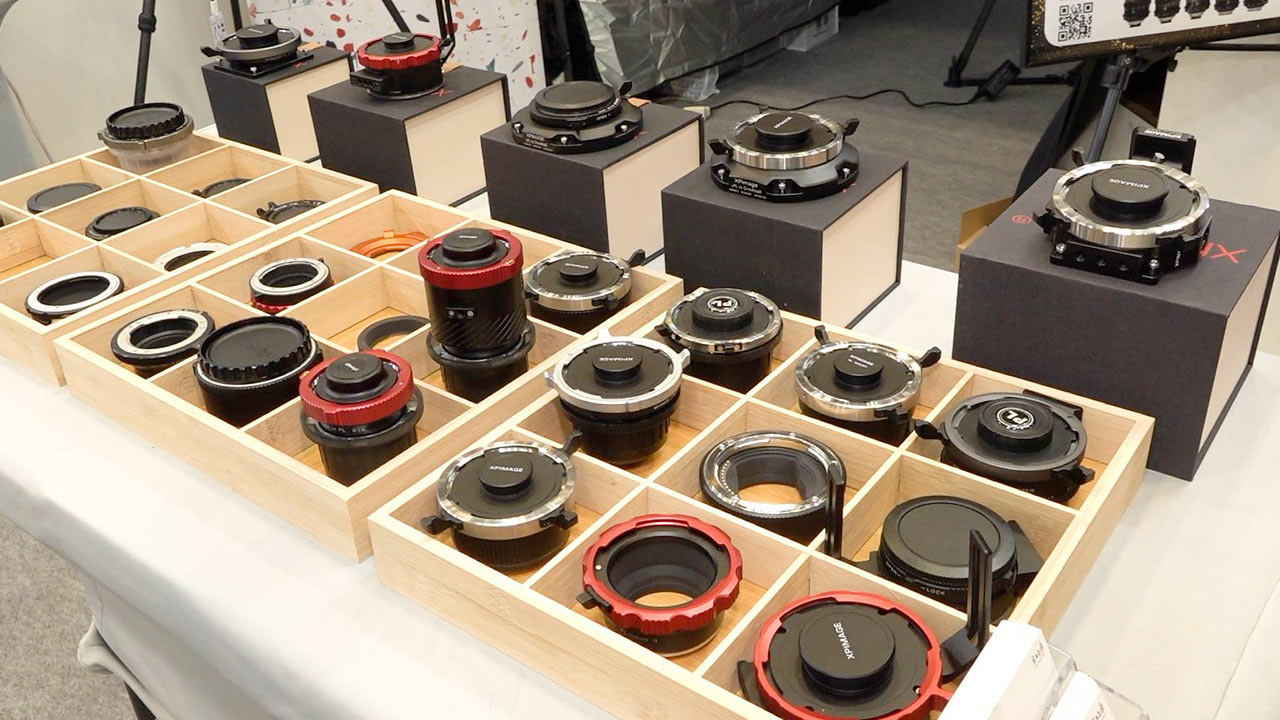
According to the person in charge, the lineup has expanded rapidly in response to requests from visitors at last year’s show, and currently stands at around 130 different types. The variety is both extremely practical and highly sought-after. For example, they even had a full range of niche products that you would never find in a regular camera store, such as an adapter for attaching a B4 mount broadcast lens to a PL mount cinema camera. As the saying goes, “You can find almost any adapter you need here,” this area was truly a treasure trove for users who want to make the most of their lens assets with the latest cinema cameras.
Precision inspection that can be carried to the site: Shoten Kobo portable lens checker is very practical and interesting.
Furthermore, among the many lens exhibits at the Focus Studio booth, there was one piece of equipment that stood out as being particularly practical: a projector-type “lens checker.” Usually, when we think of equipment for rigorously measuring the optical performance of lenses, we imagine large pieces of equipment installed in the darkrooms of specialized laboratories or factories, but the equipment on display here overturns that common sense.
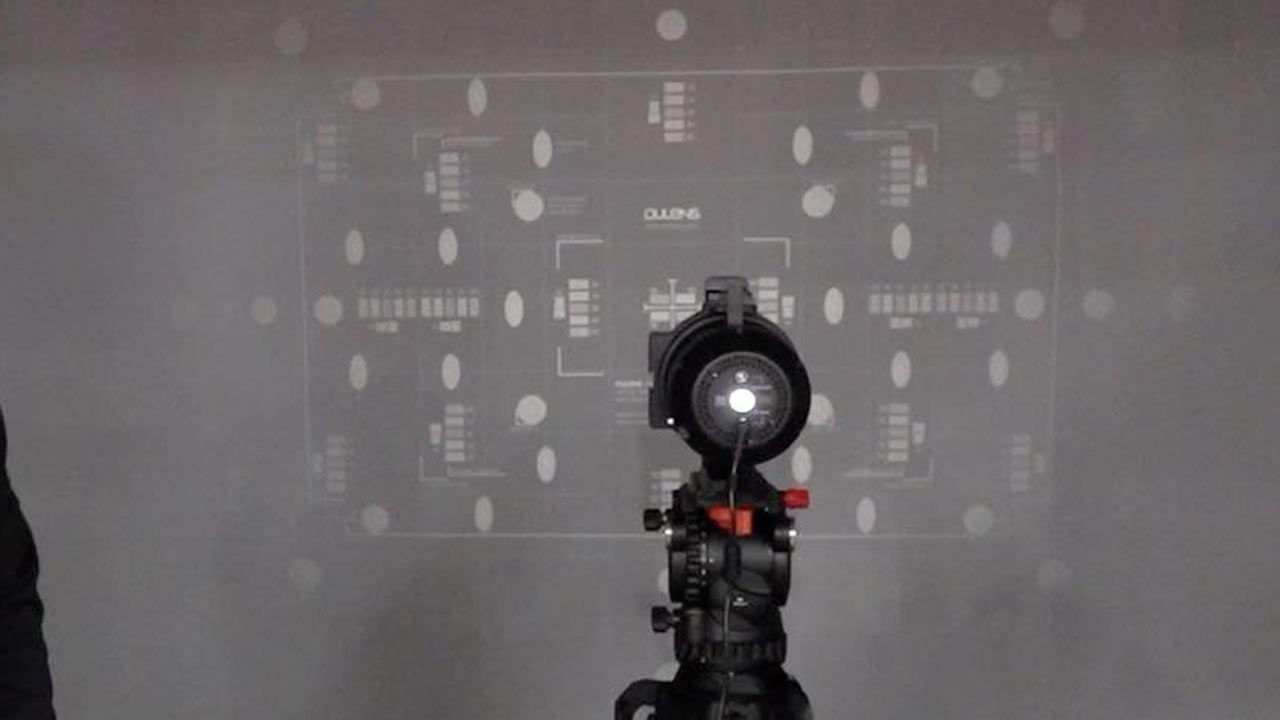
What impressed me when I actually experienced the demo was the combination of high precision and portability. When I attached the lens and checked the chart projected on the screen, not only the resolution and bokeh but also the image circle and changes in depiction in the peripheral areas were visualized in detail. It was a very fresh and interesting experience to be able to visually check the subtle characteristics of each lens on the spot, which would be overlooked with the naked eye.

Even more surprising was that the entire system could be stored and carried around in an attaché case. The benefits of being able to easily take it to location or shooting location and constantly closely check the condition of the lens while filming are immeasurable. Although it tends to be overshadowed by flashy new products, this exhibit attracted the strong interest of professionals as a tool that supports quality control in video production.