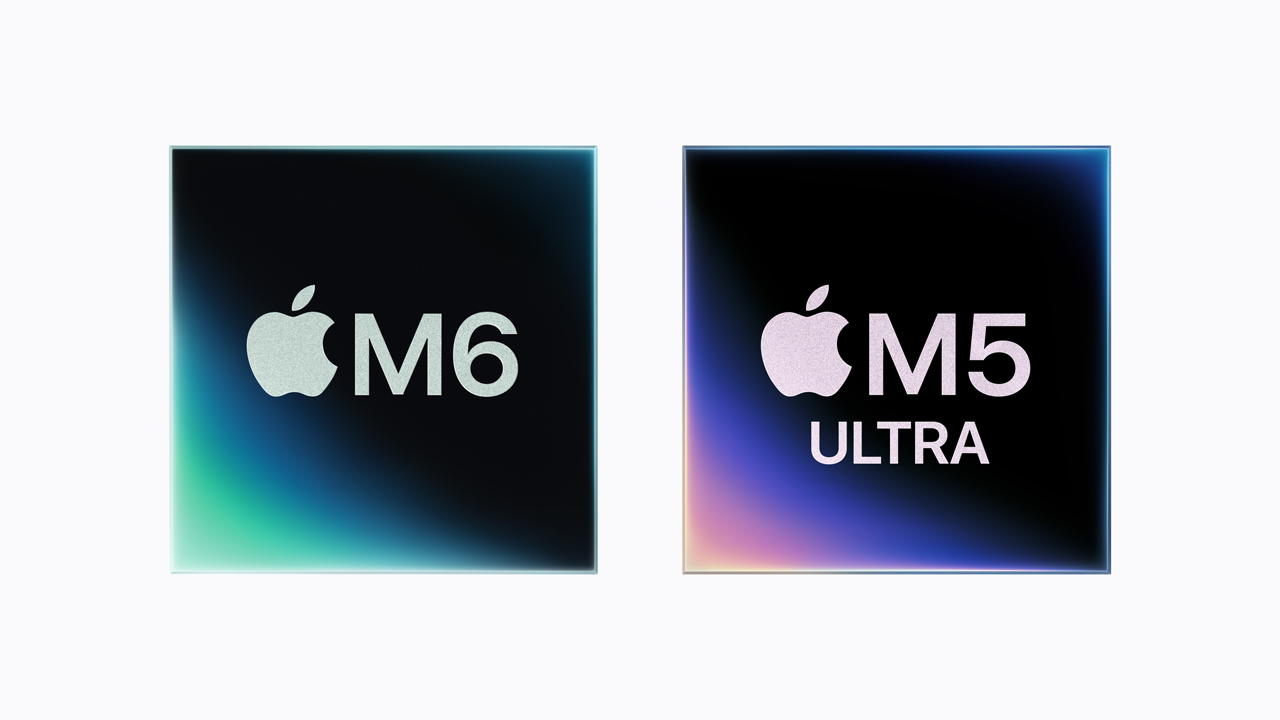
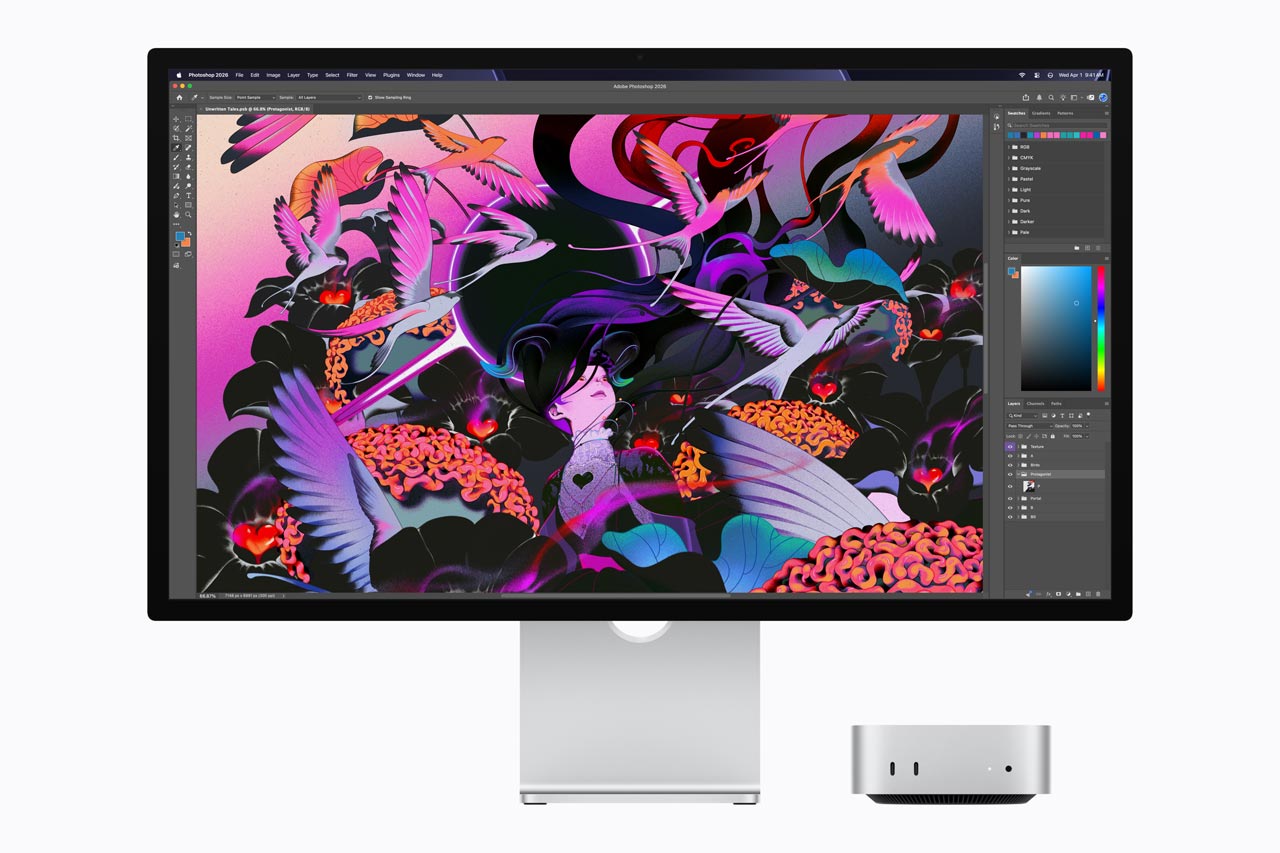
Apple announced the M6, which will be featured in the new Mac mini, and the M5 Ultra, which will be featured in the new Mac Studio. The M6 is Apple’s first chip to use a 2-nanometer process, and the M5 Ultra is the first M-series system-on-a-chip (SoC) to adopt a quad-die configuration.
The M6 features enhanced processing power across its various computing blocks, including the CPU, GPU, and Neural Engine. It boasts a 12-core CPU, a 12-core GPU with a Neural Accelerator for each core, two 16-core Neural Engines, and a unified memory bandwidth of up to 170GB/s. Apple claims the CPU has the world’s fastest CPU cores.
The M5 Ultra utilizes next-generation UltraFusion technology and is the first M-series SoC to adopt a quad-die architecture. It features up to 36 CPU cores and up to 80 GPU cores, and boasts a unified memory bandwidth of up to 1.2TB/s, which is 50% faster than the M3 Ultra.
Sri Santanam, Vice President of Silicon Engineering at Apple, commented:
“Apple today is unveiling the incredibly advanced M6 and the M5 Ultra, the most powerful M-series chip to date, which will dramatically advance the performance and AI computing capabilities of Apple Silicon.”
“Built using a state-of-the-art 2-nanometer process, the M6 combines a new CPU complex with two more CPU cores and GPU cores than before, a dual 16-core Neural Engine, and even greater unified memory bandwidth to handle workloads with astonishing energy efficiency.”
“Furthermore, to deliver ultimate desktop performance and run massive AI models, the M5 Ultra features a massive GPU with Neural Accelerator and greater unified memory bandwidth, pushing the boundaries of what’s possible on a desktop.”
Apple M6: Optimized design and enhanced performance
Apple designed the M6 for general users, students, developers, AI-related applications, and enterprise workflows, with enhanced performance, power efficiency, and on-device AI processing capabilities.
By employing cutting-edge 2-nanometer process technology and densely packing transistors onto a smaller die, performance and power efficiency are improved. It also features two 16-core Neural Engines, delivering up to twice the peak computing performance compared to the previous generation. The system framework utilizes both engines simultaneously to accelerate the execution of AI models.
12-Core CPU
The M6 features a 12-core CPU, two more than the M5, consisting of two supercores, four high-performance cores, and six high-efficiency cores. According to Apple, it delivers the world’s fastest single-threaded performance, and its multi-threaded performance is up to 1.2 times faster than the M5 and up to 2.4 times faster than the M1.
Supercores handle single-threaded processing, while high-performance cores work in conjunction with supercores to execute demanding multi-threaded tasks. High-efficiency cores handle background tasks. The goal is to accelerate demanding CPU processing such as image editing, code compilation, file indexing, and agent-based AI workloads.
Faster GPU and memory bandwidth
The M6 features a 12-core GPU, two more cores than the M5, with a Neural Accelerator on each core. The peak computational performance of the GPU in AI processing is said to be approximately 30% higher than the M5 and more than eight times higher than the M1. This speeds up prompt processing when using on-device LLMs.

Furthermore, it features updated shader core architecture, dynamic caching, and hardware-accelerated ray tracing, among other graphics capabilities, resulting in improved rendering performance and frame rates. Geometry rates for complex graphics processing have also been increased by 50%.
The M6 supports up to 32GB of unified memory, enabling multitasking with multiple demanding applications running simultaneously, as well as agent-based AI workflows that run LLM on-device. Unified memory bandwidth is up to 170GB/s, a 10% improvement over the M5 and a 2.5x improvement over the M1.
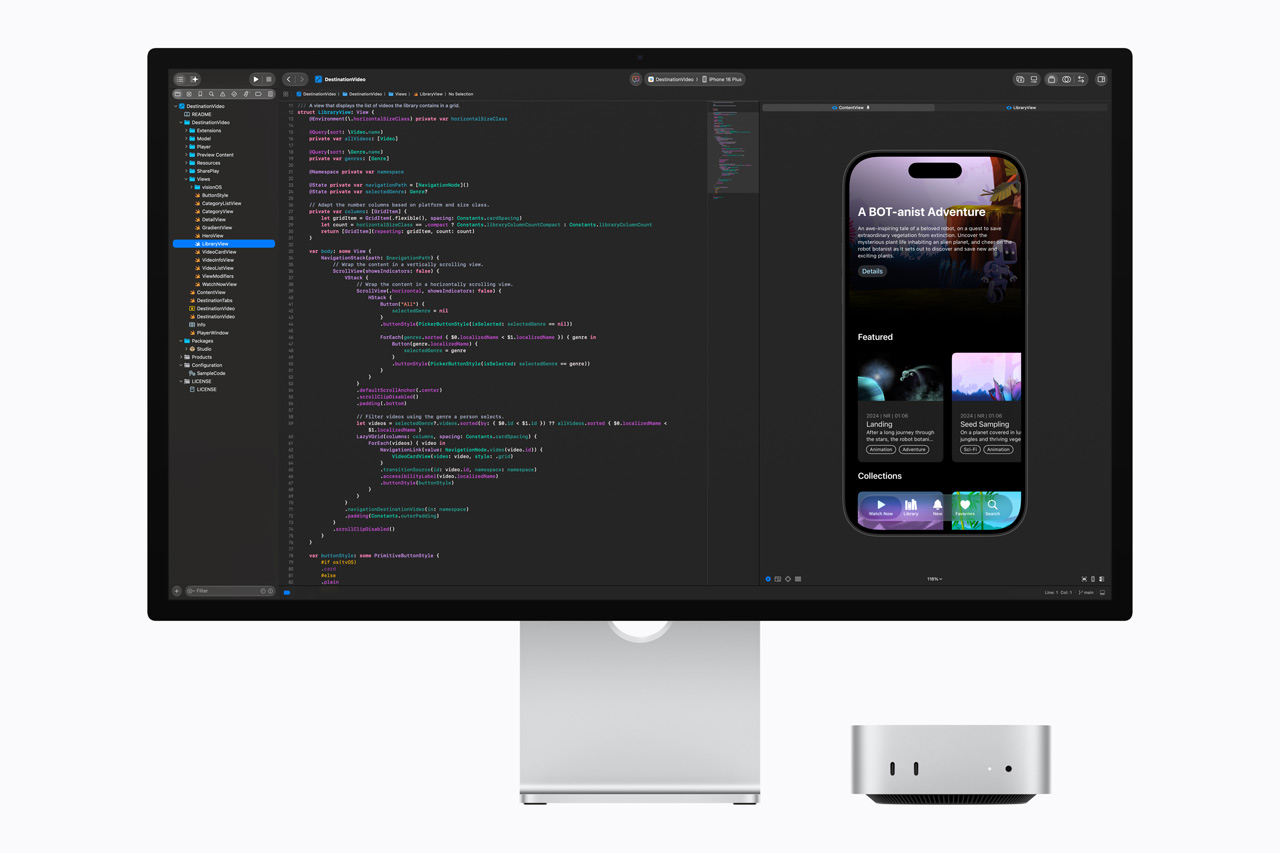
M5 Ultra: Enhanced for professional workloads and AI processing
The M5 Ultra is a chip designed for professional workloads that require high CPU/GPU performance and memory bandwidth, such as complex 3D rendering, visual effects, scientific analysis, and on-device execution of demanding AI models.
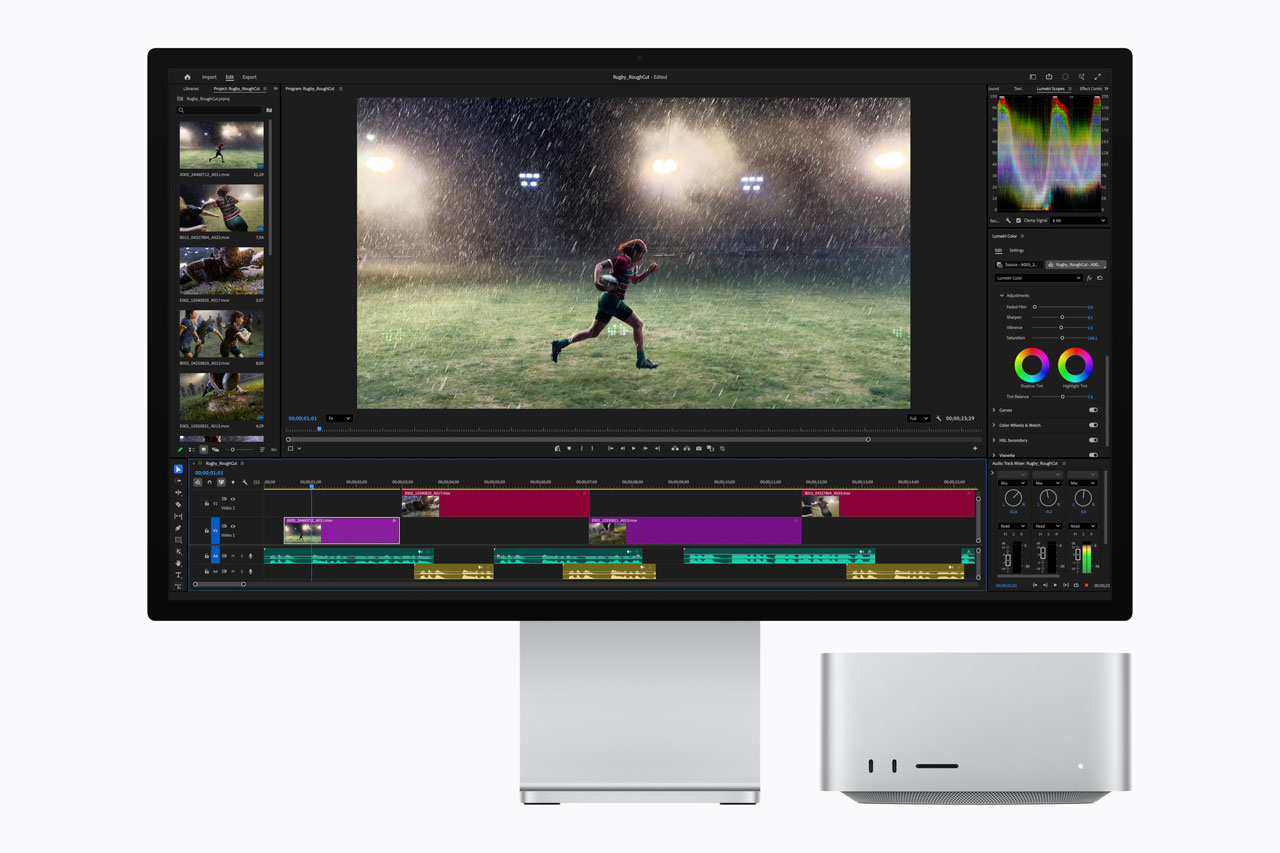
The M5 Ultra connects two dual-die M5 Max processors using next-generation UltraFusion, creating Apple Silicon’s first quad-die configuration. UltraFusion increases inter-die bandwidth to over 4.4 TB/s and improves connectivity density by more than six times compared to previous versions. This low-latency, high-speed interconnection allows the four dies to operate as a single integrated processor.
The M5 Ultra features a CPU with up to 36 cores, consisting of 12 supercores and 24 high-performance cores. Compared to the M3 Ultra, single-threaded performance is up to 1.25 times faster, and multi-threaded performance is up to 1.3 times faster.
Enhanced AI, graphics, and memory performance.
The M5 Ultra features a next-generation GPU with up to 80 cores, each with a built-in Neural Accelerator. The peak computing performance of the GPU in AI processing is said to be up to 4.5 times faster than the M3 Ultra and more than 6 times faster than the M1 Ultra.
The GPU features shader cores with second-generation Dynamic Caching, hardware-accelerated mesh shading, and third-generation ray tracing. Graphics performance is up to 40% faster compared to the M3 Ultra.

The M5 Ultra also features a more powerful media engine. It supports H.264, HEVC, four ProRes encoding/decoding engines, and hardware-accelerated AV1 decoding, accelerating high-resolution video editing. Furthermore, it has a 32-core Neural Engine, enabling on-device execution of AI processing and Apple Intelligence features.
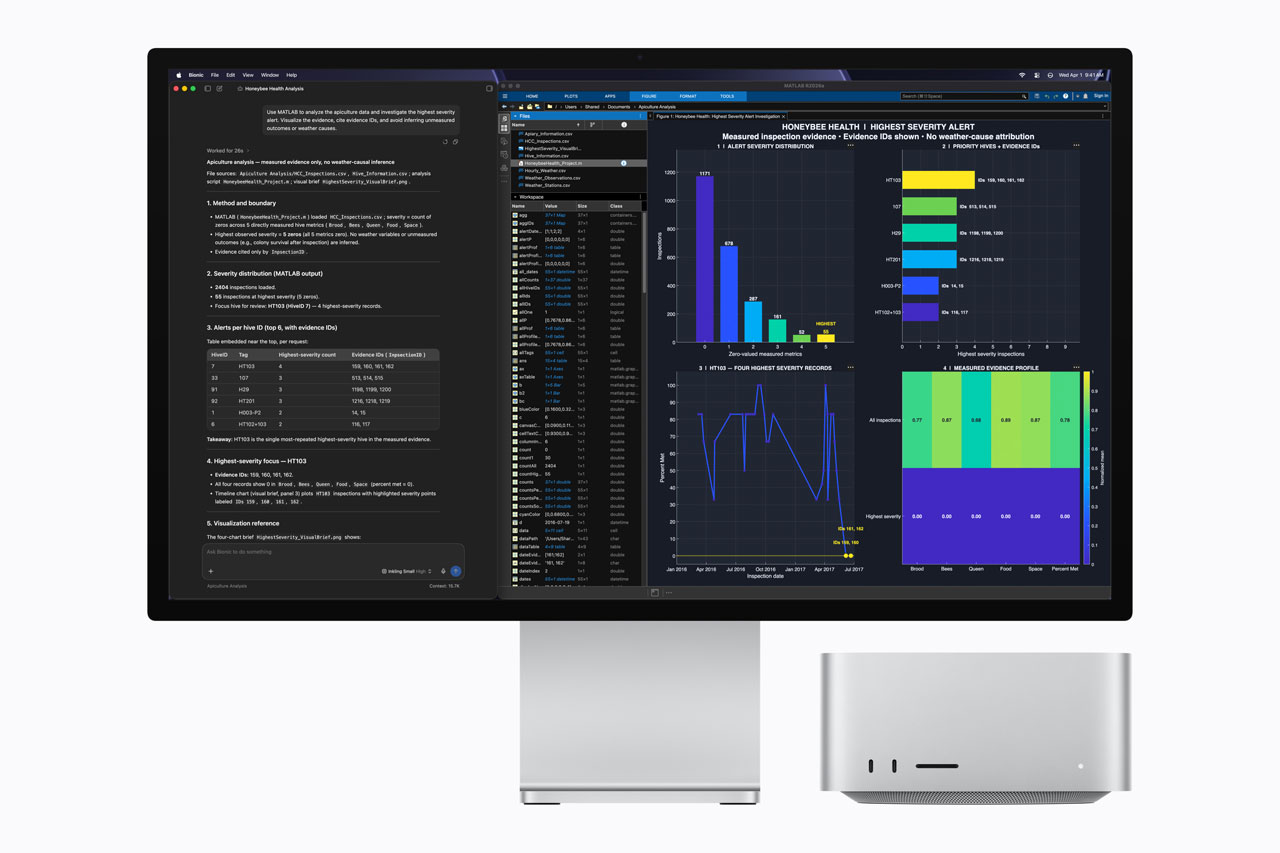
Furthermore, the M5 Ultra features up to 512GB of unified memory and a unified memory bandwidth of up to 1.2TB/s, which is 50% faster than the M3 Ultra. This allows it to handle large datasets in local memory, improve token processing speed, and support on-device execution of LLMs with hundreds of billions of parameters.
Developer frameworks and tools
Apple’s developer frameworks and tools, such as Core AI, Core ML, Metal, and Xcode, can leverage the hardware capabilities of the M6 and M5 Ultra. The Apple M6 uses a 16-core Neural Engine x2. Additionally, the M5 Ultra contains up to 512GB of unified memory, up to 1.2TB/s of memory bandwidth, and the Neural Accelerator integrated into the GPU works well for AI processing.
These frameworks and new chips enable the execution and fine-tuning of large-scale AI models on Macs. Apple’s developer tools and frameworks optimize processing across the CPU, GPU, and Neural Engine, supporting the integration of Apple Intelligence features using Apple Foundation Models and App Intents, as well as the creation and execution of on-device AI workloads using custom AI models.