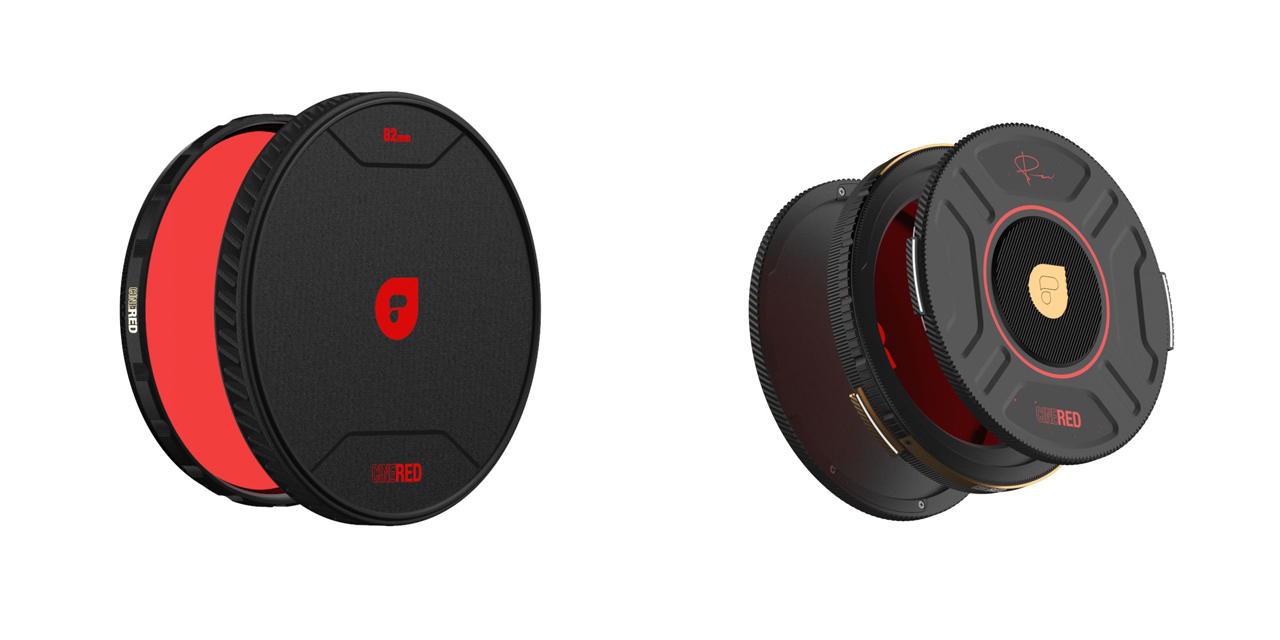
PolarPro begun accepting pre-orders for the “CineRed” filter for monochrome photography. The filter will be available through their online shop, “UAVOOM,” with shipments expected to begin around mid-November 2026.
What is the PolarPro CineRed Filter ?
Red filter can change the tonal range of a monochrome photograph.
CineRed is a product that combines a red filter and a polarizing filter, allowing you to adjust the contrast and tonal expression in monochrome photography.
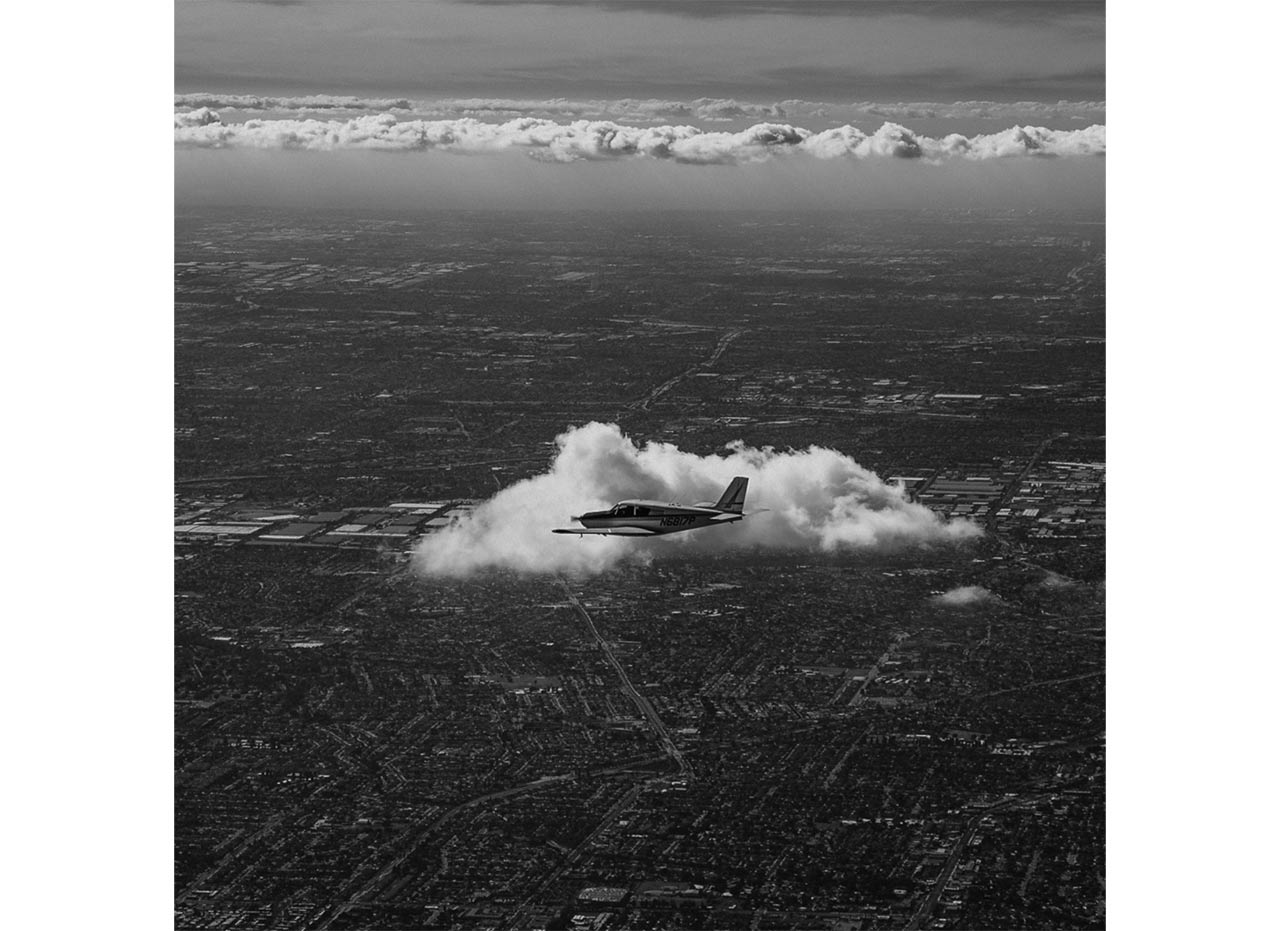
A red filter suppresses the transmission of blue light, so in monochrome photography, it darkens the blue sky and emphasizes the contrast with white clouds. It also alters the contrast between green subjects and their surroundings, bringing strong contrast to landscape photographs and other images.
The reddish tint of the filter glass is not decorative; it’s designed to selectively transmit the wavelength components of the incident light. By performing optical processing during shooting, a different tonal expression can be obtained compared to typical monochrome conversions.

Optical characteristics tuned for monochrome photography
CineRed employs a unique “CINERED” color tone characteristic tuned for monochrome photography. It alters tonal expression through the optical properties of the filter, rather than relying on digital profiles applied in image editing software.
This feature aims to clearly separate the tonal gradations of the sky and clouds in shooting environments with large differences in brightness, thereby emphasizing the contours and sense of depth of the subject. It is intended for use in photography that utilizes the contrast between light and shadow, such as landscapes and architecture.
Combines a red filter and a polarizing filter into one.
CineRed features a unique design that integrates a red filter and a PolarPro chroma polarizing filter into a single filter.
A red filter alters the tonal separation during monochrome photography, while a polarizing filter reduces unwanted reflections from surfaces like glass and water, enhancing the texture and contrast of the subject. Since both effects are available in a single filter, there’s no need to use separate filters.
The polarizing filter features a design that allows for adjustment of its effect within a short 110° rotation range. During shooting, you can adjust the degree of reflection suppression by rotating the filter.
The manufacturer states that the light reduction is approximately 3 stops. When shooting, exposure settings that take this light reduction into account are necessary.

CinemaSeries features glass and a brass frame.
The optical glass uses PolarPro’s “CinemaSeries” glass. A 16-layer coating suppresses flare and enhances resistance to fingerprints, oil, and scratches.
The frame features a 100% brass construction. A “Defender” cap is also included to protect the filter during storage and transport.
Note that the CineRed does not use standard lens caps and requires the included Defender cap. Also, it is not designed to allow another filter to be attached on top of the front of the filter.
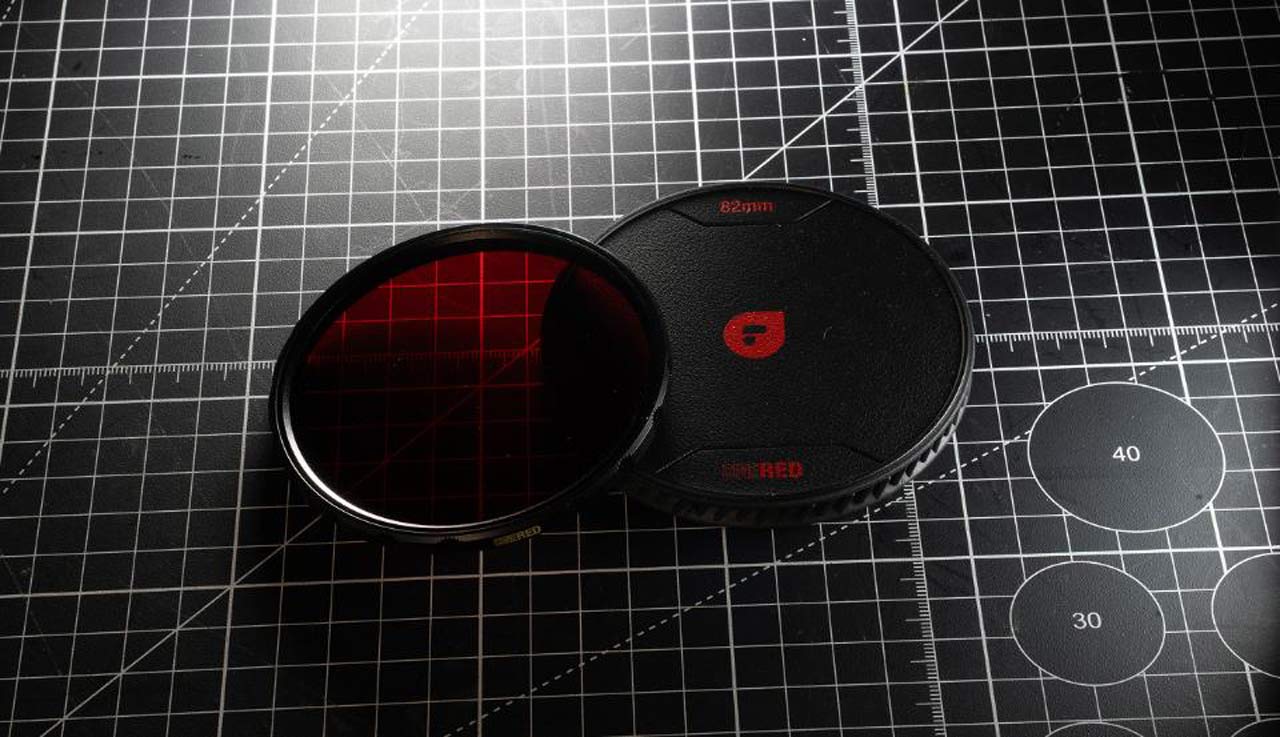
PolarPro CineRed Filter Size and Mounting
CineRed offers nine screw-in sizes: 39mm, 43mm, 46mm, 49mm, 67mm, 77mm, 82mm, 86mm (C), and 95mm (C).
The 86mm (C) and 95mm (C) versions have a coarser screw pitch, so compatibility with the lens to be attached must be checked.
In addition to screw-in types, models compatible with PolarPro’s magnetic filter mounting systems, “Helix MagLock” and “Mini MagLock,” are also available. Both require a separately sold compatible thread plate for mounting.