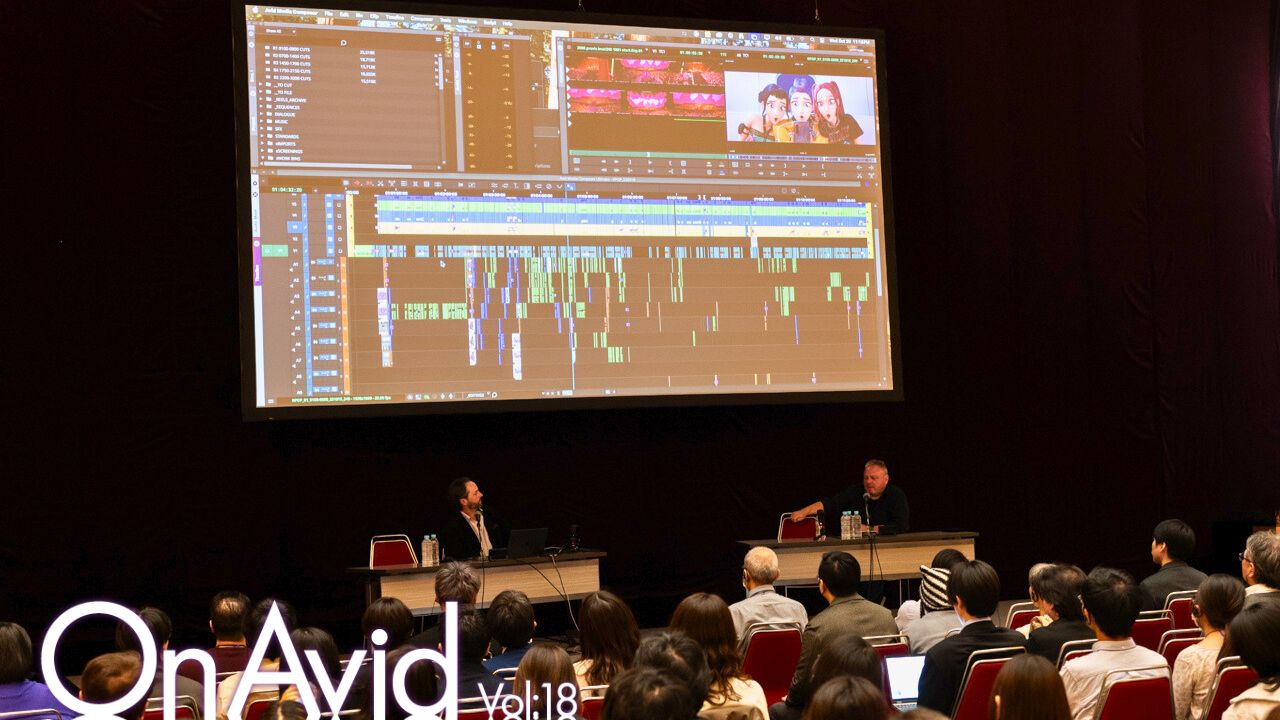
On October 30th, 2025, “ANIME TALKING JAM” was held at the Tokyo International Forum, in collaboration with Photron, Avid Technology, and MEDIA SOLUTIONS, INC. Creators and engineers involved in anime production workflows from Japan and abroad took to the stage to share examples of Avid Media Composer tool usage and on-site knowledge. The keynote featured Nathan Schauf, lead editor of “KPop Demon Hunters,” who took the stage for this session.
In conjunction with this event, we spoke with Mr. Schauf about the behind-the-scenes production process of KPop Demon Hunters.
KPop Demon Hunters Editor Nathan Schauf Profile
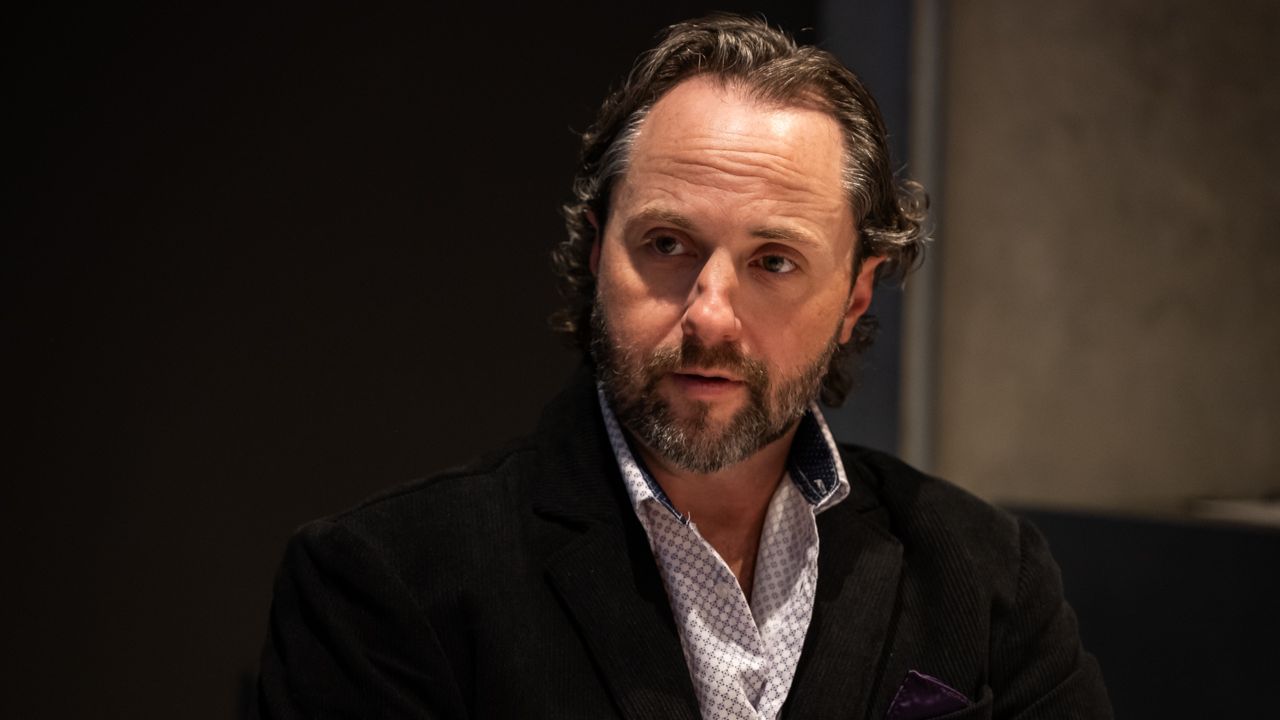
Mr. Schauf joined Sony Pictures Animation in 2020 and has since been involved in editing a variety of animation works, gaining experience in projects across a wide range of genres, from feature films to short films. He served as lead editor for the latest work, “KPop Demon Hunters.” He was deeply involved in everything from designing the rhythm of the story to creating the feel of the sound design, and was in charge of the editing work to bring out the charm of the work to its fullest.
ANIME TALKING JAM
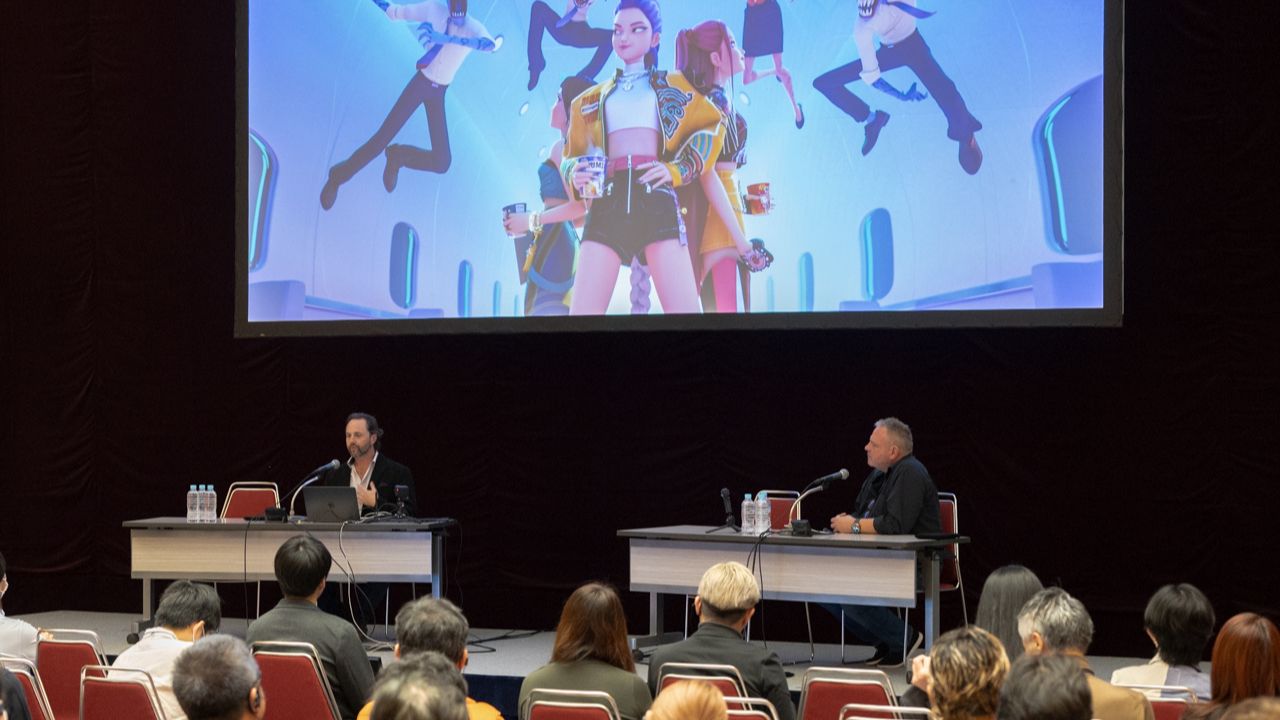
“ANIME TALKING JAM” introduced a variety of workflows used in overseas animation production. The first part of the event featured a talk session (with simultaneous interpretation) on the feature-length animated film “KPop Demon Hunters,” featuring Nathan Schauf, lead editor at Sony Pictures Animation.
The session was moderated by Matt Feury of Avid Technology, who delved into the role of editing in the production process and the use of workflows centered around Avid Media Composer in an interactive format.
The content was packed with knowledge unique to the field, such as Avid’s operational know-how for managing vast amounts of material, and how to integrate it with music and direction.
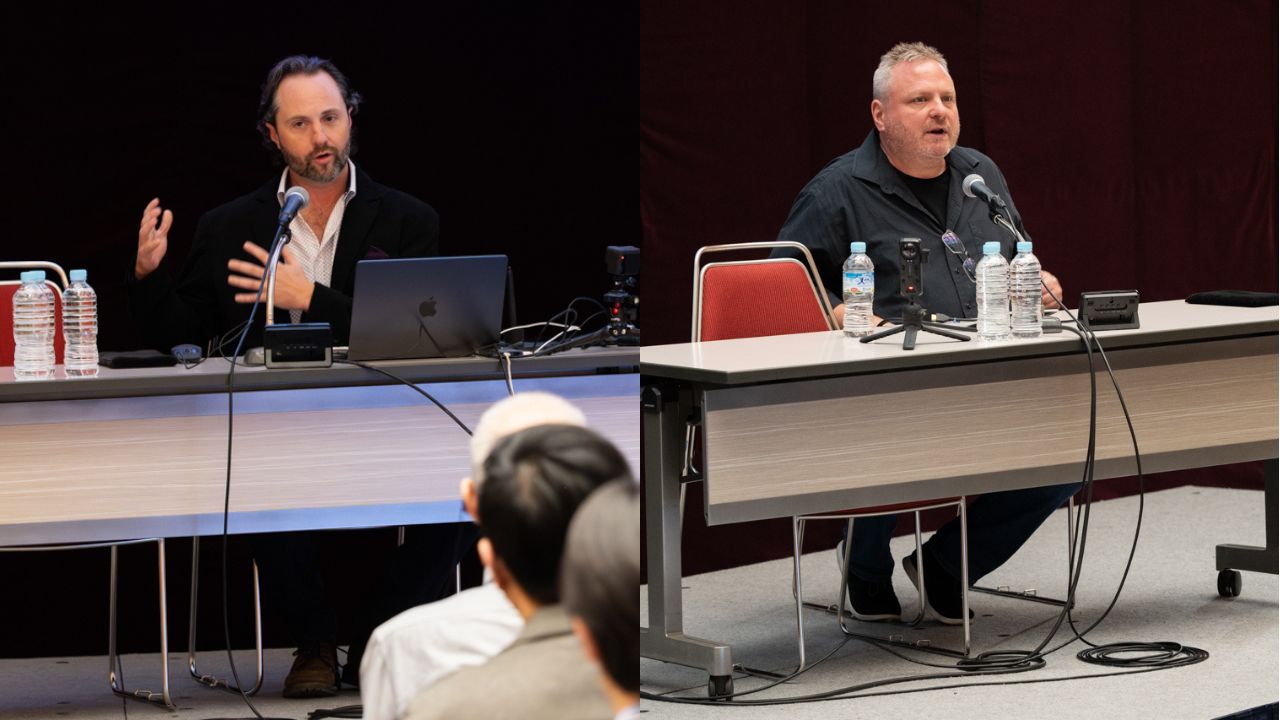
Left: Nathan Schauf of Sony Pictures Animation, Right: Matt Feury of Avid Technology
Behind the Scenes of “KPop Demon Hunters” – Interview with Lead Editor Nathan Schauf
We spoke with Nathan Schauf, who edited the feature-length animated film “KPop Demon Hunters” after the seminar.

–First, please tell us about your background. When did you become interested in video editing? Also, when did you start your current position?
Mr. Schauf:
“My first experience with filmmaking was in high school. I shot videos using my father’s video camera and edited them on an Avid. I
then got a scholarship to study sports broadcasting, but I couldn’t stop thinking about making films, so I looked for work in filmmaking. My
first involvement with the production of an animated film was in 2003.”
-Why did you get involved in animation production?
Mr. Schauf:
“First of all, because I loved animation. I grew up with Warner Brothers animation and watched WB cartoons quite often.
With animation, you can do anything you want. With live-action movies, for example, you shoot the same shot three times, compare the takes, and if you think “take 1 is the best,” you use that and that’s it.
But with animation, you can remake it hundreds of times until you’re really happy with it. The possibilities with animation are endless, and you can create anything you can imagine.
I think that’s really amazing.”
-What is the normal process for editing anime?
Mr. Schauf:
“First, a storyboard artist draws the scene, then we import all those storyboards into Media Composer and begin editing.
At this stage, there is only one video track and no audio, just eight frame long jpegs of each storyboard. Then I create a rough story flow and create the tempo of each scene by adding temp dialogue, sfx, and music.
Once the storyboard cut is approved we then will receive Layout and then Animation and cut them in on higher tracks. In this case, synchronization with the music is important, so if the timing isn’t right or the tempo feels off, I request changes to the CG or music.
Finally, I cut in the Lighting on the track above.”
–It seems like it would be difficult to make corrections like this for a project like this…
Mr. Schauf:
“Absolutely. The timing of the music is very important in this work, so if there was a change in the visuals, audio or music, it meant that everything related to it had to be changed, it’s one very large puzzle.”
–You mentioned that you use Media Composer for the actual editing, but do you ever use applications from other companies?
Mr. Schauf:
“I’ve used other companies’ products on some projects when I didn’t have the equipment for my own productions, but unless that’s the case, I use Media Composer. It’s become like a true friend to me.”
–What do you particularly like about using Avid Media Composer?
Mr. Schauf:
“Being able to properly manage all metadata is
crucial. Especially with a feature-length animated film like this one, which goes through four major visual stages—storyboarding, layout, animation, and lighting—all of the media from each stage must be imported, organized, and managed.
Each piece of media has its own metadata, and assistants add comments to the metadata, including the content of the artwork and other necessary information. Once a piece is finished, it’s moved to a specific bin, so you can tell when a piece is finished by opening the bin.
Each preview adds a new version of a sequence, and we save all of them. For example, in this case, well over a hundred different versions of a sequence are stored in a single bin.
Using that metadata, you can use the search tool to find the exact metadata you need, such as, “Where was the artwork for this scene I saw two weeks ago?” or “What was the sound used in last month’s preview?” A Media Composer project is like a database for your work.”
-Are there any specific features of Media Composer that you used frequently?
Mr. Schauf:
“I used multicam a lot. Instead of stacking all the takes of a particular scene on a track, I could group them into clips and treat them as a single clip on the timeline.
Switching between takes is just a click away. This made my workflow much faster.”
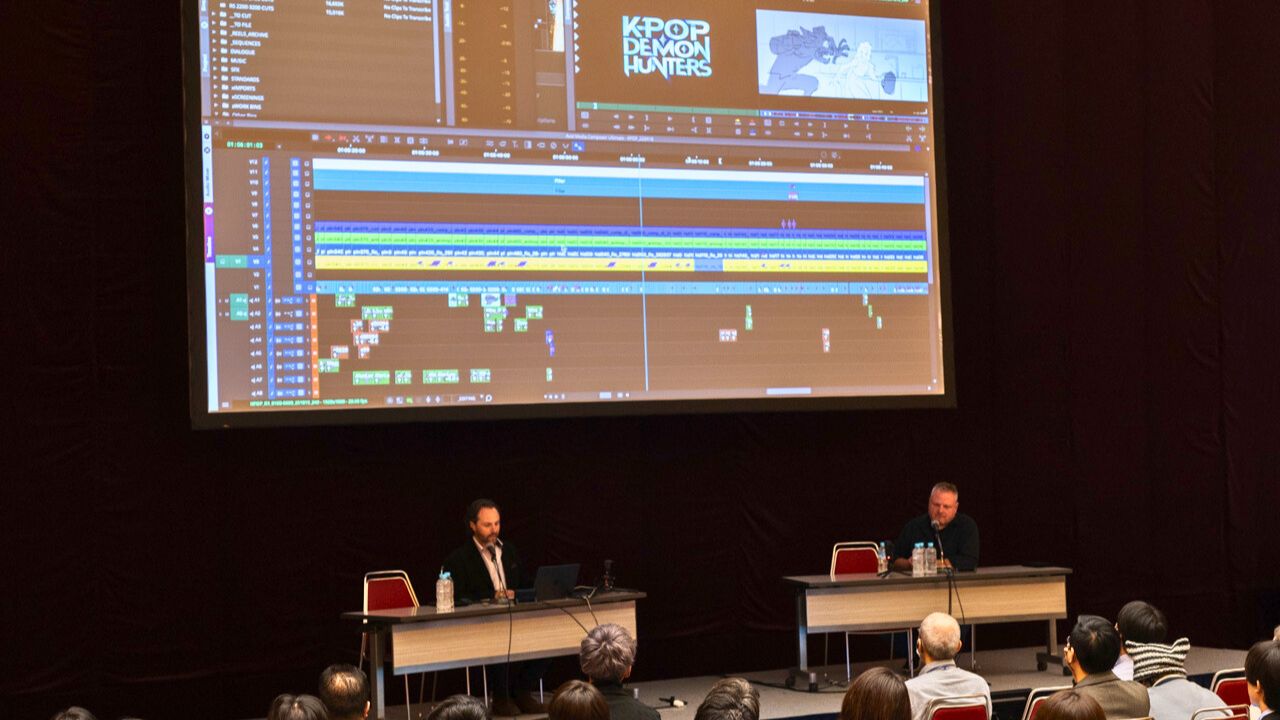
–Looking at the timeline, it seems like you’re doing some pretty complicated things with the audio editing on Media Composer.
Mr. Schauf:
“I always say that in a film production, the importance is 50% video and 50% audio.
During the storyboard stage, whenever there’s an explosion scene or a scene with swords, guns, or a train, I use all the sound effects from my sound effects library.
This time, the sense of tempo of the sound was particularly important, and since I also love sound work, it was a lot of fun.
The data edited in Media Composer is sent to Pro Tools as an AAF file for polishing, and at this point the music and sound effects are almost complete.
At the time of production of this work, there was no function to export a Pro Tools session file (.ptx) from Media Composer, so I used AAF, but I think my assistants will probably use it on future works.”
–It seems like you store separate reels for each scene, but why do you do that when there’s really no need to?
Mr. Schauf:
“Part of it is down to habit, but I also find it easier to work that way. With a feature-length film like this, many people work on various scenes and shots at the same time. While editing one scene, we might replace CG in another, or replace sound effects in another. In such cases, dividing things into reels reduces confusion, and even if something gets broken, it doesn’t affect the whole production. In Media Composer, a lock icon appears on the bin someone is working on, so you can tell that it’s currently being worked on.”
–When actually editing, if you want to stir up emotions in the viewer, are there any points you pay attention to?
Mr. Schauf:
“I always ask myself how does this scene need to feel. For example, in “KPop Demon Hunters” the scene where Mira and Zoe first see the patterns on Rumi’s body is a deeply moving one. It’s undesirable to cut so fast that the emotion of the words has not yet penetrated the viewer’s mind. So I try a slow cut, but when I look back, I feel like it’s too slow. I try it over and over again, and then have my associates watch it and give me their feedback.
Preview feedback is also important, and I sometimes make edits based on that feedback. When I look back at my previous work, I sometimes think, “Ah, this shot should have been extended by four frames.” However, this feeling is always changing, so in the end, I just have to trust myself.”
-What do you think about AI and automated editing tools?
Mr. Schauf:
“I don’t think automated editing by AI is possible, at least in the creative field.
Some people joke that the future of editing will be all about coming to the office and pressing a button under your desk, but I don’t think that’s going to happen.
Sure, AI might be useful for technical support, like automatically adding metadata or adjusting the volume for a more comfortable listening experience.
AI can be very useful when you know what you’re looking for but don’t know how to find it.
But that’s not the kind of creative decision-making that directors and I make, and in terms of the essence of creating a film that appeals to human emotions, I don’t think it would make much sense to not have it done by humans.”
-What do you think the job of an anime editor is?
Mr. Schauf:
“My job is to ensure that the director’s vision is conveyed at every stage of the long production process, which can sometimes last up to three years, from the first draft of the script to the moment it hits the cinema screen, so I’m in all the meetings and I try to be with the film through it all.”
–Finally, please give a message to young editors who want to be like you.
Mr. Schauf:
“It’s important to be prepared to demonstrate your abilities at all times.
To gain this experience, get involved in as many projects as possible when they start and devote your all to the project.
This job isn’t a normal 9-5 job with a set start and end time. No matter what time a project starts, you have to be fully committed at all times… so it’s very important to plan your life accordingly.
Technical proficiency isn’t something you can achieve with just one experience. Always learn and stay up to date on Avid, always be prepared, and be patient.”
Article originally written in Japanese by Takayuki Nishioka | PROFILE
 Mr. Nishioka is a solutions specialist at MEDIA SOLUTIONS, INC. Using his extensive knowledge and experience, he specializes in establishing optimal media production solutions for each shooting location.