CP+2026 Exhibition Report
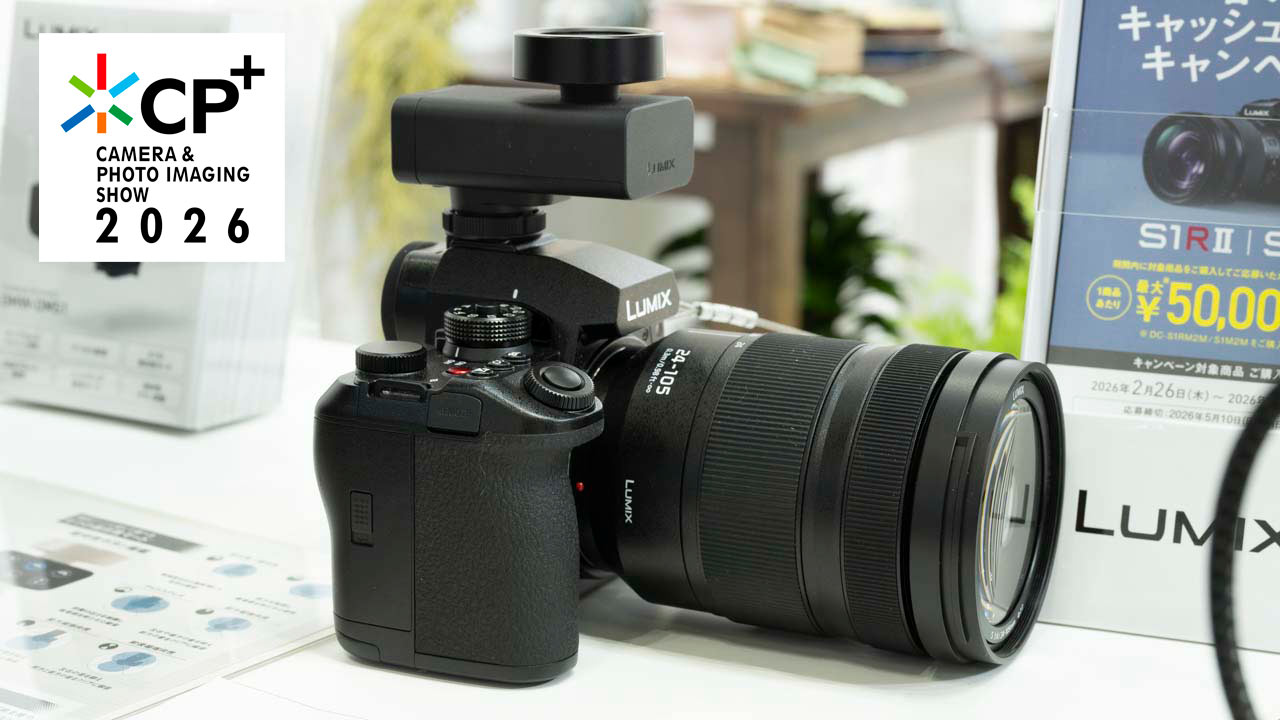
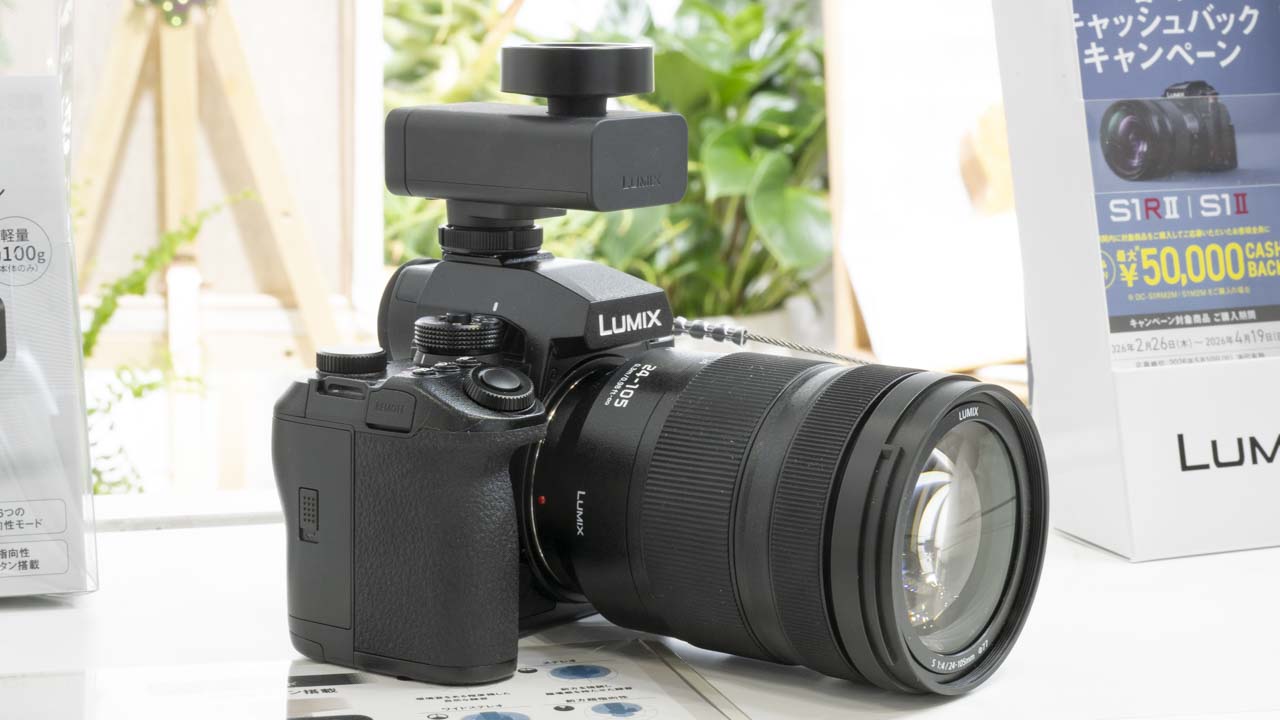
At the Panasonic LUMIX booth this year, LUMIX’s new DMW-DMS1 microphone was attracting a lot of attention. While it may seem like just another peripheral microphone, the features of this mic are surprisingly well-designed.
What is the LUMIX DMW-DMS1 ?
Fully digitally connected for streamlined operations
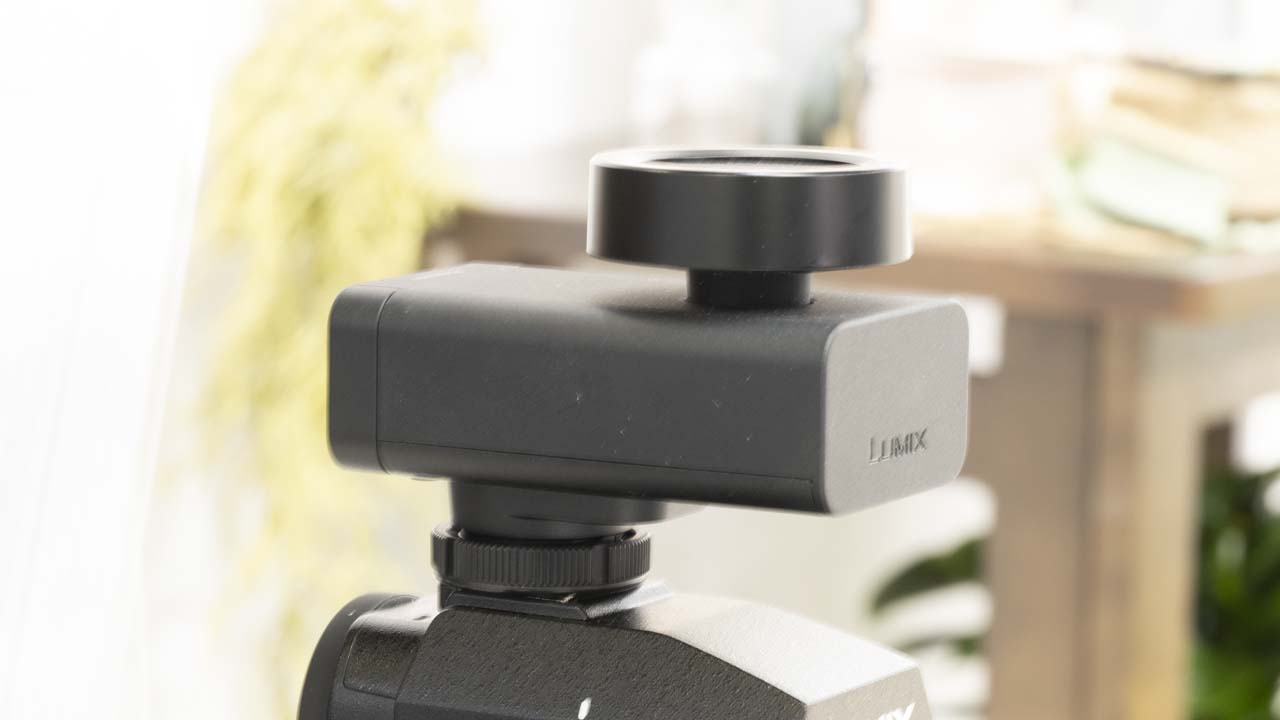
The greatest feature of the LUMIX DMW-DMS1 is the adoption of a “digital connection” that processes signals and supplies power via the hot shoe contacts. This eliminates the need for a 3.5mm microphone cable as with conventional analog connections, and has the great advantage of being able to transmit audio signals directly to the camera digitally.
As of February 2026, the supported models are the S1II, S1IIE, S1RII, S5II, and S5IIX. To use this feature, you will need to update to the latest firmware. The company also plans to support the GH7 and G9II in the future.
The digital shoe eliminates the need for cables, and the lightweight design of just 100g minimizes the impact on the center of gravity when attached to a camera. This makes it an extremely solid recording device that combines high levels of mobility and reliability.
Large-diameter microphone array supports precise directional control
Inside the housing are four large microphone arrays, each measuring 10mm in diameter. Considering that a typical built-in microphone array is around 3mm to 4mm, this size is quite unusual. Arranging the four capsules in an array not only ensures high sound quality, but also enables precise control of directionality.
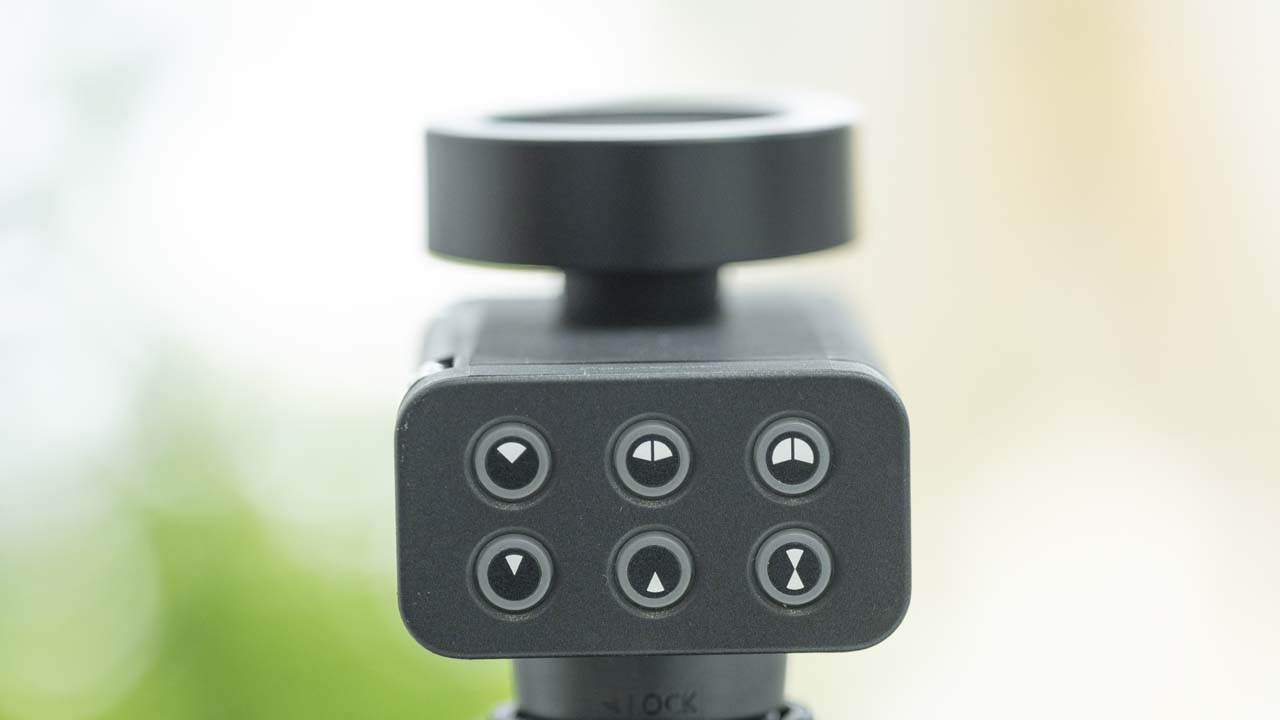
The back of the unit has six buttons for switching the directionality, with the selected mode icon illuminating for intuitive operation. From “Wide Stereo” for capturing the space of a hall or other area, to “Forward (Super Directional)” for sharply isolating the subject’s voice, to “Rear” for vlogs or “Front and Rear” for face-to-face interviews, the feeling of being able to control the environment with just a button operation completely frees the photographer from the hassle of changing microphones on location.
Innovative noise processing made possible by 32-bit float
Noise countermeasures are also thorough, from the physical design to the internal processing. The “floating structure” that allows the microphone unit to slightly vibrate physically blocks out the vibration noise that is unique to shooting while walking. Even more surprising is the evolution of the invisible digital processing.
Conventional wind noise suppression techniques have had to compress the entire sound to prevent distortion, resulting in the disadvantage of thinning out the voice. In contrast, this unit supports 32-bit float recording, capturing all sounds with an overwhelming dynamic range and then precisely removing only the wind noise through digital processing. This makes it possible to record the main voice while maintaining its resolution even in harsh environments.
Advanced risk management functions to prevent failures
The newly implemented “backup recording mode” is a practical feature that makes effective use of the four-channel recording capability.
In “Mode 1,” in addition to the selected directional sound (1st and 2nd channels), a backup omnidirectional standard sound (3rd channel) and a 20dB attenuated sound (4th channel) are simultaneously recorded. In “Mode 2,” the selected directional sound is maintained, while sounds attenuated by 20dB are recorded in parallel. Both modes are specifications that are directly linked to risk management in professional settings where recording failure is not an option.
A sophisticated interface with careful consideration for practical use
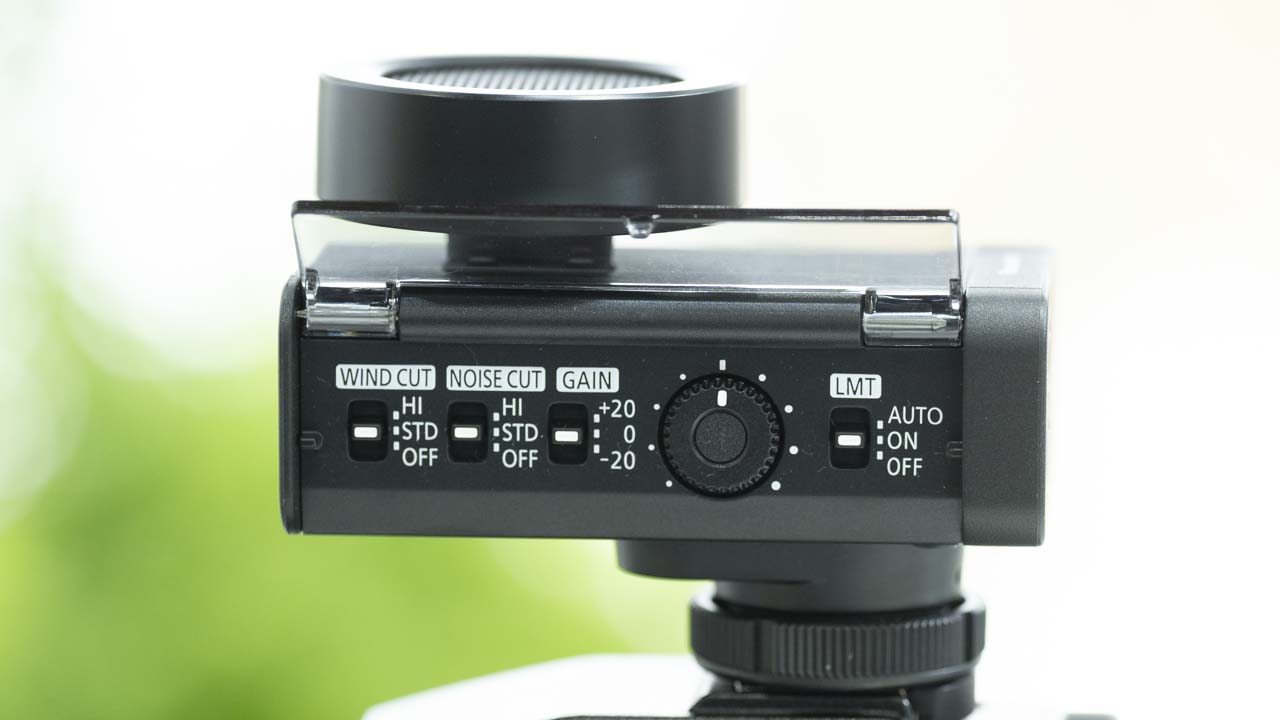
The control panel on the side of the main unit inherits the design concept of existing XLR adapters, but is more streamlined. The main switches, such as wind filter, gain, and limiter, are neatly arranged and are also equipped with a panel cover to prevent accidental operation. Of particular note is the clever placement that allows the gain dial to be reached even with the cover closed. Practical consideration has been thoroughly considered down to the smallest detail, ensuring safety without hindering responsiveness in the field.
After seeing the actual device on display, it is clear this device is a promising answer to the problem of audio recording. Its compact size not only delivers impressive performance in numerical terms, but also anticipates and solves the psychological and inconvenience issues of on-site shooting. Following its announcement at CP+, it is expected to become a new standard in video production.