NAB2026
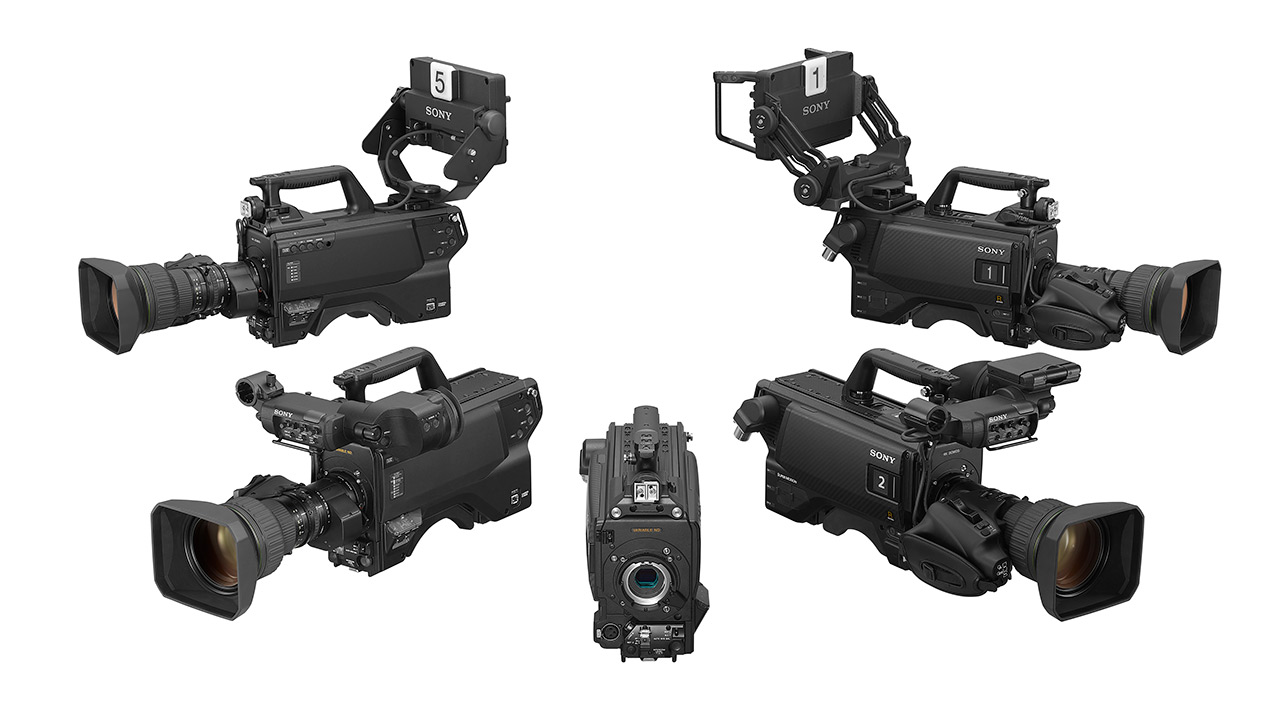
Sony announced the “HDC-R series,” a new line of system cameras reorganized to support the 4K generation. This series consists of three lines: HDC-5500RV/5500R, HDC-3500RV/3500R, and HDC-3200R. A corresponding camera control unit (CCU) “HDCU-3500R” and an optional board “HKCU-LUT35” will also be released. All models are equipped with a 2/3-inch 4K 3CMOS image sensor and a global shutter, and support 4K and HDR broadcast production. Sony worked tirelessly expanding its product line since the late 2010s, from the current HDC 3000 series to the 5000 series. However, there have been differences in specifications between generations. Specifically, the differences were subtle but accumulated in hardware aspects such as the viewfinder’s slide rail and the operability of the rear panel. Taking this into account, the R series aims to unify the main hardware controls as much as possible, from the entry-level to the high-end models. The goal is to achieve consistent operability across the entire series. Furthermore, the transmission system has been strengthened. While the focus was previously on imaging capabilities, current production environments strongly demand scalability for system construction and multi-camera operation. In response to the increasing need for additional camera operation and overall system optimization, the transmission and system functions have been enhanced. The Sony HDC-R aims to improve the competitiveness of the entire HDC series. Finally, there is the evolution of the imaging system. With the aim of improving material quality, noise has been reduced by improving the signal-to-noise ratio, and new imaging functions have been implemented. As a result, the fundamental quality of the image itself has been raised, establishing a competitive advantage over other companies’ products. The three points mentioned above—namely, “unified operability,” “enhanced transmission and system,” and “improved imaging quality”—are the main aims of this series. First, in terms of quality, the design prioritizes stable video output required in real-world situations. Expanded dynamic range suppresses highlight clipping even in high-contrast environments such as outdoor sports and concerts, achieving natural tonal gradation. In addition, the multi-sensitivity mode allows for stable imaging even in scenes with large differences in brightness. Furthermore, a high signal-to-noise ratio (S/N) performance of -64dB suppresses noise, maintaining smooth tones from dark to bright areas. Some of these features are planned to be supported in a firmware update from December 2024 onwards. Color reproduction capabilities have also been enhanced. All models, including the entry-level HDC-3200R, now support a wide color gamut (S-Gamut3/S-Gamut3.Cine/SG3 (LIVE GRADE), etc.). This enables highly accurate color matching even in multi-camera environments with different models, resulting in a consistent visual expression throughout the entire production. Looking at the lineup, the high-end 5500 series supports high frame rate shooting at up to 4x speed in 4K and up to 8x speed in HD. The top-of-the-line 5500RV is equipped with a variable ND filter and is intended for use in demanding environments such as sports broadcasts and large-scale events. The mid-range 3500 series supports shooting at up to 4x speed in HD and also features a variable ND filter, making it versatile for use from studios to outdoors. The entry-level 3200R supports slow-motion shooting at up to 2x speed in HD and its basic performance follows the specifications of previous models in the same class. In terms of efficiency, optimizing transmission and system construction is a key point. Enhanced video trunking functionality integrates external video signals into camera cables, reducing the need for additional wiring. HDR progressive and 1080i signals can be transmitted using a single SMPTE cable, contributing to the simplification of the entire system. Combined with the new CCU “HDCU-3500R,” it also supports flexible operation of SDI signals, enabling expansion while utilizing existing equipment. Furthermore, it supports the transmission of teleprompter signals, allowing simultaneous handling of scripted video and monitor video for performers without additional wiring. It also supports sending multi-video and CG-composited video to the camera, and is designed with operation in mind for advanced production environments such as AR/VR and virtual production. Network trunking functionality has also been enhanced across the entire series. IP-based data, such as camera tracking data and robotic pan/tilt control signals, can now be transmitted via camera cables, reducing external wiring and easing the setup burden on location. This makes the transition to an IP-based production environment more realistic. In terms of operability, ease of handling and consistency in the field are prioritized. The 5500 and 3500 series come standard with a slide rail for a large viewfinder, allowing it to be fixed in any position. By positioning it near the tripod’s rotation axis, it enhances the stability of panning operations and enables flexible positioning according to the installation environment. Furthermore, the intercom control panel has been standardized to the same design as the higher-end models, allowing for seamless operation even in environments where different models are mixed. The optional peripheral board “HKCU-LUT35” supports 3D LUTs, assisting with advanced color management in multi-camera productions. The R series goes beyond simply incorporating new imaging functions; it’s a product line that pursues overall system perfection, encompassing transmission, operation, and management. It aims to reduce the daily burdens accumulated in video production environments and create cameras that can operate stably over long periods. By enhancing convenience in daily operations, it provides an efficient workflow. It’s not just about expanding functionality; the design prioritizes reliability in actual operating environments.
Model
Sensor/Basic Specifications
Main Features
HDC-5500RV/5500R
2/3-inch 4K 3CMOS
Global Shutter
4K/HDR4K up to 4x speed, HD up to 8x speed HFR (High Frame Rate) shooting,
Variable ND (HDC-5500RV),
UHB transmission compatible.
HDC-3500RV/3500R
2/3-inch 4K 3CMOS
Global Shutter
4K/HDRHD up to 4x speed HFR (High Frame Rate) shooting,
Variable ND (HDC-3500RV),
HB+ transmission compatible.
HDC-3200R
2/3-inch 4K 3CMOS
Global Shutter
4K/HDRHD 2x Slow motion
Sony HDC-R system redesigned for the 4K generation.
Sony HDC-R high dynamic range
Efficient system construction through video trunk and CCU integration
Unified operability and interface to optimize on-site operations.
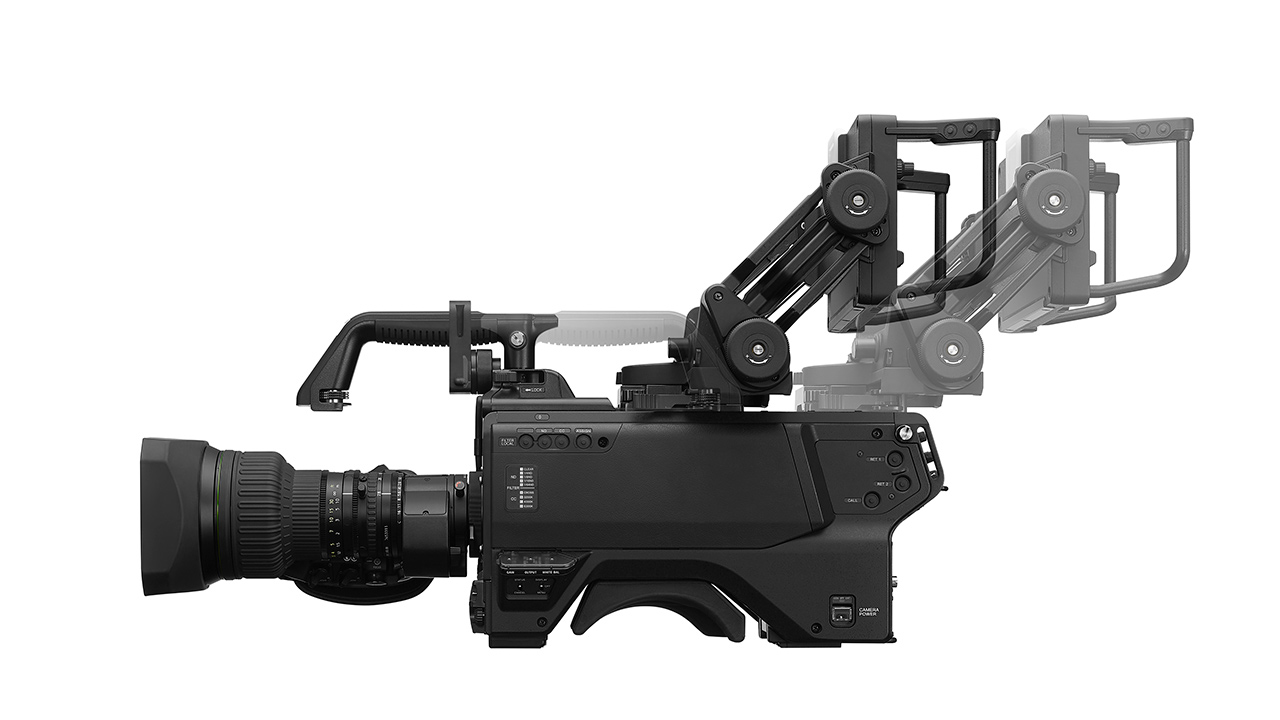
The completeness of the system as it supports the entire production process.