Cine Gear 2026
Cinema lenses are moving to the next stage.
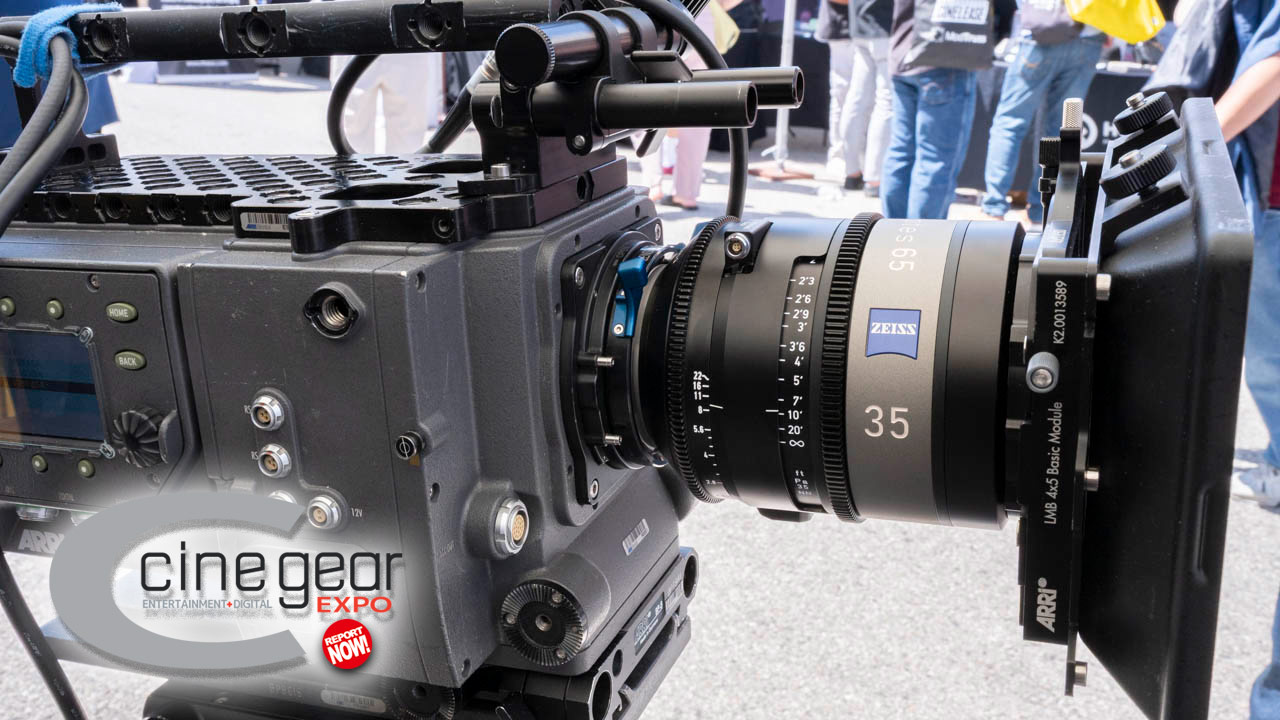
At Cine Gear Expo LA 2026, there were numerous exhibits that strongly suggested the evolution of cinema lenses is moving to the next stage. One major trend is the support for large sensors, including 65mm format capable lenses.
Furthermore, each company’s approach is diversifying, including AF-enabled anamorphic lenses, ultra-large aperture lenses with a T1.0 aperture, and rehousing to adapt vintage lenses to modern shooting environments. This article introduces some noteworthy lenses that we were able to check out on site, including their image quality and handling, which are not easily apparent from catalog specifications alone.
ZEISS – The “Panoptes 65” series of prime lenses compatible with 65mm format.

At the ZEISS booth at Cine Gear Expo LA 2026, the newly announced “ZEISS Panoptes 65” series of prime cinema lenses for 65mm format was on display. While the 2x anamorphic lens “Horizon Anamorphic” was the main topic of conversation, this newly announced series also attracted attention as a product that symbolizes the expansion of the market for lenses for large sensors.
As a series of fixed-focal-length lenses compatible with the 65mm format, it is a series that looks ahead to large-sensor cameras that have been gaining prominence in recent years, such as the ARRI ALEXA 265, Blackmagic URSA Cine 17K 65, and Fujifilm GFX ETERNA 55.
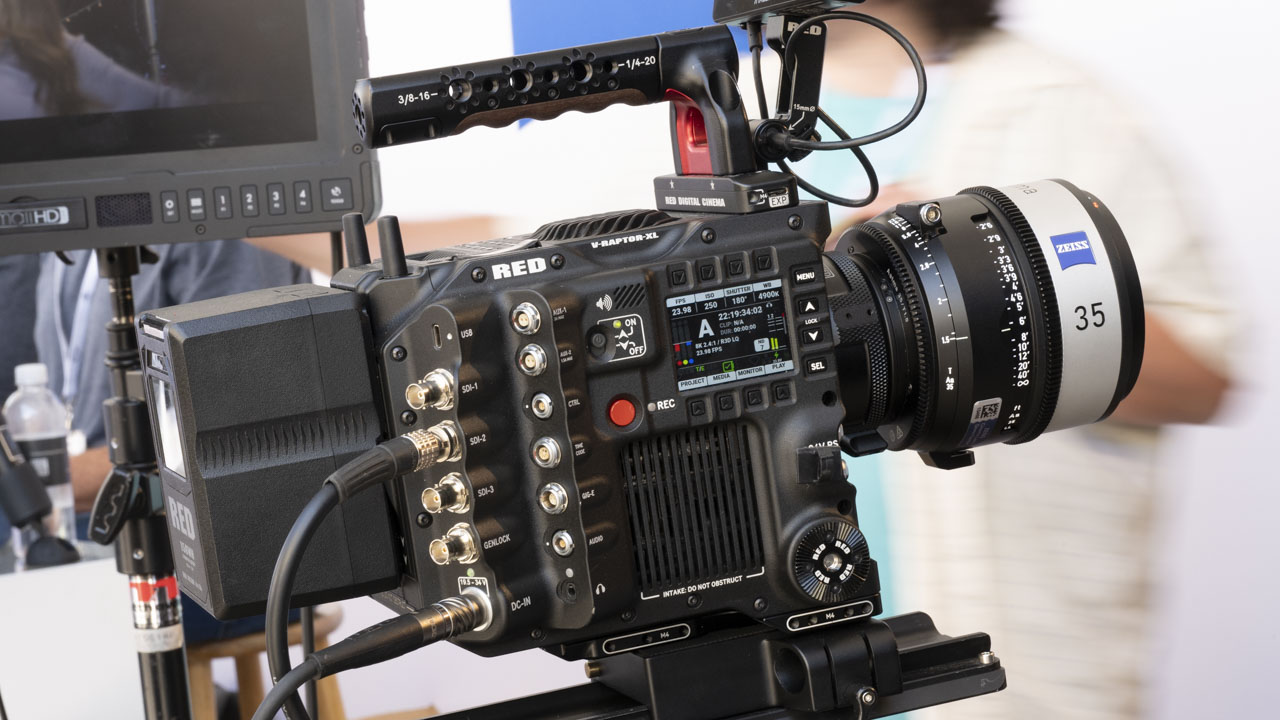
Upon actually examining the equipment, its distinguishing features were its natural color reproduction with restrained vibrancy and its meticulous rendering of skin texture. The transition from the in-focus to out-of-focus areas was smooth, resulting in a soft bokeh effect. It can be said that this lens prioritizes a comprehensive balance of rendering, including gradation and texture, rather than simply pursuing resolution.

The lineup consists of 10 lenses ranging from 25mm to 180mm. Indeed these lenses work well with the 65mm format, they additionally achieve a T2.2 aperture across all focal lengths. It also features specifications geared towards the high-end market, such as support for lens data, making it a symbol of the expanding large-format sensor lens market, and its future development is attracting attention.
Sigma – Aizu Prime: A high-performance cinema lens born in Aizu.

At the Sigma booth at Cine Gear Expo LA 2026, our team had the opportunity to experience the “Aizu Prime,” the flagship cinema lens announced at last year’s Cine Gear Expo LA 2025. A year has passed since its announcement, and it is impressive about how refined the series is. It’s not a development based on the conventional Art series, but a completely new lens series designed from the ground up with cinema use in mind.
Upon actually examining the images, it’s clear that aberration correction has been meticulously performed, resulting in clean and neutral rendering. At the same time, without excessive reliance on sharpness, it features a smooth falloff and natural tonal expression, strikingly bringing out the three-dimensionality of the subject. Without sacrificing contrast or detail, it adds a unique character to Sigma’s characteristic refined rendering.

13 Blade Iris
Mechanically, it employs a 13-blade iris. The bokeh has a unique nuance reminiscent of an anamorphic lens, and the iris ring has a 270° rotation angle, allowing for precise exposure control.
Another strength common to all Sigma products is their high color reproduction accuracy across lenses. Even when switching between different focal lengths, there is little change in color tone, which reduces the burden of color adjustments during the editing process.
Integrated System
The Aizu Prime series is distinguished not only by its optical performance, but also by its integrated production system, which encompasses design, manufacturing, and quality control, all carried out at the Aizu factory in Fukushima Prefecture. By conducting assembly and inspection at the same location, the company ensures thorough quality control across the entire series. The series name “Aizu” additionally adds respect for the people who work there.
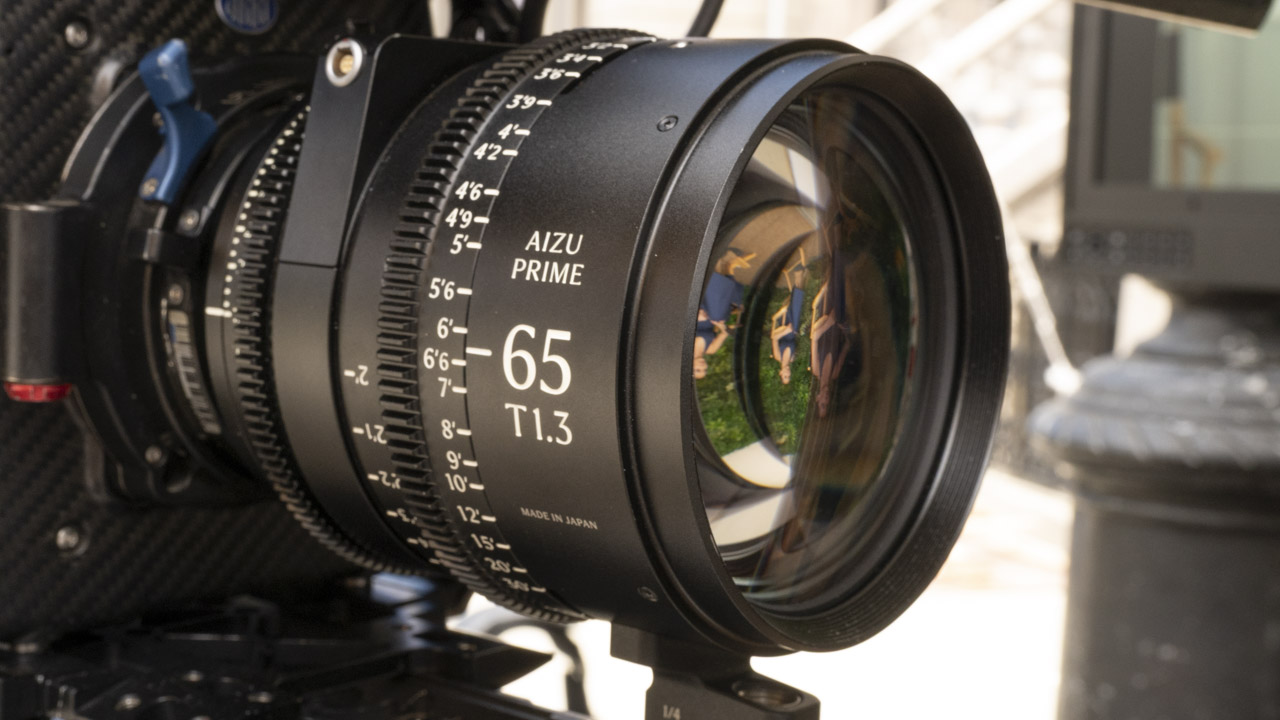
The lineup consists of 12 lenses ranging from 18mm to 125mm. The available lenses are 18mm, 21mm, 25mm, 27mm, 32mm, 35mm, 40mm, 50mm, 65mm, 75mm, 105mm, and 125mm, with the 18mm and 21mm lenses scheduled for release this fall. Furthermore, a 200mm lens is being considered for future additions.
Fast, Bright Aperture and More!
Its key features include full-frame compatibility and a bright T1.3 aperture, all while maintaining a compact design. It also boasts excellent close-up capabilities, allowing you to focus as close as approximately 30cm at 25mm. This ability to get boldly close to your subject will be a significant advantage in real-world shooting situations.
The Aizu Prime series can be considered a symbolic series that demonstrates Sigma’s serious commitment to expanding into the cinema lens market.
Sirui – A new proposal: AF-enabled anamorphic lens with 1.5x aperture: “SIRUI IronStar 35/45/60mm T1.9 1.5x”

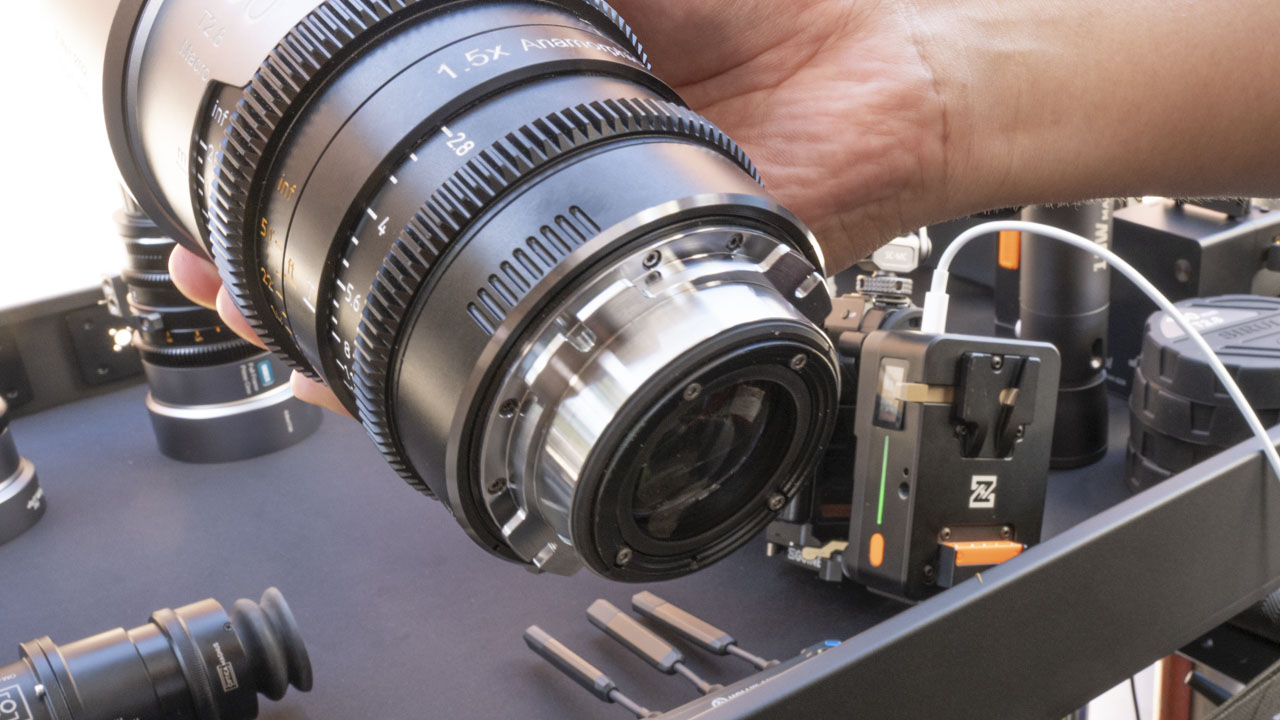
At the Sirui booth at Cine Gear Expo LA 2026, we tried out the new “SIRUI IronStar 35/45/60mm T1.9 1.5x Full-Frame Anamorphic Cine Lens,” which was making its debut at Cine Gear Expo.
Previously, the company’s anamorphic lenses were mainly 1.33x models, but this time they have evolved to a 1.5x squeeze lens that allows for a more cinematic expression. The series uses a PL mount, and the manufacturer has made it interchangeable with PL/EF lens mounts. The series as a whole is planned to have a lineup of six lenses.

AF Anamorphic
Its most distinctive feature is that, despite being an anamorphic lens, it supports autofocus. While manual focus is certainly possible, the availability of AF greatly expands the freedom of shooting style.
Compared to the 1.33x model, it offers a wider field of view, and the anamorphic characteristic of background blur, where the blur extends vertically, is more pronounced. The slim bokeh created by the 1.5x squeeze gives the image a unique atmosphere.
Even more interesting is the availability of an anamorphic macro lens in the series. While anamorphic lenses generally tend to have long minimum focusing distances, this model allows you to get significantly closer to your subject.
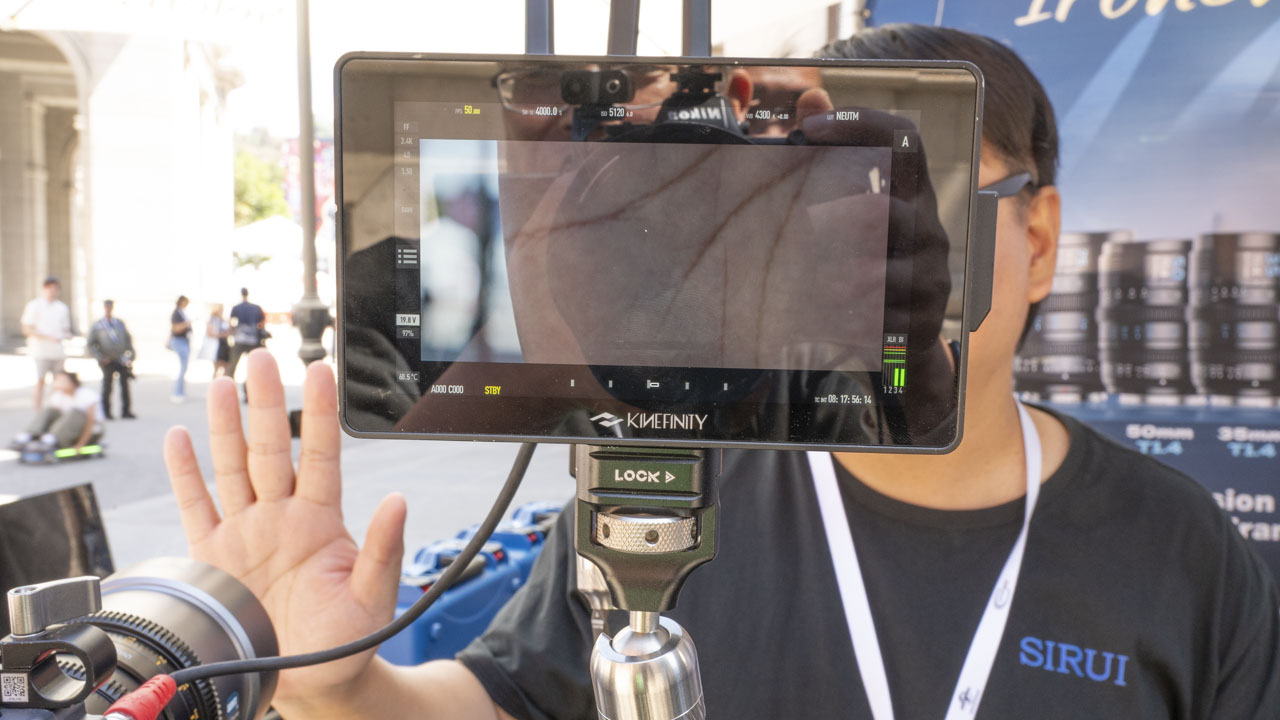
With its wide angle of view, distinctive bokeh, and close-up shooting capabilities, this series offers a different shooting style from conventional anamorphic lenses. Including its autofocus capabilities, it’s likely to attract attention as a product that expands the range of applications for anamorphic photography.
Zhongyi Optics – T1.0 opens up new possibilities: “Zone T1 Cine Series”
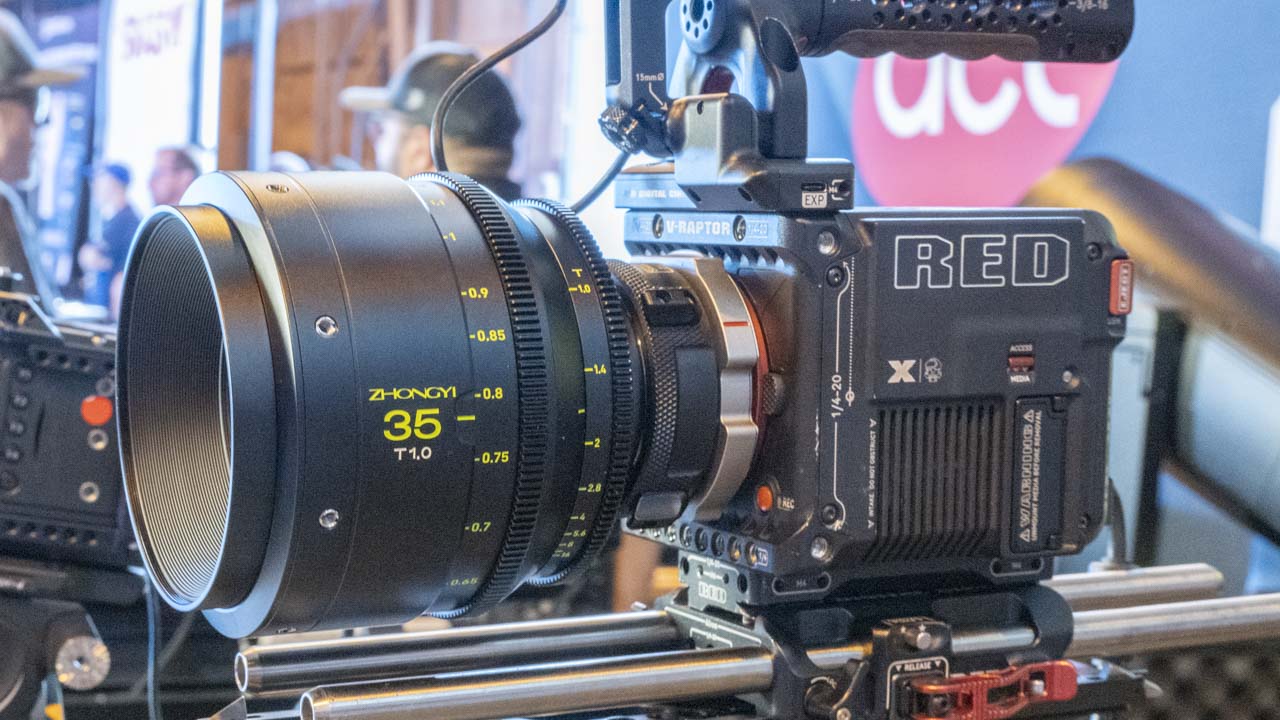
At the Zhongyi Optics booth, we could experience their new “Zone T1 Cine series.”
Its most notable feature is its bright aperture of T1.0. This specification is a great asset when shooting in limited lighting conditions, such as documentaries and interviews. A working unit mounted on a RED V-RAPTOR X was on display, and considering the price range, achieving an aperture of T1.0 is a bold approach.
The shallow depth of field produced by T1.0 creates a unique sense of distance and depth. The background blur is also smooth, maintaining a cinematic quality. The value of T1.0 in video production lies not only in its brightness, but also in these rendering characteristics themselves.

The image quality strikes a good balance between sharpness and softness, suggesting the potential for visual expression that surpasses its price range.
The mechanical build quality is also excellent. The focus and iris rings operate smoothly, and the housing feels very rigid. Compared to previous Speedmaster Cinema series models, the build quality has definitely improved.
For independent filmmakers and individual creators who struggle to secure large budgets, this series could be an attractive option. Preparations are currently underway for its launch on Indiegogo, with an official release planned for July. It has the potential to become a new option in the ultra-high-speed cinema lens market.
Zero Optik – A challenge for the era of large sensors: “Canon FD-X 10mm T3.7”
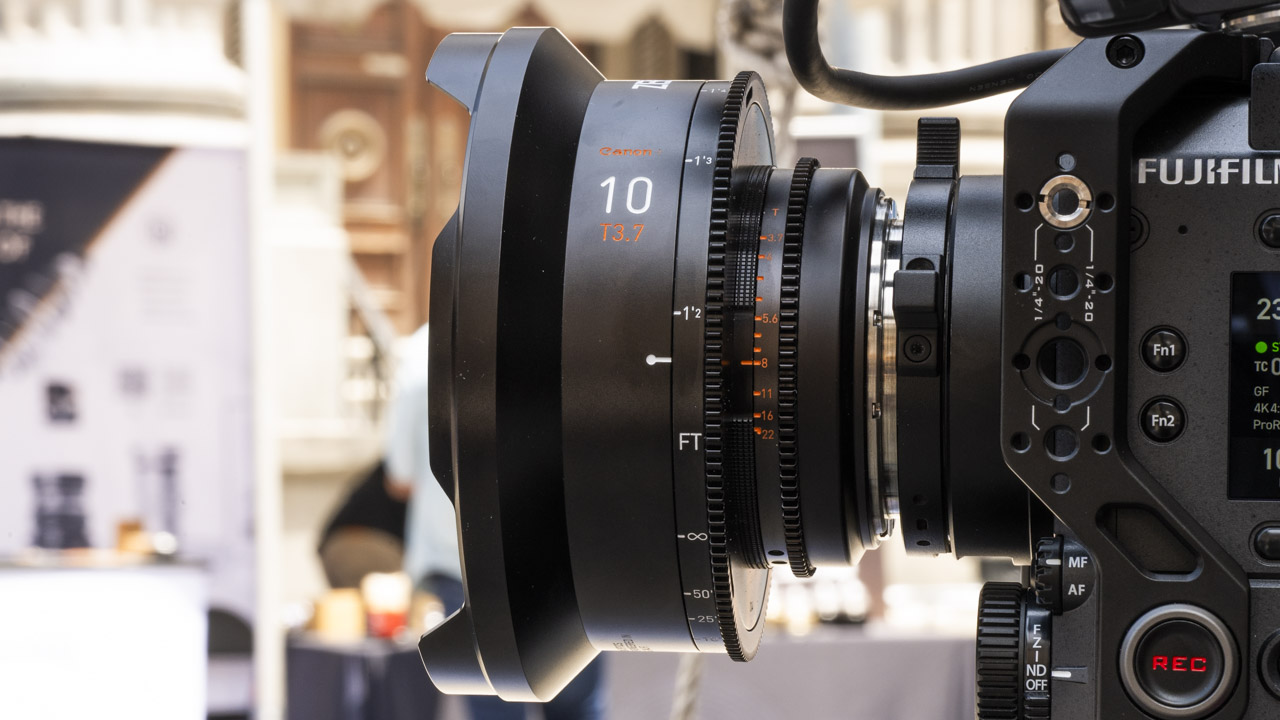
The “Canon FD-X 10mm T3.7,” displayed at the Zero Optik booth, is a noteworthy product announced in January 2026. Based on Canon’s FD lenses, this 10mm lens first appeared four years ago as a prime lens for full-frame cameras, characterized by its low distortion and linear rendering.
As sensors in film production continue to grow in size, the company has developed a special conversion kit to fully accommodate the FUJIFILM GFX ETERNA 55. By adding optical glass to the rear element, it achieves compatibility with the 65mm format, and although the aperture value changes from T3.1 to T3.7, it expands the options for ultra-wide-angle expression on large sensors.
It’s interesting that they’ve managed to maintain an ultra-wide 10mm angle while securing a vast image circle through rehousing. This allows for shooting with larger sensors such as the ARRI Alexa 65 and Blackmagic URSA Cine 17K 65, in addition to the FUJIFILM GFX ETERNA 55.

Unusual focal length adds for impressive features
A 10mm focal length on a 65mm format lens is unusual, and a major feature is that it maintains straight lines thanks to its rectilinear design.
It boasts high resolution performance even at its widest aperture, and aberrations are well suppressed. On the other hand, it also possesses an emotional character, such as moderate vignetting and flare reminiscent of vintage lenses.
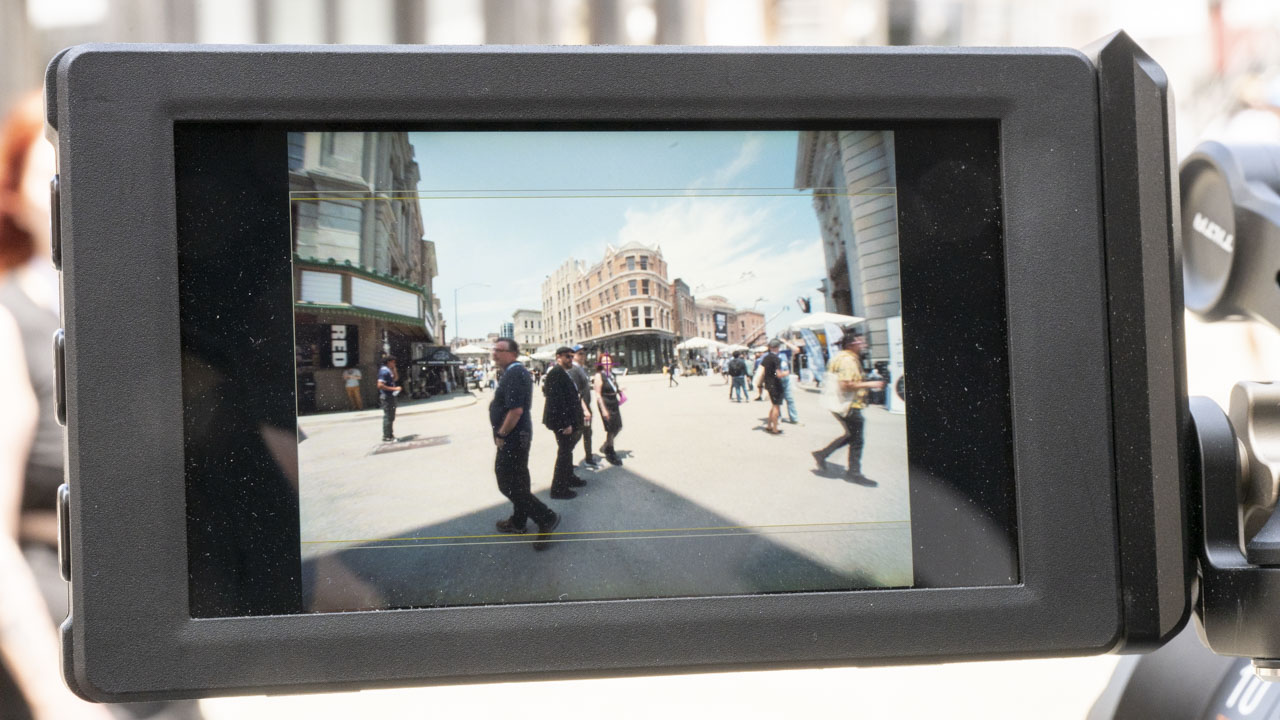
The minimum focusing distance has been shortened to approximately 35cm, making it possible to take close-up shots of subjects despite having an ultra-wide-angle lens.
Furthermore, this lens adopts a new “Name Tag” mount. Based on Cooke i/ Technology, it features a mechanism for transmitting information such as focal length, aperture value, and serial number to the camera, thus supporting digital workflows.
In recent years, the competition to develop lenses compatible with large sensors has intensified, with most of these being based on entirely new designs. Zero Optik, however, has chosen a unique approach, adapting vintage lenses to modern shooting environments while retaining their distinctive characteristics. It was an interesting alternative solution in the era of large sensors.