Sony announced the release of the RX10 V, a new model in its RX10 series of high-performance zoom cameras equipped with a large sensor. Since its initial release in 2013, the Sony RX10 series has established a unique position by combining high-magnification zoom and high image quality in a single camera. The previous model, the RX10 IV, was released in 2017. After a long hiatus, the successor model debuts.
The RX10 IV was a long-selling model that remained on the market for an extended period. This indicates its high level of refinement and the support it received from many users. That’s why the arrival of the Sony RX10 V, after approximately nine years, naturally evoked a feeling of “it’s finally here.”
Orders will begin on July 16, 2026 at 10:00 AM, with a release date scheduled for July 31 of the same year. The price is open, with an estimated retail price of around 360,000 yen (including tax). It’s certainly not a price range that’s easily affordable. However, this latest model in a series that hasn’t seen a model change for a long time incorporates the technology cultivated in the current α series, and we’ll examine its true value through hands-on testing.
Inherited “perfected” optical system and the revamped internal devices
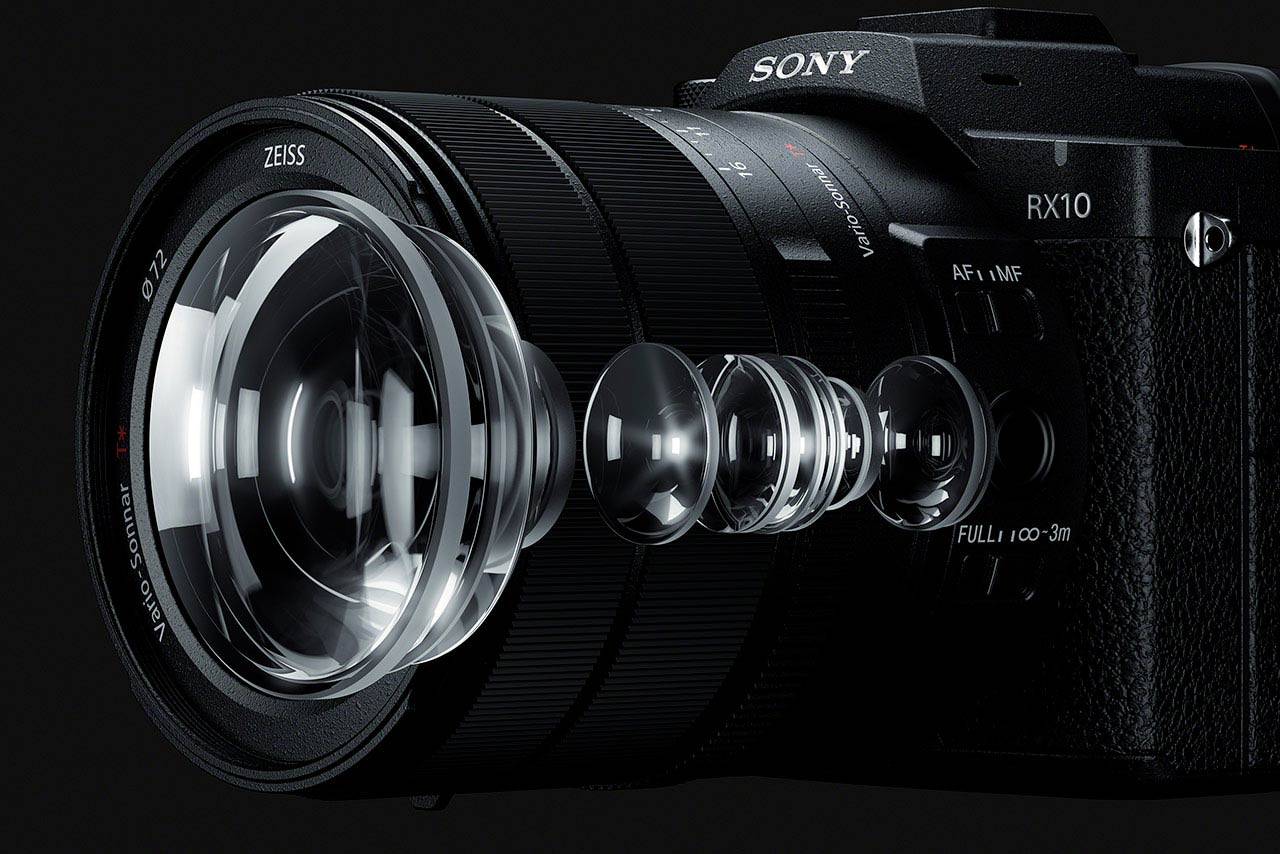
The first thing that caught my eye when I actually got my hands on it was that it inherited the same large-aperture zoom lens as the previous model, the ZEISS Vario-Sonnar T * 24-600mm F2.4-4.0. It covers a wide range from 24mm wide-angle to 600mm super-telephoto with a single lens, and maintains an open aperture of F4 even at the telephoto end. The fact that you can handle such a wide focal range without changing lenses is, upon reflection, a unique characteristic of the RX10 series.


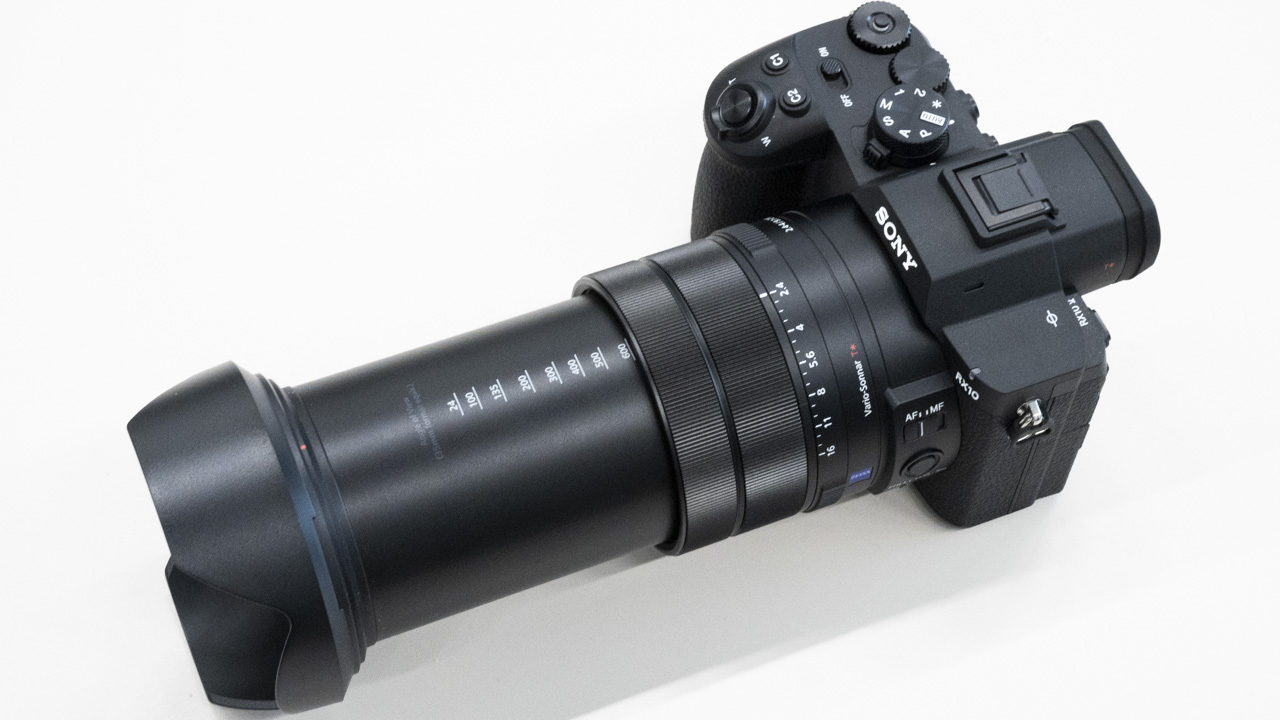
At first glance, the fact that the lens hasn’t changed might seem like a sign of stagnation. However, upon hearing the explanation, it became clear that there was a compelling reason for this decision. This lens boasts a highly refined optical system that was well-regarded in the previous model, and rather than simply replacing it with a new design, the choice was made to preserve its value.
The lens construction consists of 13 groups and 18 elements. It combines advanced aspherical (AA) lenses, ED glass, and ED aspherical lenses to achieve high resolution and high contrast while suppressing chromatic aberration. With built-in optical image stabilization (OSS), this single lens can handle a wide range of shooting situations, from wide-angle landscape photography to super-telephoto shots of birds, wildlife, and sports.
Using Sony’s Latest Processing Engine
The core of the evolution lies, rather, internally. The Sony RX10 V features the latest image processing engine, “BIONZ XR,” and an AI processing unit, significantly revamping the image processing and AF systems. The idea is to maintain the basic specifications of the lens while raising processing performance, subject recognition, and image rendering accuracy to a new generation level.
The sample images presented at the venue clearly conveyed the intended purpose. The feathers of wild birds were rendered in fine detail, the background blur was natural, and the subject stood out sharply. In close-ups of people, even the texture of the skin and the fine details around the eyes could be seen. Furthermore, improvements were observed in the resolution at the edges of the frame and the reproduction of detail in dark areas. The exhibit demonstrated that, while using the same lens, the image quality was boosted by the color reproduction and image processing advancements of BIONZ XR.

The value of condensing a 4.3kg system into approximately 1.1kg.
The most obvious appeal of the Sony RX10 V is its mobility. To cover a focal range from 24mm to 600mm with a full-frame camera, you would need multiple interchangeable lenses such as 24-70mm, 70-200mm, and 200-600mm. At the event, it was stated to weigh approximately 4.3kg.
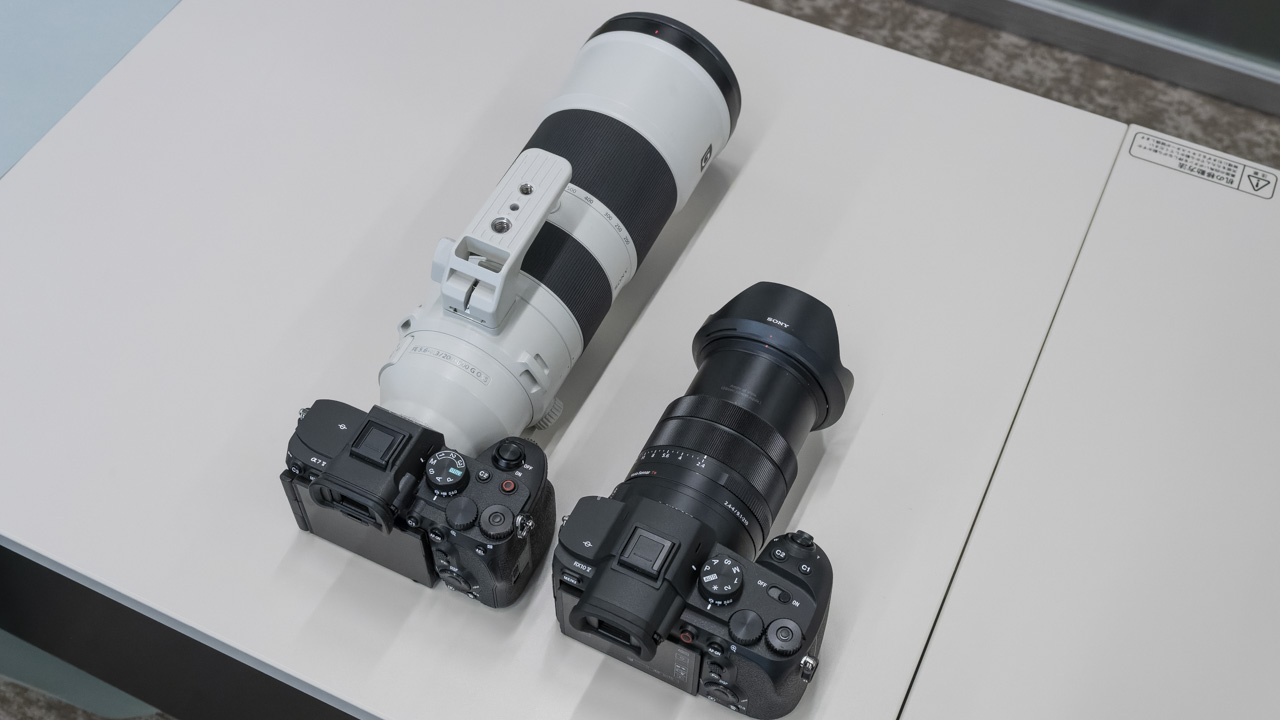
On the other hand, the RX10 V covers the same focal range with a single body weighing approximately 1,111g. Of course, a direct comparison is not possible due to the difference in sensor size. Nevertheless, a weight reduction of over 3kg is significant. When actually holding it, it felt even lighter than the numbers suggest. The redesigned grip shape has also improved the handling, making it seem easy to use even during long shooting sessions.
This mobility is a great asset for travel, mountain climbing, air shows, sports photography, and bird photography. In situations where there’s no time to change lenses, in places with restrictions on the equipment you can bring, or when you want to minimize your luggage, the peace of mind of being able to use a single 24-600mm lens is invaluable.
The close-up capabilities are also noteworthy. The minimum focusing distance is approximately 3cm at the wide-angle end and approximately 72cm at the telephoto end. The maximum magnification reaches 0.42x at the wide-angle end and 0.49x at the telephoto end. It can handle macro photography of flowers and insects, and its configuration allows for seamless shooting of everything from landscapes and wild birds to sports and close-ups of flowers and small objects without changing lenses.
Practical features that support zooming
One feature particularly practical while using the actual camera is the zoom assist function. In super-telephoto photography, it’s difficult to re-capture a subject once it’s out of frame. With the Sony RX10 V, pressing a custom button temporarily widens the field of view, allowing you to check the subject’s position. Releasing the custom button after re-framing automatically returns the focal length to its original position. While the convenience is clear from the description alone, actually using it was incredibly intuitive.
The step zoom function also left a strong impression. Operating the zoom ring allows the camera to smoothly stop at typical focal lengths such as 24mm, 28mm, 35mm, 50mm, 70mm, 85mm, 100mm, 135mm, 200mm, 300mm, 400mm, 500mm, and 600mm. This makes it easy to quickly adjust to the desired angle of view, reducing instances of “going a little too far.” While a minor feature, it’s a clever design choice that significantly improves the shooting pace.
Furthermore, in addition to the 24-600mm optical range, combining super-resolution zoom and digital zoom allows for shooting up to the equivalent of 2400mm. When I tried it with the actual camera, I was initially a little confused because it switches to a magnification display beyond 600mm. However, after checking the settings and operating it, I realized that I could get even closer to distant subjects. Of course, the resolution decreases when using digital zoom, but it’s reassuring to have this option when you “absolutely need to get closer.”
In situations where you can’t physically get close to your subject, such as watching sports, photographing aircraft, or photographing wild birds, this zoom performance will prove to be a great asset.


Speed performance supported by AI and high-speed continuous shooting
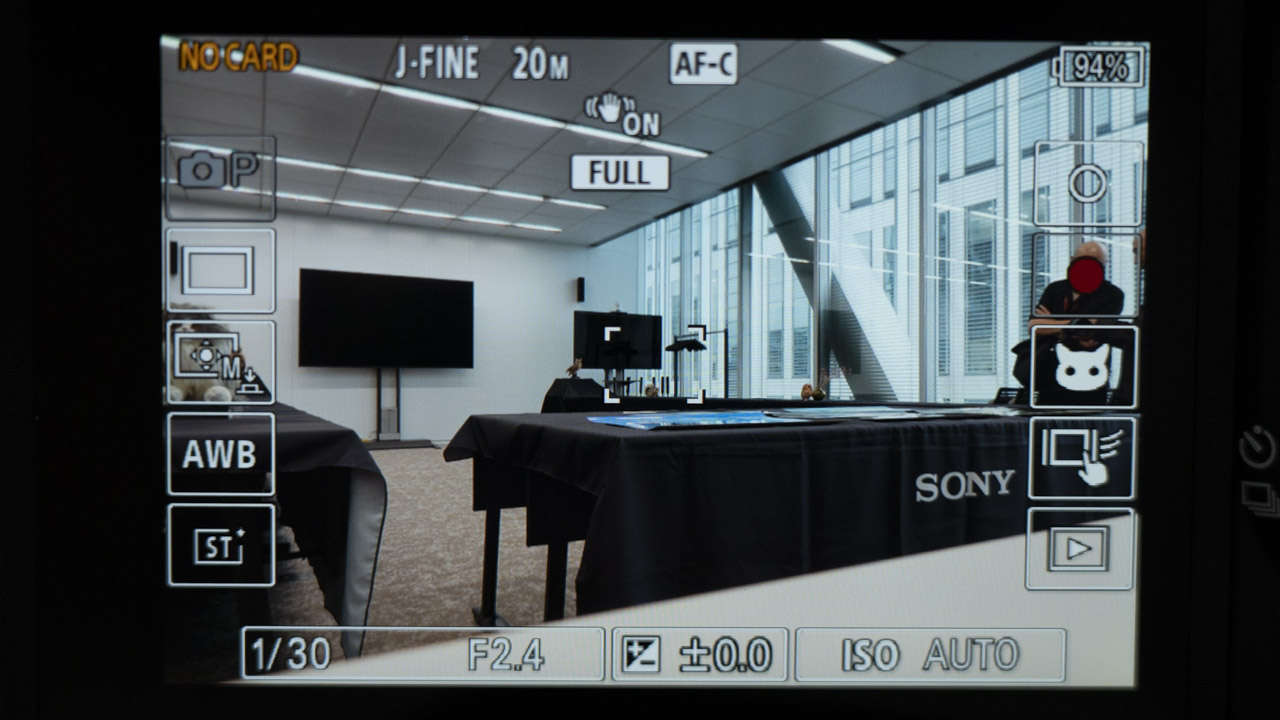
The Sony RX10 V is more than just a camera with zoom capabilities. It also incorporates the latest generation of speed into its still image performance. It supports blackout-free continuous shooting at up to approximately 30 frames per second, and AF/AE calculations reach up to 60 times per second. By tracking focus and exposure even during high-speed continuous shooting, it ensures you never miss a decisive moment.
The AF system has also been significantly improved. It features up to 575 phase-detection AF points, covering approximately 70.6% of the screen. This allows for more accurate focusing, even on small or moving subjects.
The inclusion of an AI processing unit enhances subject recognition and tracking performance. It recognizes eyes, face, head, and body in people, and eyes, head, and body in animals and birds. Furthermore, the range of recognizable subjects has expanded to include cars, trains, airplanes, and insects. Subject recognition can now be used during video recording, allowing users to experience the improved AF performance in both still images and videos.
The sample images displayed at the camera debut event, featuring birds in flight and sports scenes, clearly captured fast-moving subjects. The examples, such as the split-second movements of soccer players and skateboard tricks, demonstrated the advancements in motion photography.
AI-Powered Speed Boost
While the RX10 IV’s high speed was a major draw when it was released, the RX10 V adds AI-powered recognition capabilities and the latest processing power. As a result, it has evolved into a camera that not only shoots quickly but also captures intended subjects more reliably.
The number of consecutive shots at the highest continuous shooting speed using the electronic shutter has also improved. In JPEG (L-size fine), the RX10 IV can capture approximately 249 shots, while the RX10 V can capture approximately 546 shots. Even with JPEG + compressed RAW, the number of shots has increased from approximately 106 to approximately 141. The improved buffer performance is a great source of reassurance when using high-speed continuous shooting.
| Recording method | RX10 IV 24 frames/second |
RX10 V 30 frames/second |
|---|---|---|
| JPEG (L size fine) | Approximately 249 sheets | Approximately 546 sheets |
| JPEG + Compressed RAW | Approximately 106 sheets | Approximately 141 sheets |
*When using the electronic shutter and shooting at the highest continuous shooting speed. Lossless compression cannot be selected when the shutter method is set to electronic shutter.
The Sony RX10 V Video Performance
The video capabilities have also evolved significantly. The Sony RX10 V supports 4K 120p high-frame-rate shooting, and with the S&Q shooting function, it’s possible to achieve slow motion up to 5x. When recording in Full HD, it supports up to 240fps and allows for slow-motion playback up to 10x. Because it can smoothly capture fast-moving subjects, it will likely be very useful in sports, wildlife photography, and action-packed filming.

Another important feature is that no cropping of the field of view occurs during 4K60p shooting. By reading out all pixels without pixel binning, it generates high-definition 4K video from 5.4K oversampling. Because the wide-angle field of view can be fully utilized, there is a high degree of freedom during shooting.
On the other hand, the field of view narrows when shooting in 4K 120p or when using Active Mode. It’s also important to note that Active Mode is unavailable when using 4K 120p, which is a point to be aware of during actual shooting.
S-Cinetone and S-Log3
The Sony RX10 V supports S-Cinetone and S-Log3 for tonal expression, making it easy to integrate into workflows that assume post-production color grading. Additionally, it also supports user LUTs and LUT monitoring. This allows users capabilities with registered LUTs for on-set confirmation and video expression. Also, the camera offers features that will fully satisfy not only users who want to take still images but also users who want to seriously enjoy video production.
The camera features 12 Creative Looks, catering to users who prefer a natural, unedited color reproduction. It also includes features designed for post-production selection and editing, such as time-lapse video recording, shot marking, and automatic still image generation from video.

*Click the image to enlarge

*Click image to enlarge
In terms of audio, the Sony RX10 V comes equipped with a multi-interface shoe that supports digital audio interfaces. By combining it with compatible accessories, a cleaner and clearer audio recording environment can be created. The ability to consider not only video but also audio in the creation of a work is an appeal that goes beyond just being an “all-in-one camera”.
It also features an auto-framing function that utilizes AI-based subject recognition. This function automatically tracks and crops the recognized subject during video recording or streaming to optimize the composition, which should be useful for one-person operation.
Operability closer to the current α series
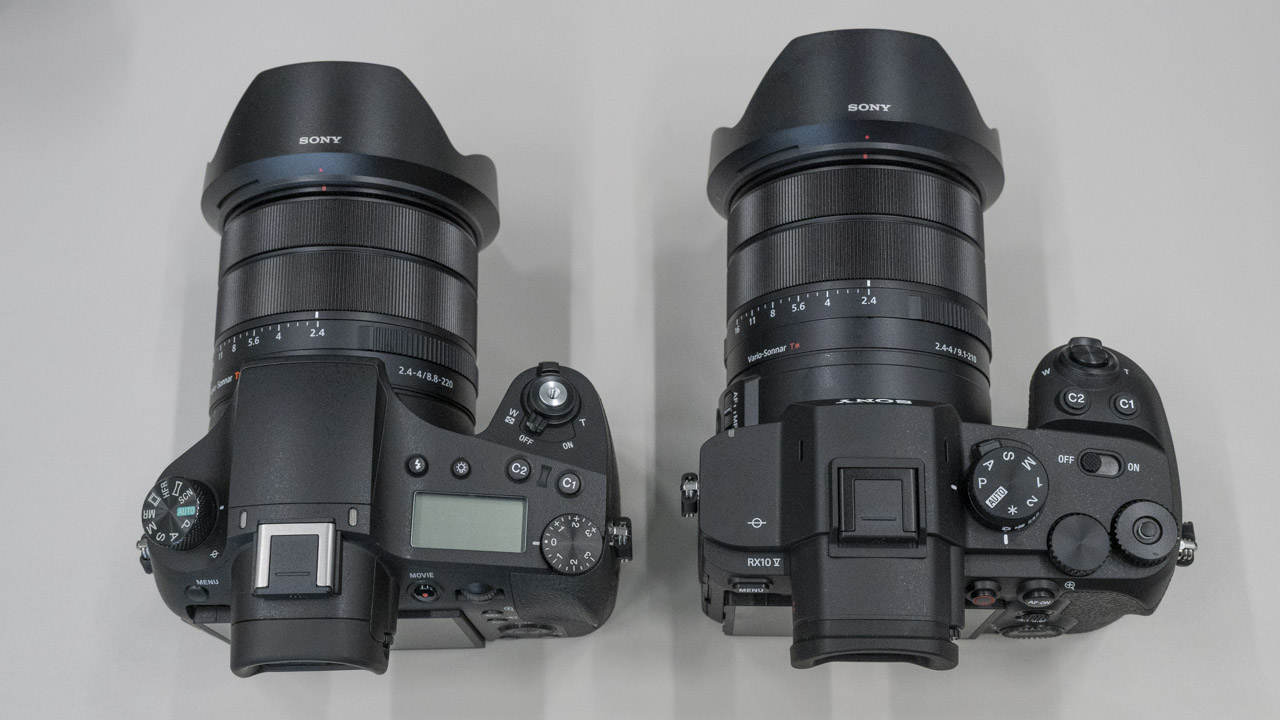
The body design has changed dramatically from the previous model. It has been revamped from the previous rounded design to a sharper design closer to the current α series. While they may look similar at first glance when placed side-by-side with the previous model, there are many subtle differences. The placement of the dials, the area around the monitor, and the grip shape have all been revised, giving the overall impression of a “modern Sony camera.”

3 Ring Control System
The camera features a triple-ring control system that allows for independent operation of focus, zoom, and aperture. It also supports swapping the positions of the focus and zoom rings, as well as changing the zoom and focus directions, enabling intuitive manual operation. The focus hold button and focus range limiter have also been repositioned for improved usability.

The controls have also been reorganized to match those of the current α series. The rear dial, button layout, multi-selector, and AF-ON button should feel natural to those familiar with the α series. It adopts the latest user interface, and the menu screen supports vertical display. It also supports operation icons and function menu access via touch and swipe gestures, enhancing usability in shooting situations.
The fact that it supports charging and power supply via USB Type-C is also practical. It also supports USB PD, making it easier to shoot for extended periods using a mobile battery. It’s easy to use for outdoor shooting and video recording. The connection terminal is a USB Type-C compatible with SuperSpeed USB 10Gbps, updating the data transfer specifications to modern standards.

The Sony RX10 V Battery
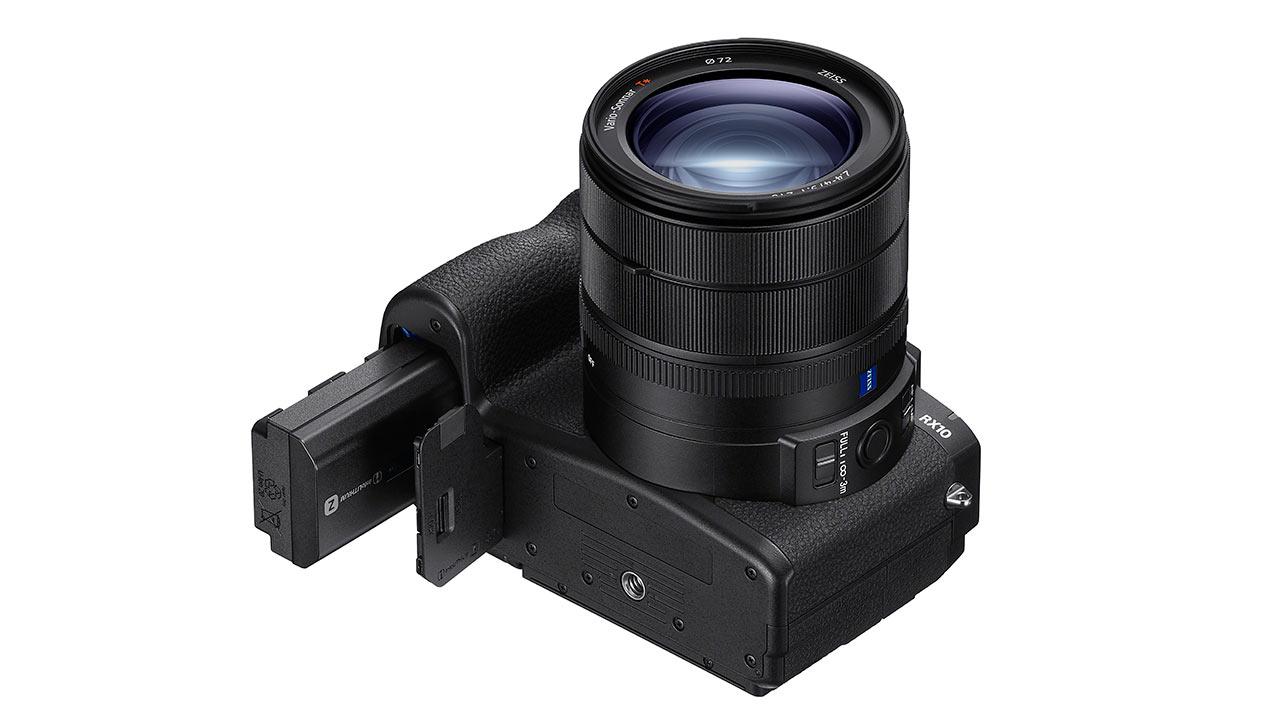
The battery has been changed to the high-capacity NP-FZ100. The number of shots that can be taken is approximately 630 when using the LCD monitor and approximately 570 when using the viewfinder, a significant improvement over the previous model. It also supports the high-speed SD UHS-II card, which enhances data management after shooting and provides peace of mind when shooting in continuous mode.
The camera employs a 0.5-inch, approximately 3.686 million-dot OLED electronic viewfinder. It supports 120fps display and has a viewfinder magnification equivalent to 0.78x. When actually looking through it, it was easy to see even small subjects, and it gave the impression that composing shots was easy even with super-telephoto lenses. The LCD monitor has also been upgraded to a high-resolution 3-inch, approximately 1.62 million-dot display.
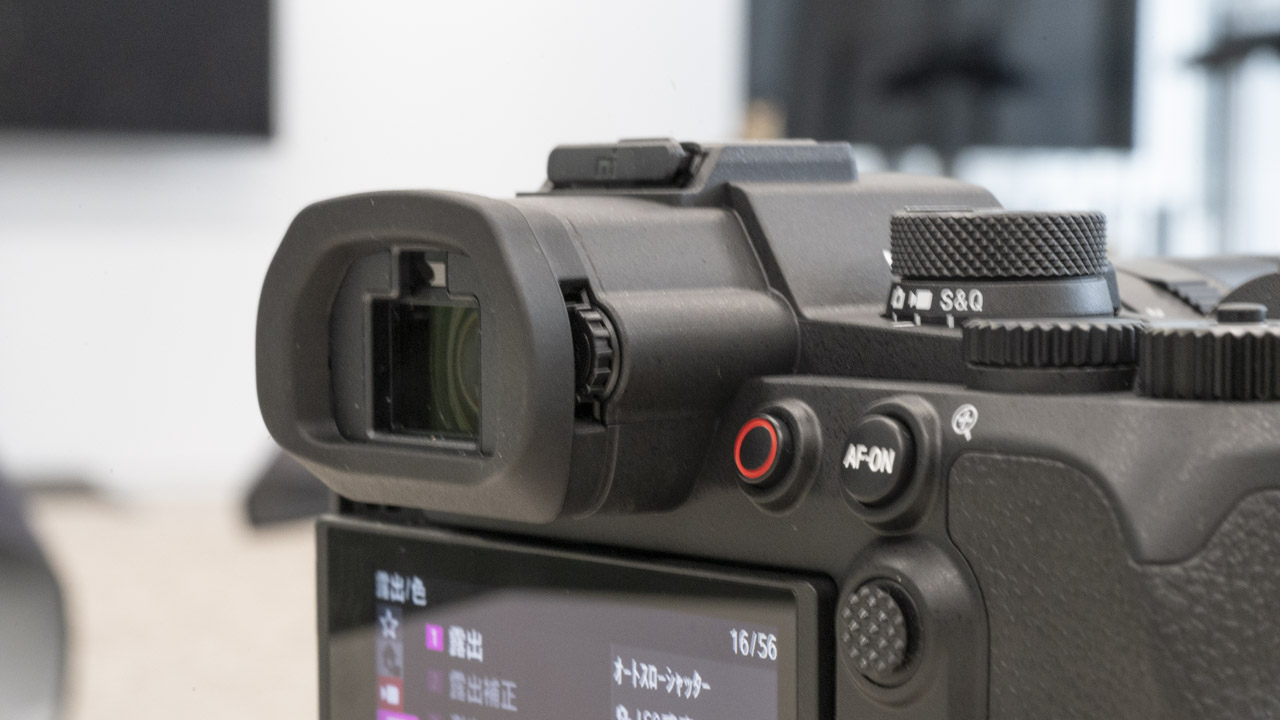

The separate power slider switch was another feature whose convenience became apparent upon use. The power position is intuitively easy to find, allowing for effortless operation even with just a fingertip. These small improvements may not be reflected in catalog specifications, but they are crucial for a tool intended for long-term use.

Evolution of reliability and connectivity
The RX10 V also boasts enhanced reliability, particularly for outdoor shooting. The sealing around the main controls and body has been strengthened, resulting in improved dust and water resistance compared to the RX10 IV. While 100% dust and water resistance cannot be guaranteed, this is a significant improvement for a camera frequently used outdoors, such as for travel, mountain climbing, air shows, and sports photography.
Connectivity has also been updated to modern specifications. Wi-Fi now supports both 2.4GHz and 5GHz bands, and Bluetooth 5.0 is also supported. The original Bluetooth remote control can now be used, increasing flexibility during remote shooting.
Furthermore, it supports live streaming up to 4K30p via USB connection, and also supports streaming via wireless or wired LAN networks. The ability to simultaneously perform 4K30p live streaming and in-camera recording is attractive to users who are interested in broadcasting or event recording.
On the other hand, some features have been omitted from the RX10 IV. HFR shooting, multi-shot noise reduction, built-in flash, AF-A mode, top display panel, and NFC are not included. These can be seen as a result of streamlining functions and operability to align with the current α series philosophy. Those upgrading from previous models should be aware of these differences beforehand.
Who is this camera suitable for?
What became clear from experiencing the actual device is that the Sony RX10 V is not a camera aimed at only one specific genre. It is strongly designed to cover a wide range of scenes with a single camera, from birdwatching, aviation, sports, travel, family photos, school sports days, and video recording.
If you’re serious about photographing only wild birds or aircraft, a full-frame camera with interchangeable lenses is a strong option. However, for people who want to enjoy hiking or traveling and also photograph wild birds and landscapes along the way, being able to pack light is a huge advantage. You want to enjoy photography, but you also want to minimize your luggage. For that kind of use, the RX10 V is a perfect fit.
It’s also suitable for families. It can handle a wide range of situations, from school sports days and travel to everyday recordings, making it an attractive option for those who want to capture various scenes with a single camera. While smartphones struggle with telephoto shots, the RX10 V can bring distant subjects closer. The difference will be clearly evident when photographing children’s sports days, sporting events, or landscapes during travel.
The Sony RX10 V Brings the RX10 series back.
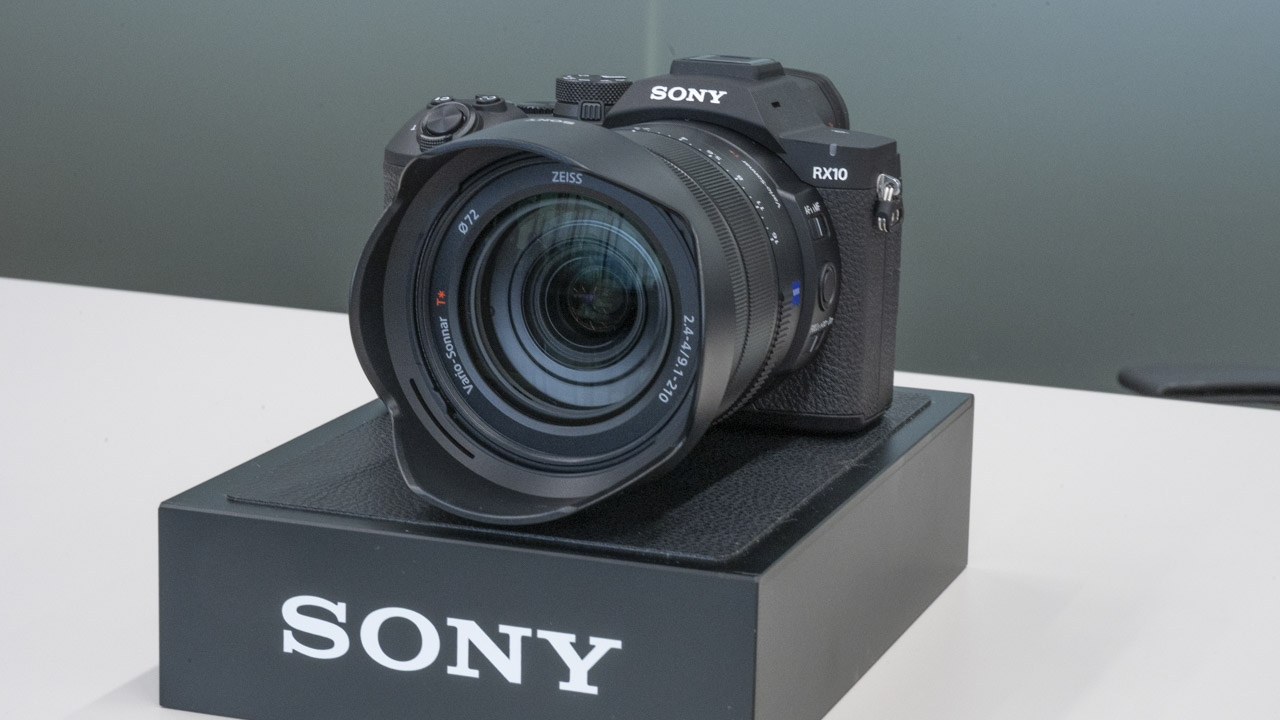
After completing the interviews, my impression was that the RX10 V is not simply a successor to the RX10 IV. Despite being a new model released after a long hiatus, it firmly inherits the “all-in-one” value that the RX series has had, while also actively incorporating the technology and operability of the current α series.
Air shows where there’s no time to change lenses, mountain climbing and travel where you want to minimize equipment, and modern content creation that requires both video and still images—the RX10 V has the potential to meet all of these needs at a high level.
This camera has a different value proposition than systems that prioritize sensor size. However, considering its mobility, wide shooting range, AF performance, video performance, operability, and reliability, the RX10 V’s unique position remains clear. When you actually use it, you’ll discover many charms that can’t be conveyed by numbers alone.
Breaking a long silence, the Sony RX10 V is a camera that reminds us once again of the joy of creation—the feeling of “how much can I capture with just this one camera?” While carrying multiple interchangeable lenses is certainly enjoyable, the ease of thinking, “Today, I’ll just take this one camera with me,” is also a major appeal of photography and videography. The RX10 V refines that enjoyment with modern technology, making it a long-awaited return to the RX10 series.