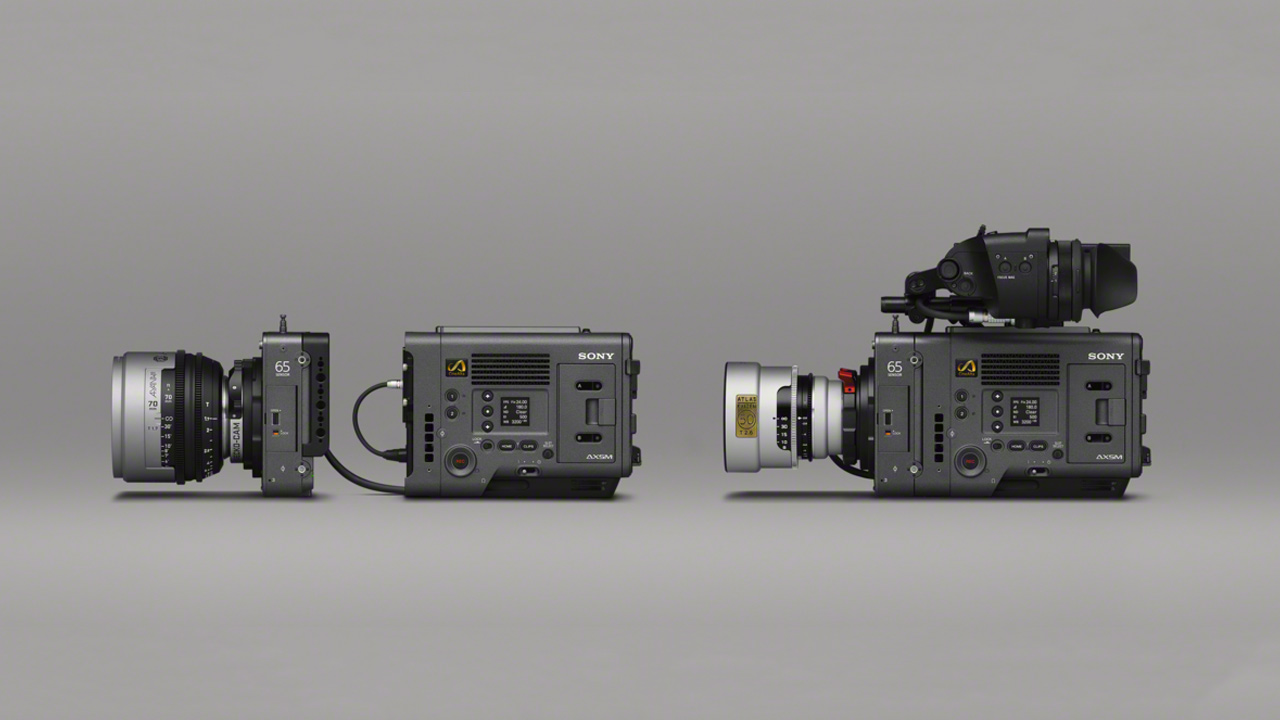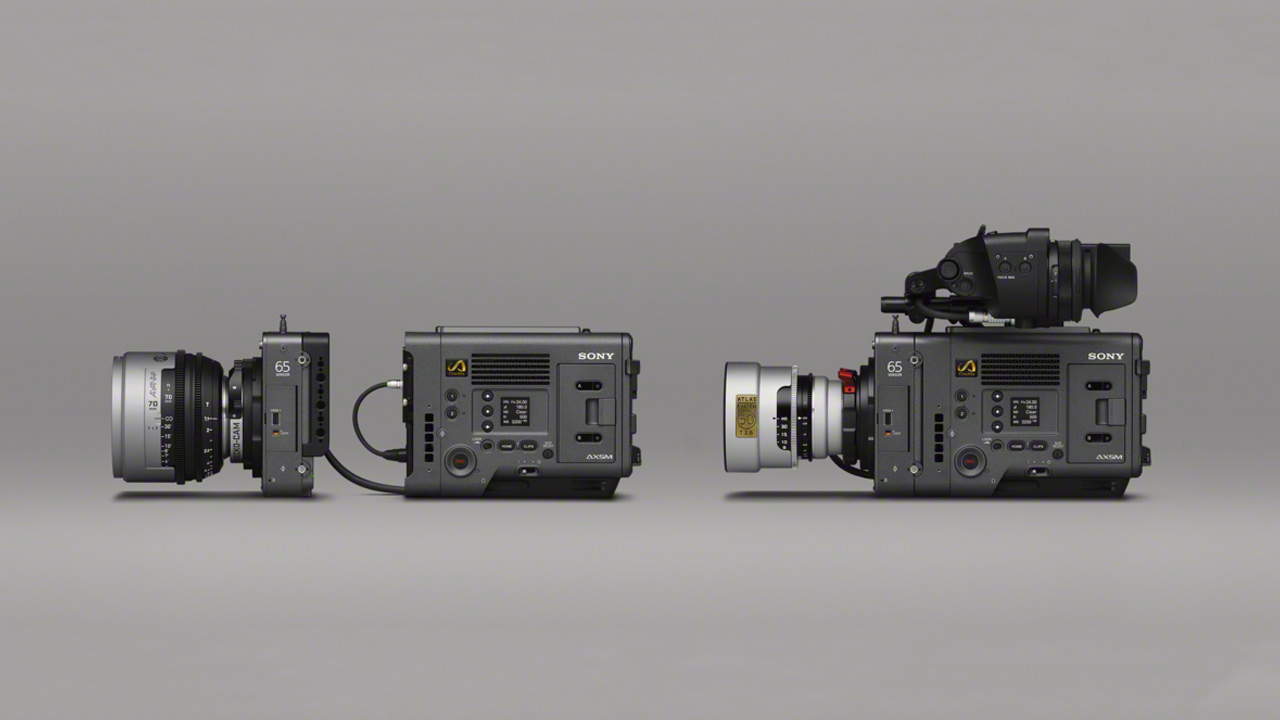
On October 29, 2026, Sony announced the “RIALTO 65” camera extension system, which expands the CineAlta camera “VENICE 2” to the 65mm format. It is scheduled for release in the first half of 2027. Previously announced in June 2026, this article will explain all of the particular details of the new Sony RIALTO 65 extension system for the Venice 2.
Sony finally unveils the “RIALTO 65” lens for the VENICE 2
The RIALTO 65 is a camera extension system equipped with a 65mm image sensor measuring 53.75mm horizontally and 35.83mm vertically (approximately 64.60mm diagonally, aspect ratio 1.5:1). It is among the largest image sensors in the industry for cinema cameras currently on the market. Note that the claim of being among the largest in the industry is based on Sony’s research as of the announcement in October 2026.
Utilizing an imaging area approximately 2.2 times larger than that of a 35mm full-frame sensor, the RIALTO 65 richly depicts the presence of people, the sense of distance between subjects and backgrounds, and the depth of space. The aim is to create visual expressions that naturally highlight the main subject even within a wide field of view, enhancing the sense of immersion in the work.
This camera supports two modes: “Extension Mode,” where the camera head is detached from the “VENICE 2” body, and “Studio Mode,” where it is directly attached to the body. This allows for both 65mm format shooting and flexible camera placement to suit different shooting situations.
Internal Recording through the VENICE 2
The recording function is handled by the “VENICE 2” unit itself, allowing for internal recording using 16-bit X-OCN and continued use of existing AXS memory cards. This system enables 65mm format video production while leveraging the color science and production workflow cultivated with CineAlta.
RIALTO 65 | Camera Field Test
RIALTO 65 | LOCAL PEOPLE by Łukasz Żal, PSC
Key features of the “Sony RIALTO 65”
9.6K open gate shooting with a 65mm sensor
The RIALTO 65 is a compact and lightweight camera head with external dimensions of approximately 115 x 154 x 63 mm (width x height x depth) and a weight of approximately 1.5 kg, and it is equipped with a 65 mm sensor.
The sensor’s imaging area is approximately 2.2 times that of a 35mm full-frame sensor. It supports 9.6K 1.5:1 open-gate readout using the entire sensor area, allowing for highly flexible framing that takes advantage of the wide imaging area of the 65mm format.
It also supports a 9.6K 2.20:1 (approximately 59.04mm diagonal) readout mode. Switching the imaging range expands the range of usable lenses. A key feature is the ability to select a shooting mode according to the aspect ratio of the work and the image circle of the lens.
Going forward, additional read modes will be added to the “VENICE 2” unit through software updates.
The base ISO can be selected from two options: ISO 2500 and ISO 10000. ISO 2500 achieves a latitude of 15+ stops. This allows for rich tonal gradation from highlights to shadows in scenes with large differences in brightness and under a wide range of lighting conditions, enabling cinematographers to create images that match their intentions.
*The terms “65mm format” and “65mm sensor” are derived from the 65mm film format used for movies and do not indicate that the actual sensor size is 65mm.
Flexible shooting with Extension Mode and Studio Mode
The RIALTO 65 offers two operating methods to choose from, depending on the shooting environment and equipment configuration.
In extension mode, the camera head is separated from the “VENICE 2” main unit and connected with a dedicated cable. Taking advantage of the small and lightweight camera head, it allows for closer shots to subjects, installation in confined spaces or at high positions, and shooting from angles that were often limited by conventional large 65mm camera systems.
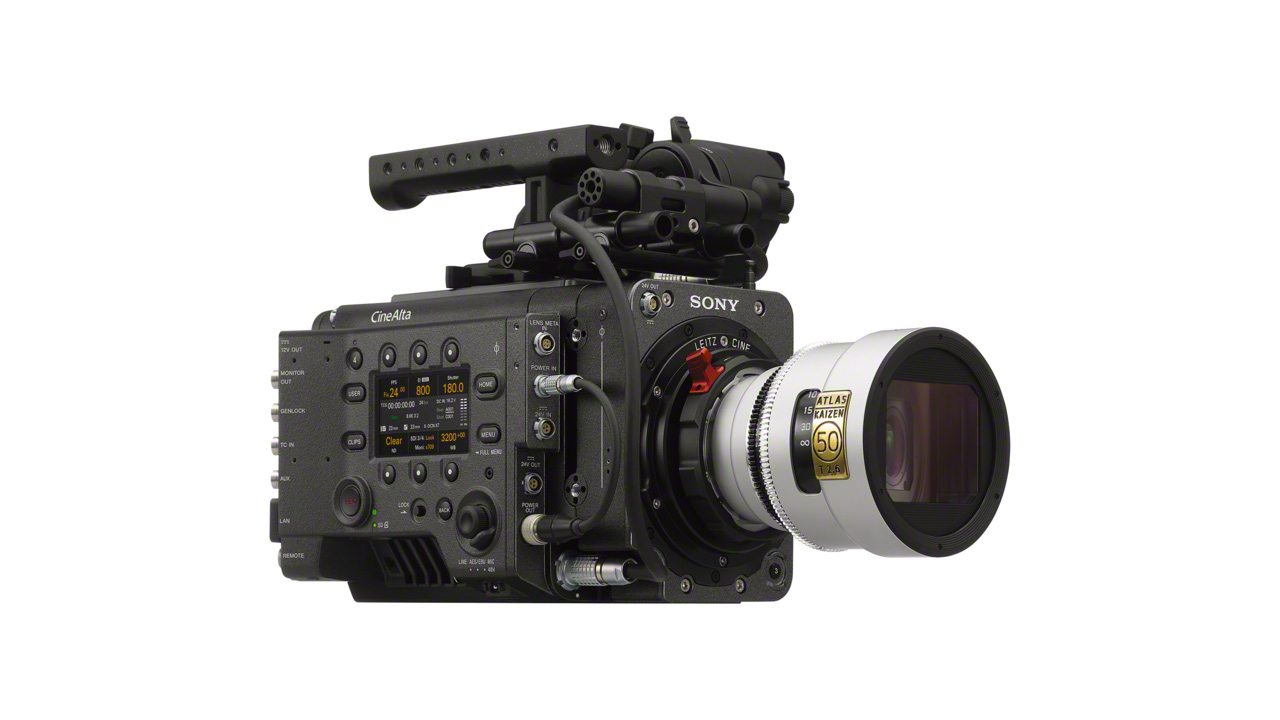
On the other hand, in studio mode, the camera head can be directly attached to the “VENICE 2” body, allowing it to be used as an integrated 65mm cinema camera system.
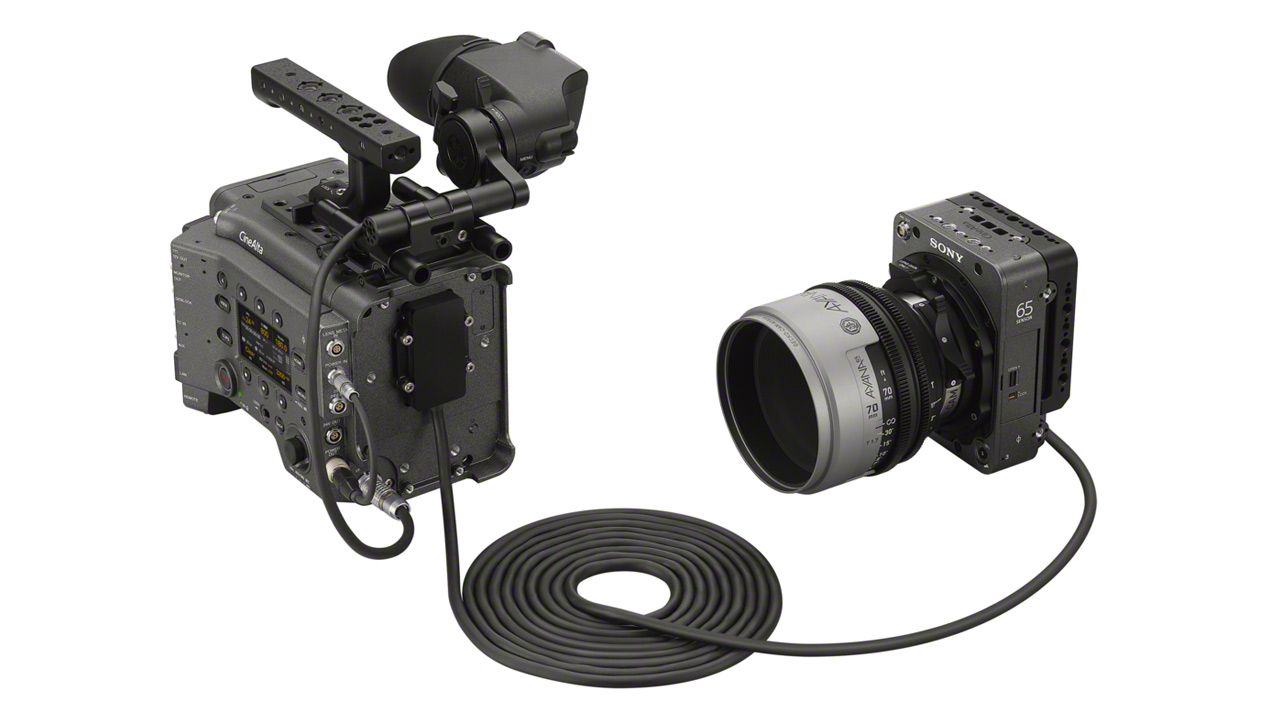
In extension mode, in addition to the standard 4.5m cable included, an optional 12m cable can also be used. The cable is designed to be detachable from both the camera head and the main unit, making it easy to integrate into shooting equipment and handle during setup.
Furthermore, camera tilt and roll information can be recorded as metadata. By referencing the camera’s tilt during shooting in the post-production process, it can improve the efficiency of tasks such as VFX and video editing.
Inheriting the image creation techniques developed with CineAlta and the workflow of “VENICE 2”.
The “VENICE 2” system, which combines the RIALTO 65, inherits the color science cultivated in CineAlta.
In addition to natural color reproduction and smooth skin tones, it supports image creation that takes advantage of tonal expression with S-Log3 and a wide color gamut with S-Gamut3, enabling cinematographers to create visuals that align with their intentions.
High-resolution video read from the 65mm sensor can be internally recorded to the “VENICE 2” body in Sony’s proprietary 16-bit RAW format “X-OCN”. This design balances image quality with efficient data management, even when shooting at high resolution.
Since the main functions, including recording, are handled by the “VENICE 2” unit itself, existing AXS memory cards can be used. This allows users to build a 65mm format shooting environment while utilizing the existing “VENICE 2” operating environment, peripherals, and post-production workflow.
Lens mount options and support for anamorphic imaging
The RIALTO 65 employs a design that allows the use of third-party lens mount adapters depending on the lens being used. It is designed for use with a wide variety of lenses, including 65mm format lenses, allowing users to select the lens configuration according to their artistic intent.
However, the lenses that can be used vary depending on factors such as compatibility with the mount adapter and image circle, so it is necessary to check each combination individually.
When using a lens and lens mount adapter that support communication with the camera, lens information such as focal length, focus position, and aperture value can be recorded as metadata. This recorded information can be used in production processes such as post-production and virtual production.
When using anamorphic lenses, users can utilize desqueeze display with support for multiple squeeze magnifications and the “Zoom to Fit” function. This allows users to check the field of view and composition according to the lens being used on set, increasing the flexibility of monitoring in anamorphic shooting.
The ND filters utilize a drop-in system with electronic contacts. Eleven types of ND filters are included, and the “VENICE 2” unit automatically recognizes the density information of the installed filter. Note that the electronic contacts are for recognizing the filter’s density information and are not a system that electronically continuously varies the ND density.
Accessories sold separately
- ND filter kit “CBK-NDK6510”: A kit containing 11 types of drop-in ND filters equivalent to those included with the RIALTO 65. Individual filters of specific densities cannot be purchased separately. Scheduled for release in the first half of 2027, with an estimated market price of around 1,320,000 yen (including tax).
- 12m Cable “CBK-12C6510”: An extension cable used to replace the standard 4.5m cable. By increasing the distance between the camera head and the “VENICE 2” body, it can accommodate a wide range of shooting environments, such as installation in narrow spaces or at high places. It is scheduled to be released in the first half of 2027, with an estimated market price of around 1,485,000 yen (including tax).
*The specifications listed are based on information available as of October 29, 2026. Specs may be subject to change before release.