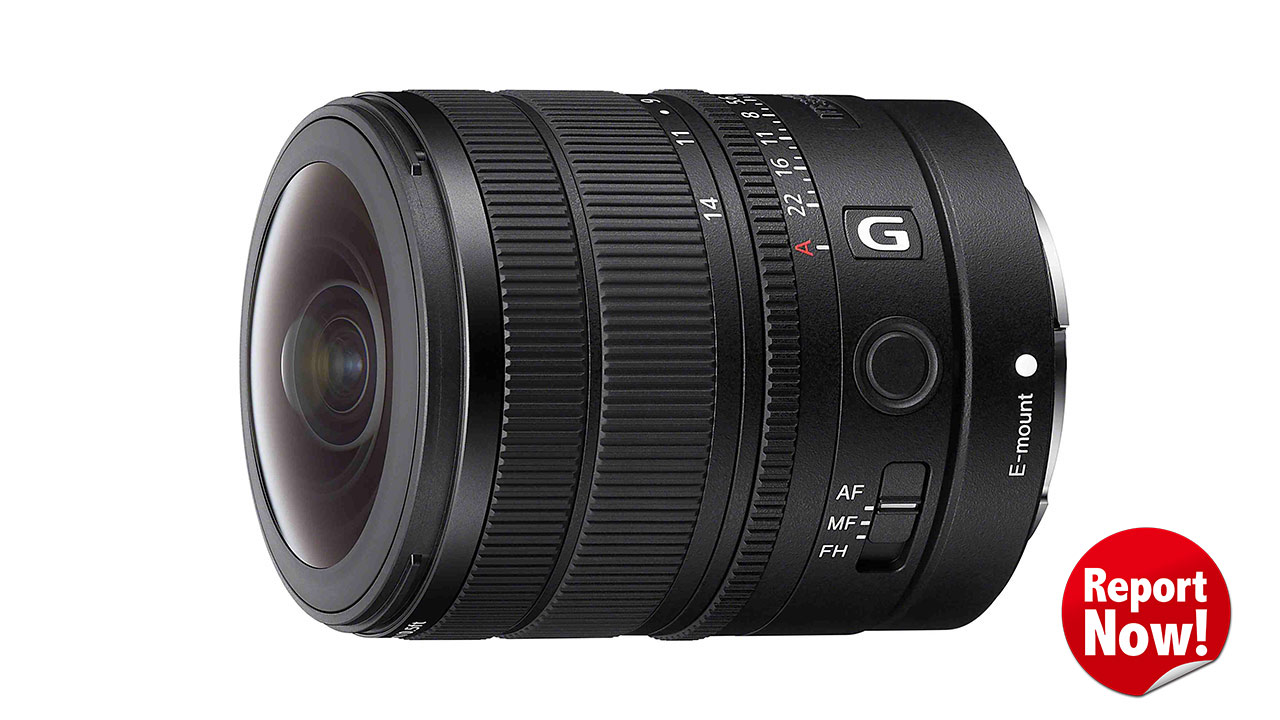
Sony announced the release of the “FE 8-14mm F3.5 Fisheye G (SEL814G).” This new lens is a fisheye zoom lens for 35mm full-frame E-mount cameras. This is Sony’s first E-mount fisheye zoom lens, covering a range from 8mm circular fisheye to 14mm diagonal fisheye in a single lens. Pre-orders will begin on September 29th (Tuesday), with a planned release date of October 9th (Friday).
Sony FE 8-14mm F3.5 Fisheye G Main Features
| focal length | 8-14mm |
|---|---|
| Focal length image (APS-C) | 12-21mm |
| Maximum magnification | 0.22 times |
| Minimum focusing distance | 0.15m |
| filter diameter | – |
| External dimensions: Maximum diameter × length | φ63.1×82.8mm |
| mass | Approximately 314g |
| accessories | Lens front cap (not sold separately), lens rear cap (ALC-R1EM), lens hood (ALC-SH186) |
Zoom coverage from 8mm circular fisheye to 14mm diagonal fisheye.
The first thing to note is its size. When you hear that it’s a fisheye zoom lens covering 8mm to 14mm, you might imagine a large lens, but its external dimensions are a maximum diameter of 63.1mm x length of 82.8mm, and its weight is kept down to approximately 314g.
At 8mm, it produces a circular fisheye effect, and at 14mm, it produces a diagonal fisheye effect, allowing you to switch between two vastly different fisheye expressions with a single lens.
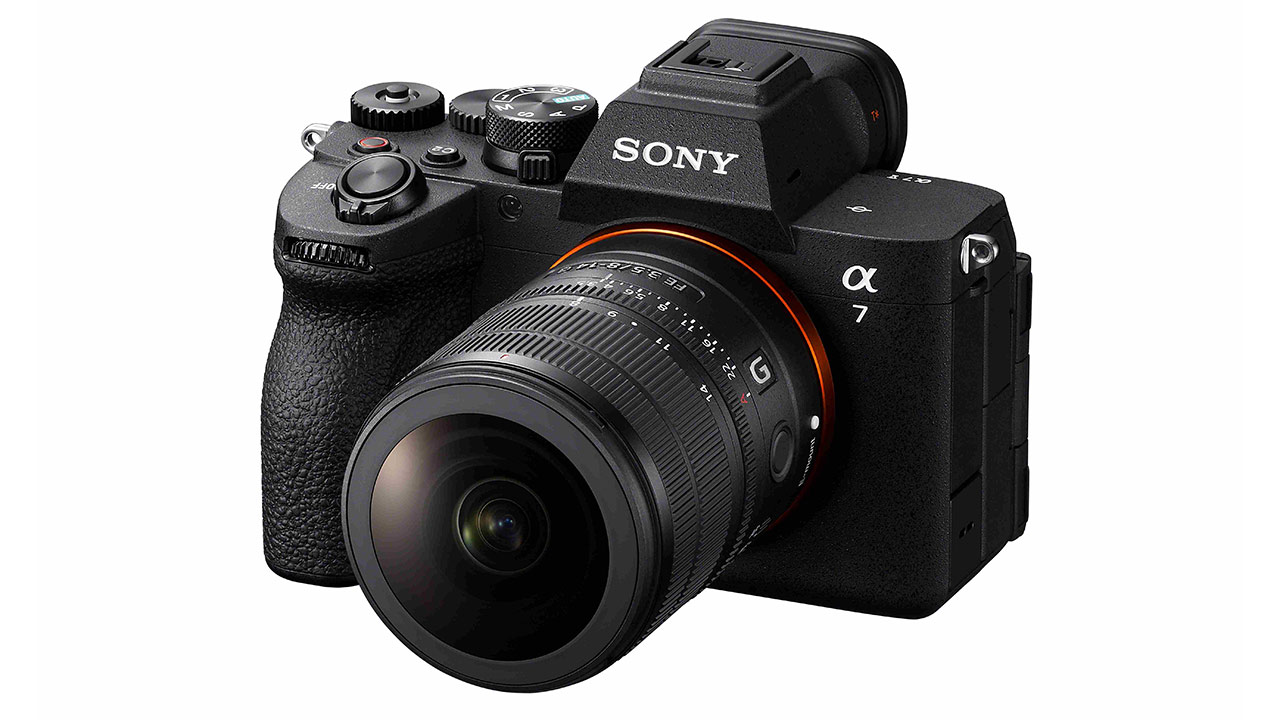
What’s interesting about this lens is that zooming doesn’t simply change the field of view. As you change the focal length from 8mm to 14mm, the image circle itself becomes larger, and in full-frame shooting, it continuously changes from an 8mm circular fisheye to a 14mm diagonal fisheye. When used with an APS-C sensor, it becomes equivalent to 12-21mm in 35mm format, and there are focal positions set during the zoom that result in a diagonal fisheye when shooting with an APS-C sensor.
Circular Fisheye
At 8mm, it becomes a circular fisheye lens, recording a 180° field of view as a circular image. In the example image taken looking straight up from within a forest, the surrounding trees are contained within the circular frame, creating a composition that makes use of the distortion characteristic of fisheye lenses.

*Click image to enlarge
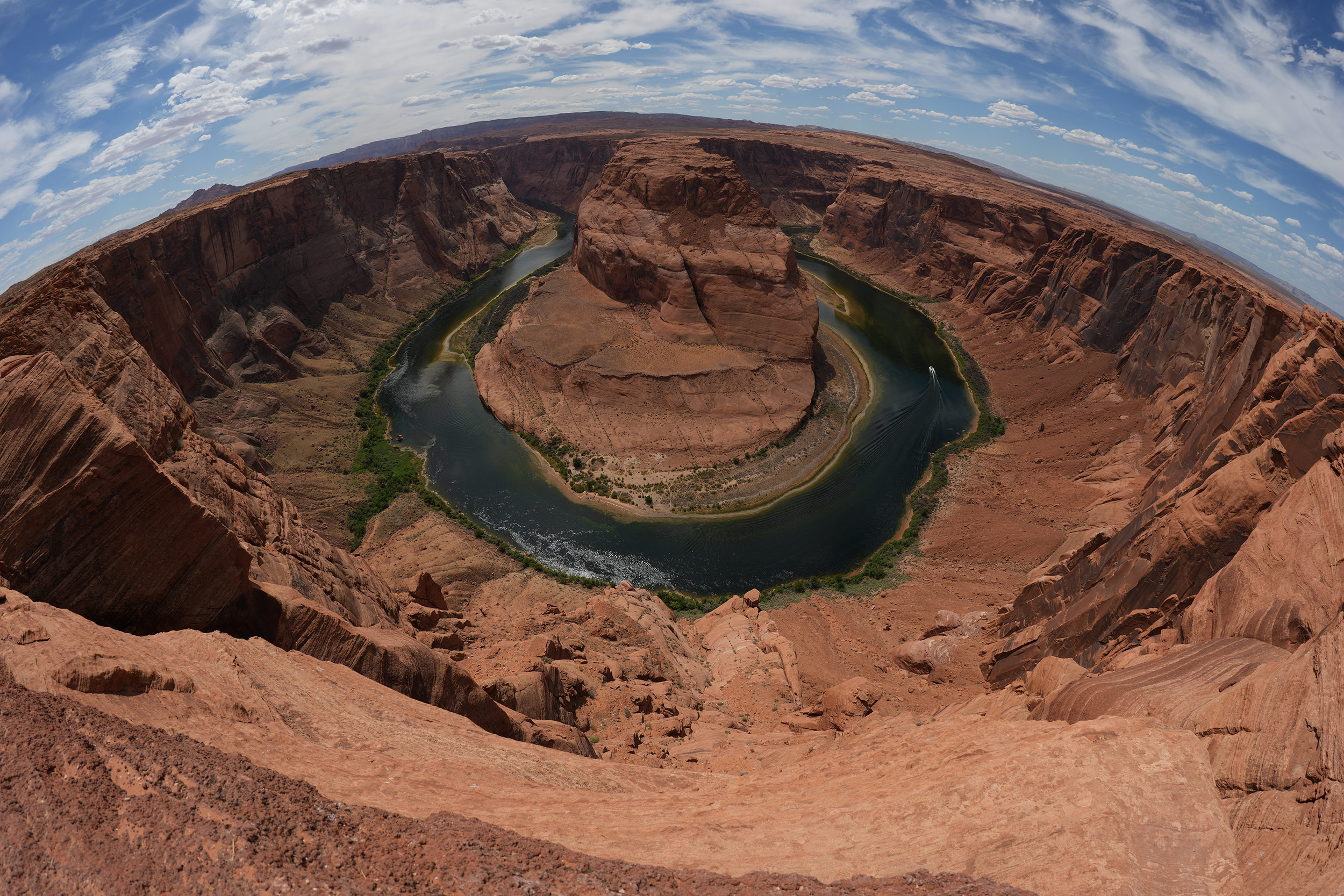
On the other hand, at 14mm, it becomes a diagonal fisheye, enabling a fisheye effect that utilizes the entire frame. In the example image of a building interior, the space composed of straight lines is depicted as large curves characteristic of a fisheye lens, resulting in a spatial representation different from that of a typical ultra-wide-angle lens.
*Click image to enlarge
Be Careful in Fisheye Mode
Note that even with the same focal length, the appearance of the fisheye image differs depending on the aspect ratio. At the wide-angle end, the entire circular fisheye image can be captured in a 3:2 still image, but the top and bottom are cropped in a 16:9 video. At the telephoto end, the vertical field of view in a 16:9 video is narrower than that of a 3:2 still image. Cameras that support 3:2 open gate video recording can utilize the entire circular fisheye image, just like in a 3:2 still image.
Fisheye lenses are often perceived as lenses that create a “unique visual effect.” However, these lenses can be seen not only as tools for special effects, but also as lenses for reconstructing the composition itself. The ability to continuously change from circular fisheye to diagonal fisheye through zooming is another feature not found in fixed-focal-length fisheye lenses.
Constant F3.5 aperture, high resolution performance, minimum focusing of 15cm
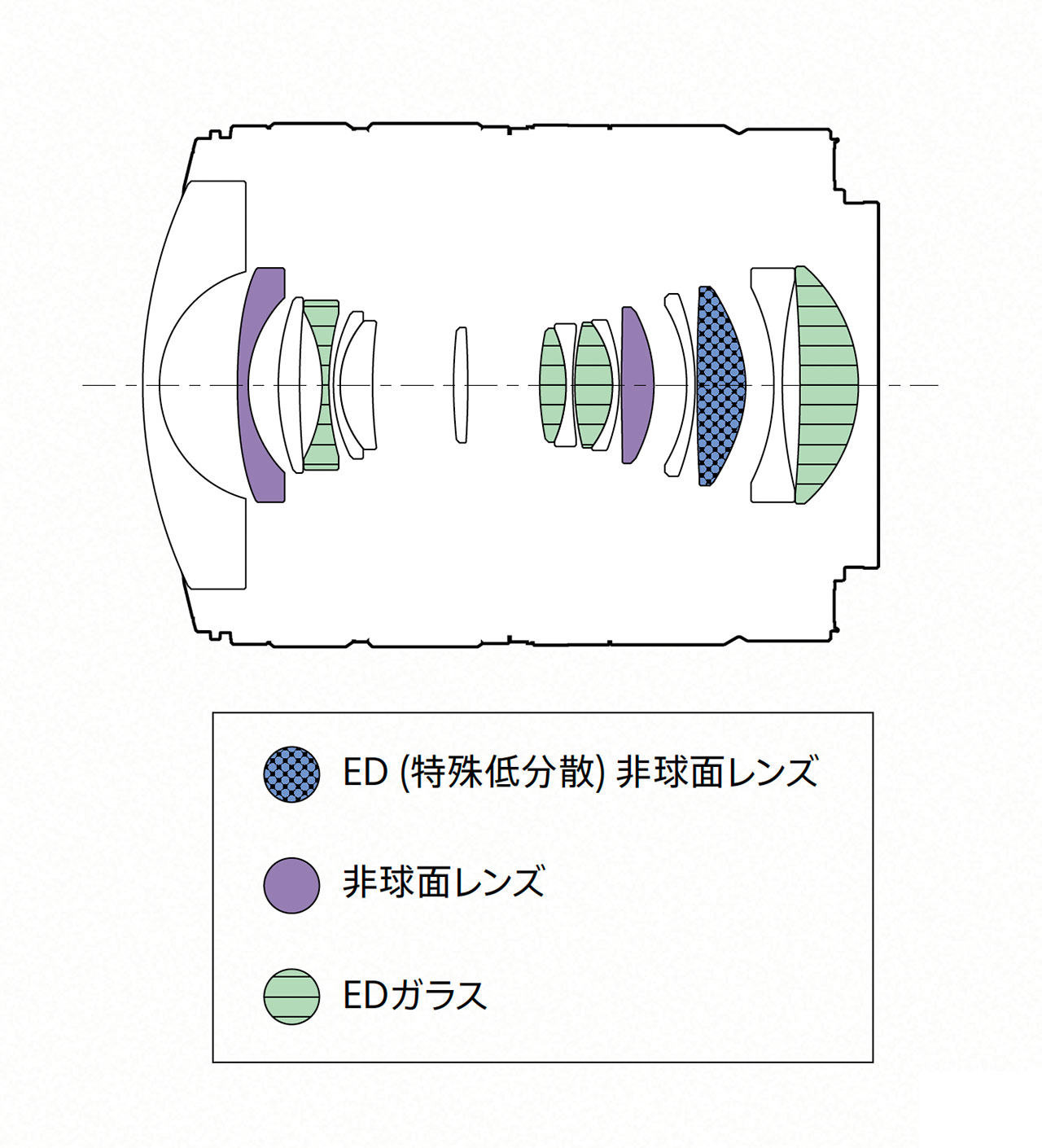
The optical system consists of 13 groups and 16 elements, with two aspherical lenses, four ED (extra-low dispersion) glass elements, and one ED aspherical lens effectively positioned. Designed to suppress various aberrations and chromatic aberrations, it pursues high resolution performance even at the edges of the image, as befits a G lens, and achieves a wide aperture of F3.5 throughout the entire zoom range.
The front surface of the lens is coated with fluorine, making it resistant to fingerprints, dust, water droplets, oil, and mud, and easy to wipe off if they do adhere.

*Click image to enlarge
Close-up shooting capabilities are another notable feature. The minimum focusing distance is 0.15m across the entire zoom range, and the maximum magnification is 0.22x at the telephoto end.

*Click image to enlarge
By getting closer to the subject, you can emphasize the central subject while capturing a wide area around it with the characteristic distortion of a fisheye lens. Unlike capturing a wide landscape with a typical wide-angle lens, the closer you get to the subject, the more the unique perspective is emphasized. This lens allows you to dramatically change the impression of the image depending on the combination of shooting distance and focal length.
High-speed autofocus and operability designed with video recording in mind.
The autofocus system employs a double linear motor, achieving high-speed and high-precision focusing. When paired with the α9 III, it supports high-speed continuous shooting at up to approximately 120 frames per second with AF/AE tracking. Furthermore, it can track the subject even during high-frame-rate video recording.
Focus breathing has also been taken into consideration during video recording. The optical design effectively suppresses breathing, and it also supports the breathing correction function of compatible camera bodies.
Furthermore, it supports linear response manual focus. This makes it easy to intuitively control the focus according to the amount of movement of the focus ring, and is also suitable for manual focus operation during video recording.
Focus Mode Switch
A distinctive feature is the focus mode switch, which has three positions: “AF,” “MF,” and “FH (Focus Hold).” After focusing in MF mode, switching to FH allows you to maintain the focus position, preventing unintended focus shifts. This is a useful function in situations where you want to maintain a predetermined focus position, such as astrophotography or VR shooting.
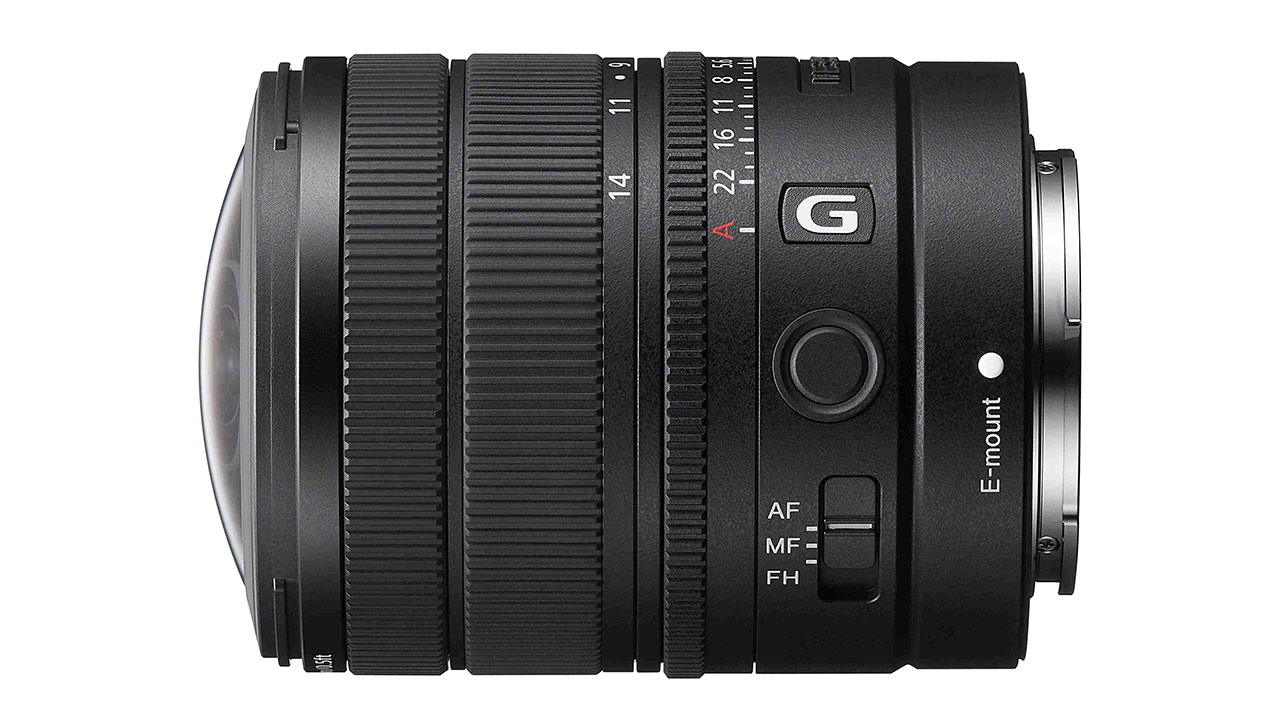
The Sony FE 8-14mm F3.5 Fisheye G additionally features a zoom lock switch, allowing the zoom ring to be locked in three positions, corresponding to full-frame circular fisheye, diagonal fisheye, and APS-C diagonal fisheye lenses.
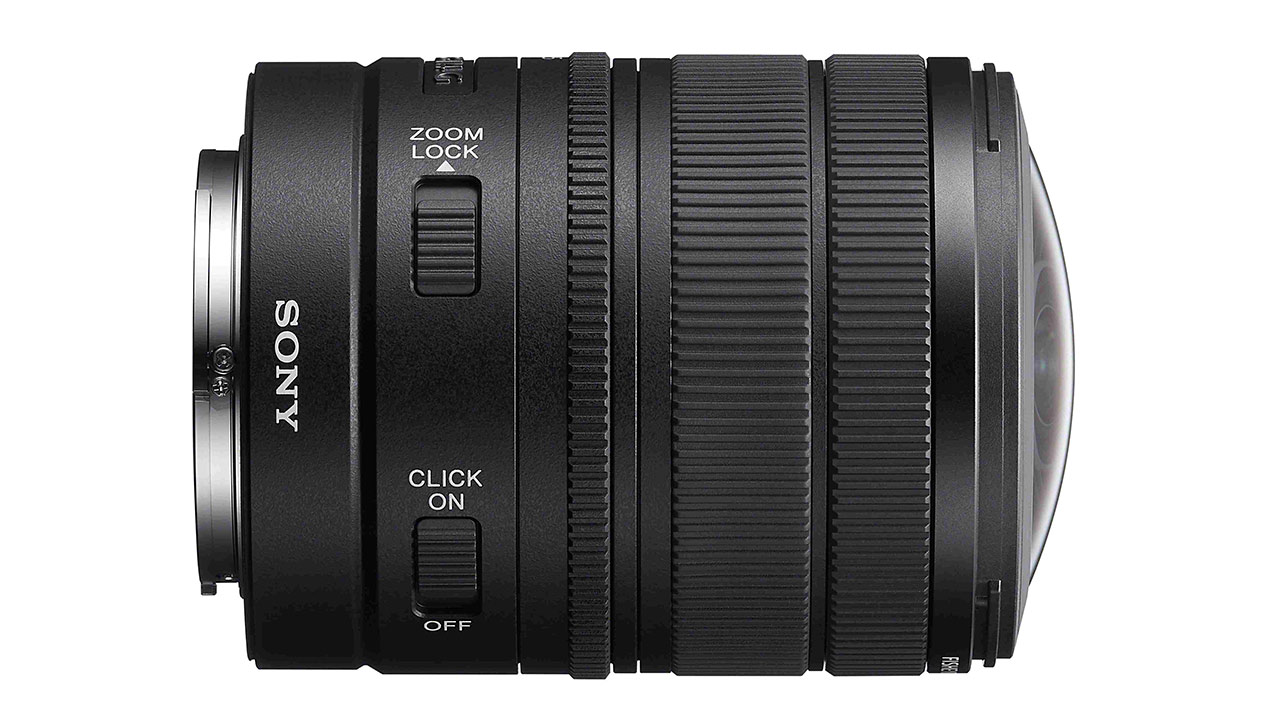
Zoom lock switch
To prevent unintended movement of the zoom ring, it locks in the following three positions.
① Full-frame circular fisheye (wide-angle end, 8mm)
② Full-frame diagonal fisheye (telephoto end, 14mm)
③ APS-C diagonal fisheye (intermediate position)
The lens barrel features a focus ring, zoom ring, and aperture ring, as well as a focus hold button and a click switch for the aperture ring. The control system is designed with not only still photography but also video and VR shooting in mind.
Dust and Water Resistance
Designed with dust and water resistance in mind, it features sealing at each joint, silicone rubber gaskets for buttons and switches, and rubber rings for mounting parts.
Furthermore, the lens features a rear filter holder. Because it is difficult to attach standard screw-in filters to fisheye lenses with a large protruding front element, the filter is used from the rear. A cutting template for processing filters is also included.
A specially designed detachable lens hood, “ALC-SH186,” is also included. The hood is intended for use at the 14mm diagonal fisheye setting, and vignetting will occur at other zoom positions. By attaching it in the reverse direction, vignetting can be avoided at all zoom positions. The lens cap is designed to be attached to the hood and cannot be attached when the hood is not attached.

*Click image to enlarge
Leveraging its compact design, it will be used for 180° and 360° VR shooting.
Another point of interest with the Sony FE 8-14mm F3.5 Fisheye G is its potential for use in VR photography.
Not only is it lightweight at approximately 314g, but its slender barrel with a maximum diameter of 63.1mm is also important for building a VR system. By combining it with Sony’s “VENICE Extension System Mini” and arranging two FE 8-14mm F3.5 Fisheye G lenses side by side, a stereo camera system for 180° 3D VR shooting can be constructed.
The camera head of the VENICE Extension System Mini has a width of 63.9mm. When two units are placed side by side without any gaps, the distance between the sensor centers can be approximately 64mm. The FE 8-14mm F3.5 Fisheye G has a maximum diameter of 63.1mm, and this compact size allows the two lenses to be positioned at a distance close to the interpupillary distance of a human eye.

How to shoot VR with this lens
In VR shooting, the distance between the left and right cameras greatly affects how the image appears when viewed in 3D. By setting the distance between the sensor centers to approximately 64mm, which is close to the interpupillary distance of humans, it becomes possible to capture natural-looking 3D images.
This is where the lens size, with a maximum diameter of 63.1mm, takes on a different meaning. It’s not simply a matter of miniaturization to improve portability; it’s also utilized in the construction of a VR system with two lenses positioned close together.
Furthermore, combine three VENICE Extension System Mini units and it is possible to expand into 360° VR production. In 360° shooting, where multiple videos are stitched together, the placement of cameras and lenses is crucial, but this configuration makes for a compact system that records 8K video from each of the three units while minimizing nodal point shift.
Fisheye zoom opens up new possibilities for visual expression.
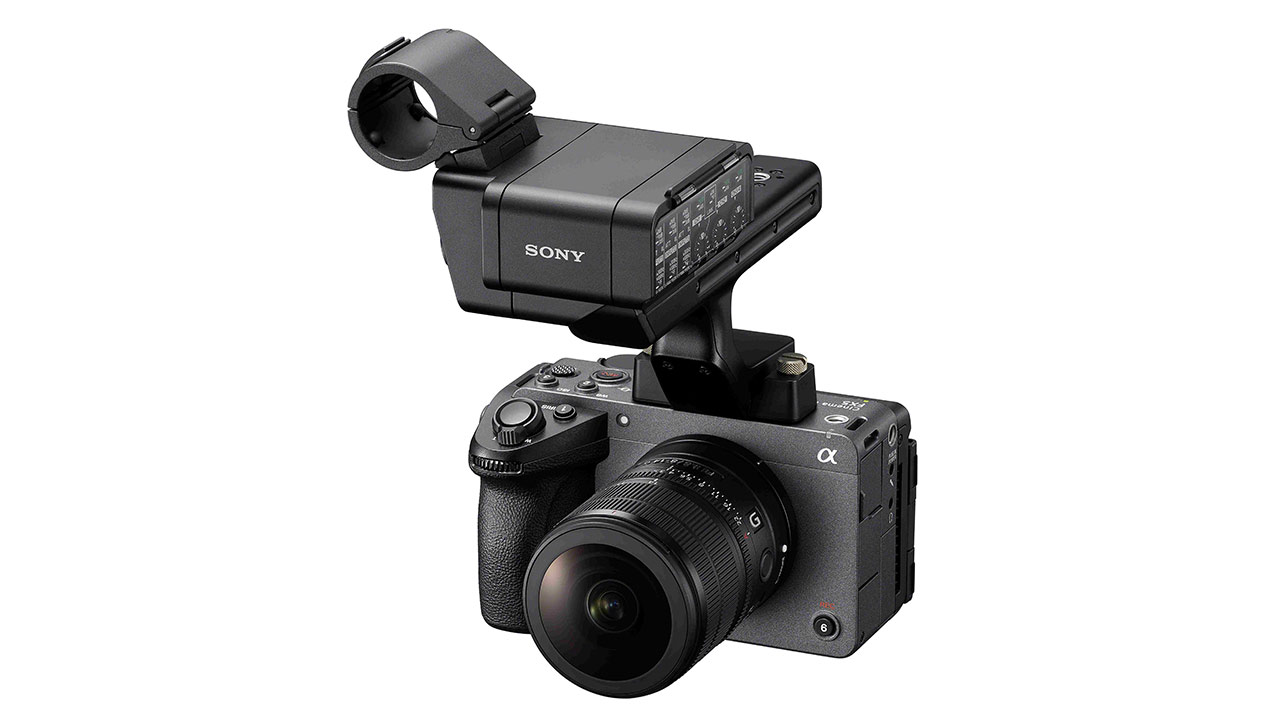
From what we’ve seen so far, it’s clear that the Sony FE 8-14mm F3.5 Fisheye G is not just a lens for enjoying the unique fisheye look.
In addition to allowing users to switch between circular and diagonal fisheye lenses with a single lens, it enables expressive shots that take advantage of the strong perspective unique to fisheye lenses by allowing users to get as close as 15cm to the subject. Furthermore, it is equipped with high-speed, high-precision autofocus and focus functions designed with video shooting in mind, and its compact design expands its applications to 180° and 360° VR production.
Fisheye lenses are inherently a category with a strong individual character, but with this lens, the expression changes dramatically not only depending on “what you photograph,” but also on “from where you are, at what focal length, and how close you get to the subject.”
From still images to video, and then to VR. Despite its short zoom range of 8mm to 14mm, it offers a significant range of expressive possibilities that go beyond the numbers alone. Because of its distinctive fisheye lens category, its uses expand greatly depending on the photographer’s imagination. This is a lens that will inspire you to experiment with various shooting techniques.