Canon announced the upcoming release of the EOS R8 Mark II, a compact and lightweight full-frame mirrorless camera with a new design, diverse expressive functions, and high mobility. The due date for this camera is on October 29, 2026.
Designed for users who pursue artistic expression in still images and videos, the new Canon EOS R8 Mark II is a successor model that inherits the compact and lightweight concept of the “EOS R8” (released in April 2023), while refreshing the exterior design, operability, and image stabilization functions.
Canon EOS R8 Mark II Features
The Canon EOS R8 Mark II features a newly incorporated 5-axis in-body image stabilization mechanism and a multi-controller, providing operability comparable to the higher-end “EOS R6 Mark III” (to be released in November 2025). AF performance and expressive functions have also been enhanced, supporting creative work in both still photography and videography.
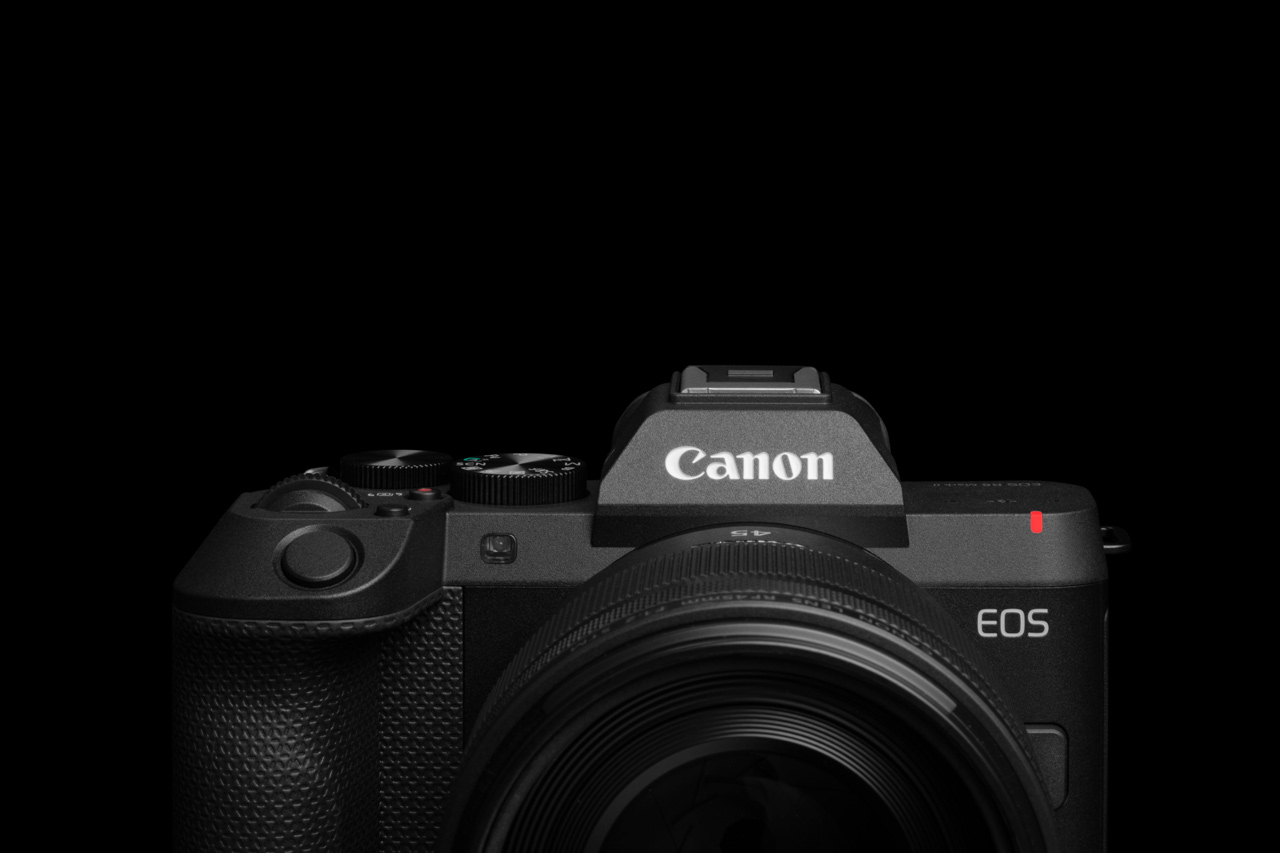
Compact and lightweight full-frame mirrorless camera with new design.
The Canon EOS R8 Mark II design has been revamped from the curved surfaces of previous EOS series models, adopting a simple and modern design based on straight lines and arcs. It combines the high image quality unique to full-frame mirrorless cameras with the portability of a small and lightweight body, making it suitable for a wide range of shooting situations.
Furthermore, it features a new multi-controller, which was not present in the EOS R8, enabling intuitive and comfortable operation.
High basic performance
The camera comes equipped with a full-frame CMOS sensor. The sensor sports maximum effective pixel count of approximately 24.2 megapixels. Additionally, the “DIGIC X” image processor supports high-sensitivity shooting with a maximum standard ISO of 102400. When shooting with the electronic shutter, high-speed continuous shooting of up to approximately 40 frames per second is possible with AF/AE tracking.
*Total pixel count is approximately 25.6 million pixels. The effective pixel count may decrease depending on the lens used and image processing.
*Continuous shooting speed varies depending on the lens used and shooting conditions. Rolling shutter distortion may occur depending on the subject and shooting conditions.
Furthermore, the EOS R8 features a newly adopted 5-axis in-body image stabilization mechanism, which was not present in the previous model. Through coordinated control with compatible RF lenses equipped with in-lens optical image stabilization, it achieves image stabilization effects of up to 7.5 stops in the center and up to 7.0 stops at the edges.
*Complies with CIPA 2024 standards. Yaw/Pitch/Roll correction performance, electronic shutter, using “RF24-105mm F2.8 L IS USM Z” at a focal length of 105mm. For details on compatible lenses, please refer to the Canon official website.
Furthermore, it features a “Registered Person Priority” function that prioritizes the detection and tracking of specific individuals registered in advance. “Dual Pixel CMOS AF II” ensures highly accurate and stable focus and tracking even during high-speed continuous shooting.
Wide Range of Functionality
The “Color Filter” function, which supports both still images and videos, has been expanded to 16 types in total, with the addition of “NegativeFilmtone” and “PositiveFilmtone,” which reproduce the nostalgic and evocative colors of film. The effect level of the filters can be set in 11 steps, allowing users to create images according to their preferences.
Furthermore, the color settings available when shooting still images in handheld night scene mode have been expanded, adding new tonal expression options. Users can choose from five different tones depending on the scene and their intended expression, enabling the creation of impressive nightscapes.
*The filter type, color tone, color settings, and filter effect level set during shooting cannot change after the photo is taken. The color settings for handheld night scene mode are only available when shooting in JPEG format.