Sigma FP2
On October 23, 2026, Sigma announced the full-frame mirrorless camera “Sigma FP2” and a new I-series prime lens, “Sigma 50mm F1.4 CL DG | Contemporary”. The FP2 will be released on November 11, and the new lens is scheduled for release in early spring 2027.
Our team recently had the opportunity to try out both newly announced products. Following the product announcements, this article will introduce the features and improvements noticed while operating the actual cameras. The FP2 inherits the concept of a compact body from the original fp series, while newly incorporating a tiltable LCD monitor, a partially stacked CMOS sensor, and approximately 70GB of built-in storage. On the other hand, the 50mm F1.4 CL is a lens that incorporates a newly developed AF drive mechanism into a compact metal barrel.
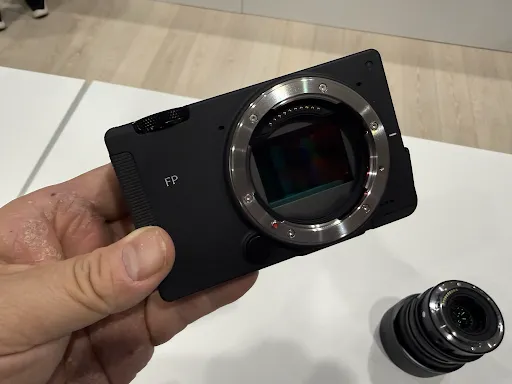
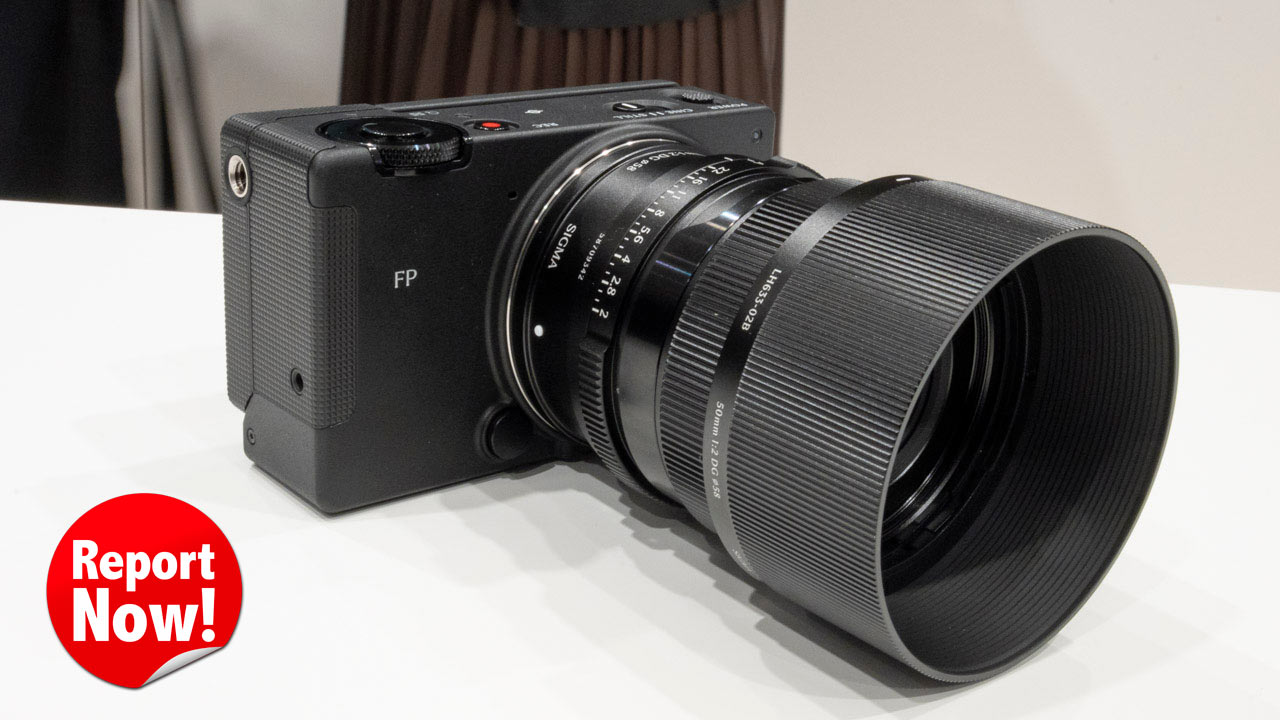
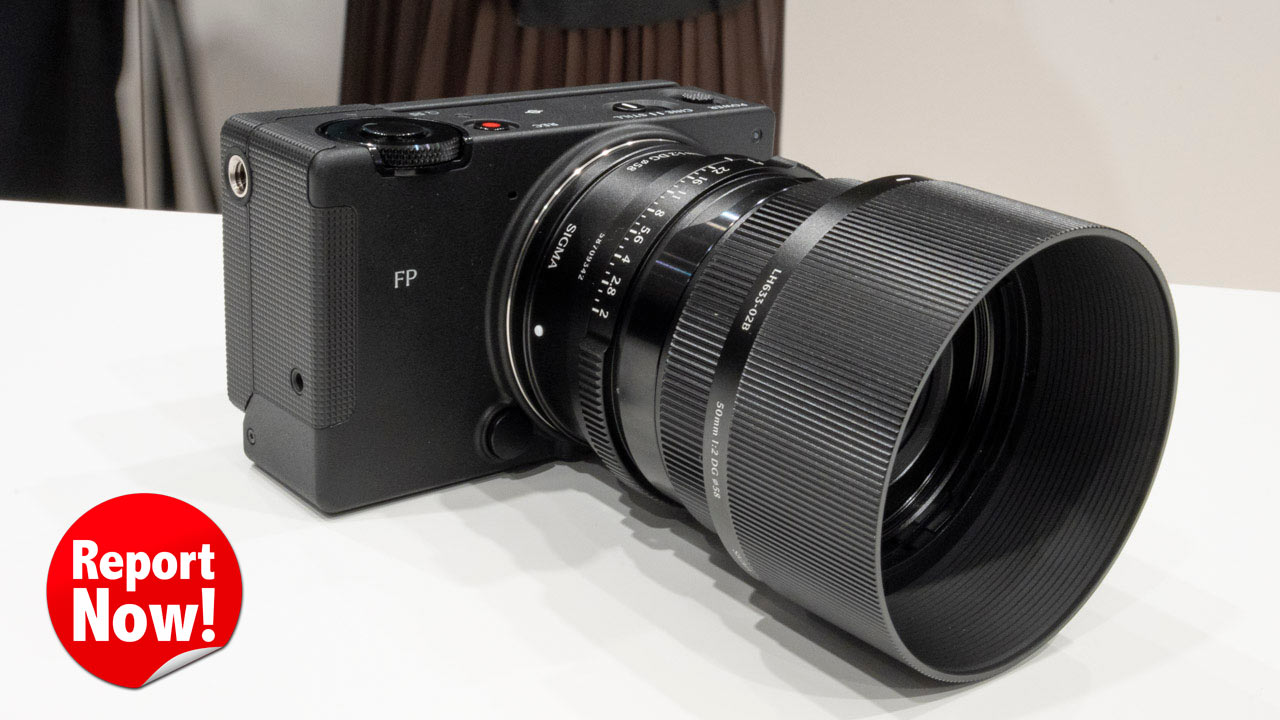
Sigma “Sigma FP2” and “Sigma 50mm F1.4 CL DG | Contemporary” lenses.
When holding the actual device, its evident it was an evolution that went beyond mere addition of features. Areas that we had been concerned about in previous fp series models have been improved, making it easier to use during shooting. Furthermore, the teardown display of the FP2 revealed the ingenuity of the development, including the redesign of almost the entire internal structure.
What’s changed within this small body? Let’s take a look at this new product, from its actual feel to its internal structure.
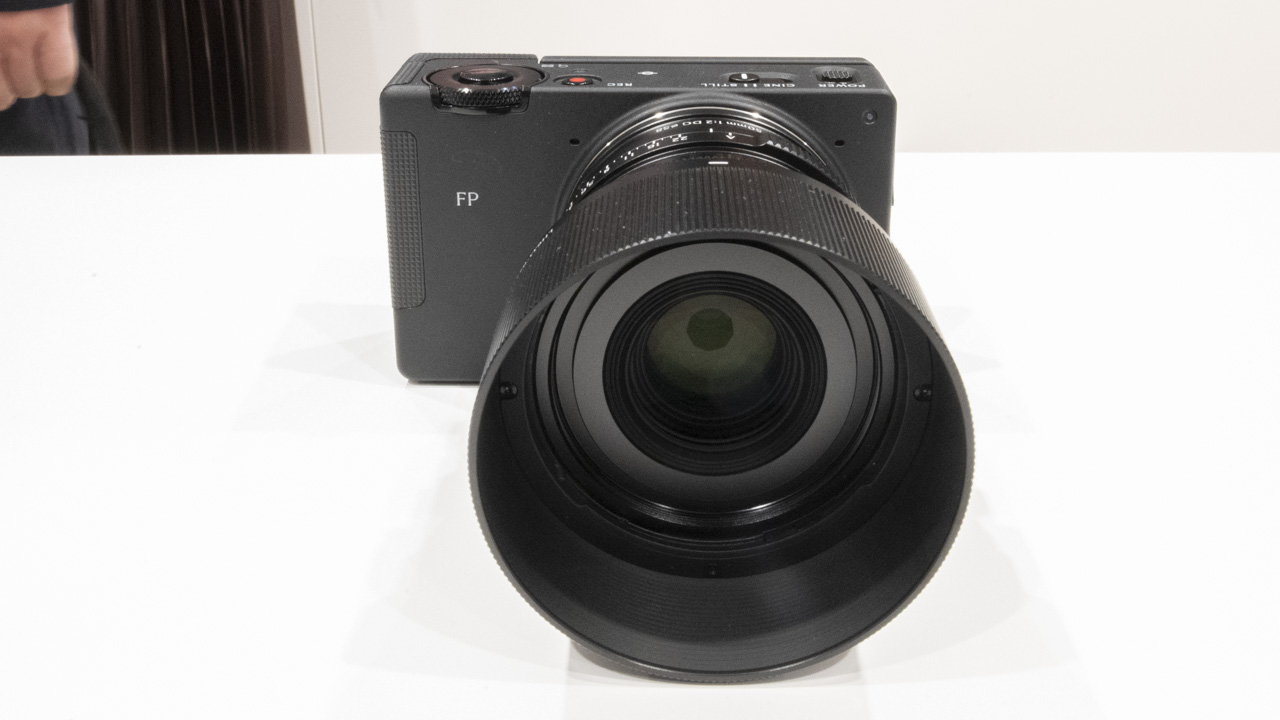

Sigma FP2 – compact while eliminating inconveniences during shooting.
Initially, the first impression of the Sigma FP2 was that it retained the familiar look of the fp series. The small, box-like body still has that distinctive presence. However, once we picked it up and started using it, we began to notice one change after another from previous models.
To summarize the evolution of the Sigma FP2 in one word, it would be “simply easier to use.” This is by no means a negative thing. While the previous fp series was appealing for its unique design that pursued miniaturization, there were aspects that required some ingenuity depending on the shooting style. In the FP2, these aspects have been re-evaluated, and its practicality as a shooting tool has been greatly improved.
Sigma FP2 Uses a Tiltable LCD Screen
One of the most noticeable changes is the adoption of a tiltable LCD screen. The rear monitor, which was fixed on the original fp, can now be tilted 90° upwards and 45° downwards on the FP2. When you actually pull out the monitor and change the angle, you’ll realize that it’s much easier to check the composition at low and high angles.


Previously, there were situations where you might have wanted to supplement with an external monitor, but this expands the range of what you can shoot with the camera alone. Most notably, the fact that they’ve incorporated a movable monitor into this small body is fascinating. It increases the freedom of shooting without drastically changing the appearance.
Autofocus Features
The autofocus (AF) system is another major improvement. It now features a new 24.5-megapixel partially stacked CMOS sensor and an AF system that combines phase-detection and contrast-detection methods. In addition to recognizing people, dogs, and cats, it can now also recognize birds.

While the AF speed and tracking performance of previous fp series models were sometimes a concern, these aspects have been improved in the FP2. Although it’s impossible to judge all aspects of AF performance based on a short period of use, this improvement makes this camera reliable for everyday snapshots and portrait photography.
Sigma FP2 has 70GB of Internal Storage
Another eye-catching feature is the approximately 70GB of internal storage. In addition to an SD card, it can also record shooting data internally. The ability to start shooting without using external recording media is an attractive feature that takes advantage of the portability of a small camera.

Another notable feature is the inclusion of two USB-C ports. These ports, featuring both USB 2.0 and USB 3.2, support recording to external SSDs, power supply, and connection to audio devices. The ability to connect an external SSD while simultaneously supplying power from another port is particularly convenient for video recording.
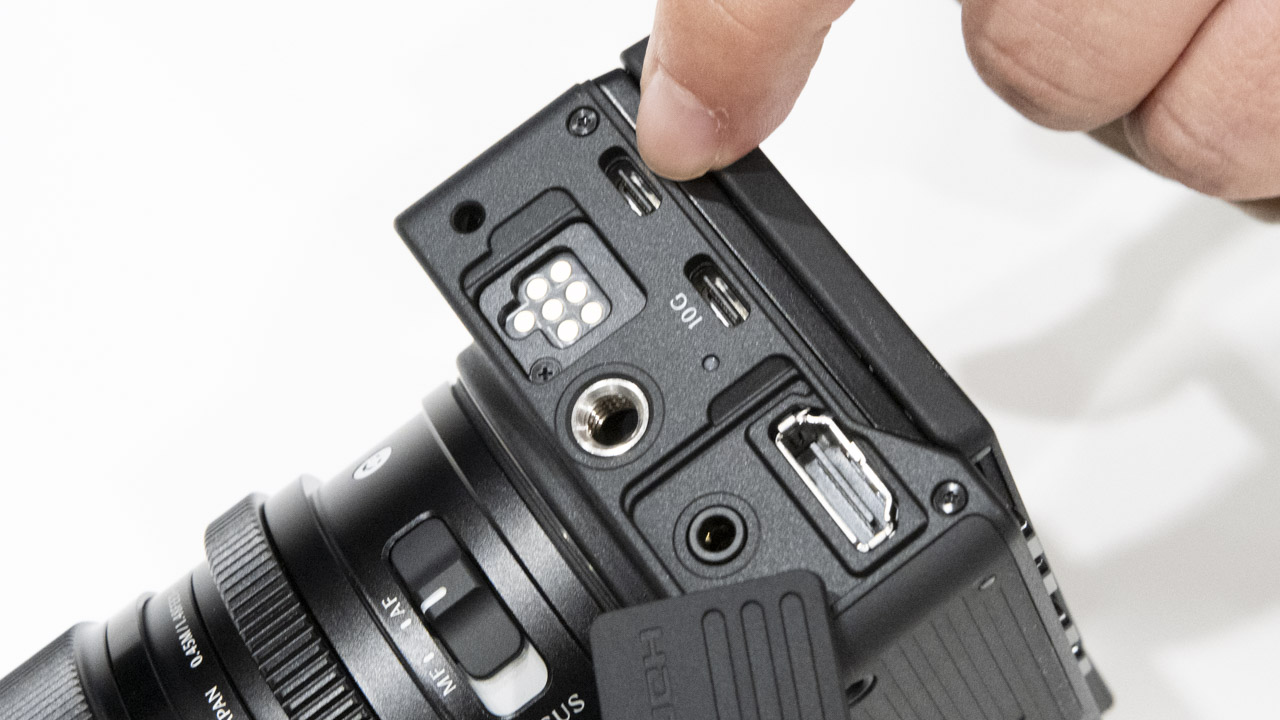
The FP2 features a tilting LCD screen, autofocus, built-in storage, and an added USB-C port. Individually, these features are common in other cameras. However, the appeal of the FP2 lies in fitting all these features into the small body of the fp series.
This camera doesn’t just pursue miniaturization; it enhances practicality while maintaining that compact size. When you actually handle it, that direction becomes clear.
Almost all of the 434 parts were redesigned: Sigma FP2 as seen in the disassembled display.
What particularly caught our eye during this interview was the disassembled FP2 camera display. Being able to examine the internal structure, which isn’t apparent just by handling the finished camera, allowed us to gain a deeper understanding of the FP2’s design.
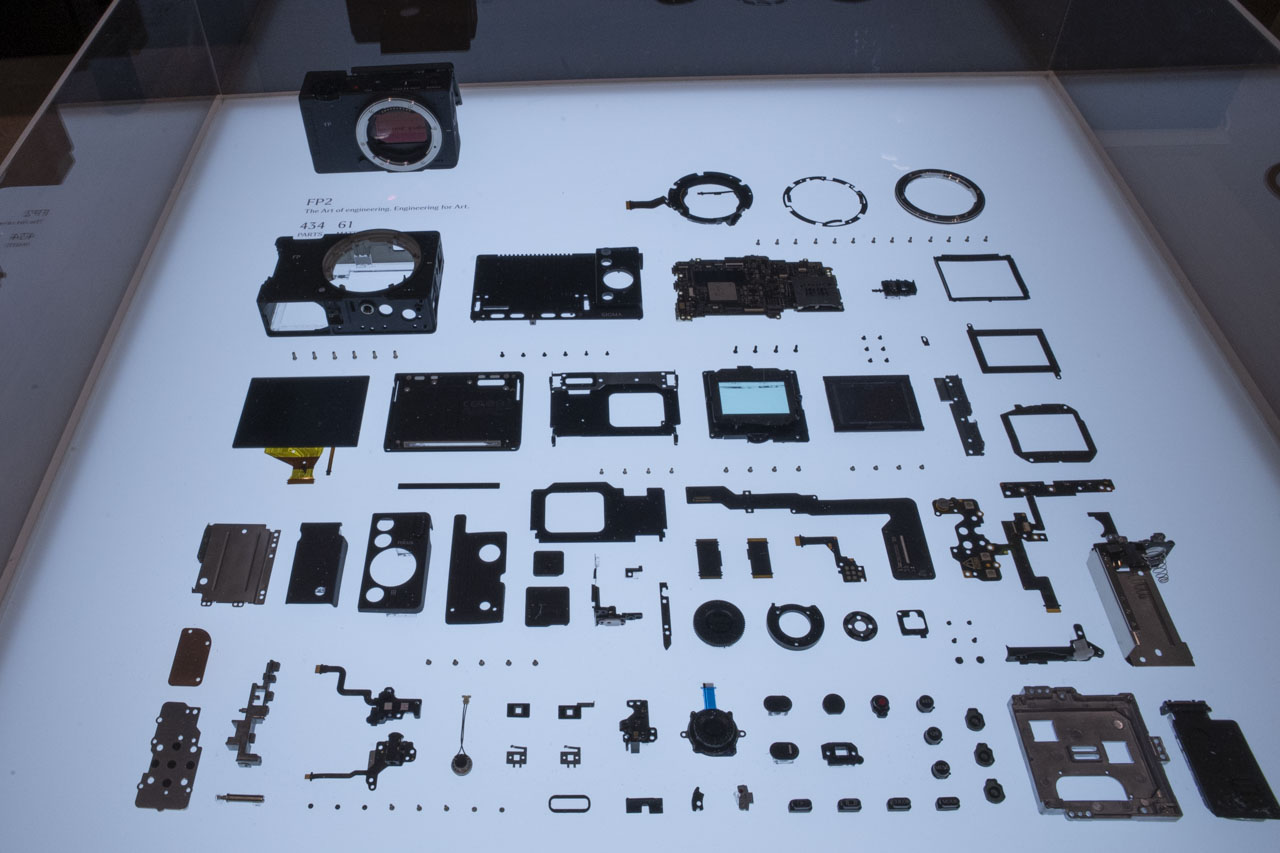
The first thing that stands out is the movable mechanism of the tiltable LCD screen. You might think that a movable rear monitor would make the device thicker. However, the Sigma FP2 incorporates this movable mechanism while maintaining a compact form factor.
Looking at the disassembled parts, it’s clear that the design took into account even the smallest internal gaps. While adding movable mechanisms, the overall size was kept down by meticulously reducing the clearances in each part. While the monitor moves smoothly in the finished product, examining its internal structure reveals the difficulty of making this mechanism work.
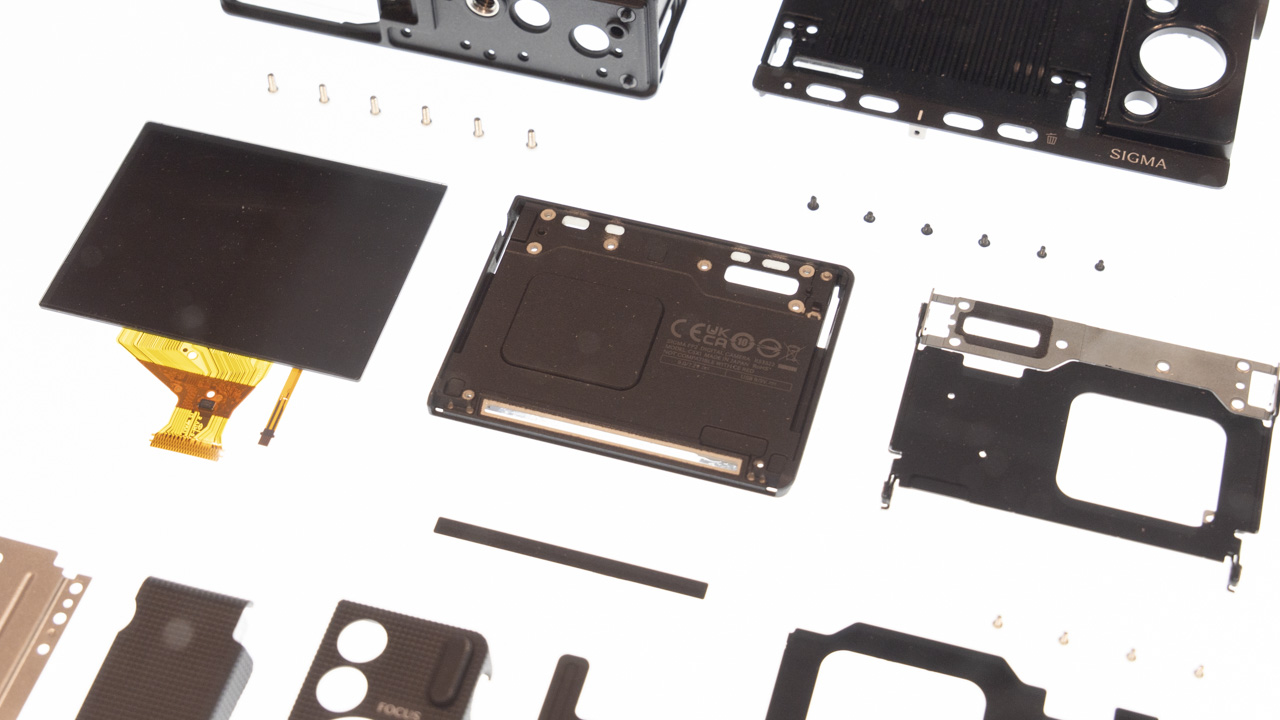
Sigma FP2 Main Circuit Board
What impressed us even more was the main circuit board. Despite being a camera equipped with a full-frame image sensor, the central processing board is remarkably compact. Comparing the sensor and the circuit board in the disassembled display clearly shows how many functions have been condensed into a limited space.
The main processing of the camera is handled by the main circuit board and image sensor, while the rest are mainly auxiliary components supporting the control buttons and dials. The internal structure of a full-frame mirrorless camera is surprisingly neat and tidy.
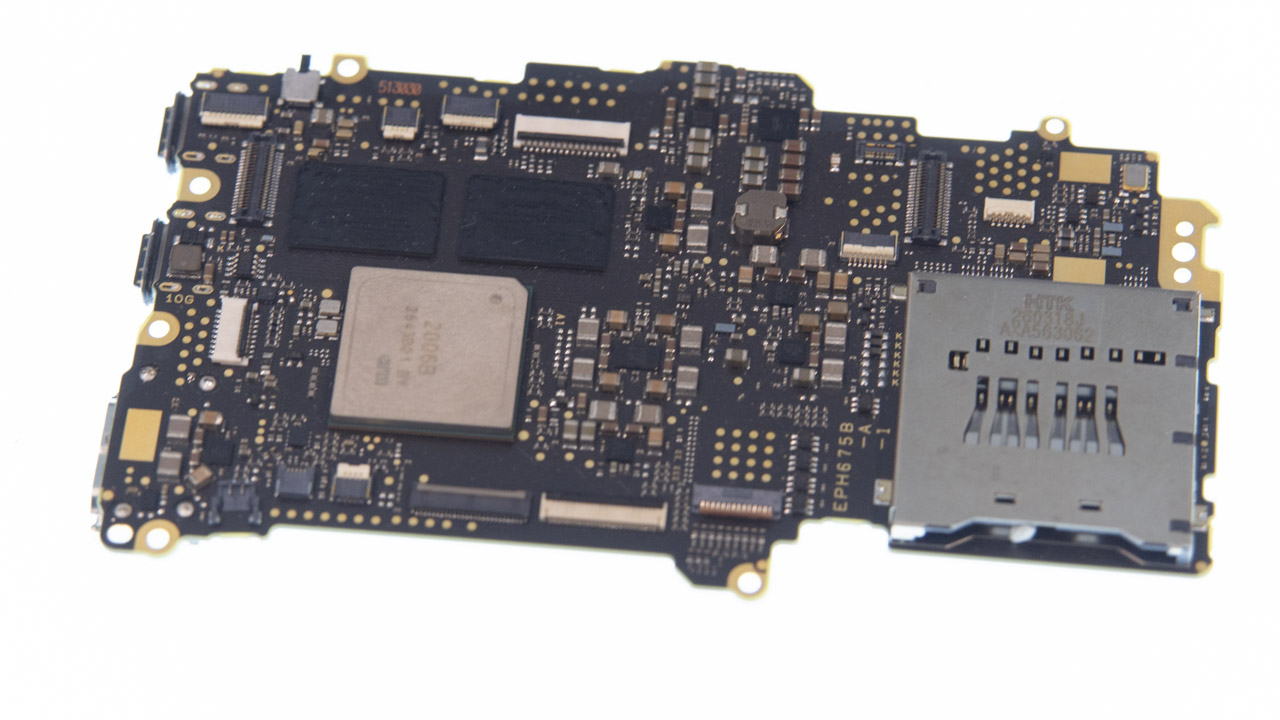
The approximately 70GB of internal storage is also mounted on the back of this main board. Leveraging the design assets cultivated with the Sigma BF, this configuration prioritizes high-speed recording and durability. While this part is not visible from the outside of the camera, it reveals one of the reasons why the camera was able to maintain its compact size while incorporating internal storage.
Fewer parts compared to the original fp
What’s even more interesting is the small number of parts reused from the original fp. Of the 434 parts that make up the FP2, only a few were directly reused from the previous model. In other words, although the exterior may be similar, the camera’s internals are almost entirely newly designed.
Due to the larger battery size and changes in the circuit board configuration, the parts that can be used as is from previous models are limited. Looking back at the FP2’s appearance after seeing the disassembled display, it was even more impressive to see how much new structure had been packed into a body that closely resembled the original.
The sensor is also a new design. By adopting a partially stacked CMOS sensor, the readout speed has been increased, and rolling shutter distortion, which was a problem with the previous fp model, has been reduced. This is a countermeasure against the phenomenon in which the shape of fast-moving subjects is distorted diagonally when photographed with the electronic shutter.
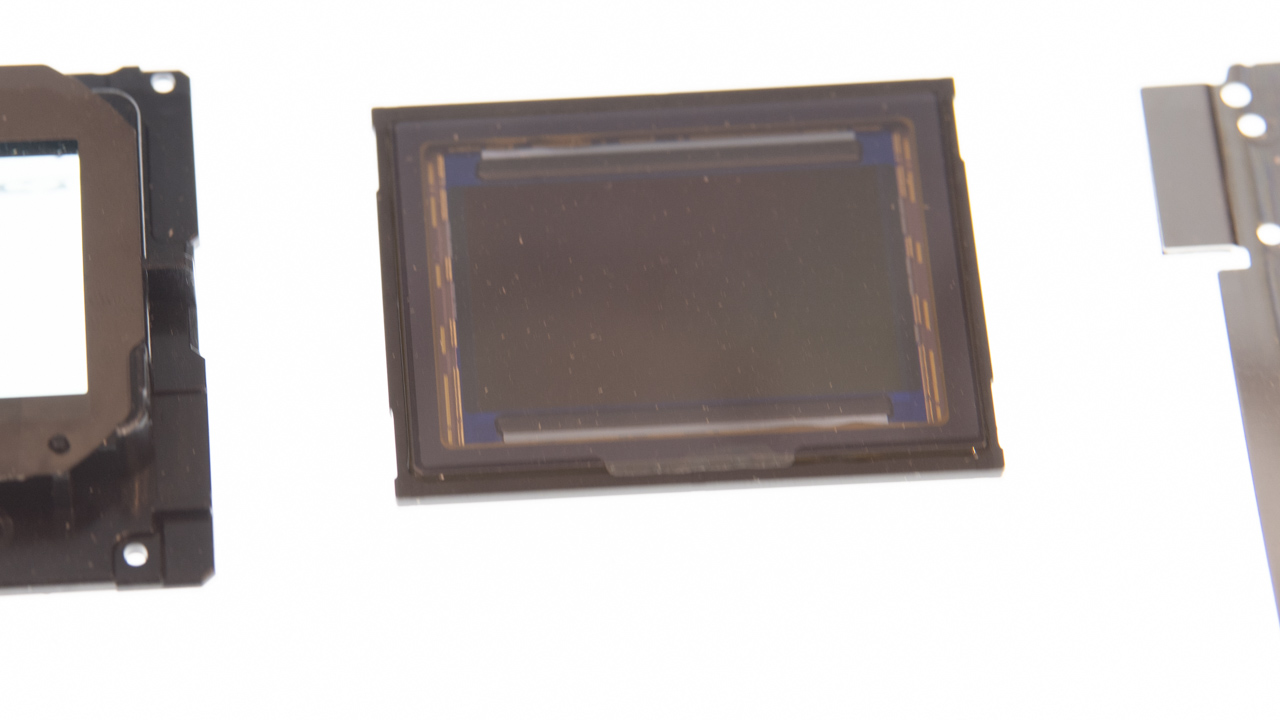
Electronic Shutter
The FP2 does not have a mechanical shutter. Therefore, the sensor readout speed is crucial. For example, with fast-moving subjects such as a moving Shinkansen train, the distortion inherent in electronic shutters can be noticeable. How much this weakness has been improved with the adoption of the new sensor is something to verify through actual shooting.
On the other hand, from a portrait photography perspective, one thing concerning was flash compatibility. Cameras with electronic shutters only tend to give the impression of being difficult to use with flash. In the FP2, the flash sync speed is 1/50 second or slower in full-frame mode and 1/60 second or slower in DC crop mode, which is an improvement over the original fp.
Considering that the original fp typically had a shutter speed of 1/30th of a second or slower, and 1/15th of a second or slower when shooting in 14-bit RAW, the improvement is clear. However, it cannot synchronize as quickly as cameras with typical mechanical shutters, so caution is needed when shooting people outdoors or moving subjects with a flash.
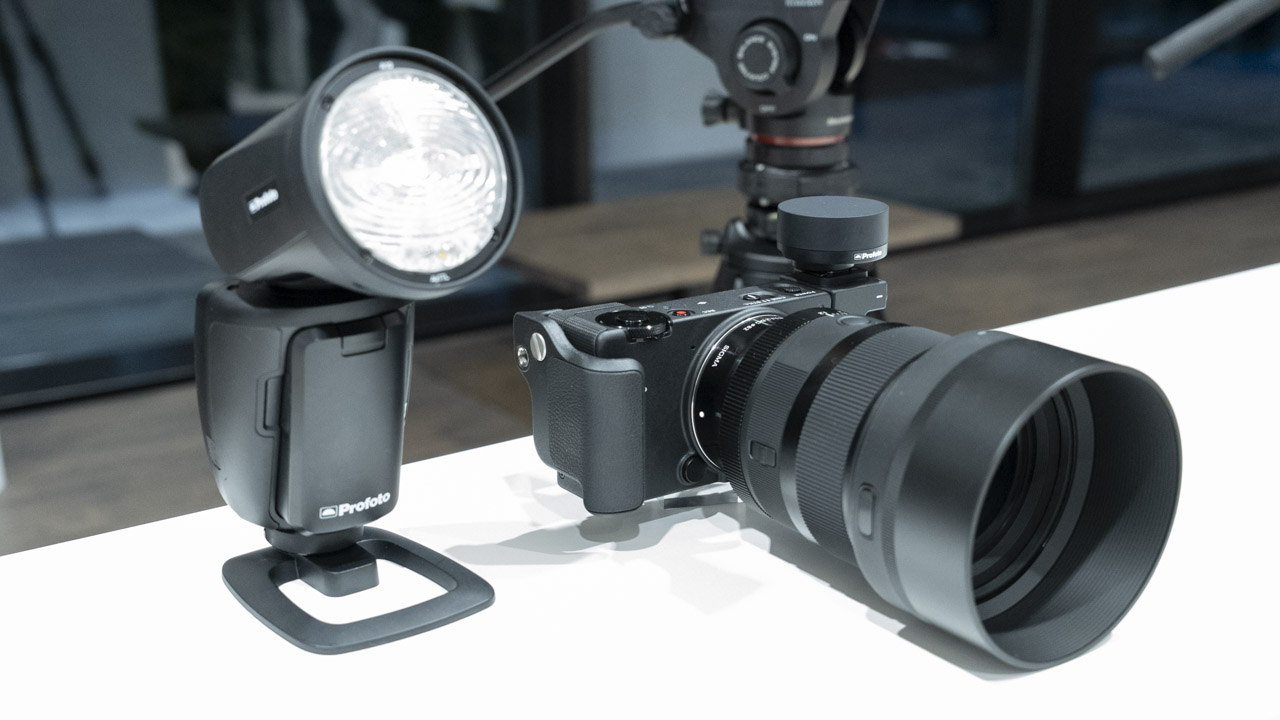
Lighting Equipment with the FP2
What caught our attention here was the separately sold hot shoe unit “HU-21”. It features a flash communication terminal with specifications common to both OM SYSTEM and LUMIX, and at the exhibition, we were able to see a configuration that combined it with a Profoto trigger.
As someone who regularly uses Profoto lighting equipment, the possibility of utilizing my existing gear is certainly appealing. While we might need to check compatible models and synchronization conditions during actual shooting, it’s great to know that even cameras with electronic shutters can offer flash photography as an option.
In addition to external connectivity, the method for attaching and detaching accessories has also been revised. The separately sold electronic viewfinder “EVF-21” now attaches using the USB-C port, making the attachment procedure simpler compared to previous viewfinders for the fp series.
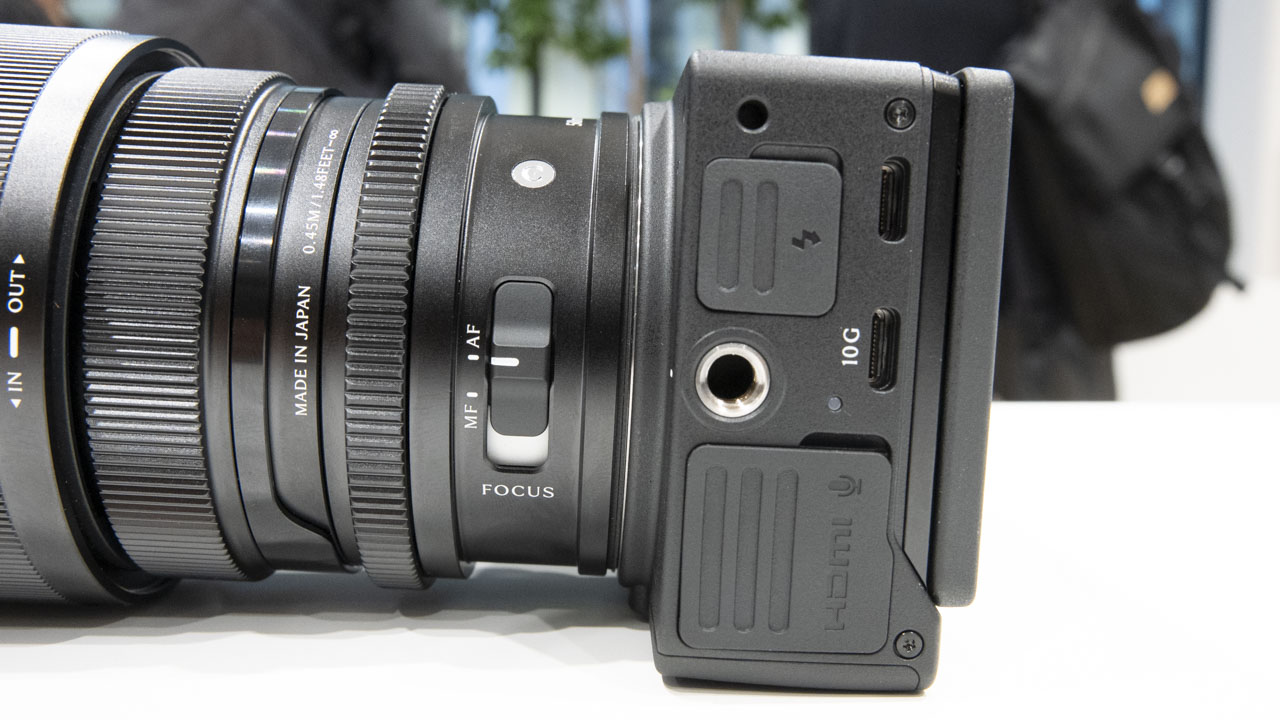
On the other hand, one thing to be careful about is compatibility with rigs and cages. Because the screw positions on the side of the body have been changed, not all conventional fp accessories will work. Since the sizes are similar, you might be tempted to reuse your old equipment, but you should check the mounting points before purchasing.
Video on the Sigma FP2
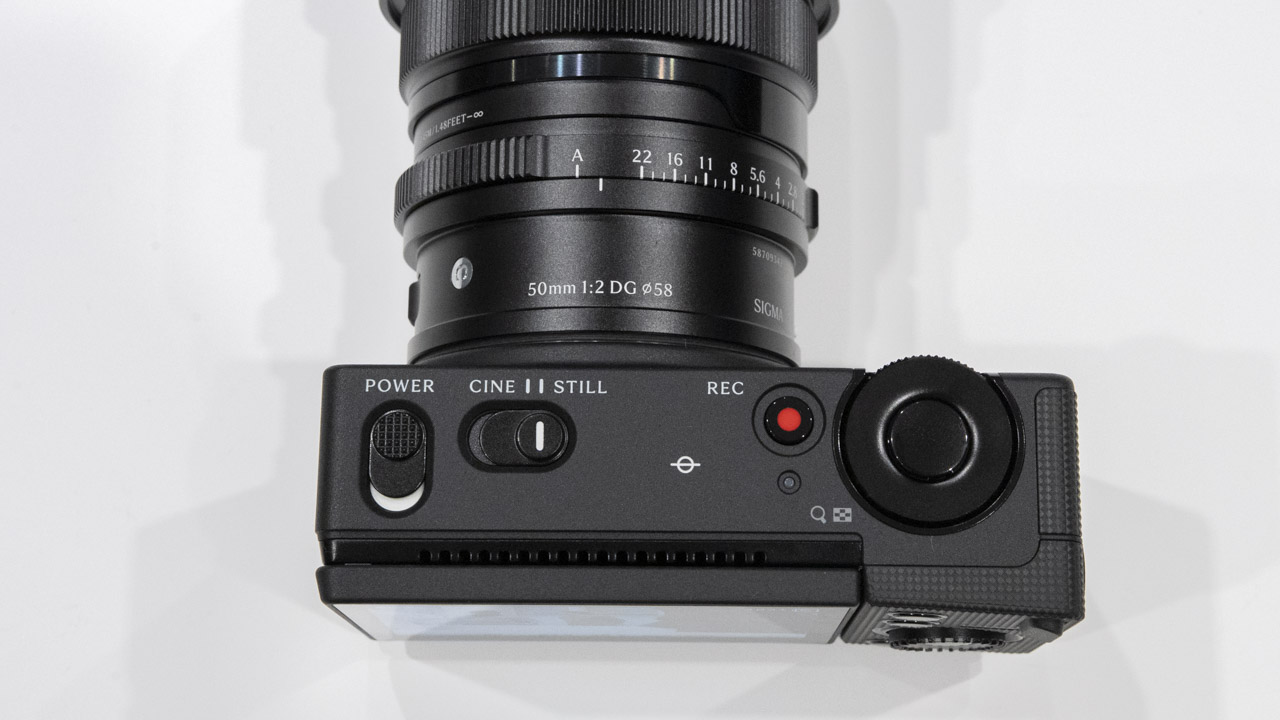
The camera also boasts excellent video recording capabilities. The FP2 supports 6K open gate recording, and a switch on the top of the body allows you to switch between STILL mode and CINE mode. It features user interfaces optimized for both photos and videos, and despite its small size, it is designed with video production in mind.
From operating the actual camera to the disassembled display, it becomes clear that the FP2 is not simply an improved version of the fp series. While inheriting the design and philosophy of the original, the internals have been almost completely redesigned. More than the changes in appearance, the improvements in ease of use and shooting functions are what make the FP2 particularly noteworthy.
The 50mm F1.4 CL: a metal lens designed for the enjoyment of operation.
Our team also got a look at the “Sigma 50mm F1.4 CL DG | Contemporary,” which was announced at the same time as the FP2. The new CL is positioned as a new lineage in the I series, and is a prime lens that combines a small, lightweight all-metal barrel with a bright f/1.4 aperture.

The first thing that caught our eye when I picked it up was the feel of operating the metal rings. Equipped with aperture and focus rings, it’s designed not just for setting numerical values, but also for the enjoyment of controlling the settings with your fingertips while shooting.
While most modern mirrorless lenses feature convenient electronic controls, this lens has an atmosphere reminiscent of old-fashioned manual lenses. The presence of distance and depth-of-field scales further reinforces this impression.

Rotary Direct Drive Ring
What’s particularly interesting is the operation of the focus ring. This lens employs a newly developed AF actuator called “RDD (Rotary Direct Drive),” which allows you to switch to manual focus by rotating the focus ring even while AF is in operation.
RDD (Radio Dynamic Generator) is an AF drive mechanism that arranges magnets and coils circumferentially around the lens barrel. It employs a full-group extension focusing structure while keeping the lens barrel size down. It is a crucial technology for achieving both a compact metal body and AF drive.
With the actual camera, we tried adjusting the focus by half-pressing the shutter button and then manipulating the focus ring. We additionally confirmed users are able to switch from AF to MF and make fine adjustments, including checking the focus using the magnified display.
After the autofocus locks onto the subject, the photographer can manually adjust the focus point with their finger. This type of operation seems useful for portrait photography and situations requiring precise focusing. It’s interesting that it maintains the convenience of autofocus while still leaving room for the photographer to directly control the focus.
Lens Optical Design
In optical design, the latest simulation technology is utilized to intentionally control aberrations. The design prioritizes not only resolution performance, but also the softness of the focal plane, the way the background is blurred, and the three-dimensionality of the subject.
While this short trial period didn’t allow for a thorough comparison of actual image quality, I’m curious to see what kind of bokeh can be achieved when shooting portraits at the widest aperture of F1.4. The fact that it incorporates the latest AF technology while pursuing classic rendering and handling characteristics also gives this lens a unique character.
Using the FP2 and the 50mm F1.4 CL consecutively reveals a common philosophy in Sigma’s product development. The FP2 maintains its traditional size while updating shooting functions and operability, while the 50mm F1.4 CL incorporates the latest AF technology while retaining the enjoyment of shooting by turning the ring.
Cameras and lenses aren’t just good if they’re high-performance. They should be small and easy to use, have a pleasant feel when operated with your fingertips, and allow the photographer to reflect their intentions. This hands-on experience with the actual equipment reminded me of these fundamental aspects of a photographic tool.
The FP2 is set to be released on November 11th, while the 50mm F1.4 CL will be available in early spring 2027. Both have appealing aspects that aren’t apparent from the spec sheet alone. They are pieces of equipment I’d like to take to actual shooting locations and use thoroughly.