NAB Show 2026
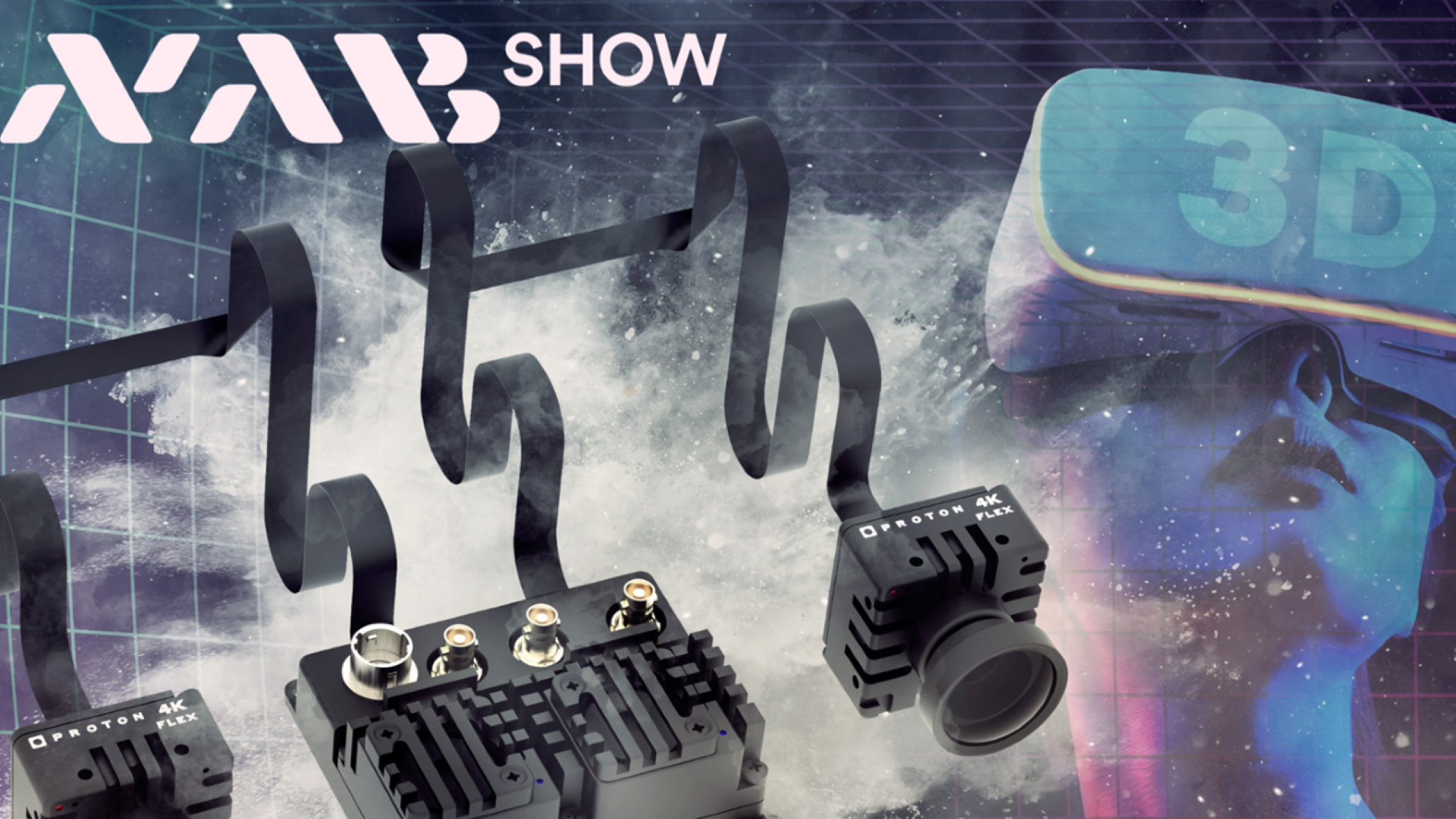
Proton Camera Innovations GmbH (hereinafter: Proton) will be exhibiting at NAB 2026 (booth number: C.4740) to demonstrate the immersive potential of its compact camera ecosystem with its new FLEX and 4K FLEX cameras. The company will showcase how its compact cameras are expanding beyond traditional sports broadcasting to the realm of stereoscopic 3D video production.
PROTON FLEX and 4K FLEX On Display at NAB 2026
At their booth, Proton will demonstrate its “PROTON FLEX” and “4K FLEX” cameras, explaining how their unique design opens up new creative possibilities for filmmakers. In particular, they will highlight the essential role these cameras play in existing 3D production processes, as currently being used by one of the leading directors of the 21st century. While production details are not yet available, Proton’s involvement indicates a growing demand for small, synchronous camera systems that can achieve true stereoscopic depth in narrative film environments.
3D Images Made Seamless
PROTON cameras are able to deliver seamless 3D images thanks to two key factors. One is the ability to coordinate two cameras with a single camera control unit (CCU). By combining two PROTON Flex or two PROTON 4K Flex cameras with one CCU, Proton achieves precise frame-by-frame synchronization between the two sensors, which is essential for delivering seamless 3D images. In addition, the small and lightweight form factor of PROTON cameras is a key factor in their ability to deliver 3D images. Their minimal weight allows them to be mounted on people or rigs without hindering movement, and their small size enables side-by-side or mirrored placement at distances close to the distance between human eyes, resulting in a much more accurate reproduction of a true 3D visual experience. This is something that cannot be achieved with standard-sized broadcast cameras.
Integrated Cooling and Power Supply
Furthermore, the PROTON Flex camera integrates power supply and allows for adjustments to color and exposure from the master camera, automatically reflecting those changes across the entire rig, making it much simpler and more efficient to integrate into the user’s 3D workflow. This efficient approach allows production teams to focus on creative work without being burdened by technical adjustments.
The application of Proton’s technology in high-end filmmaking embodies the natural evolution of the creative freedom that miniaturization brings. This freedom has been particularly driven in the field of sports broadcasting. Cameras have been mounted on drones, rally cars, helmets, goalposts, and tennis nets, delivering broadcast-quality footage from locations that conventional cameras could never reach. Now, with its continuously evolving 3D capabilities, Proton is expanding this creative potential into the realm of film, placing viewers right in the middle of the scene and allowing them to fully experience depth and immersion.
PROTON CAM
In addition to the possibilities of 3D, visitors to the Proton booth can see the “PROTON CAM,” currently the smallest broadcast camera on the market, as well as the 4K-compatible “PROTON 4K,” the “PROTON Zoom” with a built-in zoom lens, the splash-proof “PROTON Rain,” and the newly released “PROTON PRO” with a global shutter and professional connectivity. The product lineup combines flexibility and specialization, allowing users to choose the camera that best suits their creative and operational needs.
Proton CEO Marco Hopken commented as follows:
“When we developed the Flex architecture, we knew that being able to separate the lens and body would open up new doors of creativity. But even we didn’t expect that it would become the foundation of a 3D ecosystem that would be used in one of the most ambitious film productions in recent years.
The fact that two Flex cameras share a single CCU—synchronized frame by frame, sharing color metadata, and powered from a single source—reaffirms that just as creativity drives innovation, innovation also drives creativity.”