The new Mini 5 Pro has been released as part of the DJI Mini entry-level drone series. Two years have passed since the release of the previous Mini 4 Pro, and the Mini 5 Pro is packed with the latest technology from DJI, which has released a variety of products over that time. Therefore, it’s easy to say, I am pretty excited to review the DJI Mini 5 Pro.
Here is a rough outline of the features of the DJI Mini 5 Pro (you can read them in our news article linked in this headline).
- Equipped with a 1-inch sensor, it has camera performance equivalent to that of the DJI Air 3S (wide-angle 24mm only).
- Gimbal roll control like the Mavic 4 Pro
- Equipped with a front LiDAR sensor and omnidirectional sensor (compatible with low light)
- The best flight performance in the Mini series, comparable to the Mavic 3 Pro
It has such impressive features that you might wonder if it’s really okay to include so many features in the Mini series.
After actually using it, I felt that the Mini 5 Pro is an excellent all-rounder drone, suitable not only for beginners and intermediate users who have been the core users of the Mini series to date, but also as a secondary drone to other higher-end series such as the Air and Mavic, which are primarily used by creators and professional aerial photography companies.
In this article, I will introduce the Mini 5 Pro, comparing it with the older model, the Mini 4 Pro, and other models.
This drone in particular is the DJI Mini 5 Pro Fly More Combo (DJI RC2).
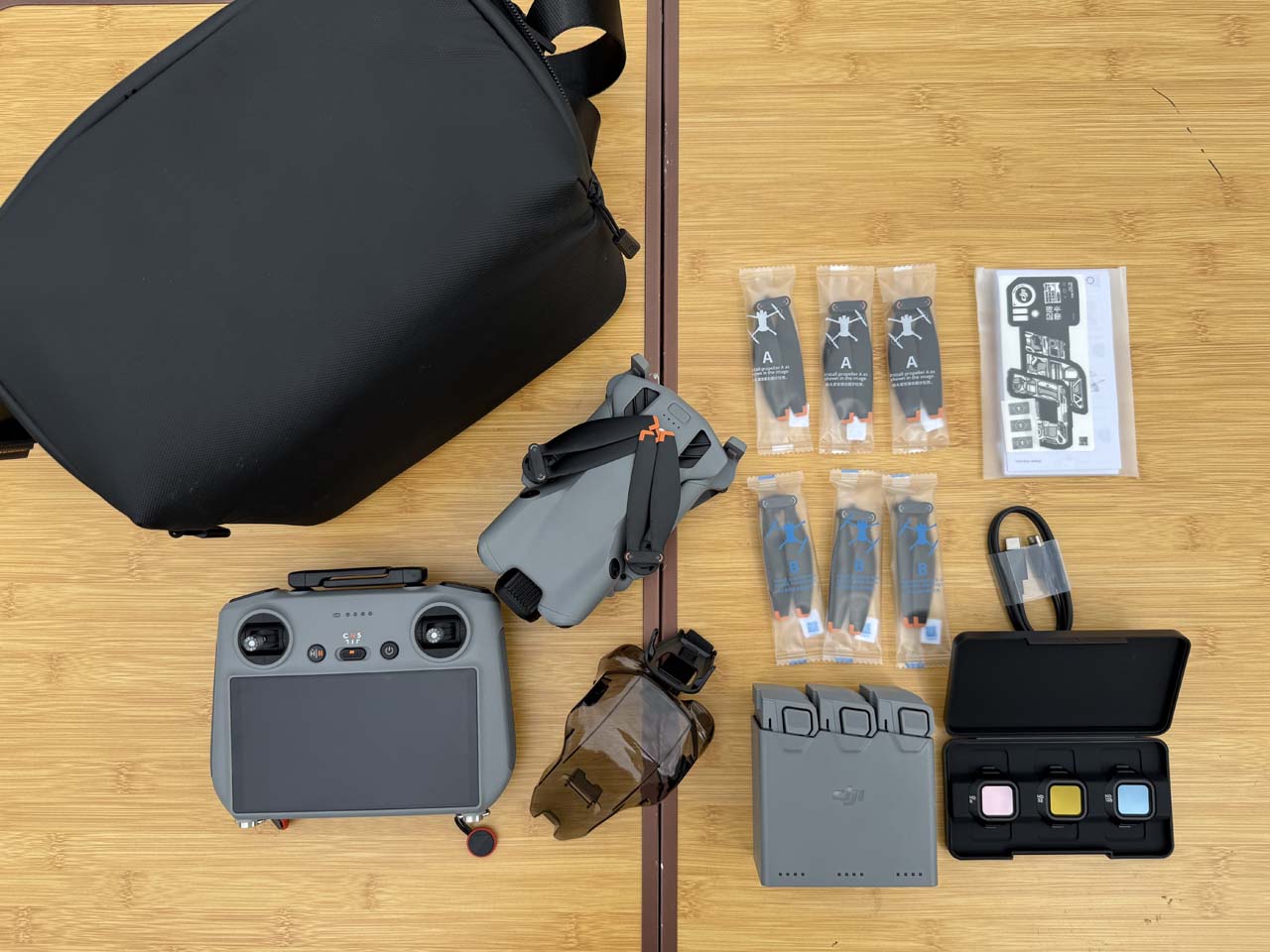
The combo is as follows:
- DJI Mini 5 Pro
- DJI RC 2
- 3 x Intelligent Flight Batteries
- 3x spare propellers
- 2-way charging hub
- Storage Cover
- ND filters (8/32/128)
- Shoulder bag
- USB-C to C Data Cable
The lineup and prices are as follows:
- DJI Mini 5 Pro (DJI RC-N3): 106,700 yen (tax included )
- DJI Mini 5 Pro Fly More Combo (DJI RC-N3): 128,700 yen (tax included)
- DJI Mini 5 Pro Fly More Combo (DJI RC2): 150,480 yen (tax included)
- DJI Mini 5 Pro Fly More Combo Plus (DJI RC2): 158,180 yen (tax included)
DJI Mini 5 Pro Shooting Samples
All sample footage was recorded in 4K 60fps HDR, normal color. HDR mode is enabled when shooting at 60fps or less.
DJI Mini 5 Pro Exterior


Compared to Mini 4 Pro


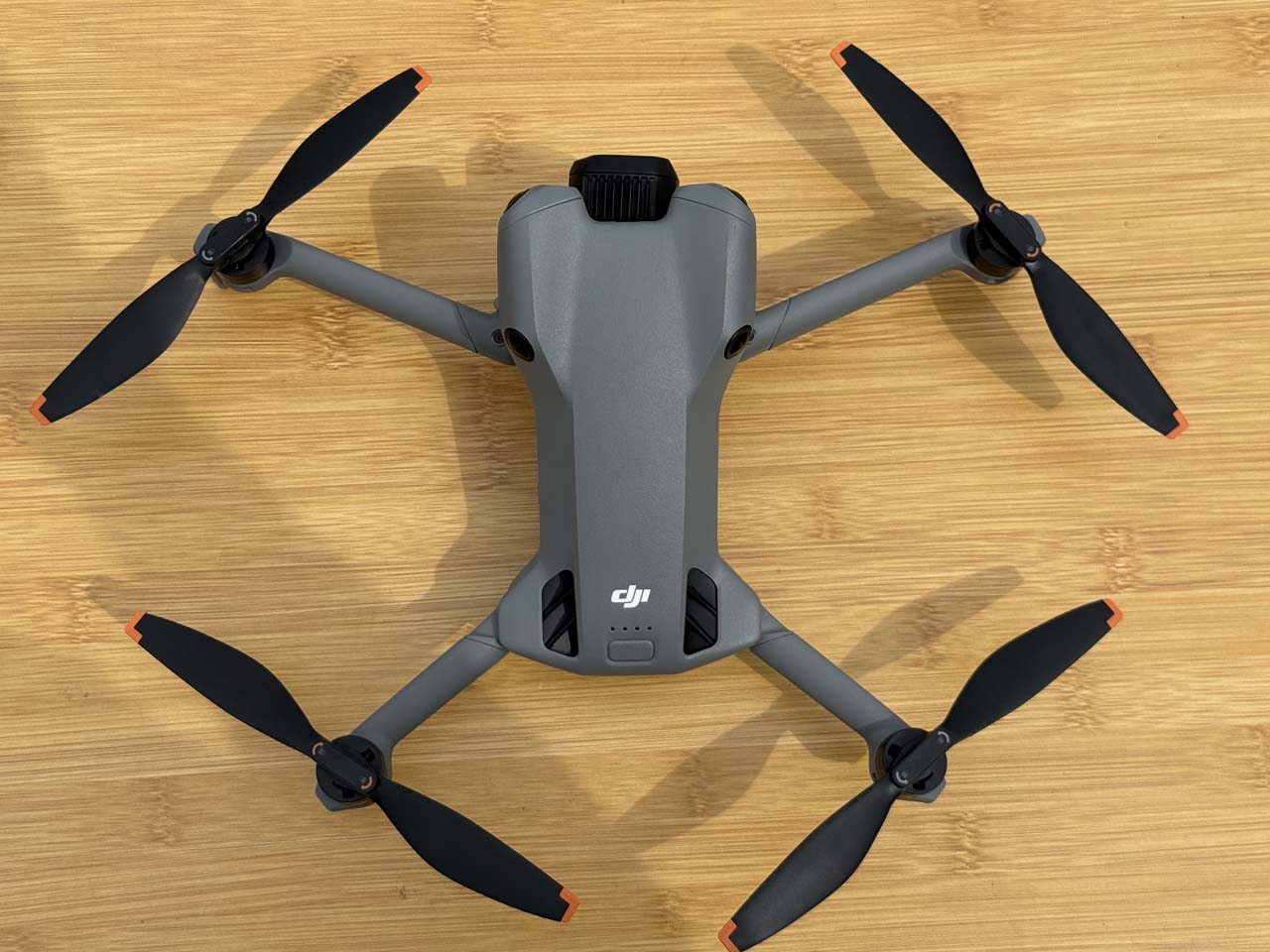
The Mini 5 Pro, coupled with the change in color scheme, gives the impression of being closer to the Mavic 4 Pro.
The biggest hardware changes are:
- Propeller attachment changed from screw type to push type
- The storage cover has been changed to an integrated gimbal and propeller type.
It’s a subtle change, but I think it makes things a lot easier.


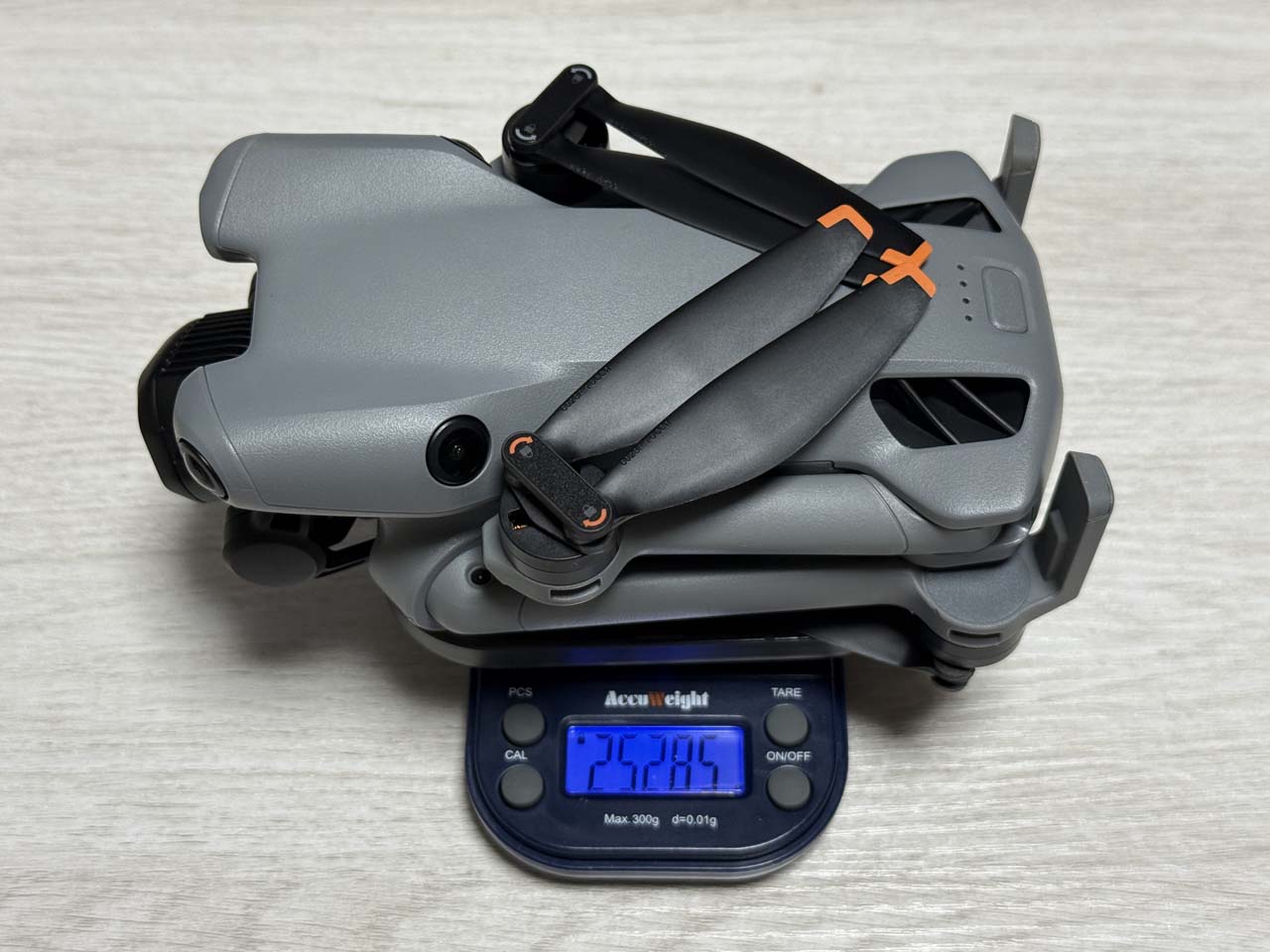
Weighing less than 249g (Japanese version only?)
This time (in the Japanese version), it is not stated that it is less than 249g to comply with overseas regulations, and the actual weight varies depending on the product batch, and appears to be approximately 249.9g ± 4g.
Unfortunately, this doesn’t have much of an impact on Japan’s 100g restrictions, but you should be careful when using it abroad, such as when traveling abroad. At the moment, there is no information on which regions will release the 249g version, so I will continue to check.
Also, if you use the Intelligent Flight Battery PLUS for long-distance flights, which will be described later, the weight will be even heavier, so be careful about that as well.
Larger sensor provides image quality equivalent to that of the DJI Air 3S

Compared to the Mini 4 Pro, the image sensor has been enlarged from 1/1.3 inches to 1 inch.
>The DJI Mini 5 Pro also supports shooting 4K100fps to 4K120fps.
>Color modes include Normal, HLG, and D-log M, all of which can be recorded in 10-bit 4:2:0.
>Looking only at the wide-angle side, it is almost the same as the Air 3S.
>The dynamic range is also 14 stops, which is better at expressing light and dark areas (the Mavic 3 Pro is 12.8 stops).
DJI Mini 5 Pro Sunset Footage
The sample footage recorded in HDR clearly captures the bright and dark areas of the sky and ground, and the details of the plants and trees are also clearly expressed, resulting in a quality that is hard to believe was shot with the Mini series.
The sensor size has been increased this time, and the lens is fixed at F1.8, making it quite bright, so of the included ND filters (ND 8/32/128), the ND128 filter was just right on sunny days. It’s essential, especially when you want to create a sense of speed with motion blur.

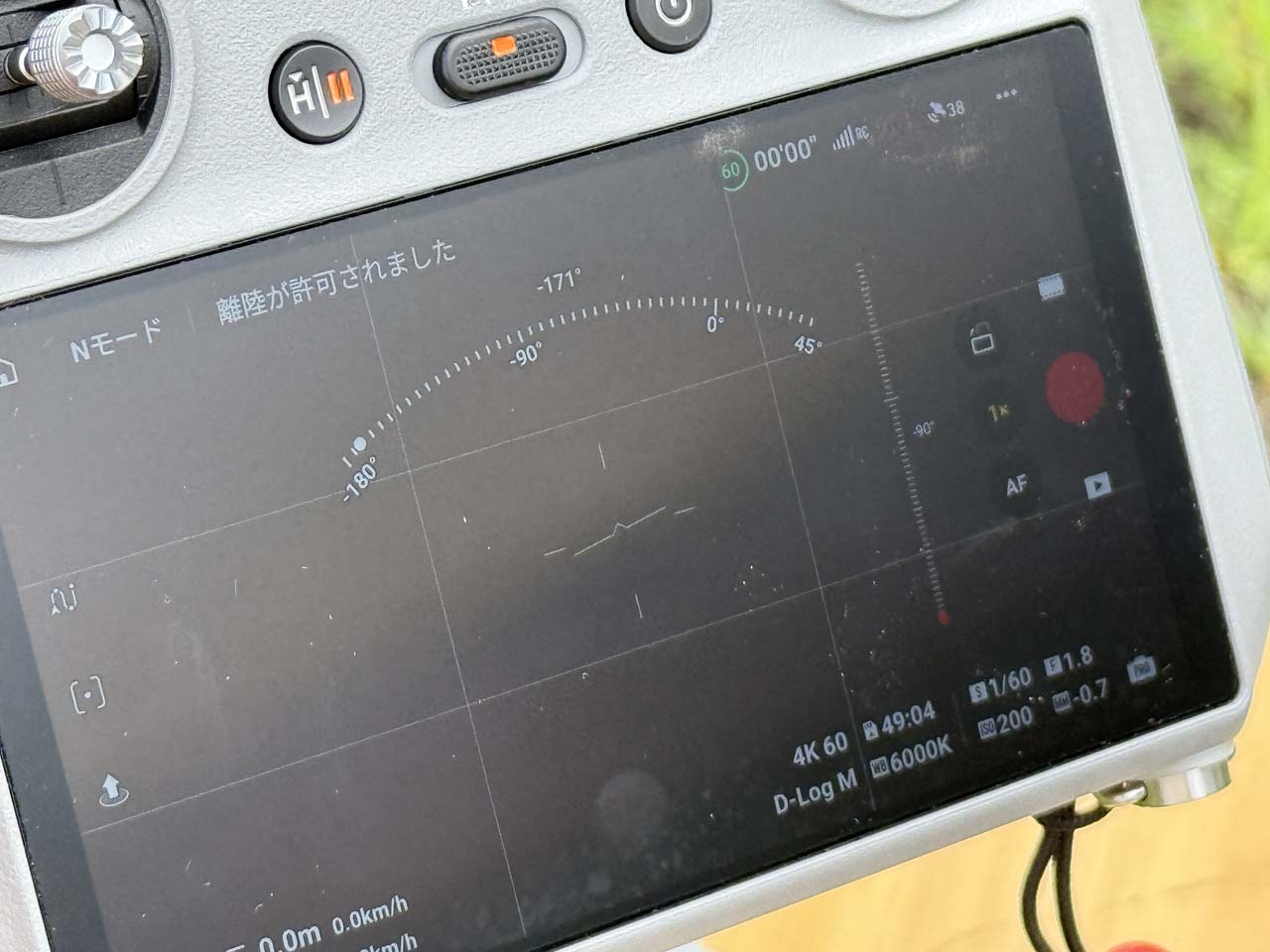
Gimbal roll operation possible
Two years ago, the Mini 4 Pro was the first DJI device to feature a vertical video shooting system that physically rotated the gimbal 90 degrees to make full use of the image sensor.
The Mavic 4 Pro’s Infinity Gimbal then allowed for more precise control of roll rotation beyond 90°, opening up new aerial photography possibilities. It’s important to note that the Mavic 4 Pro’s maximum roll rotation was 440° (130° counterclockwise, 310° clockwise), while the Mini 5 Pro’s maximum range was limited to 225° (180° counterclockwise, 45° clockwise).
Instead, one advantage of the Mini 5 Pro is that it does not have the roll rotation restrictions that existed with the Mavic 4 Pro when tilting.
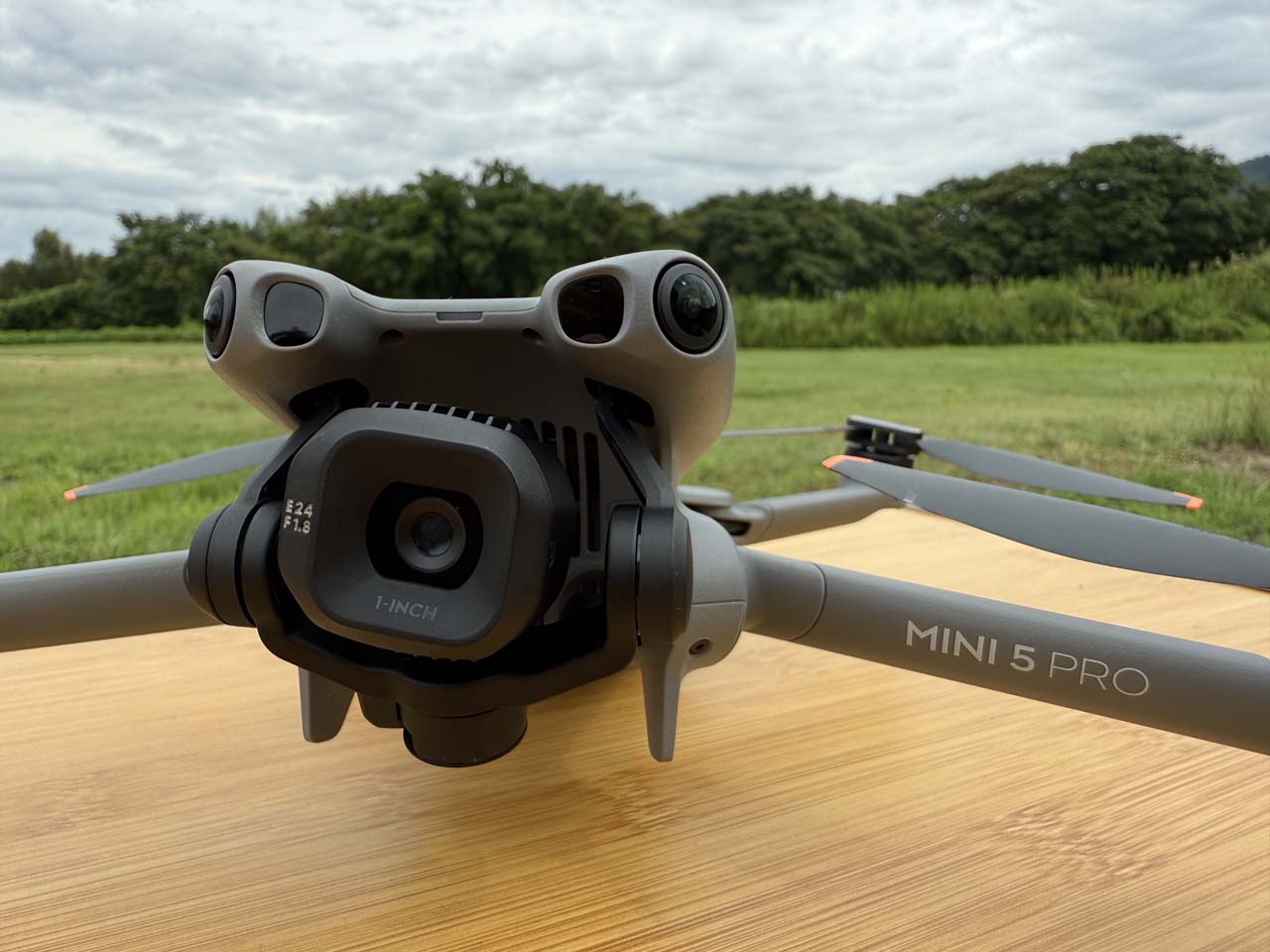
Front LiDAR + low-light omnidirectional sensor
We previously reviewed the Mavic 4 Pro sensor, and we were impressed by its improved low-light performance. This is largely due to the improved sensitivity of the omnidirectional sensor. While the previous Mavic 3 Pro and Mini 4 Pro models require a brightness of 15 lux or more for their sensors to operate, the Mavic 4 Pro requires a brightness of 0.1 lux or more, and the Mini 5 Pro requires a brightness of 1 lux or more.
This is particularly useful as it allows for stable flight even in non-GPS environments and dimly lit places such as inside a factory.
Like the Air 3S and Mavic 4, this drone is also equipped with a LiDAR sensor, which allows it to detect obstacles ahead even in pitch-black environments where the omnidirectional sensors are completely ineffective. Although we were unable to test this this time, it appears that it can safely return home even when the Return to Home command is activated at night.
The verification results are as follows.
Flight performance and battery
Like the Mini 4 Pro, there are two battery options: a standard version and a high-capacity version (Intelligent Flight Battery Plus).
>The standard battery has a flight time of 36 minutes, while the high-capacity battery has a flight time of 52 minutes.
It also boasts the best wind resistance and flight speed in the Mini series.Compared
to other models, the following is a comparison.
| Mini 5 Pro | Mini 4 Pro | Mavic 3 Pro | |
| Maximum horizontal speed | 19 m/s | 16 m/s | 21 m/s |
| Maximum Ascent Speed | 10 m/s | 5 m/s | 8 m/s |
| Maximum wind resistance | 12 m/s | 10.7 m/s | 12 m/s |
Looking at the numbers alone, it’s comparable to the Mavic 3 Pro. In fact, during test flights, even maneuvers that require a certain degree of speed and precision, such as tracking shots, were surprisingly smooth.
Compatible transmitter
As with the Mini 4 Pro, you can use transmitters that support O4 and O4+ transmission.
The following three transmitters are currently supported:
- DJI RC 2
- DJI RC Pro 2
- DJI RC-N3
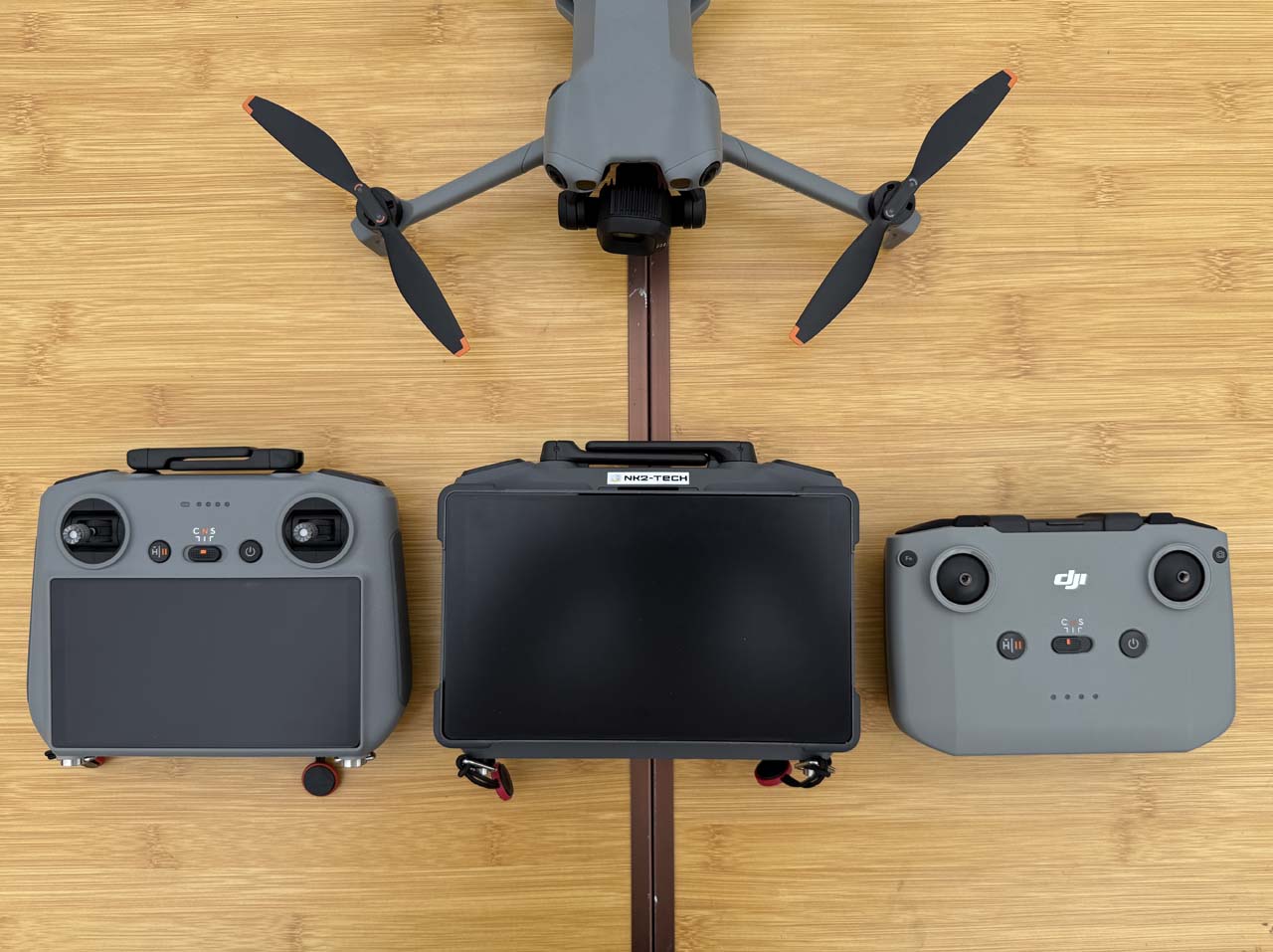
If you want to output externally via HDMI, you will need to use RC Pro2 (for now, RC2 only allows mirroring).
The Mini 5 Pro supports O4+ transmission, with a maximum transmission distance of 10km for the Japanese version.
The transmission distance remains unchanged from the Mini 4 Pro’s O4 transmission.
Other Features of the DJI Mini 5 Pro
A delightful 42GB of built-in storage
The Mini 4 Pro only had 2GB of internal storage, but this one has been expanded to 42GB, which is great for quick shoots where you can forget your microSD card and still be able to shoot.
Also, like recent DJI drones, the internal storage can be accessed even when connected to a PC with the power turned off.
Change in arm folding structure
Like the Mavic 4 Pro, you no longer have to worry about which arm to fold first. While this is nice, it’s also annoying: you can’t insert or remove the battery unless you fully unfold the arm. I often think it would be easier if you could just unfold the arm a little like on the Mavic 3 Pro. I’d be happy if this were changed in the future.

DJI Mini 5 Pro Summary
For entry-level users or professionals?
I felt that the Mini 5 Pro was even closer to professional specifications than previous models.
In recent years, DJI’s drone lineup has expanded to include models aimed at even more casual users than the Mini series, such as the DJI Neo and Flip. These lineups are attractive to users who don’t prioritize image quality. For casual uses like vlogging, the currently discounted Mini 3 and Mini 4, or the cheaper Neo and Flip, are the best options, while the Mini 5 Pro is the best choice for users who want high image quality but prefer a lightweight model, or as a secondary to a professional drone.
As a secondary camera for Mavic 4 Pro users
It can also perform gimbal rolls and the image quality is generally good enough for professional use, so it might not be an exaggeration to call it a generic Mavic 4 Pro (?).
One of my recent concerns was “what to do with the secondary camera for the Mavic 4 Pro.” Although I had purchased the Mavic 4 Pro, the wide-angle lens was now 28mm, which has a narrower angle of view than previous models, so the angle of view was sometimes not wide enough depending on the shooting location. For this reason, the production side often said, “Just to be safe, let’s use the Mavic 3 (focal length 24mm)…” This left me with mixed feelings, thinking that it was a waste of the money I had spent to purchase it.
Insurance will cover both, but I can’t use the same transmitter. I was debating whether to get a new O4-compatible model (Air 3S or Mini 4 Pro). I was a little hesitant when the Mini 4 Pro received its second-class type certification, but I’m glad I waited for the Mini 5 Pro. I’m looking forward to using it to its full potential.
As an aside, like the Mini 4 Pro, which has received Type 2 certification, the Mini 5 Pro is manufactured by DJI JAPAN Co., Ltd., not DJI (care must be taken when registering the aircraft with DIPS).
We look forward to the Mini 5 Pro being registered as a certified aircraft in the future.
Written Originally in Japanese by Masahiro Fujikura | Profile
Mr Fujikura is a drone operator living in Niigata Prefecture. CEO of NK2-Tech Inc. Currently, he is broadcasting information for drone beginners in Japanese, as a YouTuber under the name “NANKOTSU.”