Inter BEE 2025 Exhibition Report

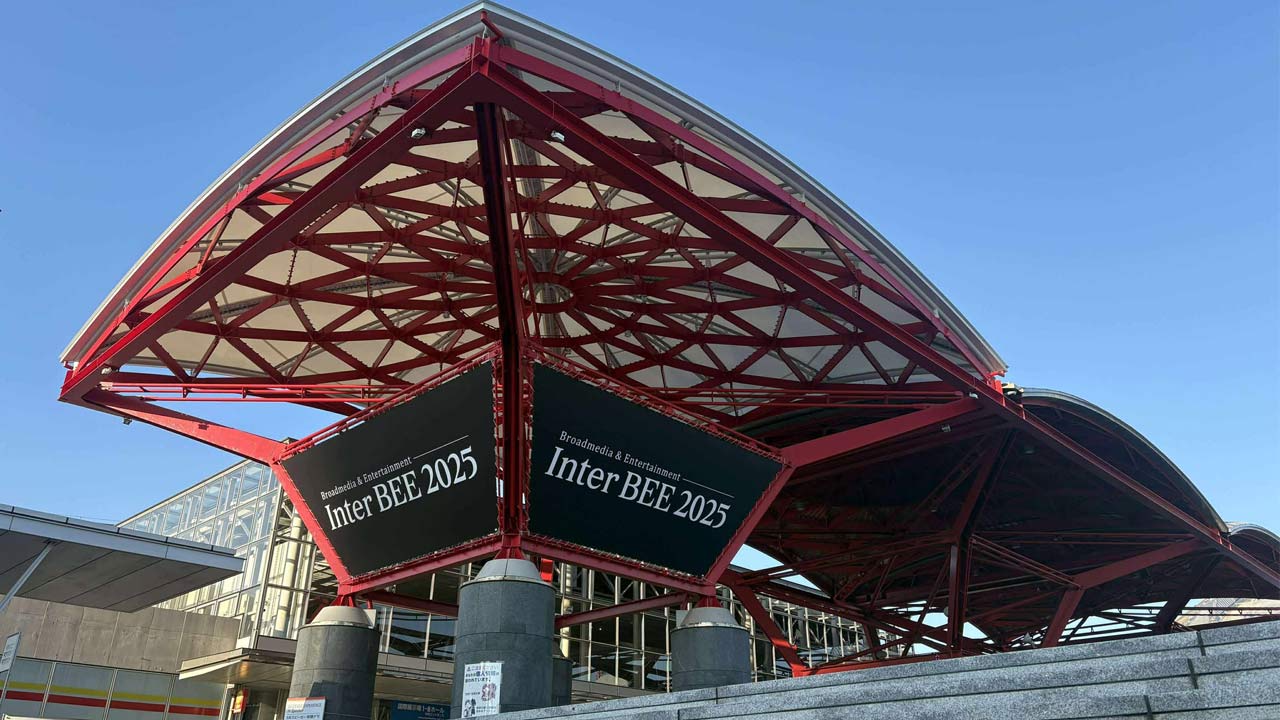
Inter BEE 2025 was held at Makuhari Messe for three days from November 19th to 21st, 2025, and concluded on a high note. What is particularly noteworthy about this year’s exhibition is the further advancement of digital transformation in content production. In addition, in terms of filming equipment, major advancements and new trends were also evident in the field of cinema cameras. In this article, we will summarize the atmosphere at the venue by genre. This article will introduce the cameras that debuted at Inter BEE 2025.
Sony exhibits the long-awaited PXW-Z300 with triple ring technology.
Transforming the workplace with AI, compact size, and authenticity support

When it comes to Inter BEE 2025 and cameras, Sony is the first name to stand out. The first thing that caught our eye at the Sony booth at Inter BEE 2025 was the handheld camcorder, the PXW-Z300. Its triple ring and flexible LCD arm offer great operability, while its viewfinder-free design prevents interference with wireless devices, making it a product that thoroughly pursues practicality. It was also one of the first to comply with the C2PA standard, which is gaining attention as an anti-counterfeiting measure, making it a product that reflects the times.
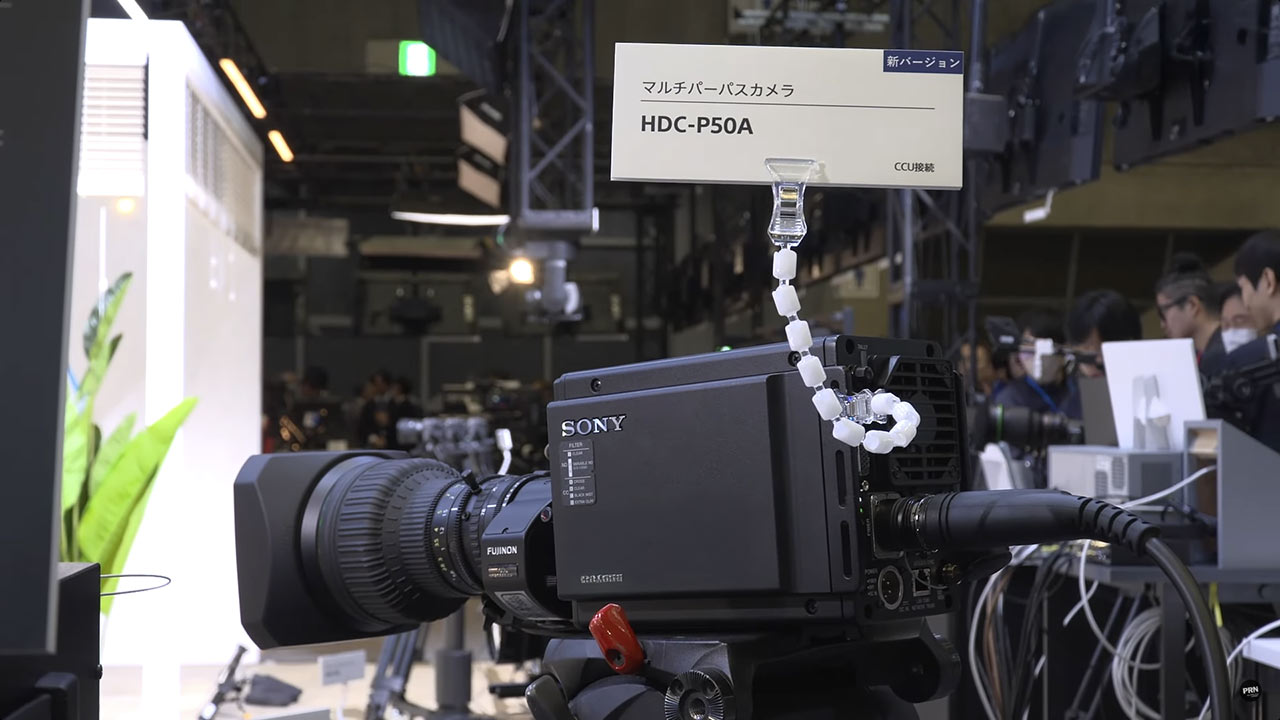
System cameras included the compact “HDC-P50,” which can be powered via a single optical cable, and the cost-effective 4K-compatible multi-format portable camera “HXC-FZ90,” further enhancing operational flexibility. Furthermore, the Cinema Line exhibited the ultra-compact “VENICE Extension System Mini,” demonstrating the potential of new filming techniques such as 3D shooting and special mount operation. Additionally, numerous solutions directly linked to resolving on-site issues were also on display, such as a highly accurate auto-framing camera using skeletal recognition AI.
Panasonic Announces New Controller “AW-RP200GJ.” Macro Function and AI Integration Driving the Future of One-Man Operation
The Panasonic Connect booth at Inter BEE 2025 featured a wide selection of cameras that combined labor-saving with high quality. First and foremost was the remote camera controller “AW-RP200GJ,” scheduled for release in the fourth quarter of fiscal year 2025. Equipped for the first time with a macro function, it allows camera operation and image quality adjustments to be performed as a series of actions with the press of a single button. The newly added “L (Left) joystick” makes it possible to operate two cameras, the main and sub, simultaneously, greatly expanding the possibilities for one-man operation.
The PTZ camera’s new “Preset Smart Composition” function is also groundbreaking. By optimizing pan and tilt speeds while moving and keeping the subject in the frame, it enables smooth camerawork even when moving, which was previously not possible.
The multi-purpose camera “AW-UB50/UB10” supports PTZ operation with a newly developed dedicated camera platform. It can be operated with existing controllers and is also planned to support “NDI HX2” free of charge, greatly improving operational flexibility.
On the software side, the “Media Production Suite” has been improved. “Video Mixer” now includes automatic mosaic and wipe functions using AI facial recognition. “Advanced Auto Framing” enables advanced automatic tracking by specifying the composition and linking with a reference camera, making it a powerful solution for small-scale productions.

Canon promotes the 7K-equipped “EOS C50” and presents next-generation workflows such as vertical video support and RF mount VP

At the Canon booth at Inter BEE 2025, equipment and solutions that will support the next generation of video production were on display. One standout was the EOS C50 digital cinema camera equipped with a 7K sensor. It supports simultaneous recording of vertical crops for open gates and social media, and the built-in 12-bit RAW “Cinema RAW Light,” making it compact yet versatile.
The new lens, the CN5x11 IAS T, boasts the widest angle of 11mm and is the lightest in the series. Equipped with a new drive unit, it supports dynamic imaging.
On the systems side, they introduced a “Virtual Production System” that utilizes RF mount communication, which enables AF shooting without the need for lens calibration. They also proposed solutions that combine labor-saving with video expression, such as “Multi-Camera Orchestration,” which links multiple PTZ cameras with the operation of a single camera, and “AMLOS,” which will be available in component format from 2026 onwards.

Broadcast and video production video reports now available
Canon: Remote Virtual Cinema Camera Showcases the Future of Filmmaking, Showcasing Next-Generation Film Workflows
“GFX ETERNA 55” detailed report: The possibilities revealed by the 44 x 33 mm sensor and flexible setup

At the Fujifilm booth at INTER BEE 2025, the attention of visitors was glued to the actual display of the new dedicated video camera “GFX ETERNA.” The highlight, and perhaps the core of this camera, is its large, non-standard medium-format sensor measuring 44mm x 33mm. The combination of this large sensor with “film simulation,” a color reproduction technology cultivated over many years, produces a unique sense of depth and bokeh, and its image expression stood out even within the venue.
Fujifilm’s “GFX ETERNA 55” is the world’s first camera to support 4:3 RAW via HDMI and SDI. The company also unveiled its original EVF and roadmap.
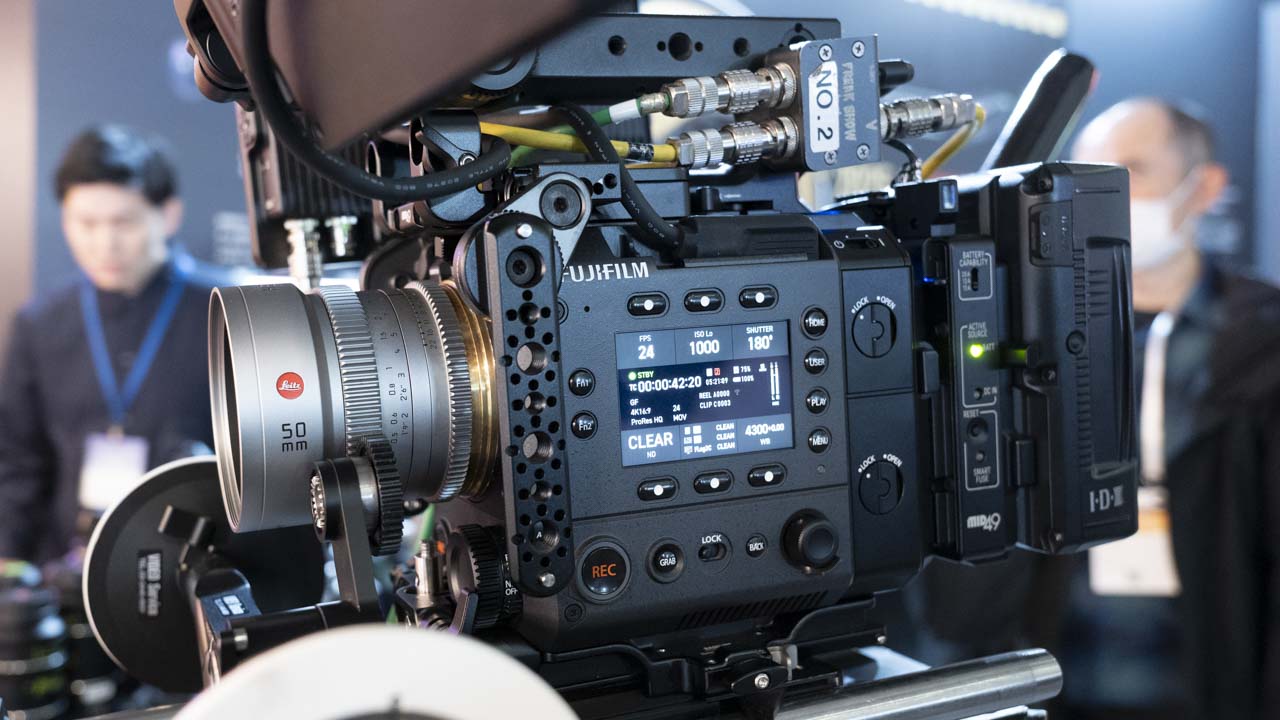
Of particular note were the two completely different setups proposed in the booth. One was a cinema-style setup fitted with FUJINON’s “HK Lens,” a heavy, full-scale build designed for film production. The other, on the other hand, was a lightweight setup combining DJI’s “RS 4 Pro” gimbal with a GF lens for still photography. This setup utilizes autofocus to enable one-man operation, demonstrating that despite being the same camera, it can exhibit extremely high mobility depending on how it is used.
In addition to the power zoom lens “GF32-90mmT3.5 PZ OIS WR” that will be released at the same time as the camera body, there was also a wide range of cinema lenses on display, including products jointly developed with ARRI, demonstrating the high level of perfection of the system.It was not just an exhibition of new products, but a rich exhibition that presented new possibilities for video production.
Nikon exhibits the “ZR” camera, featuring the new “R3D NE” format incorporating RED technology.
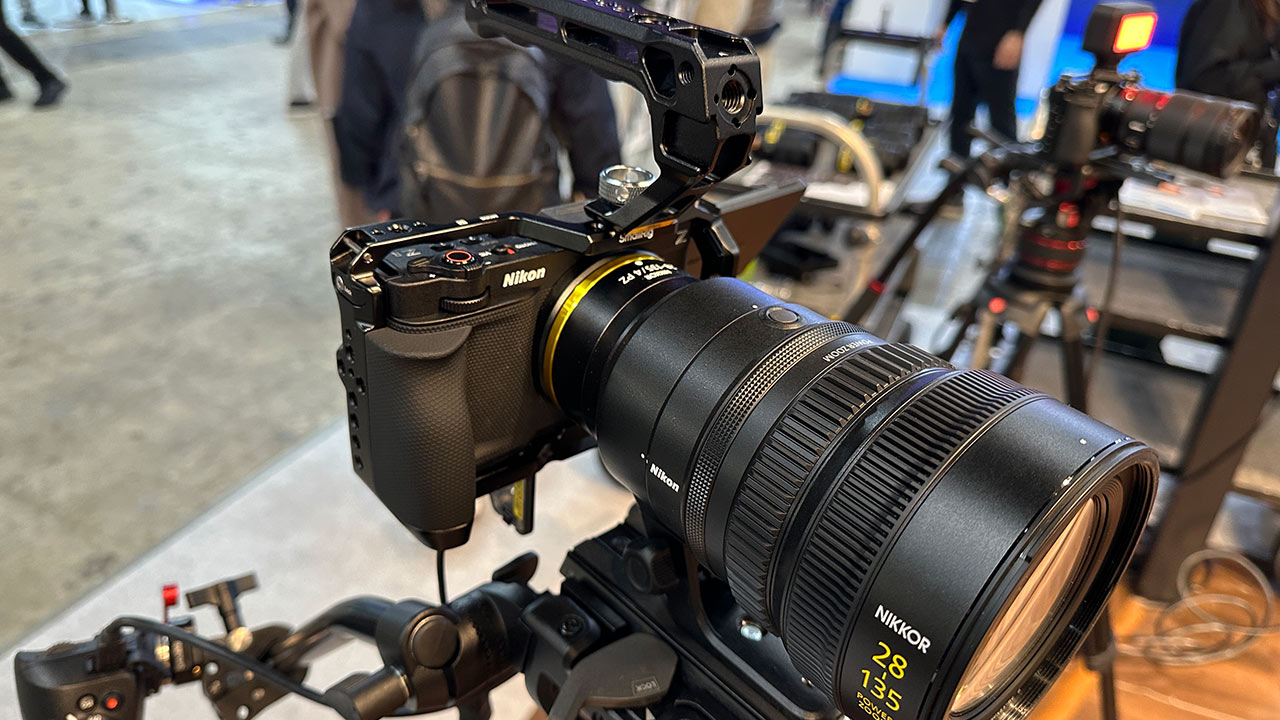
Among the cameras that attracted the most attention at the Nikon Imaging Japan booth at Inter BEE 2025 was the “Nikon ZR.” This camera is positioned as Nikon’s first camera to fully incorporate RED technology, and its core feature is the inclusion of the new “R3D NE” format. This makes it possible to shoot with the same advanced color science as RED’s RAW format, “R3D,” and has generated a lot of interest in the camera as a new option for video production.
Another major highlight is that, despite being a cinema camera, it has a thorough “all-in-one” design. Conventional cinema camera operations tend to require extensive equipment, including peripheral devices, but this camera’s compact body allows the entire shooting flow to be completed. In terms of functionality, it is packed with features that professionals need, such as support for in-body recording of 32-bit float audio. It was exhibited alongside RED products in the booth, providing an environment where visitors could actually experience its operability and performance.
RED exhibits “V-RAPTOR XE” and expands broadcast solutions. Two-pronged development: cinema and live

The RED booth at Inter BEE featured exhibits with two major themes, “Cinema” and “Broadcast,” which attracted a lot of attention. In the cinema area, the latest model, the “V-RAPTOR XE,” was introduced. It maintains the performance of higher-end models while being slimmer and more cost-effective, and its appeal lies in its ability to achieve high-end shooting at 8K60P and 4K240P with its 40.96mm x 21.60mm 8K VV 35.4MP global shutter CMOS.
In the broadcast field, they proposed a solution that turns the V-RAPTOR into a system camera. Its SMPTE module covers all the essential broadcasting functions, and RED Connect technology enables 4K high-speed shooting. Furthermore, compatibility with Sony’s RCP allows for smooth mixed operation with existing broadcasting equipment.
RAID exhibits 4K slow motion “Pixboom Spark” for the first time in Japan
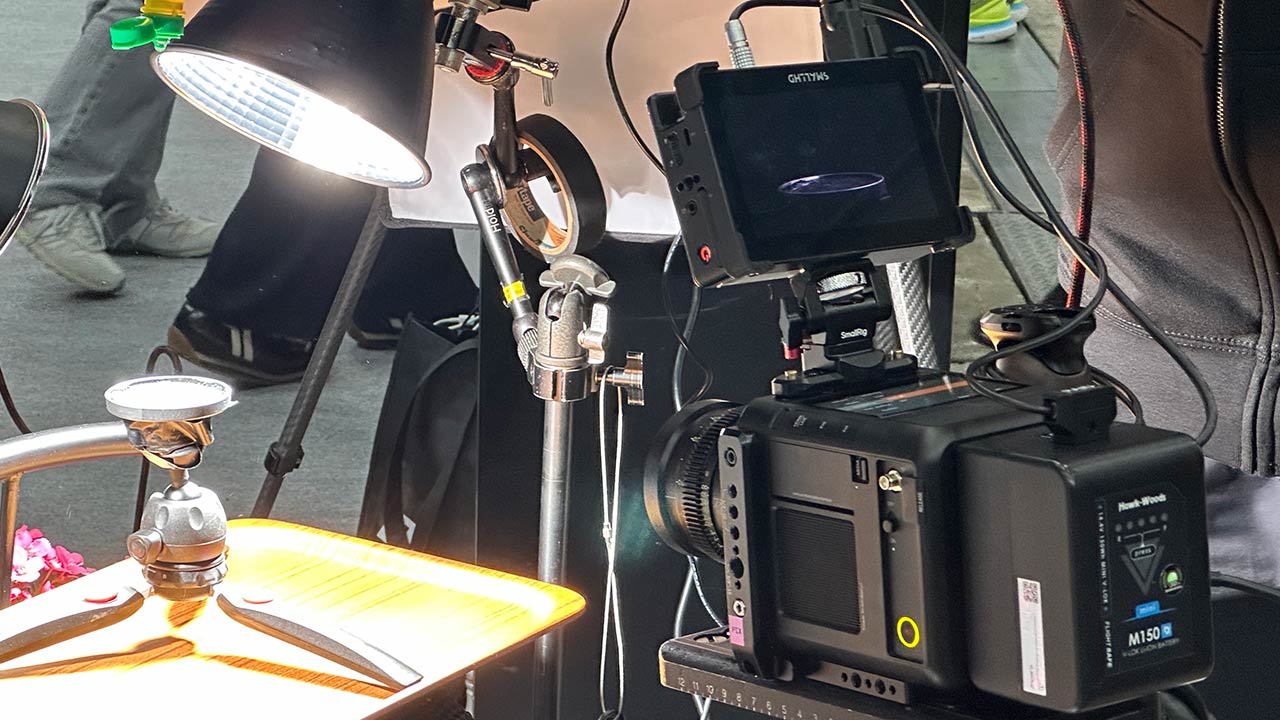
Pixboom’s slow-motion camera “Spark” also had a prominent presence at the RAID booth, being exhibited for the first time in Japan. RAID is the Japanese distributor of Pixboom, a Chinese company.
What is particularly noteworthy is its high cost performance. Despite boasting specs of 1,000 frames per second at 4K resolution and 1,800 frames per second at 2K, the price of the camera itself is in the 1.7 million yen range, making it a device that significantly lowers the barrier to entry for high-speed photography.
The specifications of the recording media are also logical and interesting. By using a method that records directly to an SSD without using internal memory, handling of shooting data becomes easier and workflow is expected to become much more efficient. The fact that it can be operated simply without having to set up a large-scale system will be a practical benefit for many creators. At the booth, it was possible to operate the actual device, allowing visitors to see its capabilities for themselves before it ships in January of next year.