Inter BEE 2025 Exhibition Report
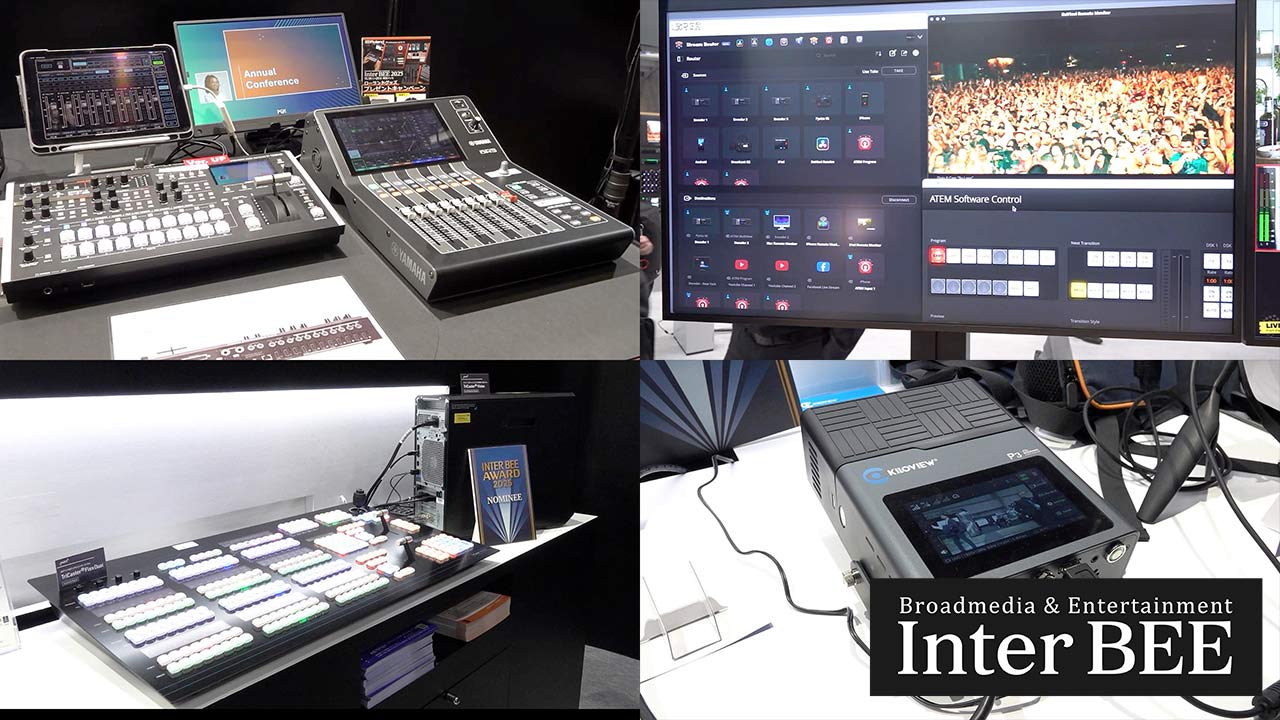
During the 2025 edition of Inter BEE, once again this year, a large number of video production and broadcasting related equipment exhibited under one roof. What struck me as I walked around the venue was the establishment of a location-independent production flow through the use of the cloud, and the evolution of solutions that support labor savings and efficiency on-site. In this article, I will report on the booth exhibits from Blackmagic Design, Roland, and ASK (Vizrt/Kiloview), which particularly caught my eye.
Blackmagic Design: Cloud switcher system unveiled for the first time in Japan
The Blackmagic Design booth was attracting a lot of attention at Inter BEE 2025. The cloud switcher system using Blackmagic Cloud, which was unveiled there for the first time in Japan, gave the impression of having the potential to fundamentally change the workflow of live streaming and video production.
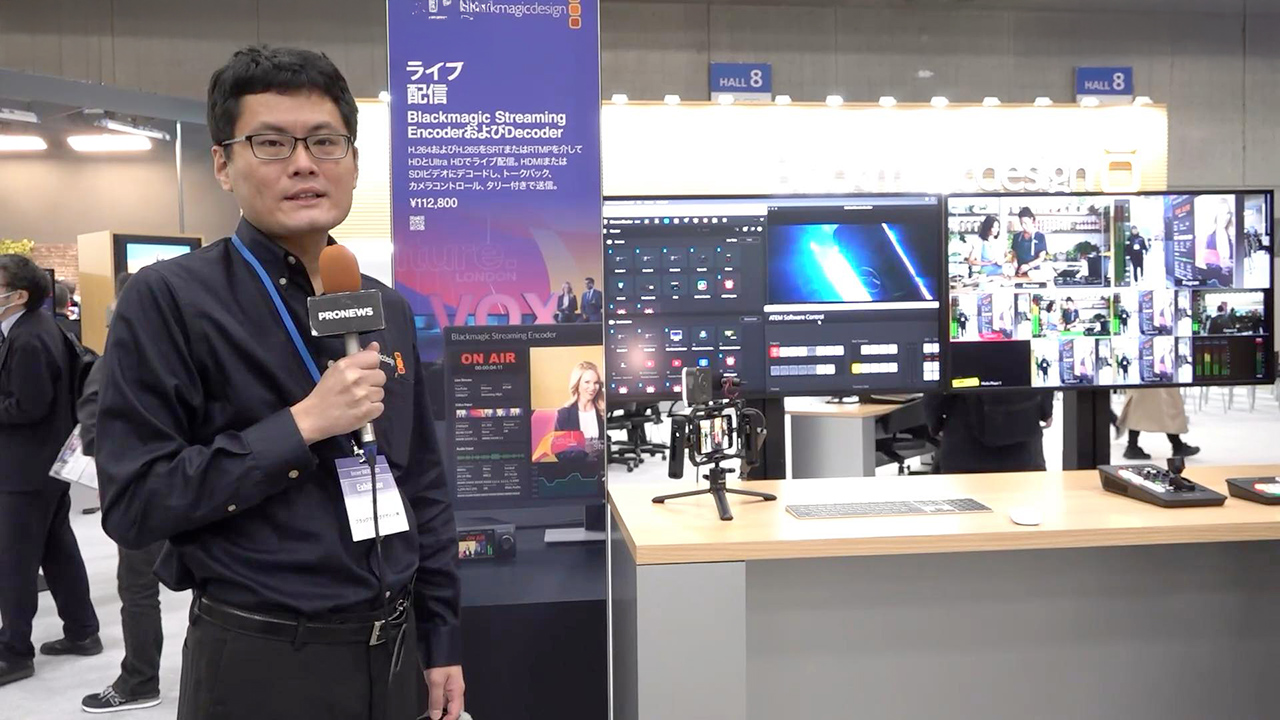
It was announced at NAB 2025 in April and has been a hot topic, but seeing the actual equipment with your own eyes is awe-inspiring at how streamlined it is. This is because the bulky hardware, such as switchers and routers, that previously had to be transported to the site are now all centralized on the cloud. Users can access the cloud-based UI and operate the equipment as if it were actually there.

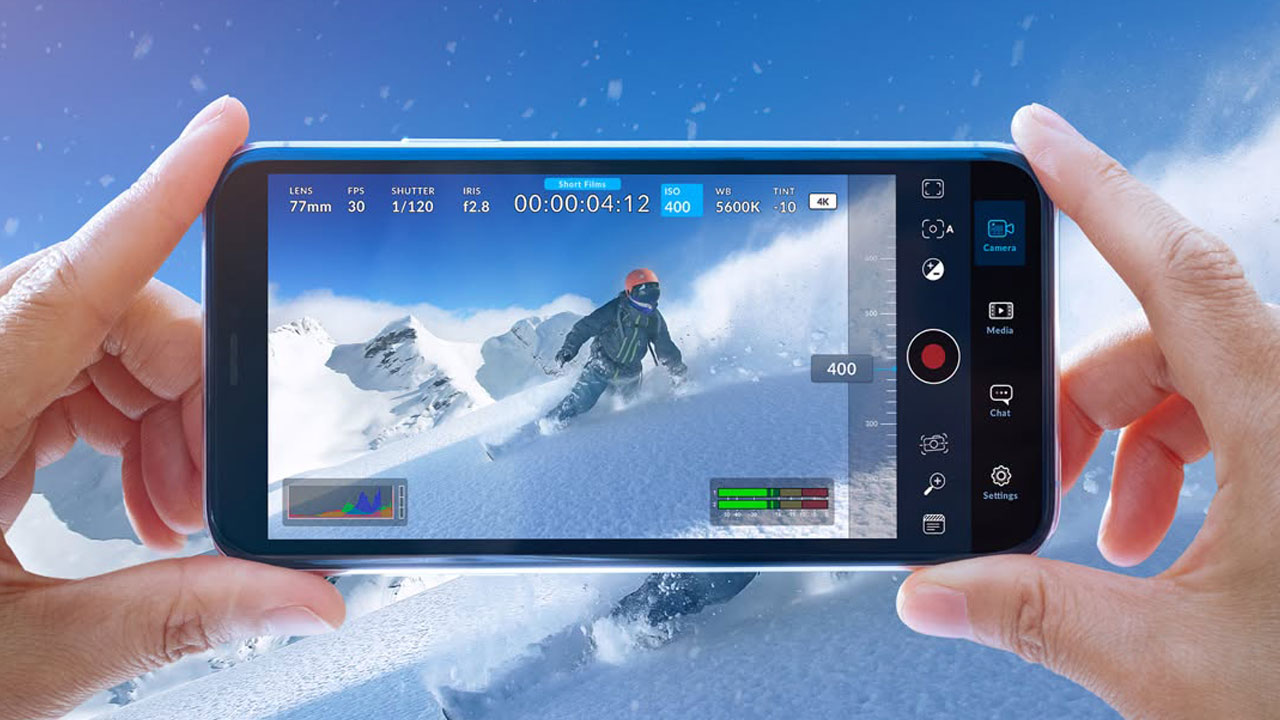
The flexibility of the video input is also interesting. In addition to using a dedicated encoder, you can also send video directly to the cloud via SRT from the “Blackmagic Camera” app, making it possible to broadcast with extremely minimal equipment. Switching is performed while checking the video on the “Remote Monitor” app on a PC.
What I found particularly practical was the ability to operate the switcher on the cloud using a physical control panel. Camera control and switching can be performed on the panel at hand, and the control signals can be used to operate the system on the cloud. This significantly reduces the amount of equipment required on site, while still maintaining the physical operation feel that professionals desire.
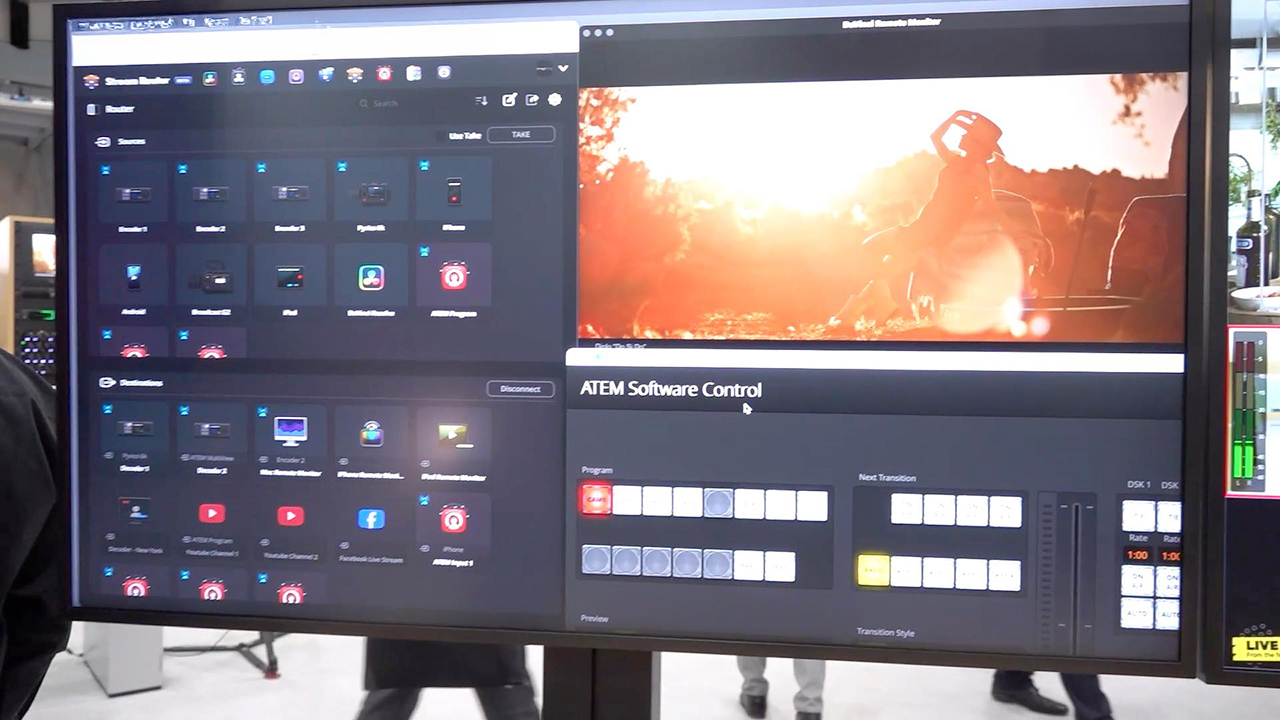
The completed video can be streamed directly from the cloud to YouTube, and can also be sent back to the site via a decoder. The service is expected to launch soon, and as a solution that accelerates labor savings and efficiency in live streaming, it was undoubtedly one of the highlights of this exhibition.
Roland: Proposing three themes for improving on-site efficiency
Another big player showcasing broadcasting gear at Inter BEE 2025 is Roland. The company had three themes for this event, and the first of these was a corner showcasing solutions for AV equipment in businesses and schools. What I found interesting here was the combination of an AV mixer designed for use in seminar rooms and streaming studios, and the VenuSet application that controls it.
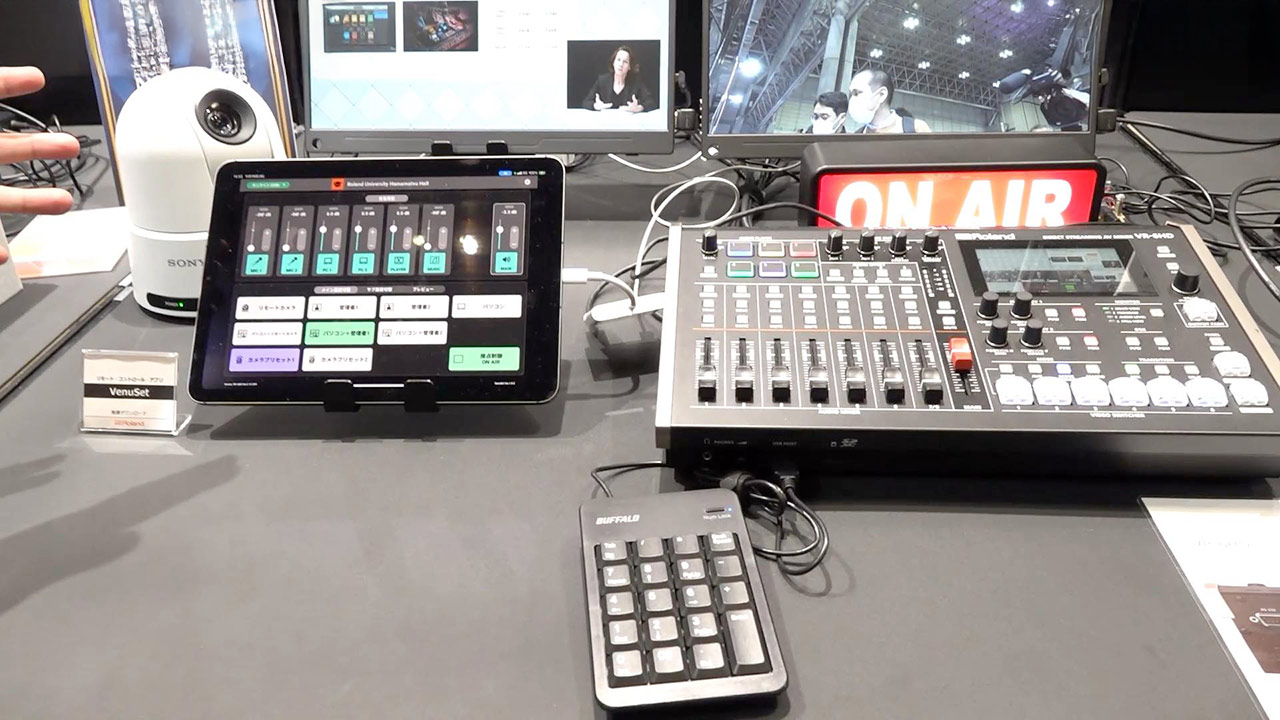
When I saw a demo of this “VenuSet,” I was amazed at how flexible and customizable it was. It is compatible with iPad, Windows, and macOS, and its greatest feature is that users can freely design the layout and design of the on-screen buttons and faders. At the exhibit, operation was performed using a touch panel monitor, and calling up video scenes and switching inputs was completed with an extremely simple interface.
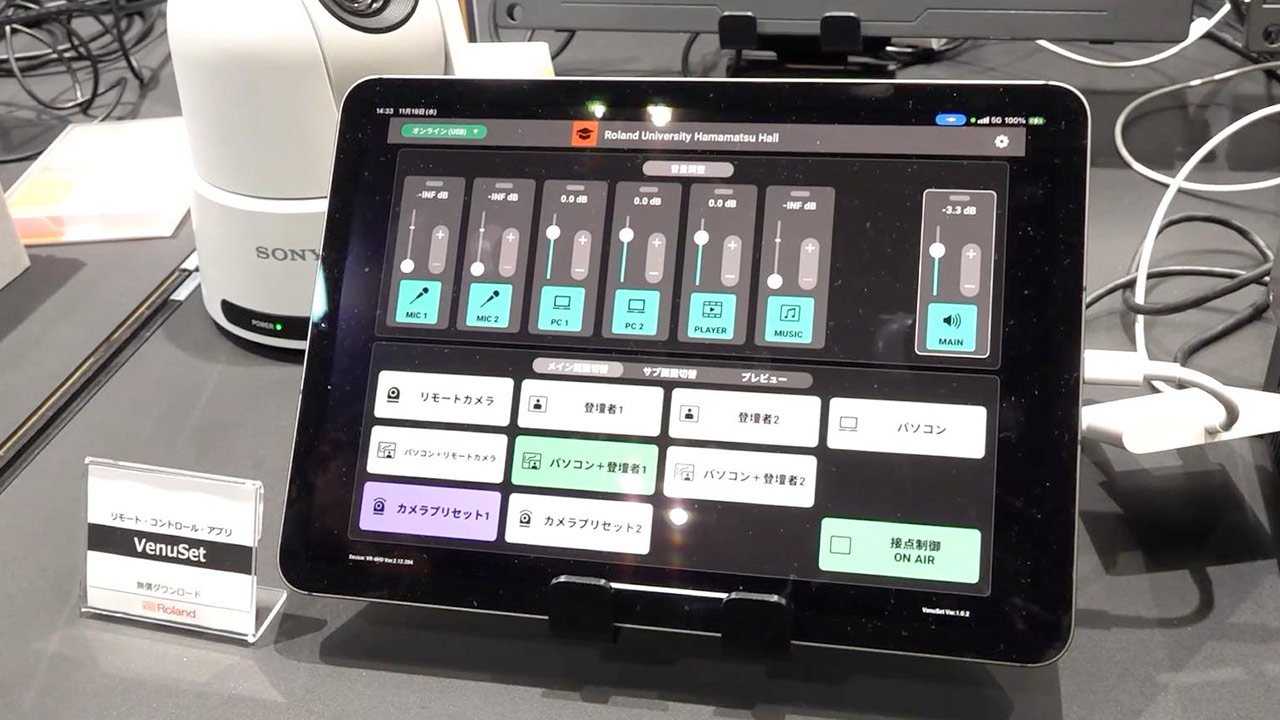
Conventional AV equipment is often complicated to operate and requires a dedicated operator, but with this app, it is possible to create an operation screen that extracts only the necessary functions. The fact that it allows users who are unfamiliar with the equipment to create an environment that is intuitive to use is very reasonable from an operational management perspective. This can be said to be Roland’s practical answer to the issue of “ease of use” when installing equipment.
Event Production Gear
Also, in the corner themed around “event production,” what caught my eye was the exhibit of the latest version, Ver. 2.0, of “GRAPHICS PRESENTER,” a Windows application for transmitting subtitles and graphics.
The biggest topic of this update is official support for Elgato’s control device, Stream Deck. At the booth, a demonstration was held simulating a corporate awards ceremony, showcasing a workflow that allows intuitive transmission of captions and graphics simply by pressing the physical buttons on Stream Deck. By importing PNG files with alpha channels created in programs like Illustrator, it is possible to display beautiful captions with transparent backgrounds, which sets it apart from simple compositing using programs like PowerPoint. There are also a wide variety of dynamic templates included, and the ability to edit text in real time and have it reflected instantly was also very practical.
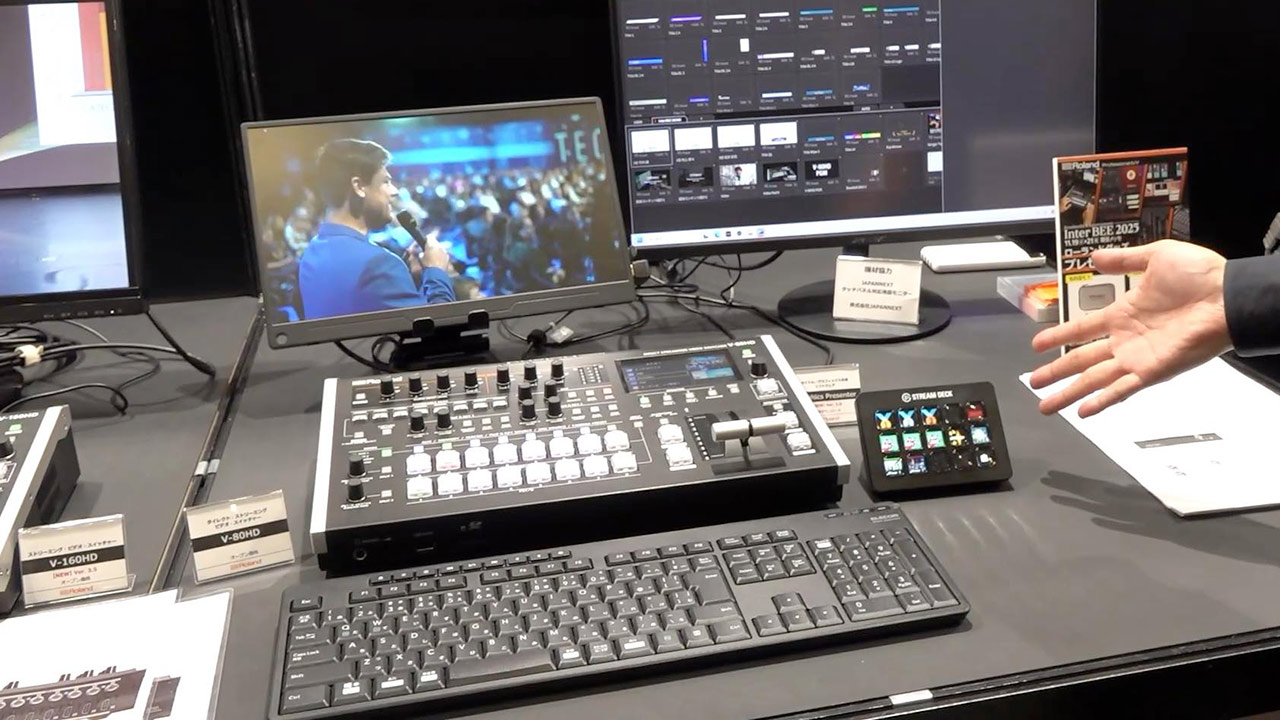
Another highlight of Ver.2.0 is the significantly improved video playback functionality. Nine sampler-like pads are displayed on the screen, and by linking these with the Stream Deck, it is possible to smoothly “play” video material at your fingertips. These functions reduce the risk of operational errors while enabling sophisticated productions even with a small number of people. This is a solid evolution that can be said to be a solution that efficiently improves the quality of events and live streaming.

Live Production latest firmware
And in the third theme, “Live Production,” the latest firmware, “Version 3.5,” for the standard video switcher, “V-160HD,” was unveiled, suggesting the potential for dramatic changes in on-site workflow.
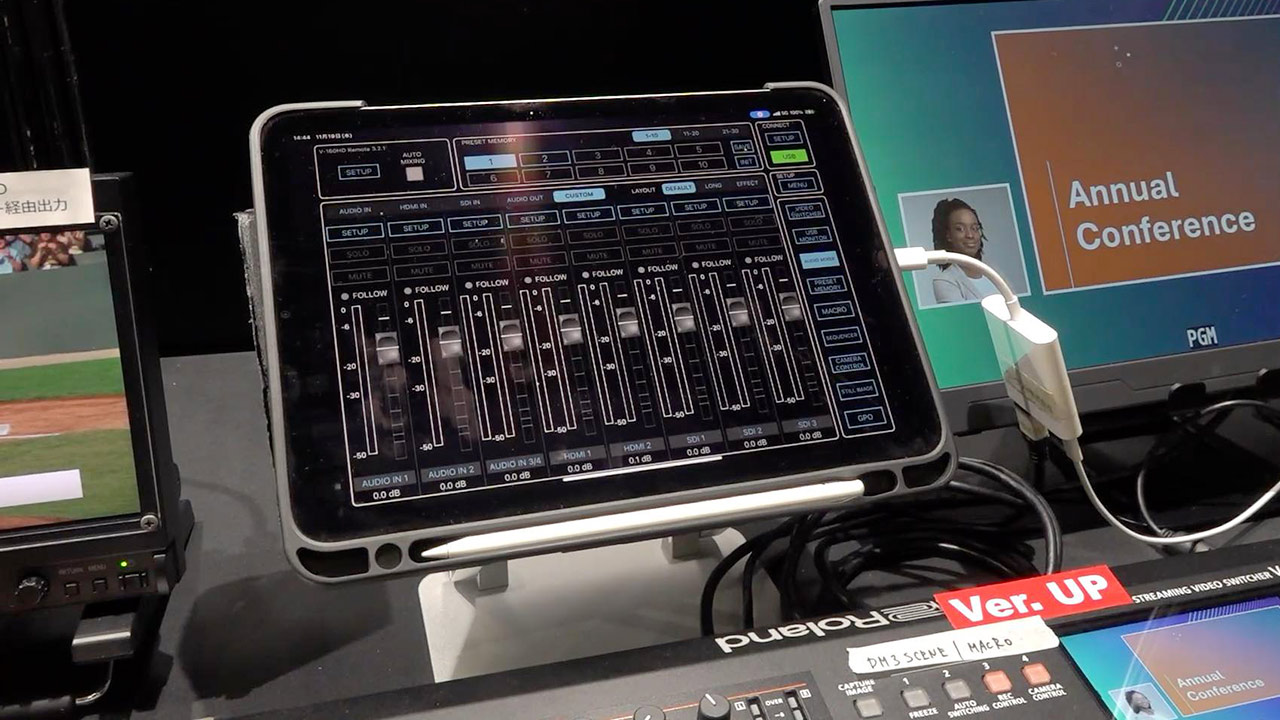
What surprised me most was the implementation of a linking function with Yamaha’s DM3 series digital mixers. This function was previously implemented in the V-80HD, but it’s no wonder that many people wanted it included in the more versatile V-160HD. Seeing an actual demonstration, I was impressed by the precision of its behavior. Connected via a single LAN cable, operating the DM3 fader instantly changed the audio level on the V-160HD’s iPad. Conversely, operating the V-160HD’s motorized fader physically moved the DM3’s motorized fader. The fact that this two-way communication was achieved without delay spoke to the high level of perfection of the system.
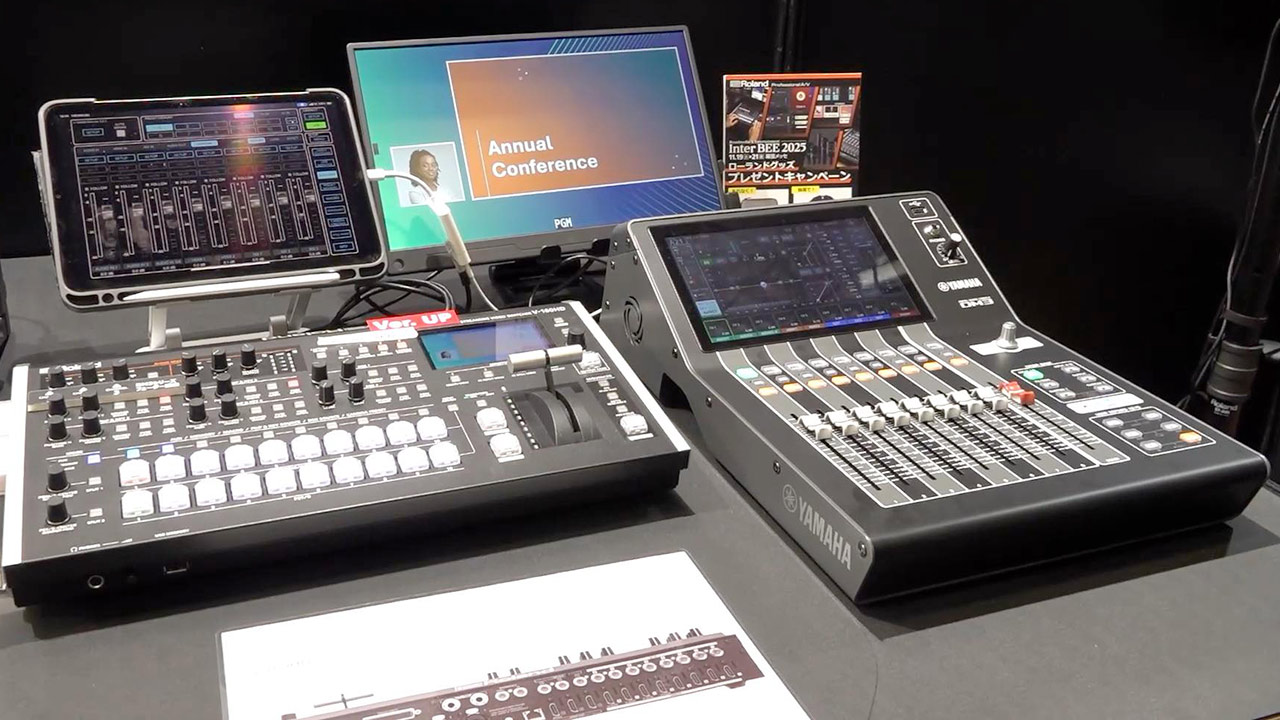
Even more interesting was the scene linking using the macro function. By simply pressing a single button on the V-160HD, the audio mixing settings (scenes) on the DM3 can be called up all at once when switching video. This should make it possible to significantly reduce operational errors even in situations that require complex transitions. This update, which seamlessly connects equipment that is considered to be the industry standard for video and audio, is a powerful answer to the need for labor-saving and efficiency improvements in live streaming and broadcasting sites, and was a noteworthy topic at this exhibition.
ASK: New flagship and the rationality of system construction
At the ASK booth at Inter BEE 2025, the display of Vizrt broadcasting products made a strong impact on visitors. What particularly caught my attention were the two major changes: the renewal of the flagship model and the long-awaited software version.
First, there’s the top-of-the-line TriCaster Vizion, the successor to the TriCaster 2 Elite. What surprised me was the use of HP’s tower or 1U rack-mount chassis for the hardware. The transition from a dedicated chassis to more versatile vendor hardware seemed like a logical evolution in terms of maintainability and reliability. In addition to expanding the number of inputs from 36 to 44, the model also comes equipped with practical new features such as AI-based voice separation “Neural Voice Isolation” and viewpoint correction. Another attractive feature is the standard availability of HTML5-based graphics “Viz Flowics,” which broadens the scope of production.
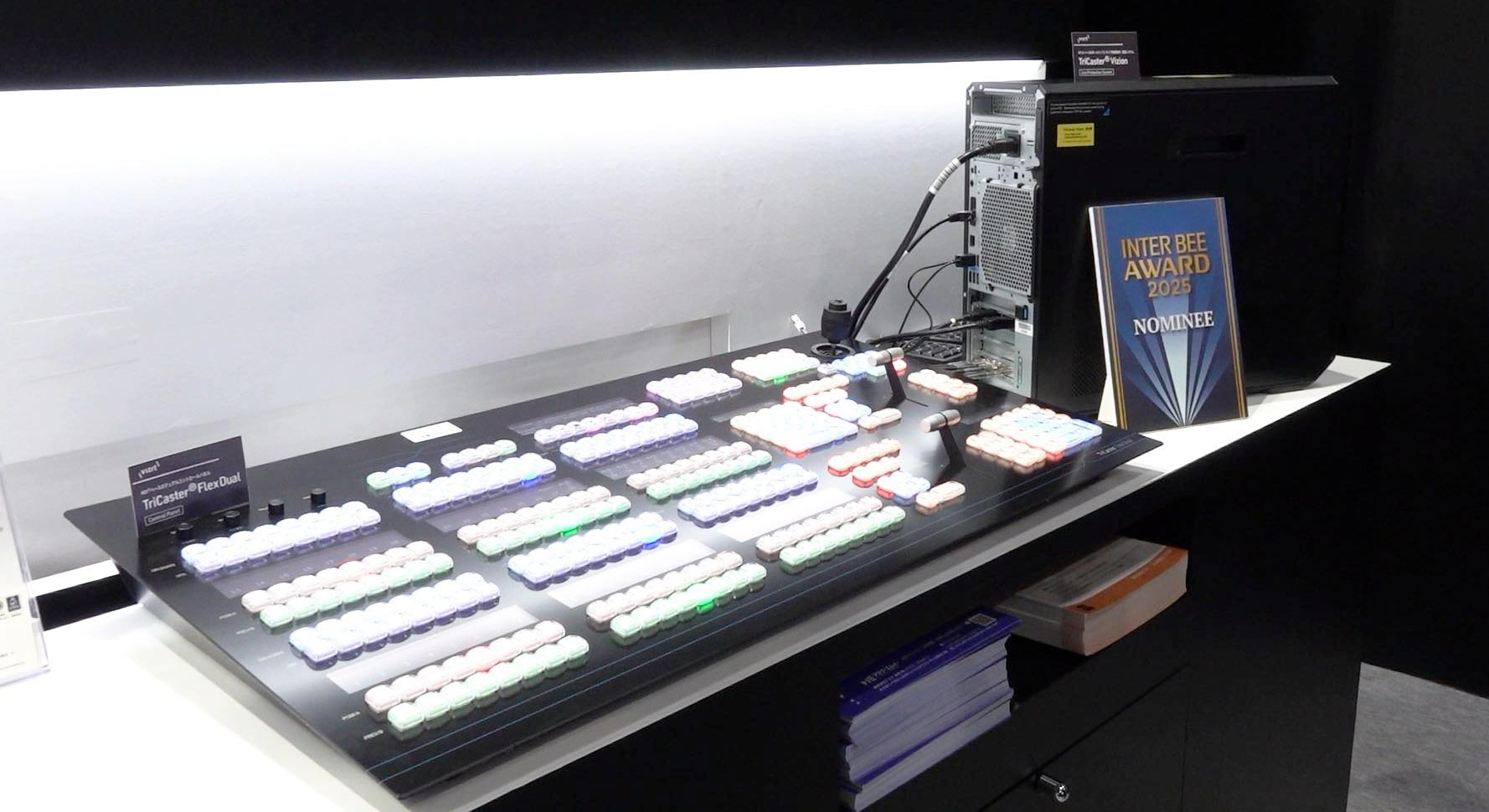
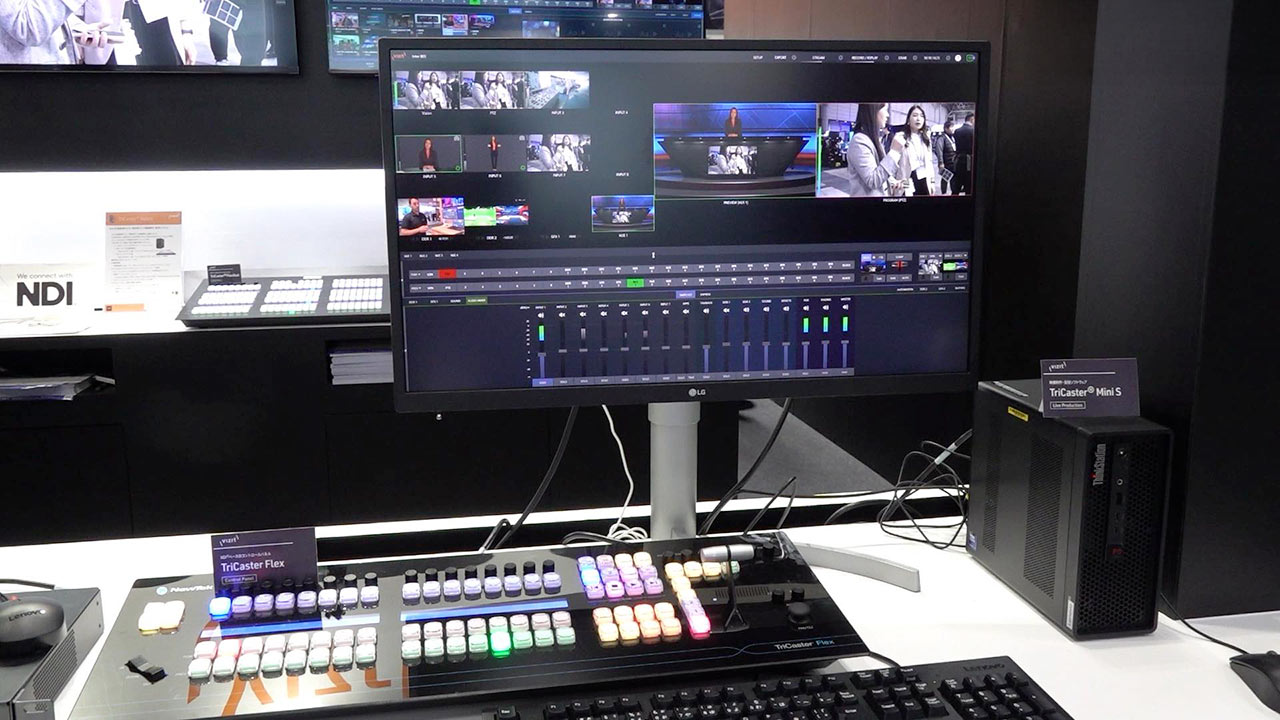
However, what caught my interest even more was the launch of the first “software version” of TriCaster. At the exhibit, it was running on a Lenovo workstation, but its flexibility, which means it can also run on existing PCs if the requirements are met, overturns the conventional wisdom of TriCaster. Although it only has eight input channels, the availability of a 30-day free trial should dramatically lower the barrier to entry. The parallel development of hardware upgrades and software versions made a strong impression on the exhibit as Vizrt demonstrates its strategic offensive.
Kiloview
The Chinese video transmission manufacturer Kiloview, also located in the ASK booth, also stopped me in my tracks, impressed by the rationality of their system architecture. Two new products, just announced at IBC in September of the same year, presented very compelling solutions for the Japanese broadcasting and distribution market.
The first thing that caught my eye was the rack-mounted chassis “RF02.” At first glance, it looks like a simple module storage unit, but I was surprised to find that it actually has a built-in Linux computer. This means that not only can it be equipped with and operate up to 16 encoder/decoder cards, such as the HDMI-compatible “FN-60” and the SDI-compatible “FN-50,” but it can also manage all the equipment on the same LAN with just this one unit.

Another noteworthy product is the P3 bonding encoder. It houses four modems within its body, bundling multiple SIM cards, Wi-Fi, and wired LAN for stable transmission, but what I found most interesting was the mechanism on the receiving side. Bonding transmission typically requires expensive receiving servers or cloud contracts. However, Kiloview has taken the bold strategy of providing its server software free of charge, allowing users to set up a server on a cloud such as AWS or on their own PC.
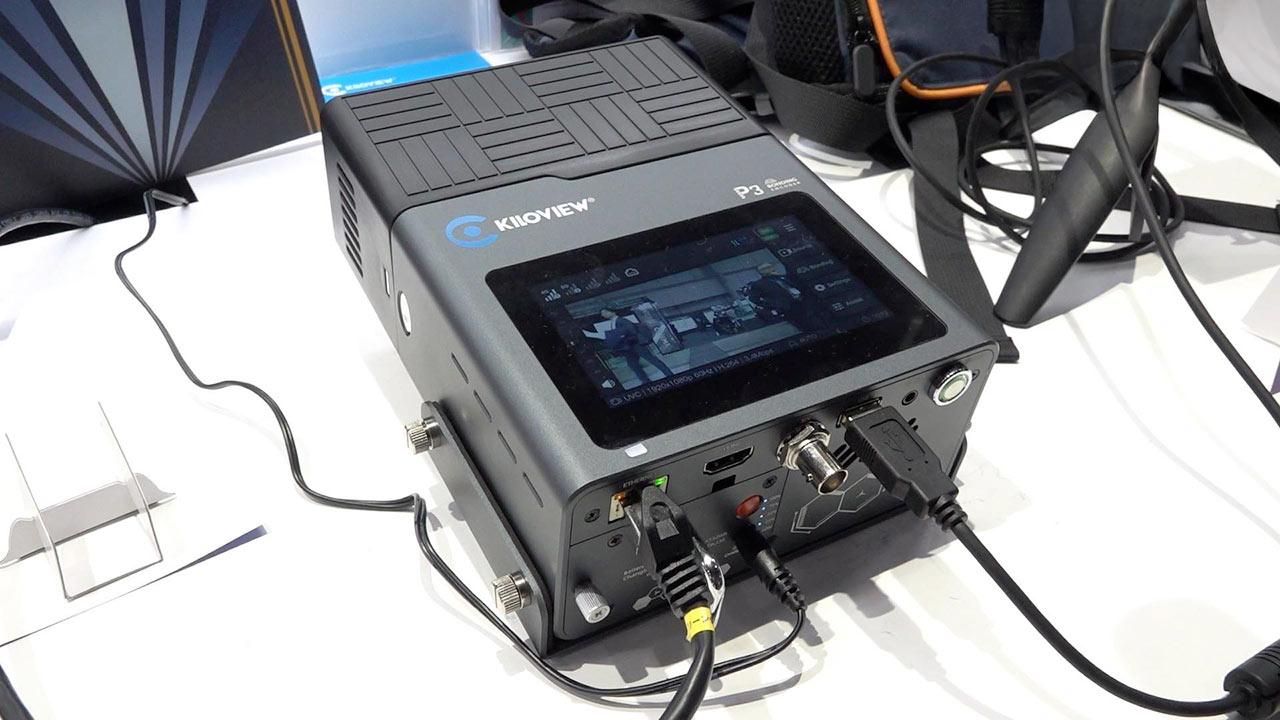
What’s even more noteworthy is that the aforementioned RF02 chassis itself functions as a bonding server. Without the need for an external server, the RF02 can receive video from up to eight P3s and redistribute it to up to 25 locations via its built-in card. This flexible, low-cost ecosystem, complete on-premise, has the potential to dramatically change on-site workflows.