PRONEWS Reviews

The Sony RX1R III is a unique high-end compact digital camera equipped with a full-frame sensor and a Zeiss 35mm f/2 lens. While it boasts the latest high-resolution sensor and advanced features, it lacks convenient features like image stabilization and a movable monitor. This compromise results in an incredibly compact and lightweight body that allows the photographer to focus on the act of taking pictures. In this article, we will review its appeal and its position, including sample images.
A full-frame compact camera packed with the latest features
The RX1R III’s greatest feature is that it is a camera with an integrated lens but is equipped with a full-frame sensor. This is a long-awaited new model, the first to be released in about 10 years since the previous model, the RX1R II.
The image sensor and image processing engine offer performance comparable to that of high-end mirrorless cameras like the α7R V, yet the camera is incredibly small and lightweight. The body weighs less than 500g, including the battery and SD card. This is a camera like no other.

The main specifications of the Sony RX1R III are summarized below.
- Image sensor: Full size (35.9 x 24.0 mm), effective pixel count: approx. 61 million pixels
- Image processing engine: BIONZ XR
- Lens: Zeiss Sonnar T * 35mm F2 (integrated with camera)
- Shooting distance (from the front of the lens): Approx. 24 cm – ∞ (Normal mode), Approx. 14 cm – 29 cm (Macro mode)
- ISO sensitivity: 100 to 102400 (standard ISO 32000, extended ISO 102400)
- Shutter speed (still image shooting):
(electronic shutter): 1/8000-30 seconds, (mechanical shutter): 1/4000*-30 seconds
*When stopped down to F5.6 or more. If opened wider than that, the upper limit is 1/2000 seconds - Image stabilization: Only electronic active stabilization is installed
- Recording media: SD/SDHC/SDXC memory card (UHS-II compatible)
- Video: 4K 30p, Full HD 120p
- Size: Approx. 113.3 x 67.9 x 87.5 mm, Approx. 113.3 x 67.9 x 74.5 mm (from tip of lens to monitor)
- Weight: Approx. 498g (including battery NP-FW50 and SD card)
- Release date: August 8, 2025
- Price: 658,900 yen (tax included) (sale price at Sony Store at the time of writing)
Top design
The top of the camera has a flat design with no protrusions. The overall color scheme is monotone, giving it a clean and smart look. While retaining the robust magnesium body, the exterior has a renewed matte texture that makes fingerprints and other smudges less noticeable.

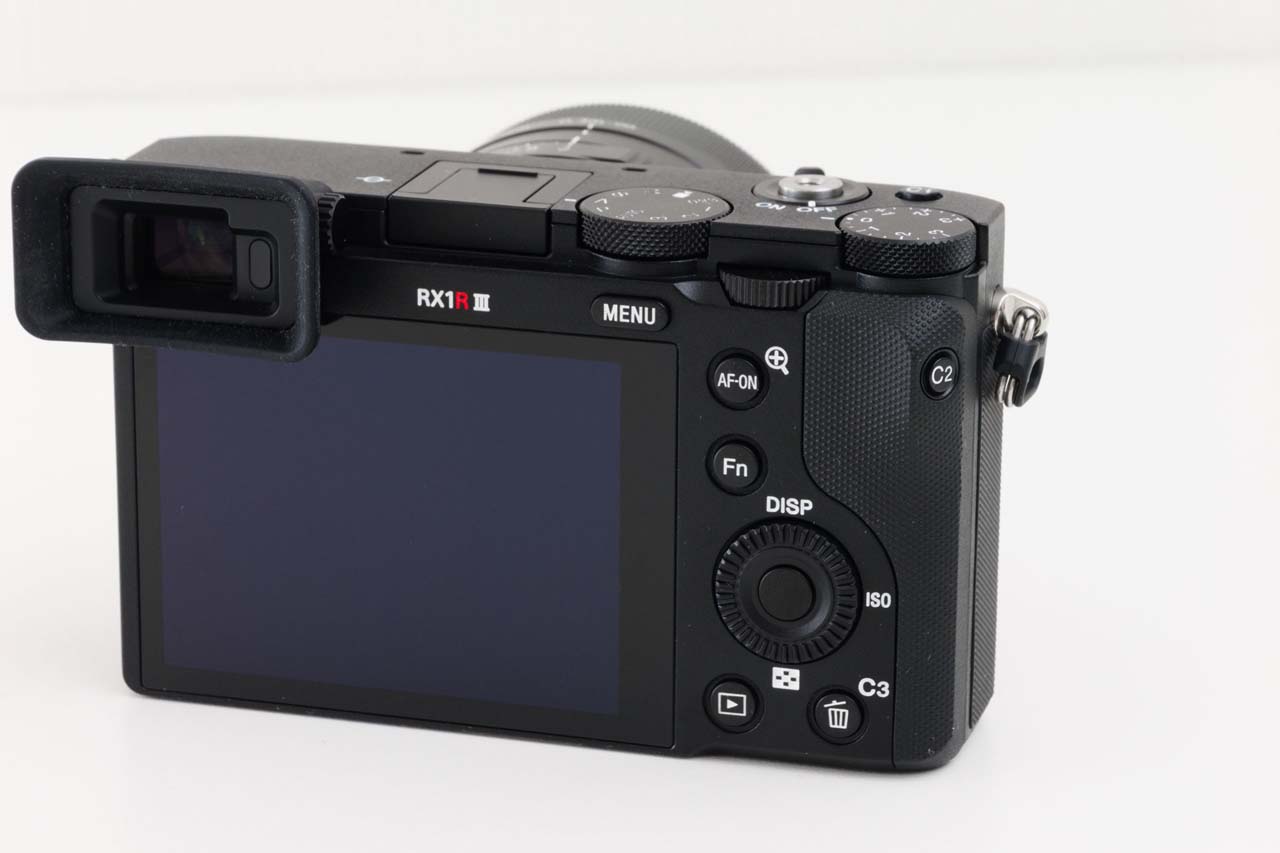
Despite its compact size, it is equipped with a proper EVF. You can comfortably shoot outdoors while looking through the viewfinder. There are two dials on the back, and no dials on the front. The main controls, such as buttons and dials, are concentrated on the right side, and there are three customizable C buttons, making it easy to use.
Camera Shutter
This camera uses a leaf shutter. The fastest mechanical shutter speed is 1/4000, but the upper limit is 1/2000 when the aperture is opened wider than F5.6, so overexposure is likely to occur when shooting at full aperture in bright outdoor conditions. On the other hand, the electronic shutter can achieve a maximum shutter speed of 1/8000, so you can use it depending on the situation.
The battery is the NP-FW50, which has improved battery life compared to the previous model. In my experience, I used up one fully charged battery in about a three-hour outing, mainly taking photos.

Number of still images that can be taken:
- When using the viewfinder: Approx. 270 shots
- When using the LCD monitor: Approx. 300 shots
Continuous video recording:
- When using the viewfinder: Approx. 80 minutes
- When using the LCD monitor: Approx. 80 minutes
*Official specifications (CIPA standard compliant)
The camera additionally supports USB charging. If the battery runs out, you can power and charge it using a mobile battery. Note that the camera does not come with a USB cable or battery charger.
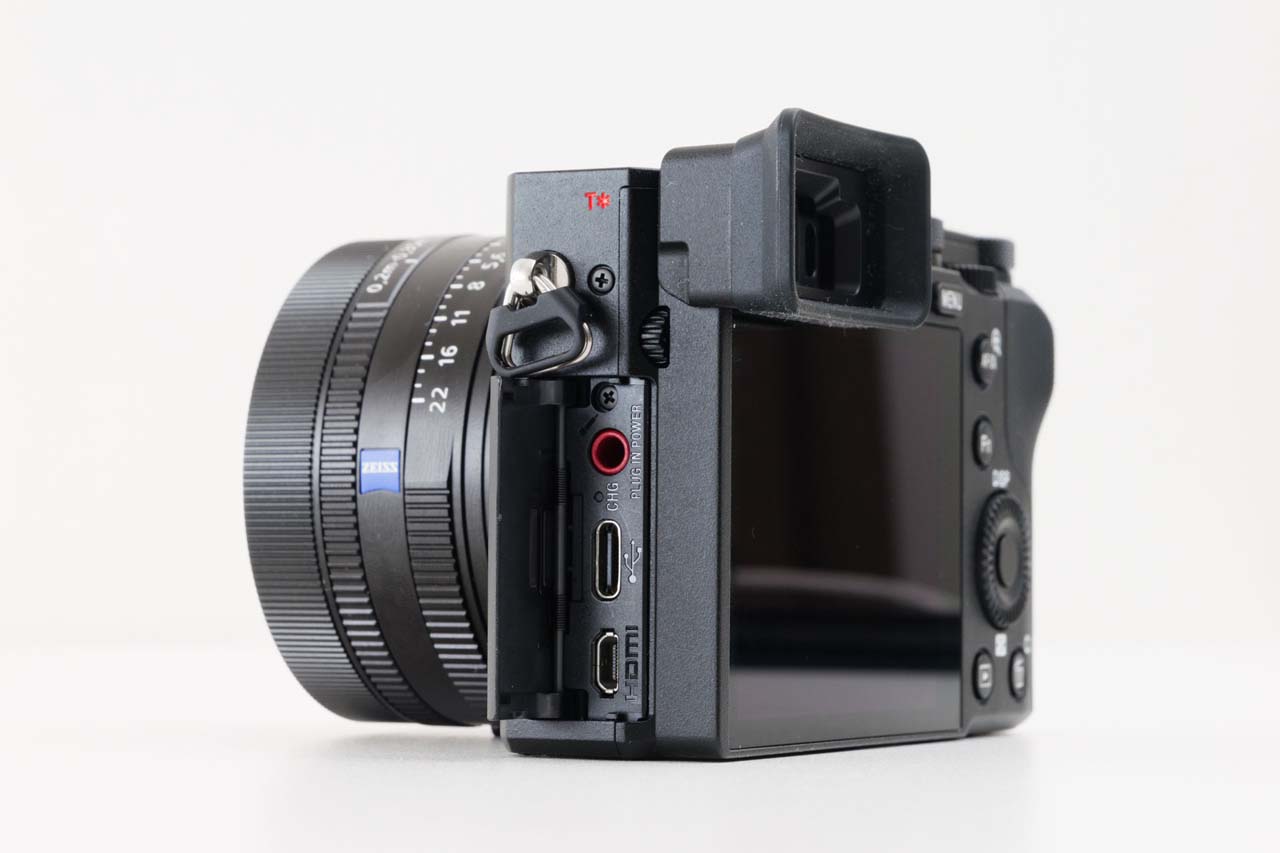
External connections
External connections include a microphone jack, USB Type-C, HDMI micro jack (Type D), and a multi-interface shoe. Overall, it’s equipped with modern camera-like features, making it an upgrade from the previous model.
On the other hand, there are some features that were omitted or not added in the RX1R III. For example, the rear monitor was previously tiltable, but on this model it is a fixed monitor that does not move.
Additionally, the camera does not have sensor-shift type in-body image stabilization. The only available image stabilization is electronic active stabilization, which can only be used when shooting video. The camera also does not support the built-in ND that is often found in compact cameras.
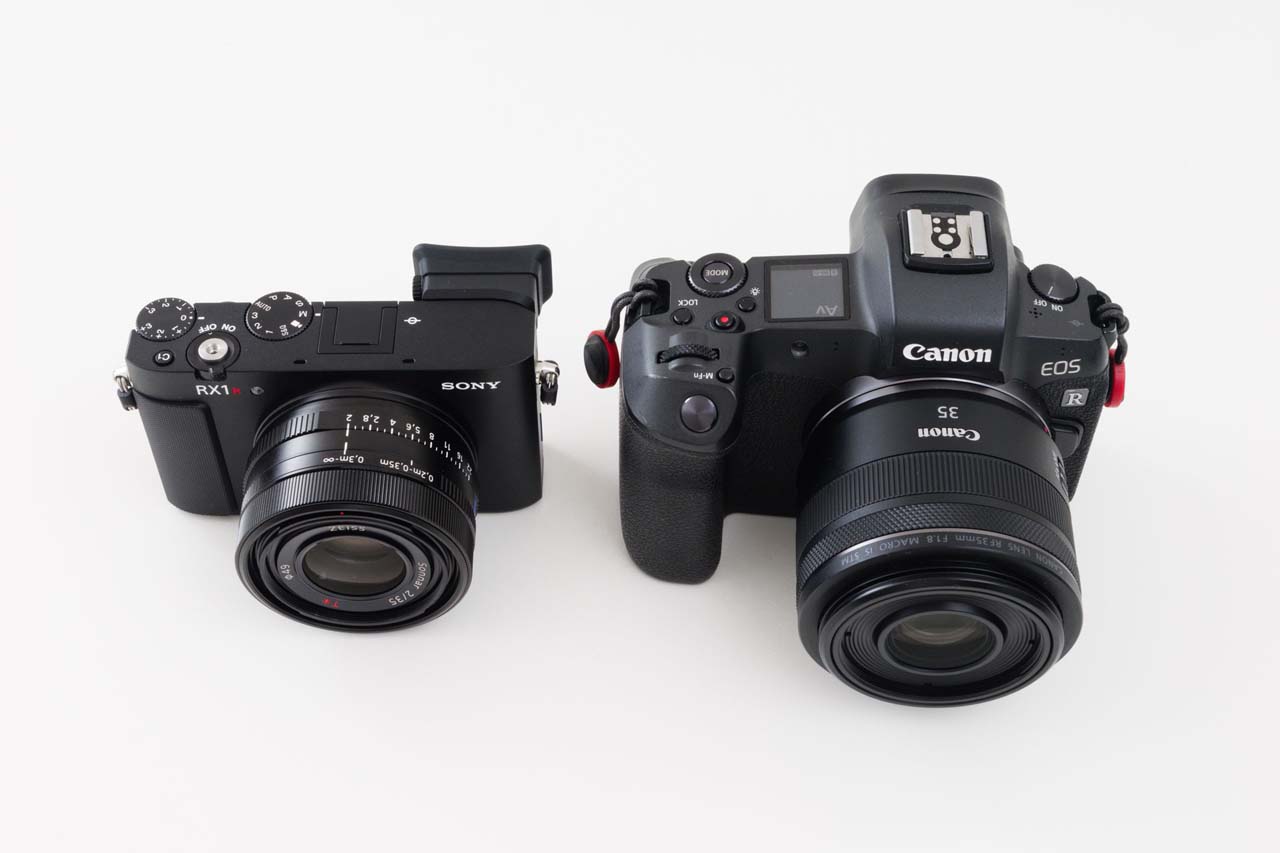
What is clear from the design is the company’s thorough commitment to making the camera small and lightweight. While it lacks sensor-shift image stabilization and a movable monitor, the body is extremely compact and has almost no protrusions. It has been further reduced in weight compared to the previous model, the RX1R II, which was already lightweight. The development team’s extraordinary enthusiasm and effort were evident in the way they managed to reduce the weight despite improving basic performance and increasing the size of the battery.
High-resolution sensor and Zeiss lens for superior image quality
Let’s take a look at what kind of photos this camera can actually take. The most notable point is its resolution. The landscape photos recorded with the 61-megapixel image sensor are extremely detailed, and even when cropped, you can clearly see that every detail is clearly depicted.


Full Aperture
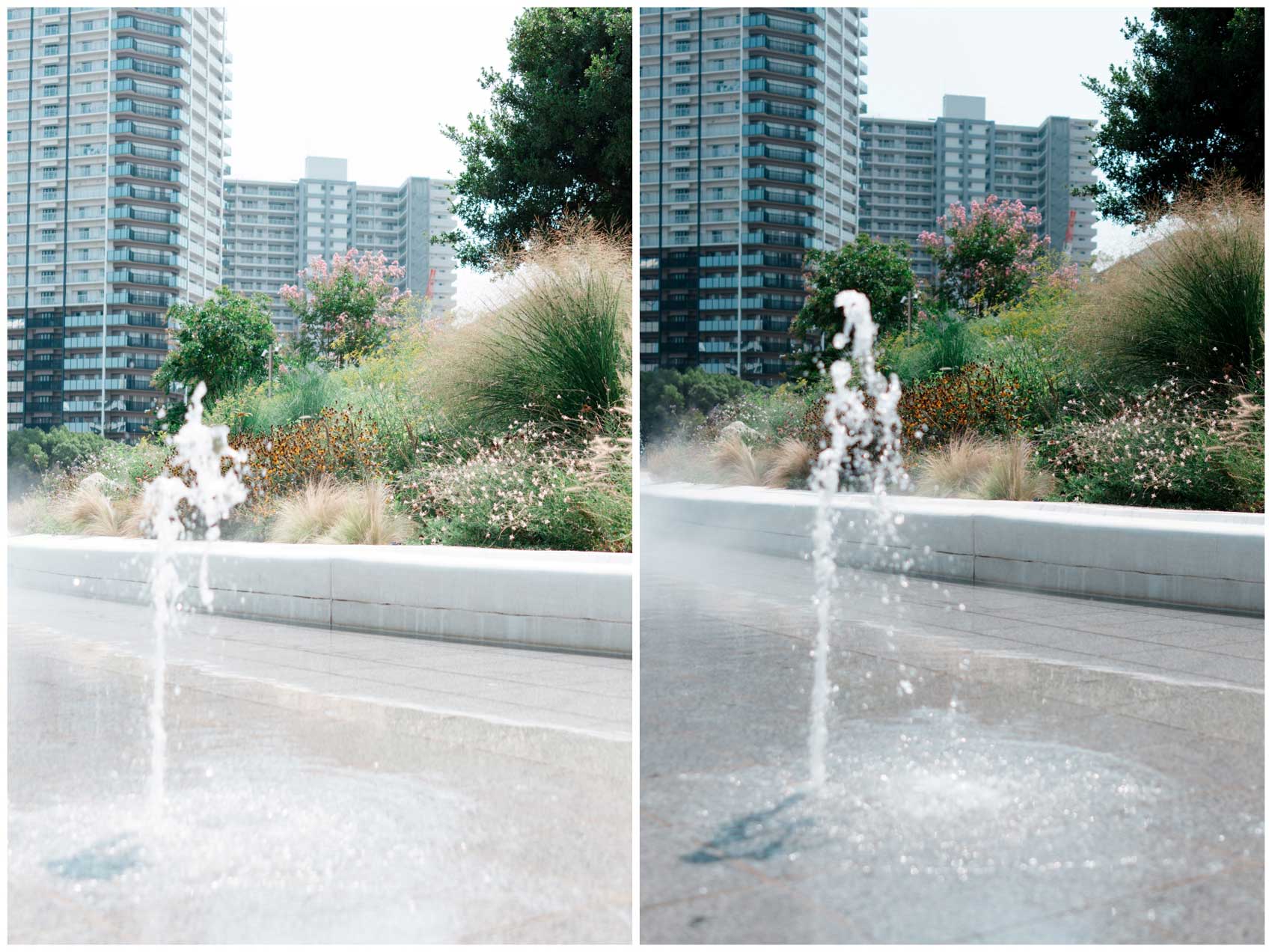
The detailed depiction performance is fully demonstrated even at full aperture. Although the depiction is a little softer than when the aperture is narrowed, it still records very detailed images.

Because it’s a full-frame sensor, the depth of field is very shallow and the large bokeh is impressive, but the in-focus area is recorded sharply, allowing for photographs that combine clear texture with a soft three-dimensional feel.

Creative Looks
The colors are also appealing, and the RX1R III comes equipped with a total of 12 different Creative Looks. Of these, the new FL2 and FL3 are noteworthy. These are variations of the ever-popular FilmLook, and both feature distinctive blue and green hues. FL2 has slightly higher contrast and muted colors, while FL3 has lower contrast and clearer colors. Personally, I prefer FL3, and I mainly used it for both photo and video shooting.
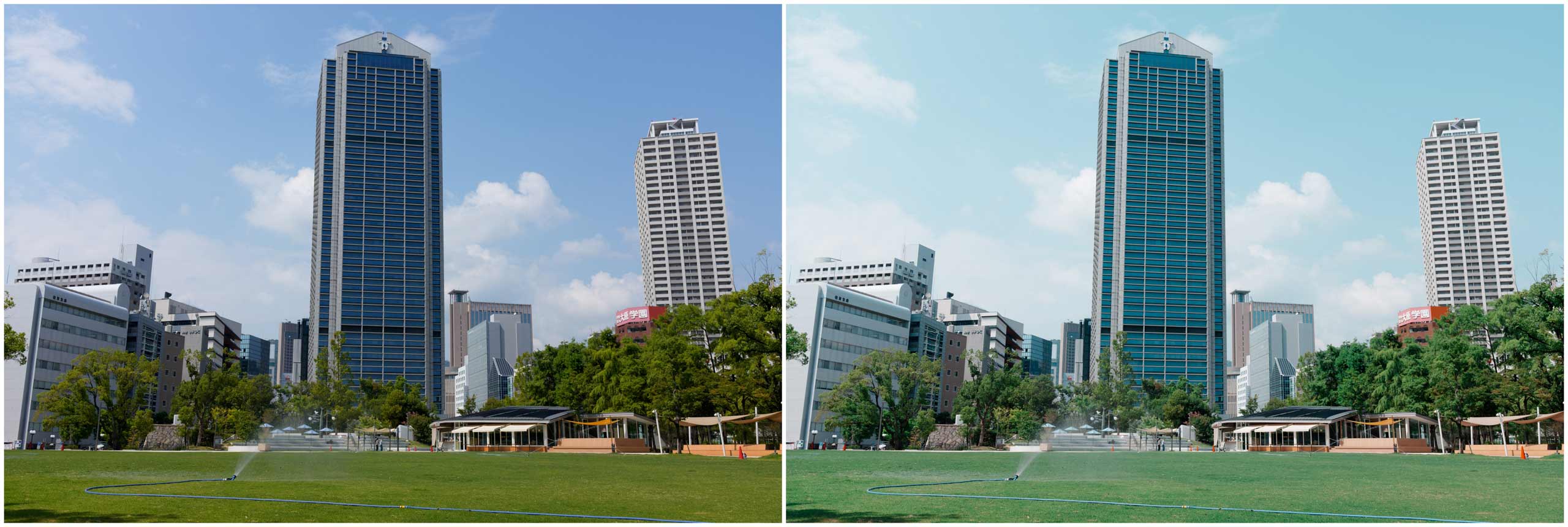
*Click on the image to enlarge.
The Lens
The RX1R III is equipped with the Zeiss Sonnar T 35mm F2 lens. It follows on from the lens that was well-received on the previous model, the RX1R II. It is a small lens, and the front element does not extend even when the focus is driven, making it extremely compact.

This lens is also great for macro photography. By turning the lens ring to switch to “macro mode,” you can achieve a minimum focusing distance of 20cm, with a maximum magnification of 0.26x.


There is a slight barrel distortion without correction, but this can be easily corrected with in-camera lens correction.
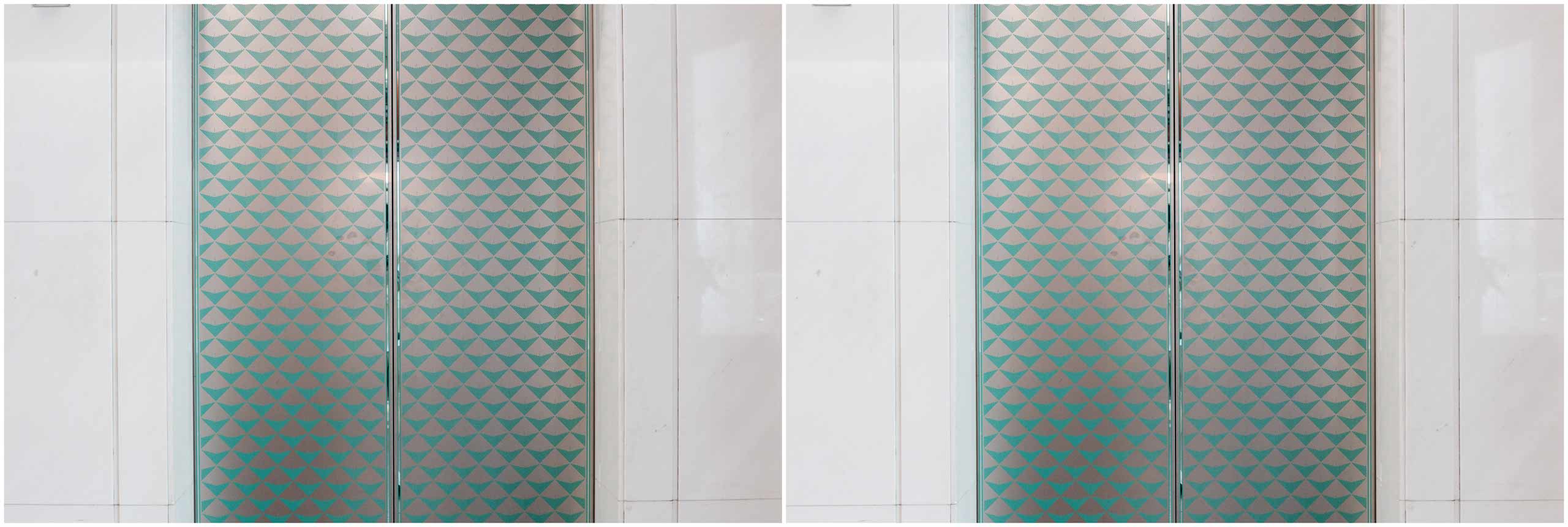
Backlighting test
Even in backlit situations, I was able to shoot with almost no loss of contrast or color, although chromatic aberration was visible in areas with extreme contrast.


The bokeh balls are generally beautifully round and soft, although oval shapes can become noticeable at the edges of the image.

Sony RX1R III High ISO Test
Let’s also take a look at image quality at high sensitivity.

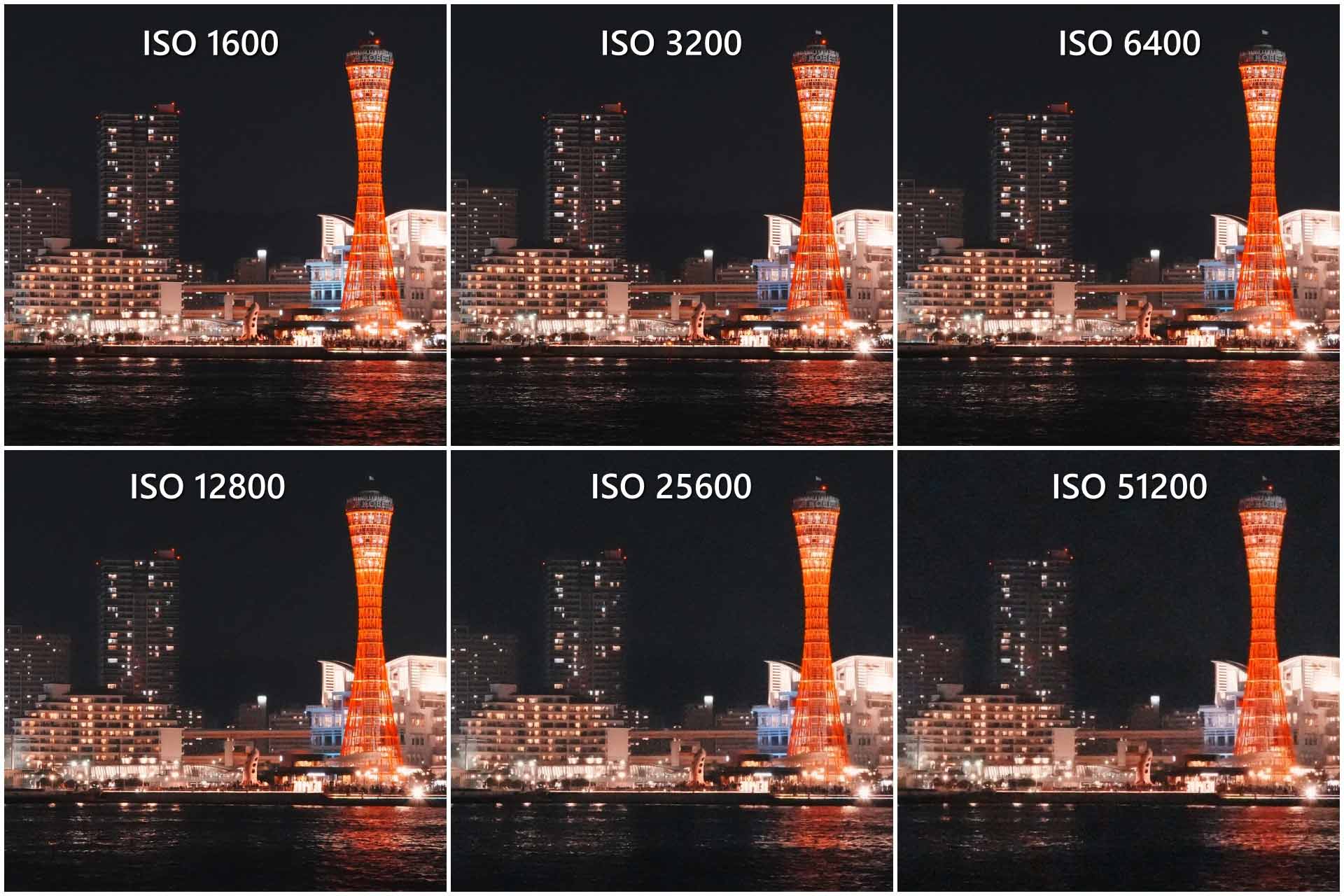
Tolerance for noise and image degradation varies greatly from person to person, but in my opinion, ISO 6400 seems practical. Recently, the noise processing functions of RAW development software have improved dramatically, so depending on the situation, it may be useful to use such software.
The sufficient dynamic range allowed me to enjoy shooting in places with large differences in light and dark, such as night scenes.

Practicality as a snap shooter
As we’ve seen above, the RX1R III has excellent imaging performance. However, its true appeal lies in the ease with which you can carry such a high-performance camera around and enjoy shooting with ease. This is the unique value of the RX1R III.
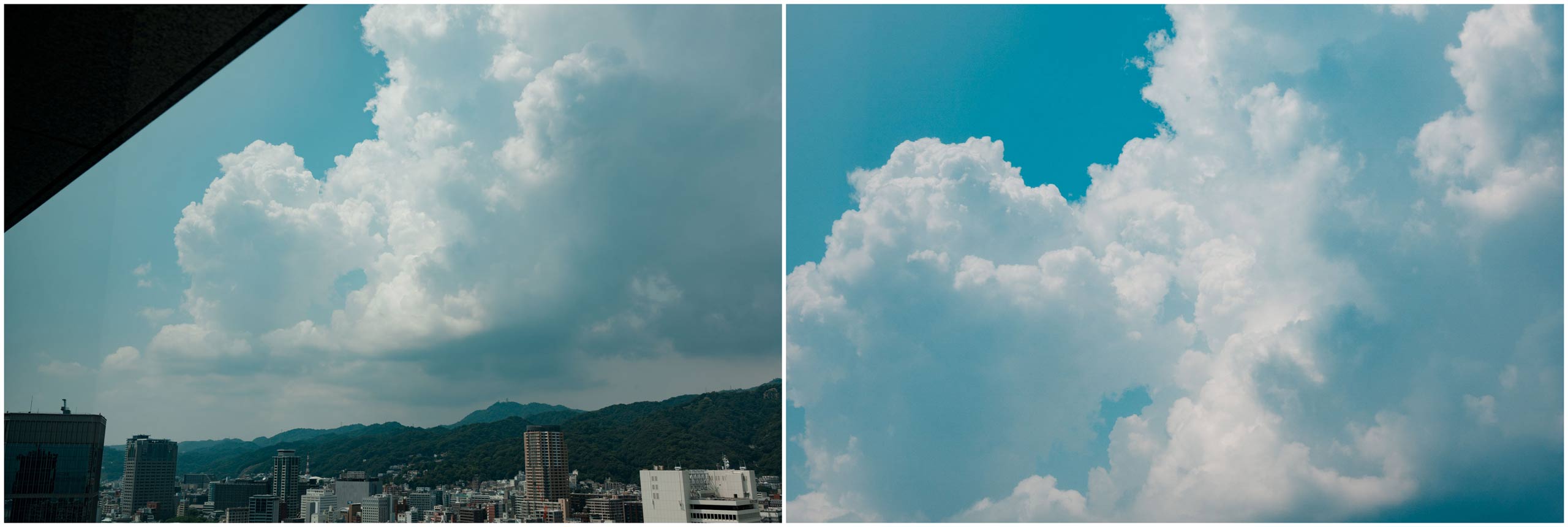
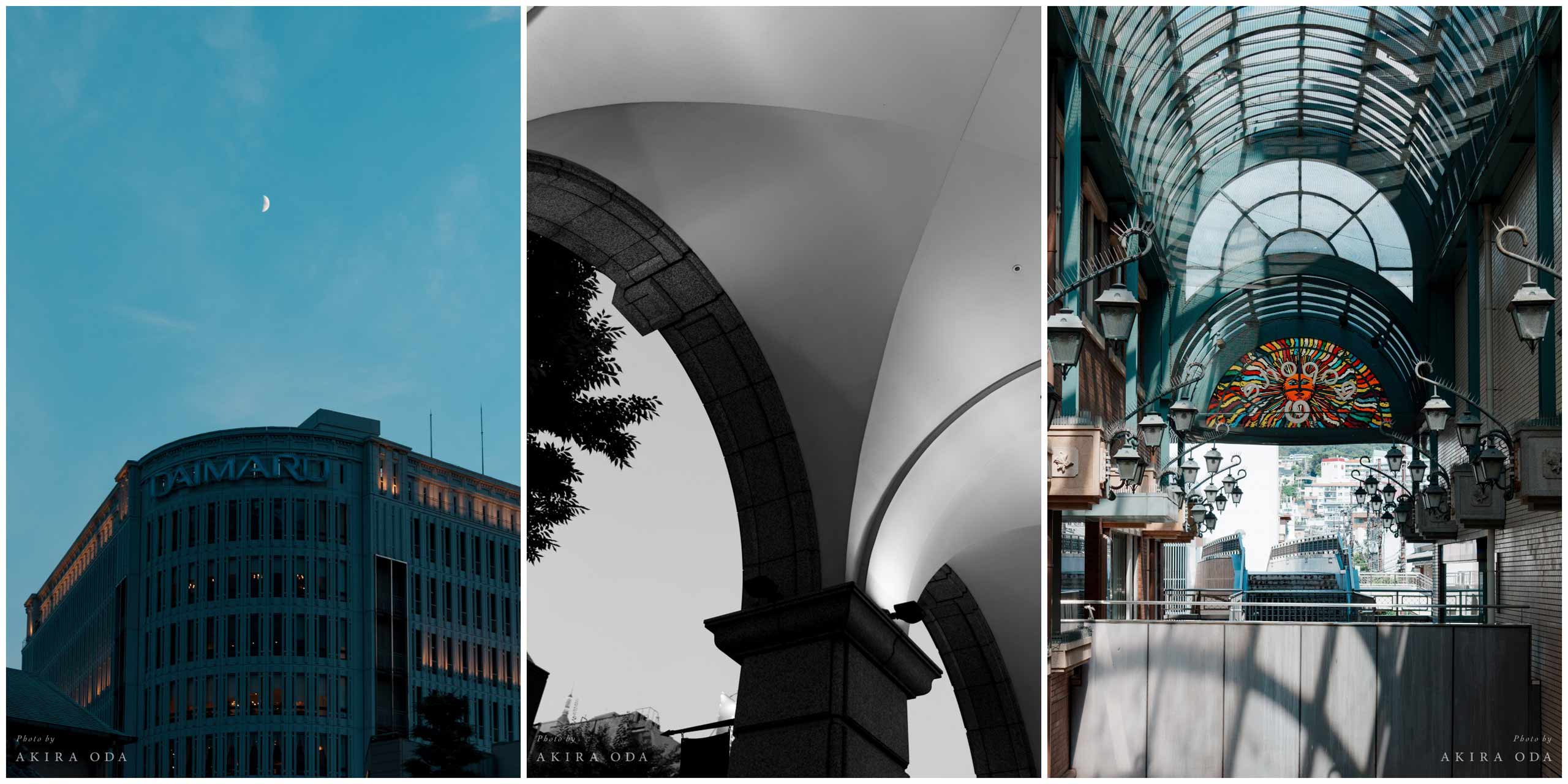
In addition to the compact and lightweight body, one of the features that contributes to a comfortable shooting experience is “step crop shooting.” This is a function that takes advantage of the high-pixel sensor to crop the image as you shoot, allowing you to shoot at a more telephoto angle. With the push of a button, you can switch between focal lengths equivalent to 50mm and 70mm. Since a normal 35mm lens has approximately 60 million pixels, even a 50mm equivalent crop will record at a size of approximately 29 million pixels, and a 70mm equivalent crop will record at a size of approximately 15 million pixels.
Thoughts on the lens focal length
Personally, I feel that the 35mm focal length is just right for taking pictures of close friends and family, and is ideal for everyday snapshots. Portraits taken with a full-frame sensor are very satisfying, as they depict skin tones and eyes in great detail.

With a high-performance mirrorless camera, you might be tempted to change lenses or add various accessories to achieve a wider range of expressions and improve the convenience of your photography.
On the other hand, the RX1R III is high-performance, but the fact that it’s a compact digital camera means I was able to shoot with ease. To put it negatively, it’s like “giving up,” but actually using the camera meant I thought less about the equipment and was able to concentrate on shooting, which was very comfortable.
A camera that lets you easily capture beautiful videos – Sony RX1R III Video Test
The Sony RX1R III is also an attractive camera for video recording. The maximum recording resolution is 4K30P. If you want to shoot at a high frame rate, you can shoot HD1920x1080 at up to 120P.
It also supports “Super Resolution Zoom,” which allows you to zoom with almost no loss in image quality. You can zoom up to approximately 1.5x in 4K and approximately 2x in HD. It also supports Log recording, and S-Log3 ensures a wide dynamic range, allowing for free color grading. The filter diameter is 49mm, so you can freely attach ND and other filters.
I tried shooting a video with the Creative Look FL3 and compiled it into a 2-minute video. Take a look below.
Example short movie
When shooting video, the active stabilization reduces camera shake, so as long as you hold the camera steady, you can capture relatively stable footage. However, the stabilization is not enough when shooting while walking or holding the camera with one hand, so don’t rely on it too much.
Personally, I really like the beautiful images captured by the RX1R III, as it allows me to record everyday scenes as something special. While it’s not suited to rough shooting like a VLOGCAM or action camera, if you take your time and carefully capture each shot, I feel it’s perfectly suited to casually shooting VLOGs and home videos.
Comparison with other models and its position
In reality, there aren’t many cameras on the market that can be compared to the RX1R III. Fujifilm’s X100VI and GFX100RF are similar models, both of which are compact cameras with integrated lenses and large image sensors, and are APS-C and large format, respectively.
However, Sony and Fujifilm have different camera designs. The RX1R III has a full-frame image sensor, so it sits between the X100VI and GFX100RF. And yet it’s slightly lighter than the APS-C X100VI.
- Fujifilm GFX100RF: Large format, approximately 102 million pixels, approximately 735g
- Fujifilm X100VI: APS-C, approx. 40.2 megapixels, approx. 521 g
- Sony RX1R III: Full-frame, approximately 61 megapixels, approximately 498g
*Weight includes battery and recording media.
The X100VI is slightly heavier, but it is equipped with in-body image stabilization and a movable monitor, making it more convenient to use. The unique film simulation colors are also a major factor in differentiating it from other cameras.
The GFX100RF is a camera equipped with a large format sensor, making it a larger, more premium camera with a slightly different feel.
The RX1R III stands out for its extremely compact and lightweight design despite its full-frame sensor. The camera’s weight is incredibly slim considering its sensor size. The latest AF system also boasts excellent subject recognition. This allows you to leave focusing to the camera, making it incredibly easy to use. Sony’s creative look, in my opinion, is just as appealing as Fujifilm’s.
Overall Review and Conclusion: A unique camera that lets you easily carry a full-frame camera anywhere
The Sony RX1R III is a rare compact camera with a full-frame sensor, and its thoroughly compact and lightweight design makes it truly one of a kind.
Considering the price of around 600,000 yen, it is true that there are some clear disadvantages that make it less convenient, such as the lack of sensor-shift image stabilization and the fixed monitor that does not move. There is no doubt that it is a high-performance camera, but it is best to consider purchasing it with the understanding that it is by no means an all-purpose camera.
At first, I was also concerned about these camera shortcomings, but when I actually held it in my hands, my expectations were pleasantly exceeded. The omission of features such as image stabilization and a movable monitor didn’t bother me at all, and in fact, this compromise allowed me to concentrate on shooting and visual expression. It’s just the right amount of functionality, making me want to shoot only what I can with this camera. That’s the kind of appeal I felt this camera had.
He talked about the advantages and disadvantages of the Sony RX1R III on YouTube. He also posted plenty of sample photos, so if you’re interested, be sure to check it out.
Sony RX1R III Sample Photos: Sony RX1R III – Photo Garage – AKIRA ODA
Originally written in Japanese by Akira Oda | Profile
A “lifestyle photographer” who shares the joys of everyday life with cameras. Under the name “Aki,” he explains how to use camera equipment and take photos in an easy-to-understand manner, even for beginners. Aki shares on on YouTube and his blog, “KOBE FINDER.”